Garbage and recycling: how to find building rules
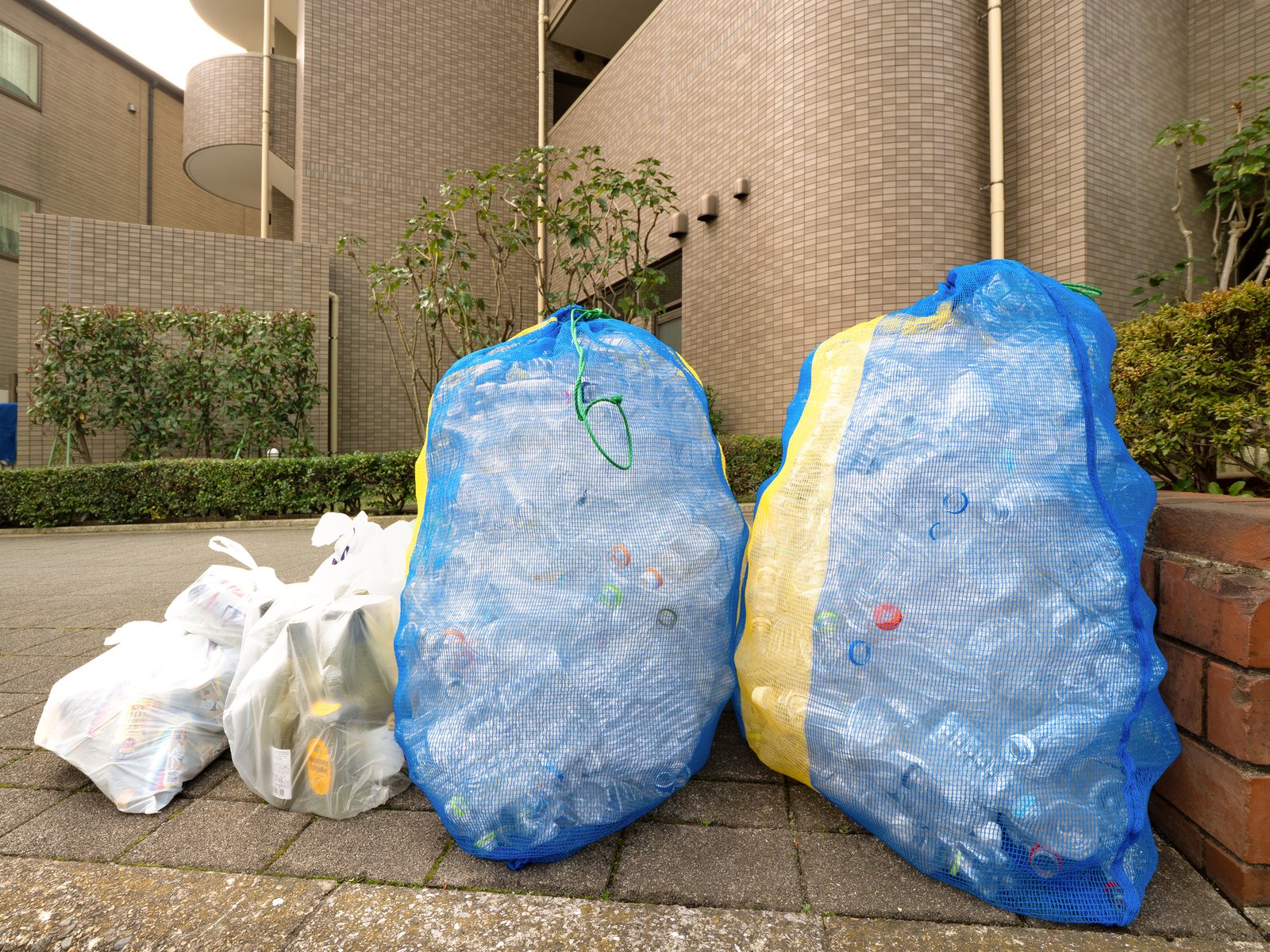
A bag of rubbish in Japan follows a short, local path: sorted in your flat, carried to the place your building has set aside, collected by your municipality. Each step is set close to home. A Ministry of the Environment FAQ explains that household waste is the work of municipalities, not the national government, and that each municipality sets its own sorting rules to suit local conditions, so the categories differ from one to the next. The rules that apply to you are on your own ward, city, town or village pages, not in a national list.
Who this is for: anyone who has just moved into a flat or house in Japan and needs to find their own municipality’s rubbish rules, the place to put bags out, or the way to get rid of something too large for a bag.
The short version: find your municipality’s rubbish page and read the sorting rules and collection days there. In an apartment building, put rubbish out at the place the building has designated. For oversized items, apply to your municipality, buy a ticket, stick it on, and put the item out where you are told. If you are unsure how to dispose of something, ask your municipality.
Where you stand now
| Your situation | Check here first |
|---|---|
| You have just moved in and do not know the rules | Your own municipality’s rubbish pages. Sorting rules differ by municipality, so rules from a previous home may not apply. |
| You live in Tokyo and cannot find your municipality’s rubbish page | The foundation’s list of rubbish information pages for each ward, city, town and village in Tokyo (see below). |
| You live outside Tokyo | The Ministry of the Environment’s list of links to waste and recycling information by prefecture and designated city. |
| You live in an apartment building and do not know where bags go | The designated place at your building. |
| You have something too large for a bag | Your municipality’s oversized-waste reception (see the sequence below). |
| You cannot read Japanese guidance | The foundation’s English page on rubbish, and any foreign-language flyers your municipal office has. |
| You are in a hotel or other short-stay lodging | The property’s own instructions; see serviced apartment, hotel or minpaku. |
Finding your municipality’s page
In Tokyo. A public-interest foundation runs a guide to daily life for foreign residents. Its page on local rules says rubbish rules are set town by town and can be checked on your local office’s website, and it lists rubbish information pages for the ward, city, town and village offices in Tokyo, grouped under five area headings, from the 23 wards to the outlying islands. Start there.
The Bureau of Environment of the Tokyo Metropolitan Government says to ask your ward or city office, or town or village office, about sorting methods, collection days and oversized-waste reception. It also keeps a links page with the 23 wards and 39 cities, towns and villages. Those links lead to each municipality’s website, such as its home page, not to its rubbish page, so expect one more step of searching once you arrive.
Outside Tokyo. The Ministry of the Environment keeps a list of links to waste and recycling information for each prefecture and designated city. Pick your prefecture or designated city. The list stops at that level; it has no links to individual wards’ pages.
Your building: where bags go
The foundation’s English guide says: “Take your trash to the designated place by your apartment or condominium.” That is the building’s part of the path. The sorting rules themselves still come from your municipality’s pages. For the other rules of shared buildings, such as laundry and noise, see coin laundry and apartment-building norms.
Oversized waste: the sequence
Items too large for a bag go through a separate request. The Bureau of Environment’s page on putting out household waste such as oversized items and discarded appliances says to check with your municipality first, then buy an oversized-waste ticket and dispose of the item. The foundation’s guide describes the same path from the resident’s side:
- Apply. Contact your municipality’s reception for oversized waste, by phone or online, and check your local municipal website.
- Buy a ticket. The foundation’s guide mentions buying the ticket at a convenience store or similar.
- Stick it on and put it out. Attach the ticket and take the item to the place designated at your apartment building.
Allow time. The Bureau of Environment notes that, depending on how busy bookings are, you may not get the date and time you want. For fees, dates and the exact steps, follow your municipality’s page.
If you cannot read Japanese
The foundation’s rubbish page has an English version, and it notes: “Some municipal offices prepare flyers and leaflets in foreign languages.” It does not say which ones, so ask your own office. The Bureau of Environment’s pages have a language menu marked as machine translation; it is not a separate foreign-language guide to putting rubbish out.
If something goes wrong
| What happened | Next step |
|---|---|
| You cannot work out how to dispose of something | Ask your municipality. The Ministry of the Environment’s answer is to dispose of discarded appliances and oversized waste by the rules your municipality gives, and to contact the municipality if you are unsure how. |
| The oversized-waste date you wanted is taken | Apply again with more time to spare. |
| Moving out or a big clear-out leaves a lot of rubbish at once | Consult your municipality, as the Bureau of Environment advises for moving, major cleaning and sorting a deceased person’s belongings. |
| A collection company offers to take items away | The Ministry of the Environment’s page on this is headed with a request not to use “unlicensed” collectors for waste. Put the items out under your municipality’s rules. |
Making the call
Find your municipality’s page, read it for sorting rules and collection days, and confirm where your building’s collection point is. For anything too large for a bag, start with your municipality’s reception and leave time before the date you need. When in doubt, ask your municipality. Moving in for a longer stay? See the long-stay checklist.
Official sources
| Topic | Source | Checked | Page’s own date |
|---|---|---|---|
| Why sorting rules differ | env.go.jp — FAQ (Japanese, PDF) | 2026-11-01 | PDF created 14 March 2015 |
| Waste and recycling links by prefecture and designated city | env.go.jp — list (Japanese) | 2026-11-01 | — |
| Oversized waste and unlicensed collectors | env.go.jp — Q&A (Japanese) | 2026-11-01 | — |
| Putting out oversized waste in Tokyo | kankyo.metro.tokyo.lg.jp — household waste (Japanese) | 2026-11-01 | Updated 1 October 2024 |
| Who handles sorting, collection days and oversized waste in Tokyo | kankyo.metro.tokyo.lg.jp — contacts (Japanese) | 2026-11-01 | Updated 9 February 2018 |
| Links to Tokyo’s municipalities | kankyo.metro.tokyo.lg.jp — links (Japanese) | 2026-11-01 | Updated 15 April 2019 |
| Rubbish rules for foreign residents | tabunka.tokyo-tsunagari.or.jp — English · Japanese | 2026-11-01 | — |
| Municipal rubbish pages in Tokyo | tabunka.tokyo-tsunagari.or.jp — list (Japanese) | 2026-11-01 | Updated 20 May 2026 |