Place name in Japanese: 山梨, Yamanashi.
Yamanashi
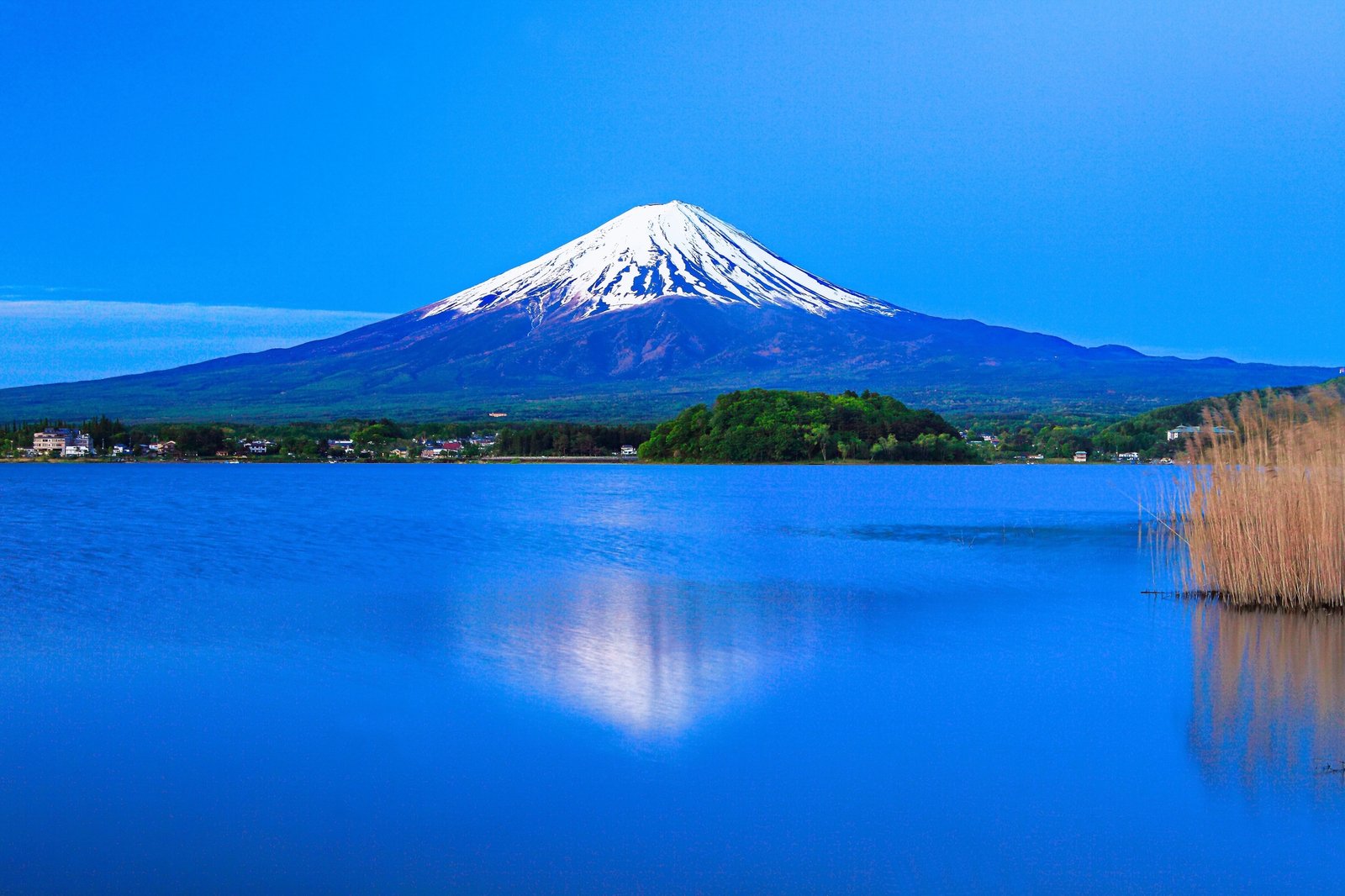
Introduction
The official Yamanashi tourism portal introduces Mt. Fuji, the Fuji Five Lakes, Kiyosato Kogen, Erin-ji, Kuon-ji, hot springs and wineries (source). The same portal describes cherry blossom in spring, cooler air and climbing in summer, autumn colour, and hot springs and snowy views in winter (source). The Japan Tourism Agency’s Accommodation Survey records 2,750,510 person-nights of overnight stays by foreign guests for Yamanashi in its 2025 final figures (source).
Who this is for / The short version
For readers planning a first visit to Yamanashi who want to know which places the official sources name, and how to reach them.
- Kofu Station and Kawaguchiko Station are the two rail and bus gateways named by the prefecture (source).
- The Fuji Five Lakes are the sightseeing base of the Fuji north-foot area (source).
- Mt. Fuji stands on the Yamanashi–Shizuoka border, and the Yamanashi-side Yoshida Route is usually open from 1 July to 10 September (source).
- Outside the climbing season, passage from the fifth station to the summit is prohibited by law (source).
- Where to do next: check opening days, fares and timetables on the official pages listed at the end of this page.
Pins
- Fuji Five Lakes, represented by Lake Kawaguchi: official coordinates 35.51744675580231, 138.75140471410862 (source).
- Shosenkyo: official coordinates 35.745491255394185, 138.56763323619805 (source).
- Mt. Fuji, in Yamanashi and reached from the Yamanashi side here: official coordinates 35.366516, 138.729858 (source).
- Mt. Daibosatsurei: pin position Check official; the nearby Daibosatsu no Yu has official coordinates 35.73430460719249, 138.7966146117729 (source).
- Kiyosato and the Yatsugatake foothills, on the Yamanashi–Nagano border: official coordinates 35.91904395338182, 138.43660992264353 (source).
- Kitaguchi Hongu Fuji Sengen Shrine: official coordinates 35.47079113639092, 138.79240842492274 (source).
- Takeda Shrine: official coordinates 35.686862, 138.577468 (source).
Main places
1. Fuji Five Lakes
The Fuji Five Lakes are the sightseeing base of the Fuji north-foot area, and they consist of five lakes: Kawaguchi, Yamanaka, Sai, Shoji and Motosu (source). Lake Kawaguchi, the representative site, lies at an altitude of about 830 m, with a maximum depth of 14.6 m (source). The official page for Lake Kawaguchi points to cherry blossom, autumn colour, lakeside hot springs and outdoor activities (source).
2. Shosenkyo
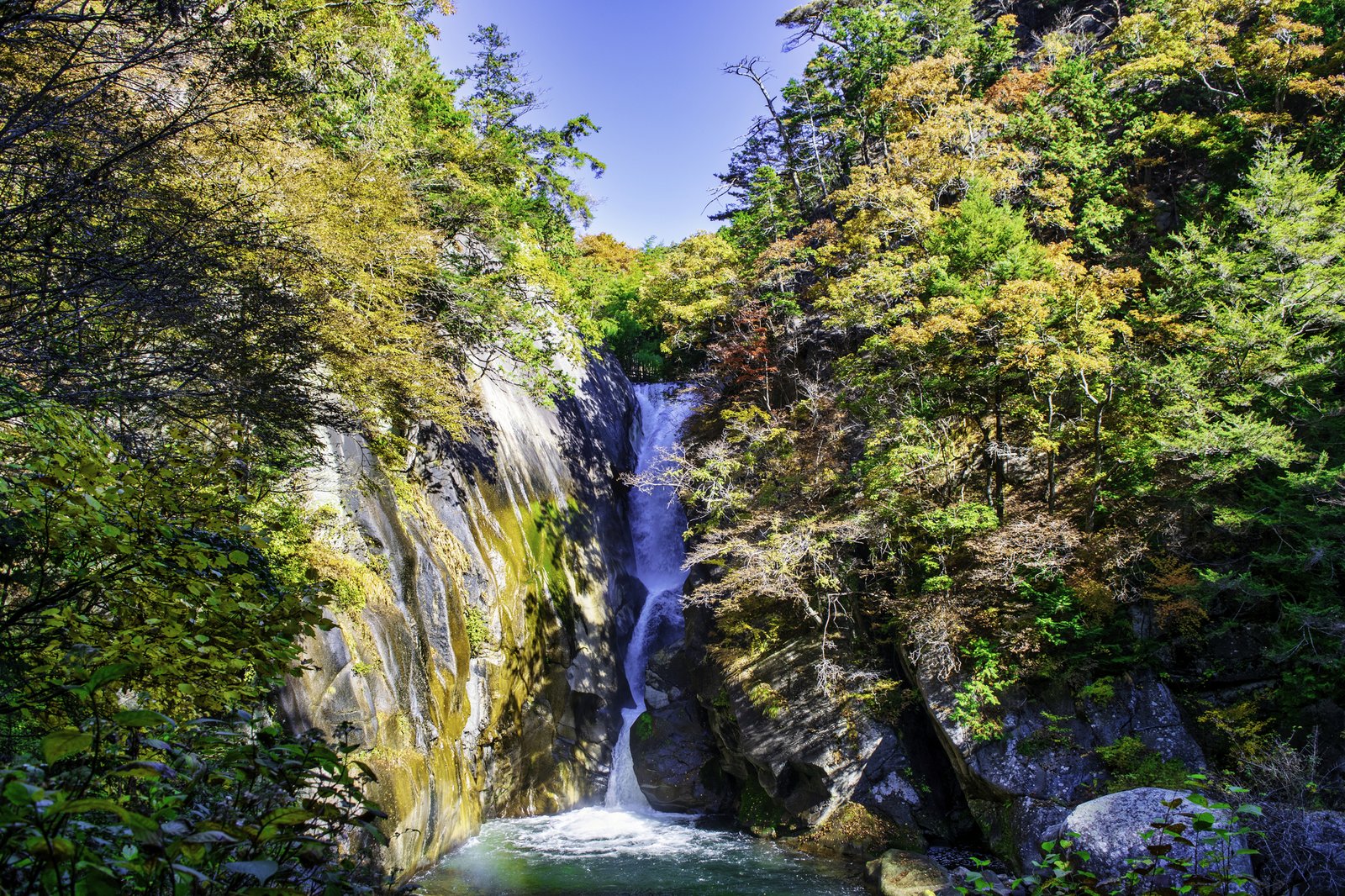
Shosenkyo is a granite gorge in the north of Kofu, inside Chichibu-Tama-Kai National Park (source). A walking path of about 5 km runs from Nagatoro Bridge to Senga Falls, and the official page gives about 1.5 hours on foot (source).
3. Mt. Fuji (Yamanashi side)
Mt. Fuji stands on the Yamanashi–Shizuoka border, and the Shizuoka side has its own entry; this page covers the Yamanashi side (source). The Yamanashi-side Yoshida Route is usually open from 1 July to 10 September (source). While the route is closed, the section from the fifth station to the summit, and the walk around the crater rim, are fully closed (source). Passage during the closure is prohibited under Article 46 of the Road Act, with a penalty of up to six months’ imprisonment or a fine of up to JPY 300,000 (source). The prefecture states that the land above 1,500 m is the core area of the World Cultural Heritage property “Fujisan”, for faith and art (source).
4. Mt. Daibosatsurei
The Koshu City tourism site presents Mt. Daibosatsurei as one of the Nihon Hyakumeizan, the Japanese list of one hundred mountains (source). The same site mentions alpine plants and views of Mt. Fuji and the Southern Alps from the ridge (source). Daibosatsu no Yu, a facility used here as a reference point at the foot of the mountain near the Daibosatsu Pass trailhead, is at 730-1 Kamiodawara, Enzan, Koshu, Yamanashi 404-0026 (source). Individual access and trail details: Check official.
5. Kiyosato and the Yatsugatake foothills
Kiyosato Kogen lies on the southern foot of the Yatsugatake range, on the Yamanashi–Nagano border (source). The official page records that Seisen-ryo was founded in 1938 by Paul Rusch (source). Kiyosato Station on the JR Koumi Line stands at 1,276 m (source). The prefecture’s Yatsugatake page covers the Kiyosato and Kobuchizawa areas (source).
6. Kitaguchi Hongu Fuji Sengen Shrine
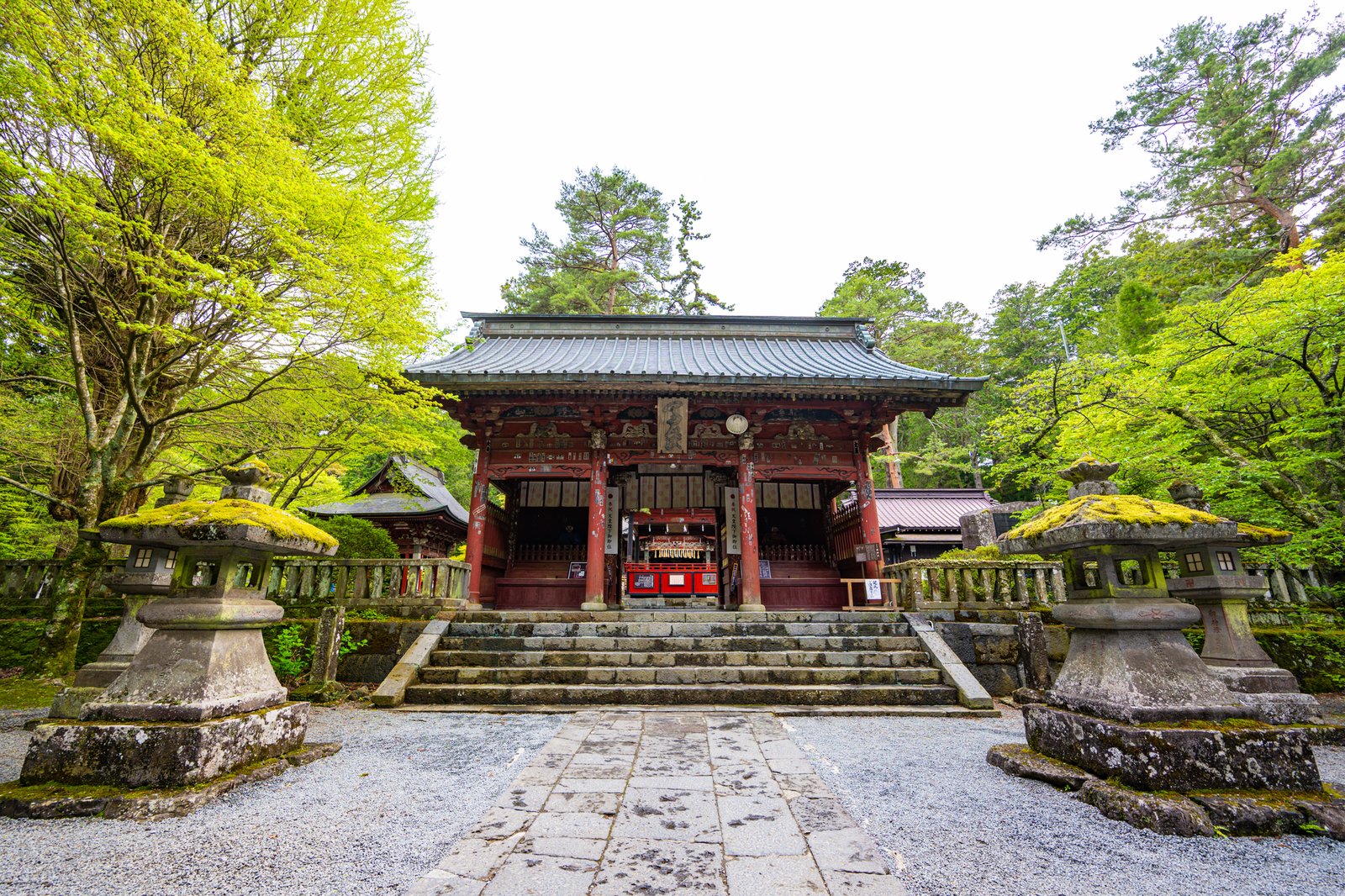
The shrine is a component part of the UNESCO World Heritage property “Fujisan”, registered in 2013 (source). The official page states that the shrine enshrines Konohanasakuya-hime-no-mikoto (source).
7. Takeda Shrine
Takeda Shrine enshrines Takeda Shingen, the Sengoku-period lord of Kai, and stands on the site of the residence of three generations of the Takeda clan: Nobutora, Shingen and Katsuyori (source). The official page presents a treasure hall and an avenue of cherry trees (source).
Getting there
Trains and highway buses run from Tokyo, Narita Airport and Haneda Airport to Kofu Station and to Kawaguchiko Station (source). Routes from each station to the individual places above: Check official. Where to do next: check timetables and fares with the operators, starting from the prefecture’s access page above.
Seasons and closures
The prefecture’s portal lists cherry blossom in spring, cooler air and climbing in summer, autumn colour, and hot springs and snowy views in winter (source). For 2026, the Yoshida Route on the Yamanashi side runs from 1 July to 10 September, and the descent route can be used until the morning of 11 September (source). Opening days for shrines, gorge paths and the facility at Mt. Daibosatsurei: Check official.
Where to stay
Three accommodation candidates are listed here from their official sites; room rates and booking are on each official page.
- Fuji View Hotel: the official site gives 511 Katsuyama, Fujikawaguchiko Town, Minamitsuru District, Yamanashi 401-0310 (source). It is about 10 minutes by taxi from Kawaguchiko Station and about 10 minutes from the Kawaguchiko interchange of the Chuo Expressway (source). The site names the Fuji-Kawaguchiko hot spring area and its bath, Shurei no Yu (source).
- Kofu Kinenbi Hotel: the official page gives 3-2-30 Yumura, Kofu, Yamanashi 400-0073, with coordinates 35.6778668824732, 138.55495127822022 (source). From stop 4 at the south exit of JR Kofu Station, a Yamanashi Kotsu bus takes about 10 minutes to the stop “Yumura Onsen Iriguchi” (source).
- Fuji-san Onsen Hotel Kaneyamaen: the official page places it in Fujiyoshida, with coordinates 35.466674, 138.81304; street address: Check official (source). From Shinjuku, a highway bus takes about 2 hours, then a shuttle bus about 10 minutes from Fujisan Station; the JR Chuo Line and Fujikyuko Line also reach Fujisan Station (source).
Related guides
- Fuji Five Lakes
- Shosenkyo
- Mt. Fuji winter closure
- Mt. Daibosatsurei
- Kiyosato and the Yatsugatake foothills
Overnight stays
The Japan Tourism Agency’s Accommodation Survey, 2025 final figures, records 2,750,510 person-nights of overnight stays by foreign guests for Yamanashi (source). That places Yamanashi tenth among the prefectures for overnight stays by foreign guests (source). On that same foreign-guest series, the figure is 33.8% above 2019 and 7.7% above the previous year (source). Person-nights count each guest for each night stayed, so they are not a count of individual visitors (source).
If something goes wrong
See English-speaking medical care in Japan and emergency numbers in Japan.
What we have not verified
- Mt. Daibosatsurei: individual access, trail details and pin position. The local association site could not be reached, so only the Koshu City tourism site is used: Check official.
- Opening hours, admission and closing days for the facilities and shrines above, and for Daibosatsu no Yu: Check official.
- Street address of Fuji-san Onsen Hotel Kaneyamaen: Check official.
- Room rates and booking terms for the three hotels: Check official.
- Rail and bus timetables and fares: Check official.
- The Shizuoka side of Mt. Fuji is not covered here: Check official.
- English spellings of some place names and facility names: Check official.
Official sources
Confirmed 22 November 2026 unless stated.
- Japan Tourism Agency, Accommodation Survey, 2025 final figures (confirmed 31 October 2026): https://www.mlit.go.jp/kankocho/content/002026763.pdf
- Yamanashi tourism portal, about Yamanashi: https://www.yamanashi-kankou.jp/english/about-yamanashi/index.html
- Yamanashi tourism portal, access: https://www.yamanashi-kankou.jp/english/access/index.html
- Fuji Five Lakes area: https://www.yamanashi-kankou.jp/english/explore-by-area/fujisan-fujigoko/index.html
- Lake Kawaguchi: https://www.yamanashi-kankou.jp/english/uncover/lake-kawaguchiko.html
- Shosenkyo: https://www.yamanashi-kankou.jp/english/discover/shosenkyo-gorge.html
- Mt. Fuji, off-season: https://www.fujisan-climb.jp/en/off-season/
- Mt. Fuji, climbing season: https://www.fujisan-climb.jp/en/season/
- Mt. Fuji, prefecture page: https://www.yamanashi-kankou.jp/english/explore-by-area/fujisan-fujigoko/mt-fuji.html
- Koshu City tourism site: https://www.koshu-kankou.jp/
- Daibosatsu no Yu: https://www.yamanashi-kankou.jp/english/recover/daibosatsu-no-yu.html
- Kiyosato: https://www.yamanashi-kankou.jp/english/discover/kiyosato.html
- Yatsugatake area: https://www.yamanashi-kankou.jp/english/explore-by-area/yatsugatake/index.html
- Kitaguchi Hongu Fuji Sengen Shrine: https://www.yamanashi-kankou.jp/english/uncover/kitaguchi-hongu-fuji-sengen-shrine.html
- Takeda Shrine: https://www.yamanashi-kankou.jp/english/explore-by-area/kofu-shosenkyo-gorge/takeda-shrine.html
- Fuji View Hotel: https://www.fujiview.jp/
- Kofu Kinenbi Hotel: https://kinenbi-hotel.kaiei-ryokans.com/access/
- Fuji-san Onsen Hotel Kaneyamaen: https://www.kaneyamaen.com/information/access.php