Place name in Japanese: 祐徳稲荷神社, Yūtoku Inari Jinja.
Yutoku Inari Shrine, Kashima: the bus from Hizen-Kashima, the founder’s story and the old approach along the Hama River
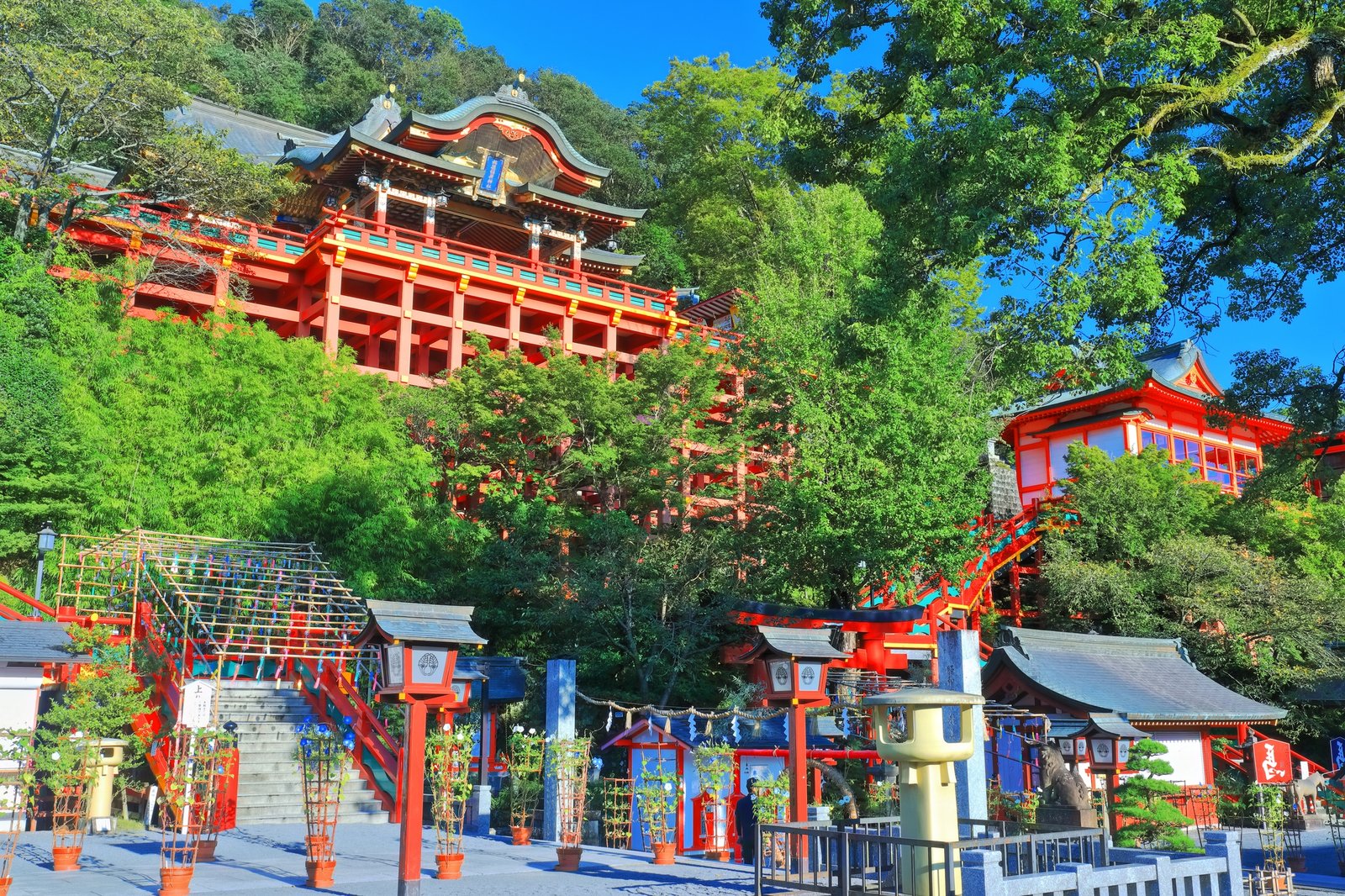
Yutoku Inari Shrine is an Inari shrine in Kashima, in Saga. The shrine says it was founded in 1687, when the wife of Nabeshima Naotomo, lord of the Hizen Kashima domain, enshrined a share of the spirit of the Inari deity that had been worshipped at a place of prayer for the imperial court (Yutoku Inari Shrine, about the shrine (in Japanese)). Kashima City describes the shrine as built along the slope of a mountain in a valley, with the planted outer garden of Higashiyama on the slope facing it (Kashima City, historic landscape plan (in Japanese, PDF)).
Who this is for: travellers in Fukuoka, Saga or Nagasaki who want a day at a shrine by train and local bus, with time for the museum and the old approach on foot.
The short version: take the train to Hizen-Kashima Station and the Yutoku Bus from Kashima Station (Platform 2) to the shrine; the shrine puts the ride at about 10 minutes by bus or taxi. The Yutoku Museum stands across the Hama River from the shrine grounds. Bus times, fares, museum hours and parking charges are on the operators’ pages linked below.
What to plan for
| If… | Then lean towards… | Check |
|---|---|---|
| You come by train | The Yutoku Bus from Kashima Station (Platform 2), or a taxi | Yutoku Bus, English timetable (PDF) |
| You want to see the shrine’s treasures | The Yutoku Museum, across the Hama River | Yutoku Inari Shrine, museum (in Japanese) |
| You come by car | The shrine’s Outer Garden Car Park No. 1, which charges after an initial free period | Yutoku Inari Shrine, access (in Japanese) |
| You collect shrine stamps (goshuin) | Leave your stamp book at the reception before you pray | Yutoku Inari Shrine, goshuin (in Japanese) |
| You can come in December | The Ohitaki fire festival on the night of 8 December | Yutoku Inari Shrine, events from October to December (in Japanese) |
Getting there: train, bus and the walk from Hizen-Hama
- By train: the shrine’s access page gives the JR Nagasaki Main Line to Hizen-Kashima Station from Hakata and from Saga, and a route from Nagasaki by Shinkansen, limited express and local trains via Takeo Onsen and Kohoku (Yutoku Inari Shrine, access (in Japanese)).
- By bus: Yutoku Bus’s English timetable lists buses from Kashima Station (Platform 2) to Yutoku-jinja (Yutoku Inari Shrine), some via Hamamitsukado and some via Kuboyama, in separate columns for weekdays and for Saturdays, Sundays and holidays (Yutoku Bus, English timetable (PDF)). Times and fare: Check official. For the return, the same sheet lists buses from Yutoku-jinja-mae (Yutoku Shrine) and says all of them go to Kashima Station.
- How long: the shrine gives about 10 minutes by taxi or bus between Hizen-Kashima Station and the shrine (Yutoku Inari Shrine, access (in Japanese)).
- On foot from Hizen-Hama Station: Kashima City says that people still get off at Hizen-Hama Station and walk to the shrine, looking around the area on the way, and that some now ride rental bicycles from the station (Kashima City, historic landscape plan (in Japanese, PDF)).
What to do: before you set out, open Yutoku Bus’s timetable for the day of the week you travel, as weekday and weekend buses are listed apart. Where to verify: Yutoku Bus timetables (in Japanese).
At the shrine: the museum, parking, the stamp book and December
| Item | Hours | Fees | Where to check |
|---|---|---|---|
| Yutoku Museum | Check official | Check official; the shrine lists group rates | Yutoku Inari Shrine, museum (in Japanese) |
| Outer Garden Car Park No. 1 | — | Check official | Yutoku Inari Shrine, access (in Japanese) |
| Ohitaki (autumn grand festival) | From sunset into the night of 8 December: Check official | — | Yutoku Inari Shrine, events from October to December (in Japanese) |
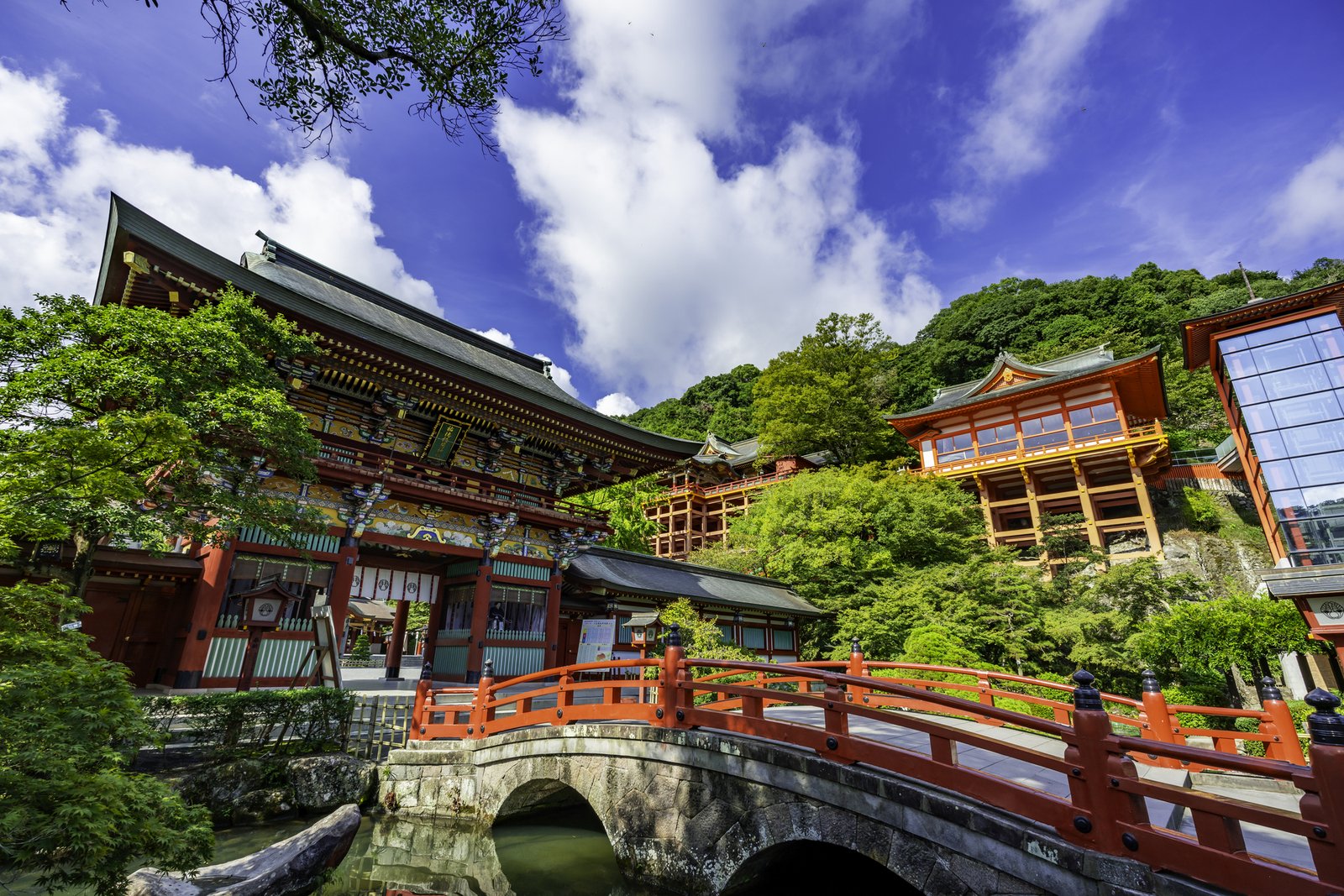
- The museum: the shrine says the Yutoku Museum shows the shrine’s treasures and materials on history, fine art and crafts centred on the local area, and lists among its permanent displays objects left by the founder and the armour and helmets of the lords of the former Kashima domain (Yutoku Inari Shrine, museum (in Japanese)). Its special exhibitions change through the year: Check official.
- Parking for a prayer ceremony: the shrine asks visitors who have a prayer ceremony to collect a parking service ticket at the shrine office (Yutoku Inari Shrine, access (in Japanese)).
- The stamp book: the shrine asks you to hand in your stamp book at the reception on the left of the shrine office before you pray, to pray from the kagura hall on the right of the office, and then to collect the book with your number tag and pay (Yutoku Inari Shrine, goshuin (in Japanese)). It says the reception can be crowded at New Year and at major festivals.
- Ohitaki: the shrine says that on 8 December, after the chief priest’s prayer, the flame before the altar is passed to torches and set to the oyama, a pile of wood enclosed in green bamboo, and that amazake made from the new rice offered at the altar is handed out (Yutoku Inari Shrine, events from October to December (in Japanese)).
What to do: if you plan the museum, check its page for the current exhibition before you go. Where to verify: the museum page (in Japanese).
The founder, as the shrine tells it
The shrine’s page for Sekiheki Shrine, which stands on the grounds and enshrines the founder, tells her story (Yutoku Inari Shrine, Sekiheki Shrine and the water mirror (in Japanese)). It says she was a daughter of Kazan’in Sadayoshi, Minister of the Left, and married Nabeshima Naotomo in 1662; on her marriage her father gave her the spirit of the Inari deity, moved into a sacred mirror, from the place of prayer for the imperial court. After her two children died young, she founded Yutoku-in here in 1687, at the age of 62, and served the gods and the Buddha herself. In 1705, at the age of 80, she had a tomb cut into the rock on the slope of Mt Sekiheki and, the page says, sat there fasting and praying for the peace of the country until the end of her life.
The same page retells a tale from local elders: she is said to have known in advance that a villager would bring her vegetables, because she had seen him that morning in the water mirror she looked into each day. The shrine says the water mirror is still beside Sekiheki Shrine.
The main hall you see now dates from after a fire. The shrine says a fire in May 1949 destroyed the main hall and the shrine office, and that rebuilding took close to 20 years (Yutoku Inari Shrine, events from October to December (in Japanese)). Kashima City gives 1957 for the rebuilt main hall, and says the present Myobu-sha hall, built in 1804 according to its ridge tag, served as the main hall until 1933 before it was moved to where it stands (Kashima City, historic landscape plan (in Japanese, PDF)).
What to do: at Sekiheki Shrine, look for the water mirror beside it, and at Myobu-sha, look at the hall the city dates to 1804. Where to verify: the Sekiheki Shrine page (in Japanese).
Why the old approach follows the Hama River
Kashima City says the Hama River runs beside the shrine, the shop street at its gate and Hizen-Hamashuku, and that people along it have long drawn its water into their streets; water channels run along the shop street today (Kashima City, historic landscape plan (in Japanese, PDF)). The same plan says pilgrims used a route over the mountains from the Nagasaki side and a route from Hamashuku, a base for sea transport, along the Hama River to the shrine.
The plan then sets out how arrival changed. In 1904 a horse-drawn railway known as the Yutoku Kido opened from Takeo through Kashima and Shiota to the shrine’s gate, with a Yutoku-Hama station at Hama, and a guide of 1909 describes a sea route that landed at Hamashuku in Hachihongi village and connected with that railway. In 1930 the line now called the JR Nagasaki Main Line opened with Hizen-Hama Station; around 1934, as shared buses spread, the Yutoku Kido closed, and the road laid on its track became today’s approach. Read in order, that is a sea and mountain approach, then a horse-drawn railway from 1904, then a railway station from 1930.
The Agency for Cultural Affairs database records two districts of Hama as Important Preservation Districts for Groups of Traditional Buildings (our translation), both selected on 5 July 2006: Hamanakamachi-Hachihongi-shuku, which it lists as a brewing town on the left bank of the Hama River with the Tara Kaido, one of the Nagasaki Kaido roads, running through its centre (Agency for Cultural Affairs database (in Japanese)), and Hamashozumachi-Hamakanayamachi, which it lists as a port town and country town that grew up around a river port (Agency for Cultural Affairs database (in Japanese)).
What to do: if you have time, walk between Hizen-Hama Station and the shrine and look for the channels drawn from the Hama River along the way. Where to verify: the Kashima City plan (in Japanese, PDF).
What we have not verified
- Train times and fares on the JR line to Hizen-Kashima and Hizen-Hama stations; we did not fetch the rail operator’s pages.
- Opening hours for the shrine grounds and the hours for prayer ceremonies, which the pages we fetched do not print.
- Annual visitor numbers and ranking labels printed by the shrine and the city; the figures differ between pages, and we have not used them.
- A prefectural designation for Myobu-sha that the city prints; we did not fetch a designation record for it.
- The English forms of the founder’s name, Hizen-Kashima Station and the Yutoku Museum (NAMES pending).
- The walking time from Hizen-Hama Station to the shrine.
Official sources
| Topic | Source | Checked |
|---|---|---|
| Founding, the lord’s wife, the imperial place of prayer | Yutoku Inari Shrine, about the shrine | 2026-11-14 |
| The founder’s story, the water mirror | Yutoku Inari Shrine, Sekiheki Shrine and the water mirror | 2026-11-14 |
| Train routes, taxi and bus time, car park | Yutoku Inari Shrine, access | 2026-11-14 |
| Museum hours, fees, displays | Yutoku Inari Shrine, museum | 2026-11-14 |
| Stamp book | Yutoku Inari Shrine, goshuin | 2026-11-14 |
| Ohitaki, the 1949 fire | Yutoku Inari Shrine, events from October to December | 2026-11-14 |
| Bus routes, times and fares | Yutoku Bus, English timetable (PDF) | 2026-11-14 |
| Bus timetables by route | Yutoku Bus timetables | 2026-11-14 |
| Setting, walkers from Hizen-Hama, rebuilding, Myobu-sha, the Hama River and the old routes | Kashima City, historic landscape plan (PDF) | 2026-11-14 |
| Hamanakamachi-Hachihongi-shuku | Agency for Cultural Affairs database | 2026-11-14 |
| Hamashozumachi-Hamakanayamachi | Agency for Cultural Affairs database | 2026-11-14 |