Place name in Japanese: 屋久島, Yakushima.
Yakushima, Kagoshima: the boats and flights the town lists, the mountain conservation donation, and how the forest came to be protected
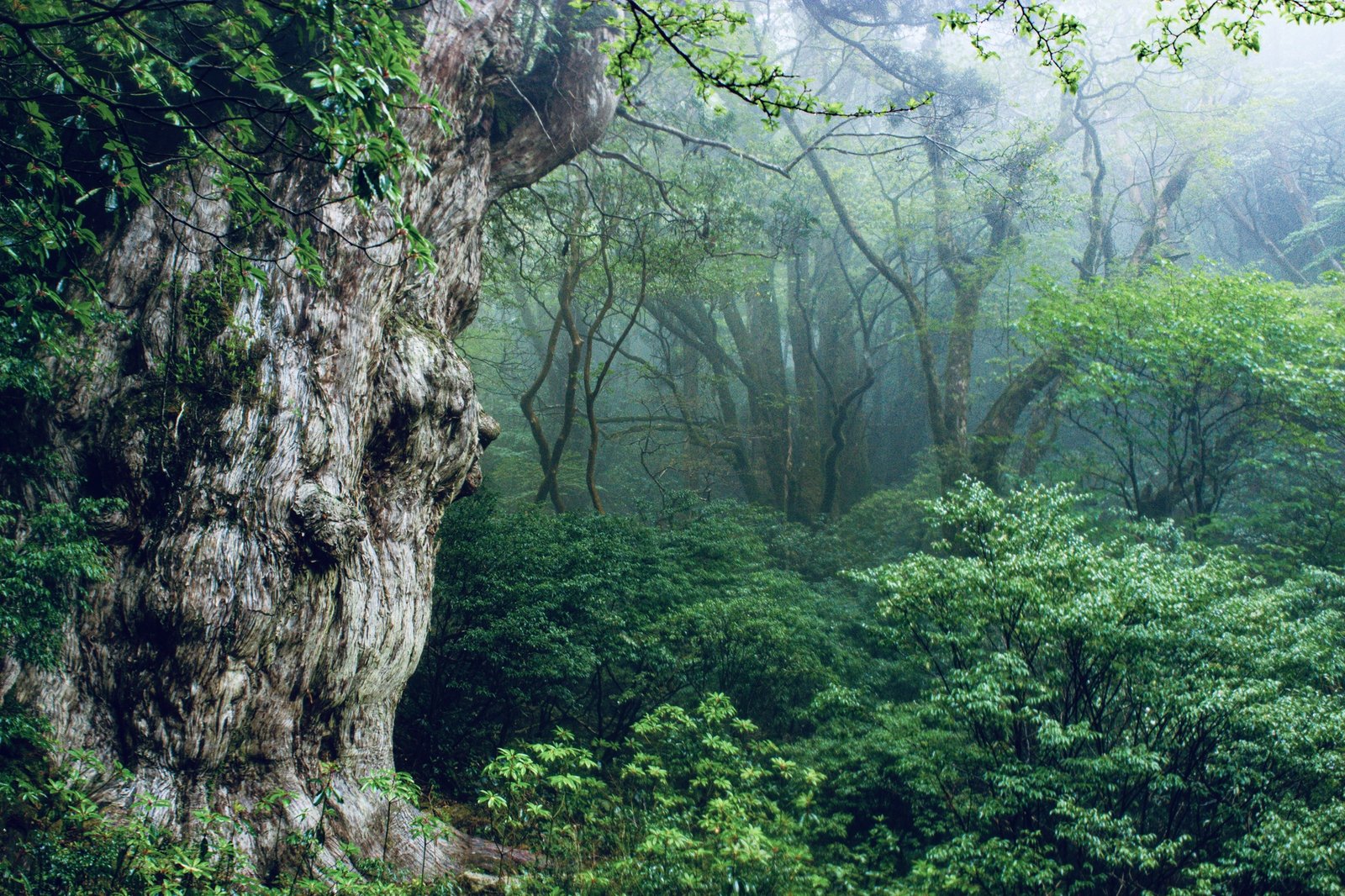
Yakushima is an island in Yakushima Town, Kagoshima Prefecture. UNESCO lists the World Heritage property “Yakushima”, inscribed in 1993 and covering 10,747 ha (UNESCO World Heritage Centre). The Ministry of the Environment says Yakushima National Park was designated on 16 March 2012, after the island had been part of Kirishima-Yaku National Park from 16 March 1964 (Ministry of the Environment, Yakushima National Park (in Japanese)). The Agency for Cultural Affairs lists the island’s primeval forest of sugi (Japanese cedar) as a Special Natural Monument, designated on 9 December 1924 and given its special designation on 20 March 1954 (Agency for Cultural Affairs, database of nationally designated cultural properties (in Japanese)).
Who this is for: travellers planning how to reach Yakushima from Kagoshima or elsewhere in Japan, and who want to know about the mountain donation and the history of the forest’s protection.
The short version: the town lists flights from Kagoshima, Fukuoka and Osaka (Itami), and a jetfoil and ferries from Kagoshima; times, fares and timetables change, so check each operator. The town says bad weather can delay or cancel ferries and flights. People entering the mountains are asked for a mountain conservation donation; the amounts are on the official pages linked below.
What to plan for
| If… | Then lean towards… | Check |
|---|---|---|
| You are coming from Kagoshima | A flight, the Toppy & Rocket jetfoil or a ferry, all of which the town lists | Yakushima Town, Access to Yakushima |
| You are coming from Fukuoka or Osaka (Itami) | The direct Japan Air Commuter flights the town lists | Yakushima Town, Access to Yakushima |
| You are taking Ferry Yakushima 2 | The operator’s timetable and fares page | Ferry Yakushima 2, timetable and fares (in Japanese) |
| You are going into the mountains | The mountain conservation donation and where to pay it | Yakushima Town, Request for donations |
| The weather is turning | The town’s notice on checking whether flights and boats are running | Yakushima Town, checking flight and sea services (in Japanese) |
Getting there: the flights and boats the town lists
Yakushima Town’s English access page says direct flights to Yakushima are available from Osaka (Itami), Fukuoka and Kagoshima airports, and ferries only from Kagoshima, apart from chartered ones. It lists Japan Air Commuter flights on the three routes, the Toppy & Rocket jetfoil between Kagoshima and Yakushima, some services calling at Tanegashima or Ibusuki, and three ferries: Ferry Yakushima 2 between Kagoshima and Yakushima, Ferry Hibiscus via Tanegashima, and Ferry Taiyo, which links Yakushima with Kuchinoerabujima and Tanegashima. The page says fares and timetables may change and asks travellers to contact each company (Yakushima Town, Access to Yakushima). The town’s Japanese access page gives the same operators with its own figures (Yakushima Town, access (in Japanese)).
The operator of Ferry Yakushima 2 prints its timetable and fares on its own page; it names Kagoshima’s main port, the South Wharf, and Miyanoura Port on Yakushima as its terminals (Ferry Yakushima 2, timetable and fares (in Japanese)).
The town notes that Yakushima’s weather changes easily and that ferries and flights can be delayed or cancelled in bad weather, and it asks travellers to check the operating status of each service before using it, especially in the typhoon season and in bad winter weather (Yakushima Town, checking flight and sea services (in Japanese)).
What to do: on the day you travel, check the operating status of your flight or boat on the operator’s page. Where to verify: the town’s notice on operating status (in Japanese).
The mountain conservation donation
The Ministry of the Environment’s Yakushima World Heritage Centre explains that the World Natural Heritage Yakushima Mountain Environmental Conservation Donation began in March 2017. It is asked of people entering the mountains, with one amount for a day trip and another for those staying overnight in the mountains; children of primary school age and under are not asked to pay. The ministry says the money is used for purposes such as looking after the mountain toilets and inspecting and repairing the trails, and that people entering from the Arakawa trailhead pay it when they buy their shuttle bus ticket (Ministry of the Environment, mountain conservation donation (in Japanese)).
The town’s English page names the body running it as the Yakushima Mountain Environmental Management Council (YMEMC). It lists the council’s work as carrying waste out of the mountain toilets, promoting portable toilets, maintaining climbing routes and running the traffic regulations on the Arakawa route, and it lists the tourist information centres where the donation can be paid (Yakushima Town, Request for donations).
What to do: pay the donation before you start your climb and collect the supporter’s card you are given. Where to verify: the ministry’s page on the donation (in Japanese).
From protected forest to World Heritage, 1922 to 2012
The Ministry of the Environment’s Yakushima World Heritage Centre sets out how the island’s protection was built up. In 1922 a forest reserve for scientific reference was set aside. On 9 December 1924 that reserve was designated a Natural Monument as the Yakushima primeval sugi forest, and on 20 March 1954 it became a Special Natural Monument. On 16 March 1964 Yakushima was designated a national park as part of Kirishima-Yaku National Park, and in 1967 the Minami-Nippon Shimbun newspaper reported the discovery of the Jomon Sugi (Ministry of the Environment, how Yakushima came to be inscribed (in Japanese)).
The ministry’s timeline continues with part of the national park designated a wilderness area in 1975, the reserve, enlarged with surrounding areas, designated the Yakushima Forest Ecosystem Reserve in 1992, and the island’s nomination to the World Heritage Committee on 1 October 1992. The committee, meeting in Cartagena, Colombia, inscribed Yakushima and Shirakami-Sanchi as natural heritage in December 1993, with 11 December as the formal date of inscription. On 16 March 2012 Kirishima-Yaku National Park was reorganised and Yakushima National Park newly designated (Ministry of the Environment, how Yakushima came to be inscribed (in Japanese)). UNESCO’s page names the same protections: the Yakushima Wilderness Area, Yakushima National Park, the Special Natural Monument and the Yakushima Forest Ecosystem Reserve (UNESCO World Heritage Centre).
What to do: read the forest you walk through as land covered by several overlapping protections. Where to verify: the ministry’s timeline (in Japanese).
Yakusugi, kosugi and jisugi: three names for cedar
Yakushima Town explains that the island uses three names for its cedar. Natural cedars 1,000 years old or more are called yakusugi; natural cedars under 1,000 years are called kosugi; and cedars planted by people are called jisugi. The town says that on the mountains where yakusugi and other trees were once felled, cedar was planted, mostly after the war, and that this jisugi has now reached the age at which it can be cut for timber. Its own town office was built almost entirely of jisugi, from the structural timber to the interior and exterior finishes (Yakushima Town, from yakusugi to jisugi (in Japanese)).
The Agency for Cultural Affairs’ record of the Special Natural Monument quotes an early description of the forest as a primeval forest of the cedar known as yakusugi, standing in a pure stand (Agency for Cultural Affairs, database of nationally designated cultural properties (in Japanese)).
What to do: when you see cedar timber on the island, keep the three names in mind: only natural cedars 1,000 years old or more are yakusugi. Where to verify: the town’s page on the three names (in Japanese).
What we have not verified
Check official before you go: flight times, numbers of services and fares (Yakushima Town, Access to Yakushima). Check official before you go: the Ferry Yakushima 2 timetable and fares (Ferry Yakushima 2, timetable and fares (in Japanese)). Check official before you go: the amounts of the mountain conservation donation and who is asked to pay it (Ministry of the Environment, mountain conservation donation (in Japanese)). Check official before you go: the Arakawa route traffic regulations and the Arakawa shuttle bus (Yakushima Town, Request for donations).
- The jetfoil operator’s own page and the mountain council’s own page: these could not be read, so the jetfoil timetable and the council’s details are not confirmed here.
- Journey times: the town’s English and Japanese access pages give different journey times for some routes; neither figure is given above.
- Buses on the island, trailheads and trail conditions: these are not confirmed here.
- English names: the town prints “Japan Air Commuter”, “Toppy & Rocket”, “Ferry Yakushima 2”, “Ferry Hibiscus”, “Ferry Taiyo” and “Yakushima Mountain Environmental Management Council (YMEMC)”; the name of the Special Natural Monument and the names in the timeline are this site’s renderings.
Official sources
| Topic | Source | Checked |
|---|---|---|
| World Heritage property, inscription, area, protections | UNESCO World Heritage Centre | 2026-11-11 |
| Yakushima National Park, 1964 and 2012 | Ministry of the Environment, Yakushima National Park | 2026-11-11 |
| Special Natural Monument, dates, description | Agency for Cultural Affairs, database of nationally designated cultural properties | 2026-11-11 |
| Timeline from 1922 to 2012 | Ministry of the Environment, how Yakushima came to be inscribed | 2026-11-11 |
| Mountain conservation donation | Ministry of the Environment, mountain conservation donation | 2026-11-11 |
| Donation in English, YMEMC, where to pay | Yakushima Town, Request for donations | 2026-11-11 |
| Flights and boats (English) | Yakushima Town, Access to Yakushima | 2026-11-11 |
| Flights and boats (Japanese) | Yakushima Town, access | 2026-11-11 |
| Ferry Yakushima 2 timetable, fares, terminals | Ferry Yakushima 2, timetable and fares | 2026-11-11 |
| Weather, delays and cancellations | Yakushima Town, checking flight and sea services | 2026-11-11 |
| Yakusugi, kosugi, jisugi | Yakushima Town, from yakusugi to jisugi | 2026-11-11 |