Place name in Japanese: 脇町, Wakimachi.
The Udatsu Townscape of Wakimachi, Mima, Tokushima: the street of raised udatsu, and the indigo merchant’s house
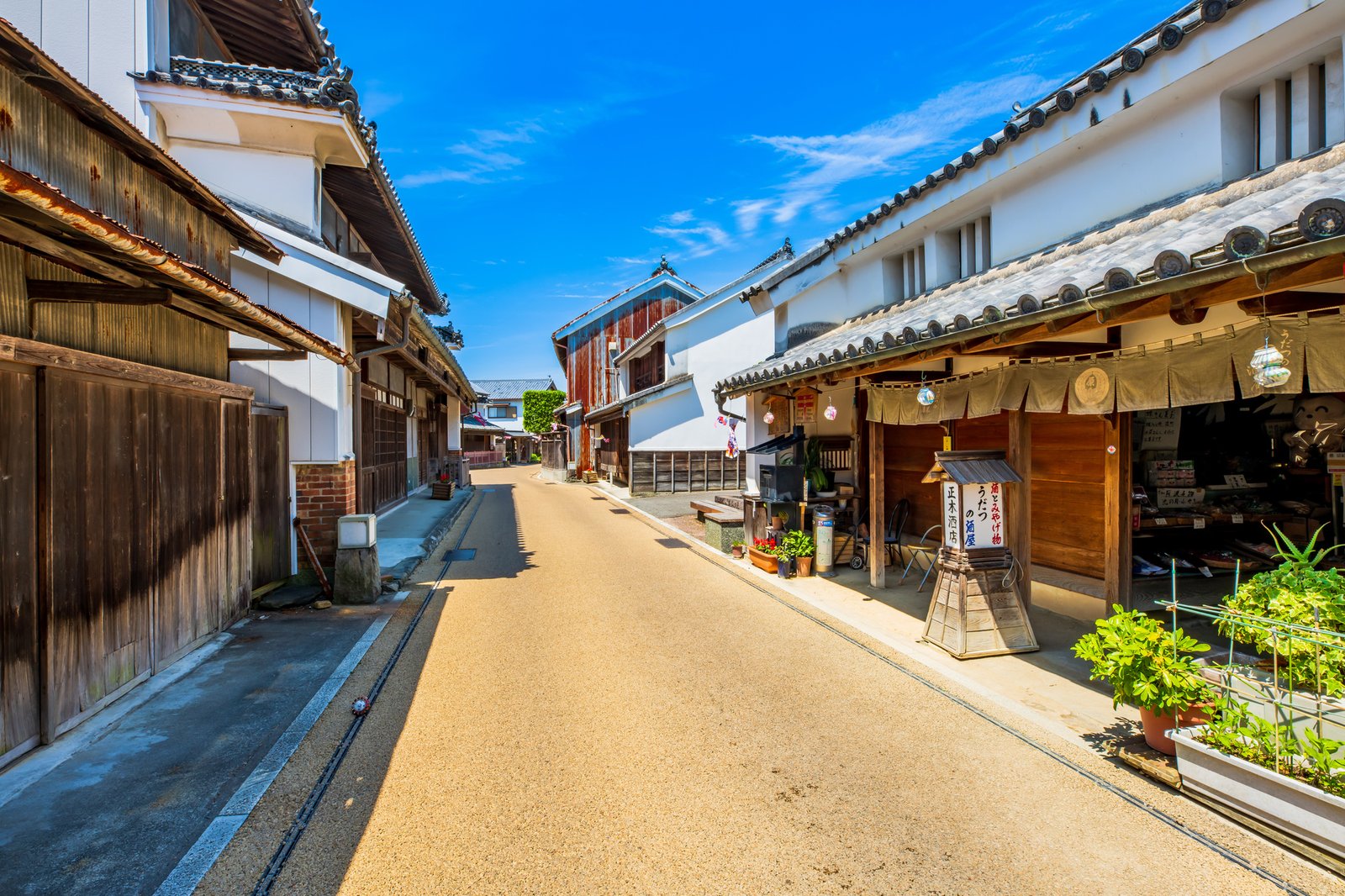
The Agency for Cultural Affairs database records Wakimachi Minamimachi, Mima City, Mima-shi Wakimachi Minamimachi, as an important preservation district for groups of traditional buildings, of the merchant-town type, and prints the selection on 16 December 1988, also printed as Showa 63.12.16, with an area of 5.3 hectares, in Mima, Tokushima (Agency for Cultural Affairs database (in Japanese)).
Who this is for: travellers heading for Mima, Tokushima, who want the printed hours and admission for the indigo merchant’s house, and what official pages say about the street of raised udatsu.
The short version: Mima City prints a taxi ride of about ten minutes from JR Anabuki Station, or about ten minutes by car from the Wakimachi interchange. The district is 5.3 hectares, selected on 16 December 1988. Admission to the Yoshida Family Residence is 510 yen for adults and 250 yen for children; it is printed as open from 9:00 to 17:00, with last entry at 16:30, and closed from 27 December to 1 January. The city’s ordinance also prints closing on Wednesdays. Check official for the hours on the day you go.
Walk the street, or go into the merchant’s house
| If… | Then lean towards… | Check |
|---|---|---|
| You want the street of raised udatsu | Walk the main street, which the city prints as about 430 metres from east to west | Mima City, the preservation district (in Japanese) |
| You want the indigo merchant’s house | The Yoshida Family Residence, a city-designated cultural property, with a printed ticket | Mima City, the Yoshida Family Residence (in Japanese) |
| You come by train | A taxi of about ten minutes from JR Anabuki Station | Mima City, the Udatsu Townscape (in Japanese) |
| You come by car | About ten minutes from the Wakimachi interchange; park at the roadside station, then walk about one minute | Mima City, the Yoshida Family Residence (in Japanese) |
What to do: walk the street first, then buy a ticket for the merchant’s house if you want the printed interior. Where to verify: the city page for the residence (in Japanese) and the city page for the district (in Japanese).
Hours and admission
| Item | Time or fee | Where to check |
|---|---|---|
| Yoshida Family Residence, adult / child | 510 yen / 250 yen | Mima City, the Yoshida Family Residence (in Japanese) |
| Same fees in the city’s ordinance; group amounts 410 yen / 200 yen | 510 yen / 250 yen for individuals | Mima City, ordinance on the residence (in Japanese) |
| Groups of 15 or more | A group discount, as the city page prints it, without an amount | Mima City, the Yoshida Family Residence (in Japanese) |
| Hours | 9:00 to 17:00; last entry 16:30 | Mima City, the Yoshida Family Residence (in Japanese) |
| Closed days, city page | 27 December to 1 January | Mima City, the Yoshida Family Residence (in Japanese) |
| Closed days, city ordinance | Wednesdays (or the next day that is not a national holiday, if Wednesday is a holiday), and 27 December to 1 January | Mima City, ordinance on the residence (in Japanese) |
| Hours on the day you go | Check official | Mima City, the Yoshida Family Residence (in Japanese) · Mima City, ordinance on the residence (in Japanese) |
What to do: use the printed ticket for the residence if you want the interior, and check official for the closed days. Where to verify: the city page for the residence (in Japanese) and the ordinance (in Japanese).
Getting there and how long it takes
Mima City says that from JR Anabuki Station a taxi takes about ten minutes; from the Wakimachi interchange, about ten minutes; from Tokushima, about 40 minutes on the Tokushima Expressway, or about an hour on ordinary roads; and from Takamatsu, about 1 hour 20 minutes on ordinary roads (Mima City, the Udatsu Townscape (in Japanese)). A city administration page says that the municipal buses ended on 31 March of Reiwa 4 (2022) (Mima City, the Anabuki–Koyadaira line (in Japanese)).
The city places the Yoshida Family Residence at 53 Oaza Wakimachi, Wakimachi, inside the townscape, and prints a walk of about one minute from the roadside station Ai Land Udatsu, which can take large buses; a tourist-bus car park to the east of the station has no spaces for ordinary cars (Mima City, the Yoshida Family Residence (in Japanese)).
What to do: take a taxi from Anabuki, or drive to the roadside station and walk. Where to verify: the city page for the townscape (in Japanese) and the city page for the residence (in Japanese).
What to see
The city’s cultural-property page prints the main street as about 430 metres from east to west, and counts 85 traditional buildings in the 5.3-hectare district, at Tsukinuke-cho and Chonan in Wakimachi (Mima City, the preservation district (in Japanese)). It says that, of the traditional townhouses on the street, 50 face the street, and 22 of those have a frontage of four and a half ken (9 metres) or more, with plots that can run more than 80 metres deep (Mima City, the preservation district (in Japanese)). The roofs are printed as pantiled, the second-floor windows as mushiko-mado, made with fire in mind, and plastered udatsu as standing at both ends of the second-floor roof (Mima City, the preservation district (in Japanese)). The same page, and the Agency, print a building plaque of the 4th year of Hoei (1707) as the oldest dated house in the group (Mima City, the preservation district (in Japanese); Agency for Cultural Affairs database (in Japanese)).
The Yoshida Family Residence is printed as the house of the indigo merchant Yoshida Nahei, who began in the 4th year of Kansei (1792), under the shop name Sanao; on a plot of about 600 tsubo, five buildings from the middle and later Edo period, including the main house, a pawn storehouse and an indigo storehouse, stand around a courtyard (Mima City, the Yoshida Family Residence (in Japanese)). The city publishes an English guide under the title Yoshida Family Residence guide (Mima City, the Yoshida Family Residence (in Japanese)).
What to do: walk the main street for the printed udatsu, then go into the residence if you want the ticket. Where to verify: the city page for the district (in Japanese) and the city page for the residence (in Japanese).
A merchant street that raised udatsu
The Agency’s commentary says the district preserves houses of each period from the early eighteenth century on, as a prosperous country town of the early modern period, and that the townhouses have a heavy air, with pantiled roofs, plastered walls and decorative udatsu; most are two-storey or tsushi-nikai houses, gabled, with the ridge parallel to the street, and they raise udatsu (Agency for Cultural Affairs database (in Japanese)). Mima City says the town began as the castle town of Waki Castle, at the crossing of the Muya highway and the road to Sanuki, on the north bank of the Yoshino River, and grew as a place where indigo was gathered and sent on; the traditional buildings, 85 of them, run from the mid-Edo period to the early Showa period, with many of around the Meiji period, and the udatsu of pantiles and plaster at both ends of the townhouses give the street its familiar name, the Udatsu Townscape (Mima City, the Udatsu Townscape (in Japanese)). The city says that udatsu were first made against fire, and that because they cost a great deal they came to be ornamental, and then a sign of wealth and success (Mima City, the Udatsu Townscape (in Japanese)).
What to do: read the place first as the Agency records it, a merchant-town preservation district in Mima, Tokushima, then walk the street. Where to verify: the Agency record (in Japanese) and the city page for the townscape (in Japanese).
Official sources
| Topic | Source | Checked |
|---|---|---|
| Important preservation district, 1988.12.16, 5.3 hectares, commentary | Agency for Cultural Affairs database | 2026-11-14 |
| Same name, reading, 19881216 date, 5.3 hectares, same commentary | Cultural Heritage Online | 2026-11-14 |
| Townscape, indigo, 85 buildings, udatsu, access | Mima City, the Udatsu Townscape | 2026-11-14 |
| Street length, 85 buildings, windows, Hoei plaque, location | Mima City, the preservation district | 2026-11-14 |
| Yoshida Family Residence, hours, last entry, admission, year-end closing, parking | Mima City, the Yoshida Family Residence | 2026-11-14 |
| Same individual fees, group amounts, Wednesday closing, hours 9:00 to 17:00 | Mima City, ordinance on the residence | 2026-11-14 |
| End of the municipal buses, 31 March of Reiwa 4 (2022) | Mima City, the Anabuki–Koyadaira line | 2026-11-14 |
What we have not verified
- A bus from JR Anabuki Station to the townscape, other than the municipal buses the city says have ended, and any single-ride fare. We have not fetched a page of a present operator that prints a route or a fare.
- Whether a fee is charged to walk the street itself. The pages we fetched print admission only for the Yoshida Family Residence.
- Official English names for the district and the street, beyond the city’s print of Mima city and of Yoshida Family Residence guide.