Place name in Japanese: 臼杵石仏, Usuki Sekibutsu.
Usuki Stone Buddhas, Oita: hours and admission, the bus from the station, and the figures carved in the rock
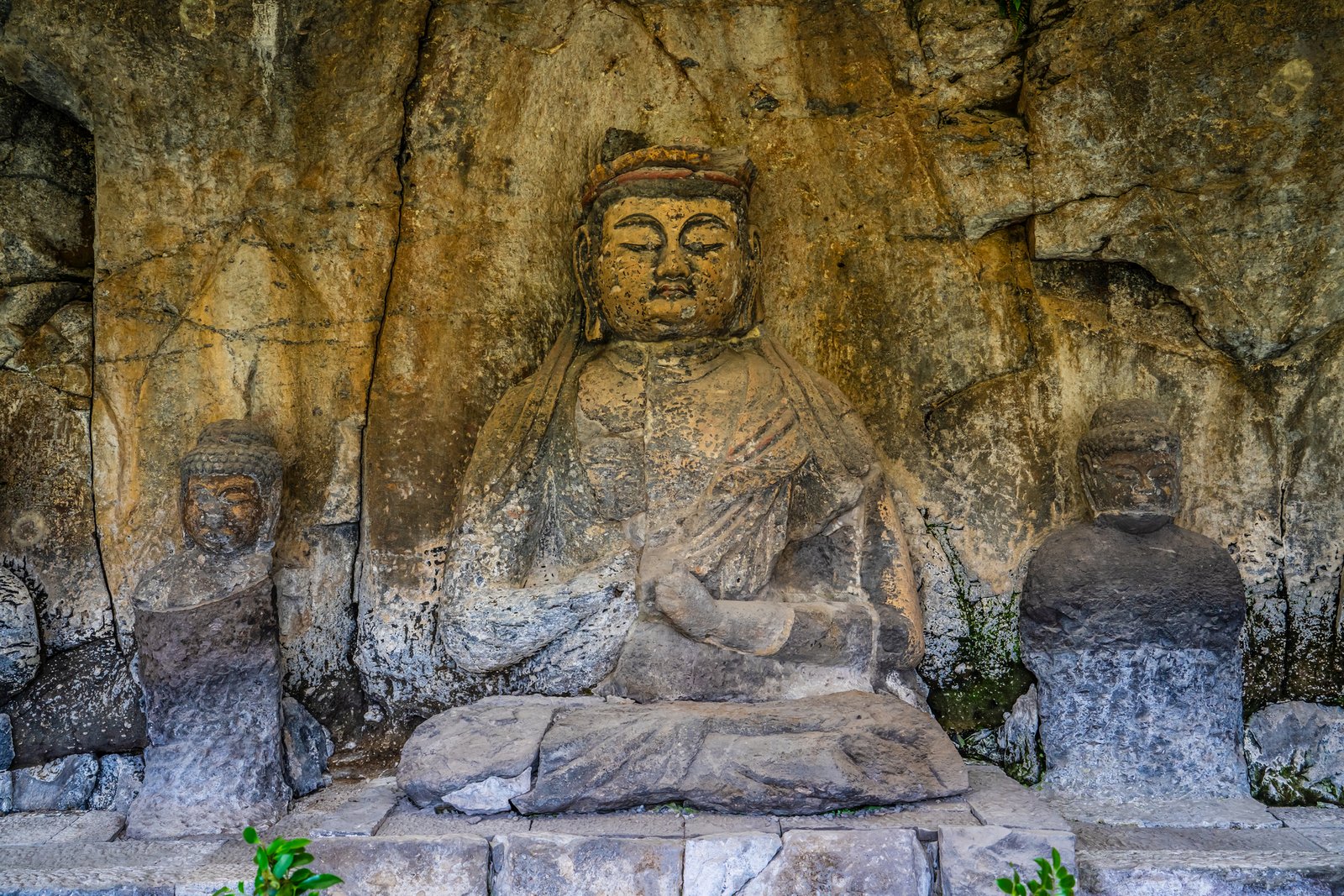
The official site presents the place as Usuki Stone Buddhas, a national treasure, also calling it Usuki Sekibutsu (Usuki Stone Buddhas, English). The national designated cultural properties database lists the sculptures as a National Treasure, with 21 June 1962 as the date of designation as an Important Cultural Property, 15 June 1995 as the date of designation as a National Treasure, and 15 September 2017 as the date of an addition (National designated cultural properties database, sculptures (in Japanese)). A separate entry lists the site as a Special Historic Site, designated on 22 January 1934, given the special designation on 29 March 1952, with an addition on 11 October 2024 (National designated cultural properties database, historic site (in Japanese)).
Who this is for: travellers arriving by train at JR Usuki Station who want the hours, the admission, and the bus to the carved figures, and who want to know what the national database says about them.
The short version: the site is open year-round from 9:00 to 17:00, with last entry at 16:30. Admission is 550 yen for adults (high school students and older, our translation) and 270 yen for children (elementary and junior high school students, our translation), on the official access page. From JR Usuki Station, the official access page says a local bus to the Usuki Stone Buddhas stop takes about 20 minutes and costs 200 yen; check the bus company’s timetable for times.
Train, bus or on site
| If… | Then lean towards… | Check |
|---|---|---|
| You arrive by train at JR Usuki Station | The local bus to the stop named for the stone Buddhas, about 20 minutes in the official site’s figure | Usuki Stone Buddhas, fees and access (in Japanese) |
| You want the departure times | The railway company’s station timetable, and the bus company’s timetables linked from the official access page | JR Kyushu, station timetable (in Japanese) |
| You want the hours and admission before you go | The official hours and fees, which the official access page prints | Usuki Stone Buddhas, fees and access (in Japanese) |
| You will visit other sites in the city as well | The combined tickets described on the official access page | Usuki Stone Buddhas, fees and access (in Japanese) |
Times, hours and fees
| Item | Time or fee | Where to check |
|---|---|---|
| Opening hours | 9:00 to 17:00, last entry 16:30; open year-round | Usuki Stone Buddhas, fees and access (in Japanese) |
| Admission, high school students and older (our translation) | 550 yen | Usuki Stone Buddhas, fees and access (in Japanese) |
| Admission, elementary and junior high school students (our translation) | 270 yen | Usuki Stone Buddhas, fees and access (in Japanese) |
| Group rates and combined tickets | Check official | Usuki Stone Buddhas, fees and access (in Japanese) |
| Train times to JR Usuki Station | Check official | JR Kyushu, station timetable (in Japanese) |
| Bus times from JR Usuki Station | Check official | Oita Bus, timetable from Usuki Station, prefectural-office route (in Japanese); Oita Bus, timetable from Usuki Station, Mie route (in Japanese) |
| Bus fare | Check official | Usuki Stone Buddhas, fees and access (in Japanese) |
- Residents of the city: the official Japanese access page says residents of Usuki City enter free, if they show identification.
- Pets and parking: the same page says pets may enter if they are kept on a lead and droppings are cleared, and that there is a free car park.
- Before you go: check the official hours and fees page and the bus company’s timetable, which can change (Usuki Stone Buddhas, fees and access (in Japanese); Oita Bus, timetable from Usuki Station, prefectural-office route (in Japanese)).
What to do: confirm the hours and the last-entry time for the day you will visit. Where to verify: the official access page (in Japanese).
Getting there and how long it takes
- By train: the official English page starts from JR Usuki Station. The railway company prints the station name in Japanese on its station page; the official English page writes JR Usuki Station (JR Kyushu, Usuki Station (in Japanese); Usuki Stone Buddhas, English). The official Japanese and English access pages give different limited-express times from JR Oita Station, so use the railway company’s timetable (JR Kyushu, station timetable (in Japanese)).
- By bus: from JR Usuki Station, the official access page says to take a bus bound for the Oita prefectural office or for Mie, and to get off at the stop named for the stone Buddhas, a ride of about 20 minutes; it also gives a fare of 200 yen. For times, use the bus company’s timetables linked from that page (Usuki Stone Buddhas, fees and access (in Japanese); Oita Bus, timetable from Usuki Station, prefectural-office route (in Japanese); Oita Bus, timetable from Usuki Station, Mie route (in Japanese)).
- From JR Oita Station by bus: the official access page also describes a bus to the same stop, and links an Oita Bus timetable from Oita Station; check that page and the timetable for the current time and fare (Usuki Stone Buddhas, fees and access (in Japanese); Oita Bus, timetable from Oita Station (in Japanese)).
What to do: from JR Usuki Station, take the local bus and get off at the stop named for the stone Buddhas. Where to verify: the official access page (in Japanese) and the bus company’s timetable (in Japanese).
What to see
The official about page says the figures are divided into four clusters, named from the places where they stand: the Hoki First Cluster (with a second Japanese name on that page), the Hoki Second Cluster, the Sannosan Cluster and the Furuzono Cluster, and presents them as magaibutsu, figures carved in the rock, in our translation (Usuki Stone Buddhas, about (in Japanese)). The same page says the Furuzono Cluster is the central group, arranged around a figure of Dainichi Nyorai (Usuki Stone Buddhas, about (in Japanese)).
What to do: walk the four clusters, and look closely at the Furuzono figures around Dainichi Nyorai. Where to verify: the official about page (in Japanese).
Four clusters carved in the rock
The commentary in the national designated cultural properties database describes the Usuki figures as a group of magaibutsu of the Heian and Kamakura periods, carved in four clusters into the welded tuff of a hillside, with 59 figures in relatively shallow niches, in high relief (National designated cultural properties database, sculptures (in Japanese)). It says no historical records of their making are known, and that, from their style, most of the work is thought to have been in place by the late Heian period, with some figures added in the Kamakura period (Cultural Heritage Online, sculptures (in Japanese)). The Furuzono Cluster, it says, is arranged around a figure of Dainichi Nyorai, and some heads, including that of the central figure, were carved free of the rock (National designated cultural properties database, sculptures (in Japanese)). The same commentary says a conservation repair, carried out as a work of art from the 55th year of Showa to the 5th year of Heisei, in the commentary’s dating, joined even small fragments back to the parent rock, and that the detached head of the Furuzono Dainichi Nyorai was put back in place, after which the group was designated a National Treasure (Cultural Heritage Online, sculptures (in Japanese)). The official about page says two standing gate-guardian figures on the rock face in front of the Furuzono Cluster were added to the National Treasure designation, bringing the total to 61 figures (Usuki Stone Buddhas, about (in Japanese)). The database gives 15 September 2017 as the date of that addition (National designated cultural properties database, sculptures (in Japanese)).
What to do: at Furuzono, look at how the central head sits free of the rock, as the database describes. Where to verify: the database entry (in Japanese).
Official sources
| Topic | Source | Checked |
|---|---|---|
| National Treasure, dates, sculpture commentary | National designated cultural properties database, sculptures | 2026-11-14 |
| Sculpture commentary, four clusters, 59 figures | Cultural Heritage Online, sculptures | 2026-11-14 |
| Special Historic Site, dates | National designated cultural properties database, historic site | 2026-11-14 |
| Historic-site commentary | Cultural Heritage Online, historic site | 2026-11-14 |
| English names | Usuki Stone Buddhas, English | 2026-11-14 |
| Hours, fees, bus directions, pets, parking | Usuki Stone Buddhas, fees and access | 2026-11-14 |
| Four clusters, 2017 addition, 61 figures | Usuki Stone Buddhas, about | 2026-11-14 |
| City hours and fees, official site | Usuki City, Usuki Stone Buddhas | 2026-11-14 |
| Station | JR Kyushu, Usuki Station | 2026-11-14 |
| Train times | JR Kyushu, station timetable | 2026-11-14 |
| Bus times from Usuki Station | Oita Bus, timetable from Usuki Station, prefectural-office route | 2026-11-14 |
| Bus times from Usuki Station, Mie route | Oita Bus, timetable from Usuki Station, Mie route | 2026-11-14 |
| Bus times from Oita Station | Oita Bus, timetable from Oita Station | 2026-11-14 |
What we have not verified
- The railway company’s own English name for the station and for the line, which the official English page writes as JR Usuki Station (JR Kyushu, Usuki Station (in Japanese); Usuki Stone Buddhas, English).
- The limited-express time from JR Oita Station, because the official Japanese access page and the official English page do not agree (Usuki Stone Buddhas, fees and access (in Japanese); Usuki Stone Buddhas, English).
- An official English name for the two gate-guardian figures added to the National Treasure in 2017 (Usuki Stone Buddhas, about (in Japanese)).