Place name in Japanese: 嬉野温泉, Ureshino Onsen.
Ureshino Onsen, Saga: the public bath Siebold no Yu, the footbaths, and a post town on the Nagasaki Highway
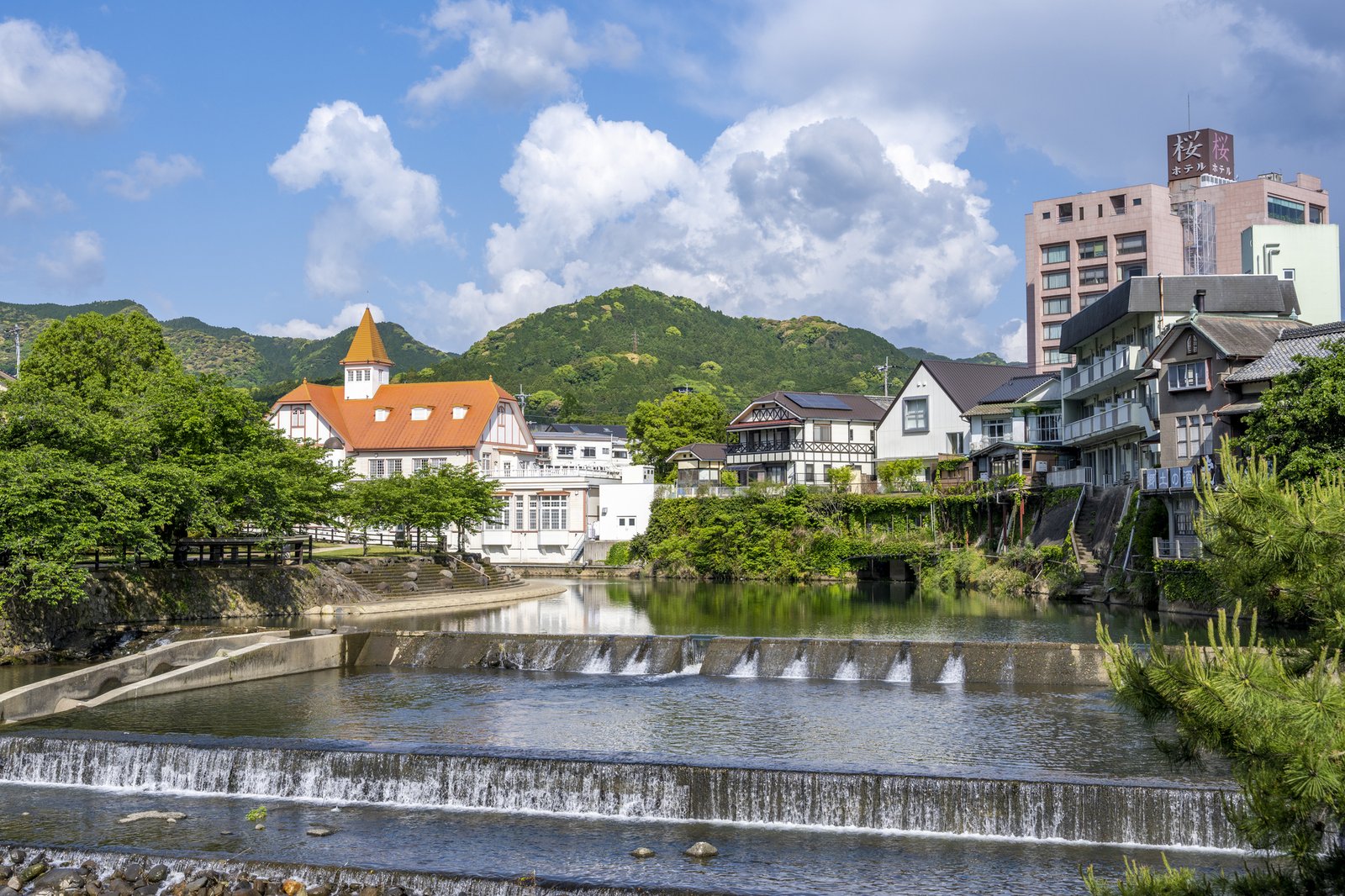
Ureshino City’s English commentary calls the town Ureshino Hot Springs, a post town on the Nagasaki Highway in the Edo period, from 1603 to 1867, and names the city’s public bath Siebold no Yu (Ureshino City, Ureshino Hot Springs). A Ministry of the Environment table of a 1927 selection of scenic places, also printed as Showa 2, lists Ureshino Onsen, in Saga, in its hot-spring category among the hyakkei, the hundred views (our translation), which it records as recommended at the same time as the eight views (Ministry of the Environment table (in Japanese, PDF)).
Who this is for: travellers heading for the hot-spring town in Ureshino City, Saga, who want the city’s public bath and the free footbaths, and where official pages now print the hours and the fares.
The short version: the city’s public bath, Siebold no Yu, is the usual first stop. The city page now prints its hours as 6:00 to 22:00, with last entry at 21:30, and a closed day on the third Wednesday of each month, or the next day if that Wednesday is a public holiday. For the fare, use the amount now printed on that page. The city also prints three footbaths as free. From JR Kyushu’s Ureshino-Onsen Station the city gives about five minutes by car to the bath, or a seven-minute walk from Ureshino Bus Centre. Check official for the hours and the fares on the day you go.
The bath, the footbaths, and what to check on the day
| If… | Then lean towards… | Check |
|---|---|---|
| You want a public bath | Siebold no Yu, the city’s public bath | Ureshino City, Siebold no Yu (in Japanese) |
| You want a free footbath | One of the three footbaths the city lists, beginning with Siebold’s Footbath at Yuyu Plaza | Ureshino City, footbaths (in Japanese) |
| You come by train | JR Kyushu’s Ureshino-Onsen Station, then a car or a bus toward the town | Kyushu Railway Company, Ureshino-Onsen Station (in Japanese) |
| You need the hours or the fare | The amounts and hours now printed on the city’s bath page | Ureshino City, Siebold no Yu (in Japanese) |
What to do: go first to the public bath or to a footbath, and check official for the hours and the fares. Where to verify: the city bath page (in Japanese) and the city footbath page (in Japanese).
Hours, fares, and what the city now prints
| Item | Time or fee | Where to check |
|---|---|---|
| Public bath, hours | The city page now prints 6:00 to 22:00, with last entry at 21:30 | Ureshino City, Siebold no Yu (in Japanese) |
| Public bath, closed day | The city page now prints the third Wednesday of each month, or the next day if that Wednesday is a public holiday | Ureshino City, Siebold no Yu (in Japanese) |
| General bath, adult (junior-high age to under 70) | The amount now printed: 450 yen | Ureshino City, Siebold no Yu (in Japanese) |
| General bath, age 70 and over / a child in primary school | The amounts now printed: 340 yen / 220 yen | Ureshino City, Siebold no Yu (in Japanese) |
| Private bath, 50 minutes | The amount now printed: 2,500 yen, and a bathing tax of 100 yen for an adult from 1 October 2025 | Ureshino City, Siebold no Yu (in Japanese) |
| Opening-anniversary day | The city prints the general bath as free on 1 April each year; the private bath is not available that day | Ureshino City, Siebold no Yu (in Japanese) |
| Parking at the public bath | The amounts now printed: the first 90 minutes free, then 100 yen every 30 minutes, with a 24-hour maximum of 500 yen | Ureshino City, Siebold no Yu (in Japanese) |
| Siebold’s Footbath at Yuyu Plaza | The city prints it as open 24 hours, with the lights in the building off at 3:00; it may be closed on Wednesday mornings for cleaning | Ureshino City, footbaths (in Japanese) |
| Footbath at Yushuku Plaza | The city now prints 8:00 to 23:00 for the footbath, and 9:00 to 20:00 for the steam bath | Ureshino City, footbaths (in Japanese) |
| Footbath at Yuttsura Plaza | The city now prints 7:00 to 23:00 | Ureshino City, footbaths (in Japanese) |
What to do: use the hours and the amounts now printed, and check official before you go. Where to verify: the city bath page (in Japanese) and the city footbath page (in Japanese).
Getting there and how long it takes
Kyushu Railway Company prints the station name in Japanese with its reading, which we romanize as Ureshino-Onsen; the same page links to a timetable (Kyushu Railway Company, Ureshino-Onsen Station (in Japanese)). The city’s bath page prints the public bath as about five minutes by car from that station, about seven minutes on foot from Ureshino Bus Centre, and about five minutes from the Ureshino interchange on the Nagasaki Expressway (Ureshino City, Siebold no Yu (in Japanese)).
The city says three operators run eight route-bus lines in the city, including the Ureshino line of JR Kyushu Bus, and asks readers to check each operator’s own page for the timetable and the fare (Ureshino City, public transport (in Japanese)). We do not print clock times or fares for those buses here. Check official for the railway timetable.
What to do: travel to Ureshino-Onsen Station, then use a car or a bus toward the bus centre and the public bath. Where to verify: the station page (in Japanese) and the city bath page (in Japanese).
What to see
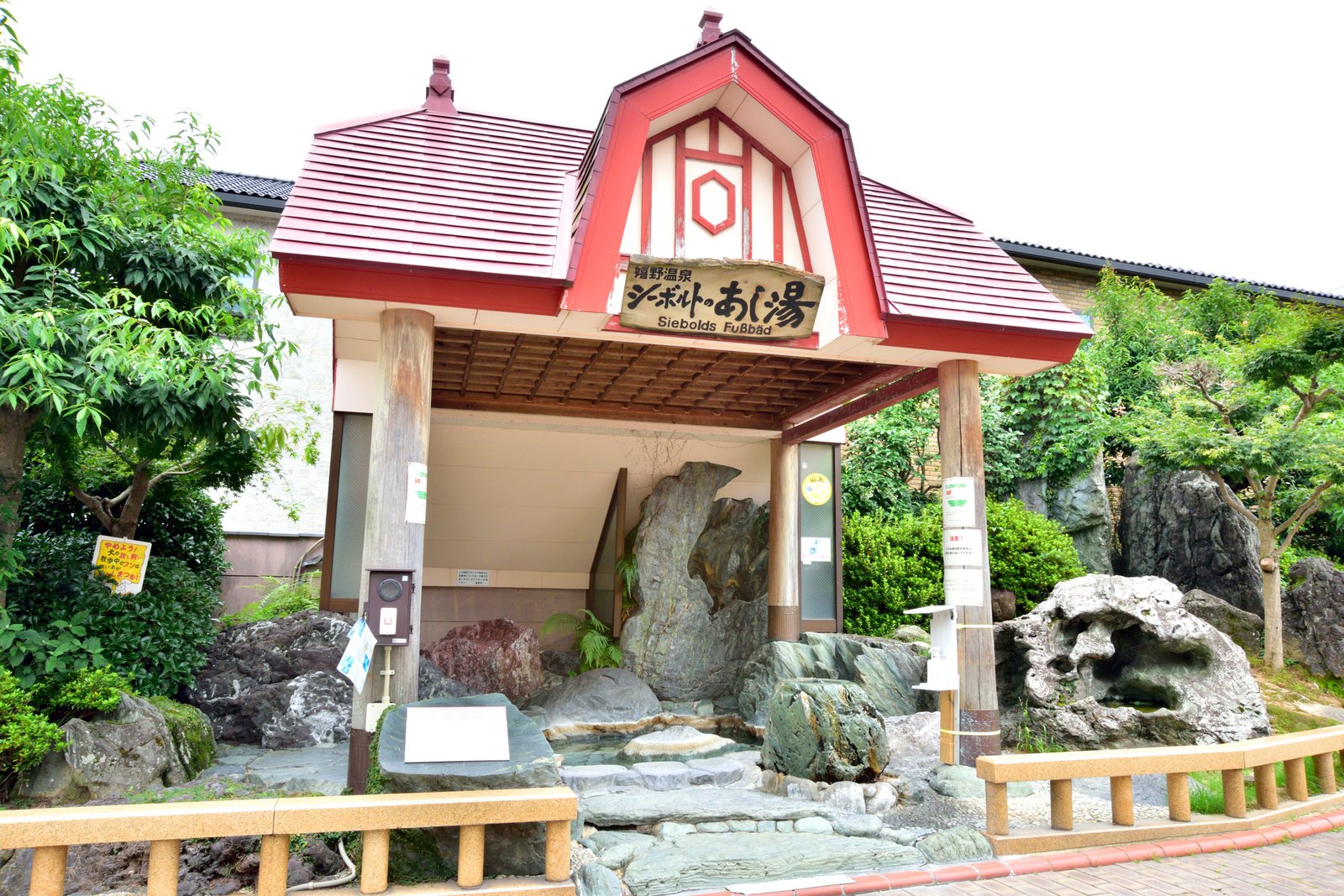
The city describes Siebold no Yu as a wooden building of two storeys, about 750 square metres, with an orange pointed roof, across from Ureshino Onsen Park; it says the public bath opened in April 2010, also printed as Heisei 22.4, and has a general bath, a private bath and a civic gallery (Ureshino City, Siebold no Yu (in Japanese)). The city’s English commentary calls the building European in style (Ureshino City, Ureshino Hot Springs). The city prints the spring as a sodium, hydrogen-carbonate and chloride spring; it also prints a list of claimed effects, which we do not repeat (Ureshino City, Siebold no Yu (in Japanese)).
The city lists three footbaths as free (Ureshino City, footbaths (in Japanese)). It names the one at Yuyu Plaza Siebold’s Footbath, and gives a reading for the plaza; it prints that bath as having opened in October 2000, also printed as Heisei 12 (Ureshino City, footbaths (in Japanese); Ureshino City, Siebold’s Footbath). Yushuku Plaza, with a reading, opened in April 2012, also printed as Heisei 24, and has a footbath and a steam bath; Yuttsura Plaza, with a reading the city explains as a Saga word for taking things slowly, opened in January 2021, also printed as Reiwa 3, and has a footbath, a hand bath and a shallow bath for children (Ureshino City, footbaths (in Japanese)).
What to do: start at the public bath or at Siebold’s Footbath, and check official for the hours. Where to verify: the city bath page (in Japanese) and the city footbath page (in Japanese).
A post town on the highway, and a line in the 1927 table
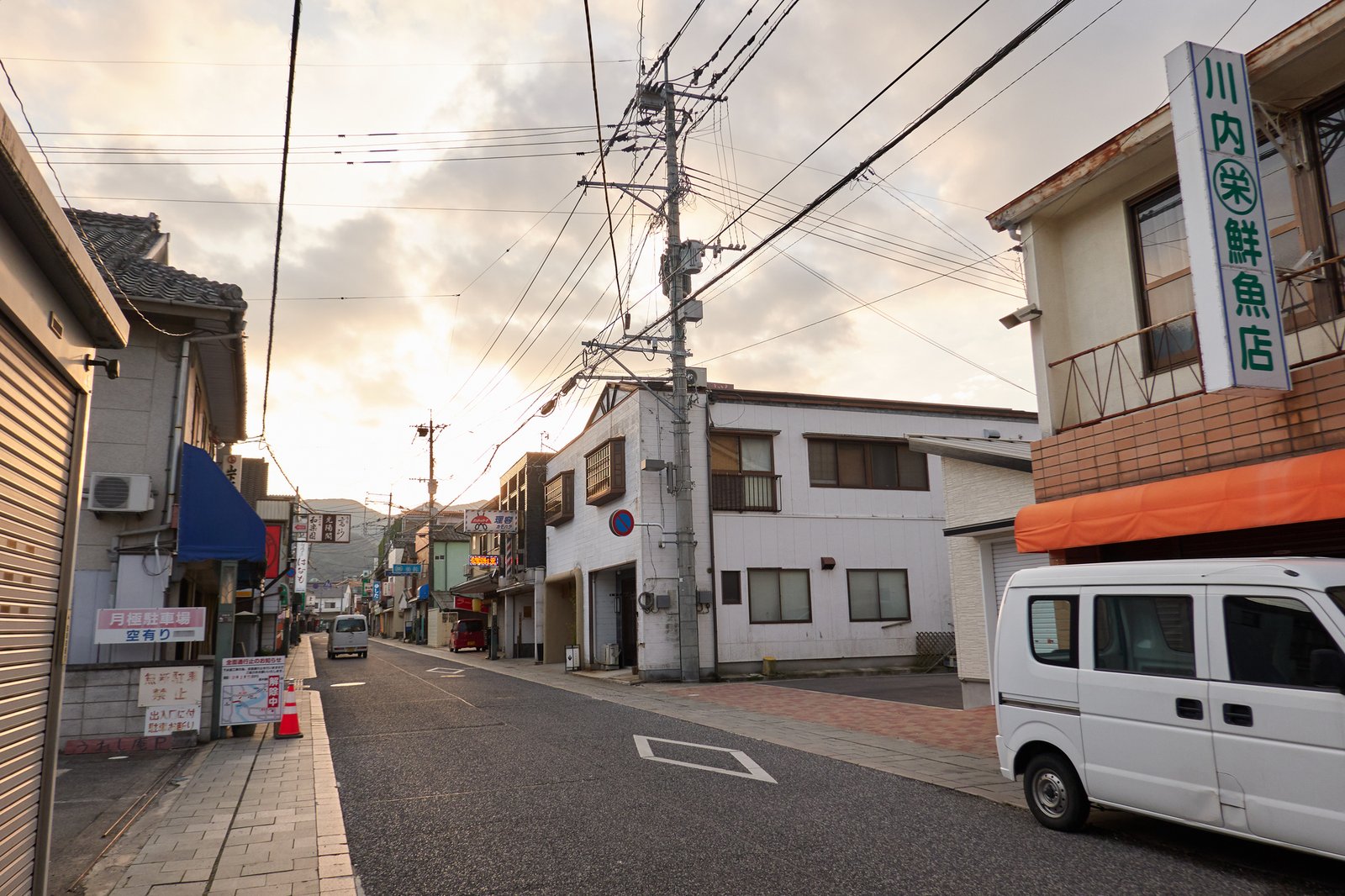
The Ministry table, under a heading for the hyakkei, lists Ureshino Onsen at the line we numbered 136, in Saga, in the hot-spring category, with a mark in the column for places outside the national and quasi-national parks (Ministry of the Environment table (in Japanese, PDF)). The same document says the selection was held in Showa 2, which is 1927, by two newspapers, and that the hyakkei were recommended at the same time as the eight views (Ministry of the Environment table (in Japanese, PDF)).
The city’s English commentary, looking back along a much longer axis than a walk through the town, says the spa has a history of more than 1,300 years, and that the area prospered as a post town on the Nagasaki Highway in the Edo period, from 1603 to 1867; it says the highway linked Nagasaki, then Japan’s only open trading port, with Kokura in northern Kyushu, and was nicknamed the Sugar Road, as a route for sugar brought by European ships (Ureshino City, Ureshino Hot Springs). Travellers often stopped at Ureshino to rest, the same page says (Ureshino City, Ureshino Hot Springs).
The public bath takes its name from Philipp Franz von Siebold, 1796 to 1866, a German physician and botanist. The city says he came to Japan in 1823, and that in 1826 he travelled the Nagasaki Highway from the port of Nagasaki to Kokura; it says it is believed that he stopped to rest his feet in the hot water, and that he was one of the first to collect data on the waters of Ureshino (Ureshino City, Siebold’s Footbath; Ureshino City, Ureshino Hot Springs). A Natural Monument in the same city, the Great Tea Tree of Ureshino, was designated on 20 October 1926, also printed as Taisho 15.10.20, the year before the table of views (National designated cultural properties database (in Japanese); Cultural Heritage Online (in Japanese)).
What to do: read the 1927 line first as the Ministry table records it, then walk the town under the names the city prints. Where to verify: the Ministry table (in Japanese, PDF) and the city’s English commentary.
Official sources
| Topic | Source | Checked |
|---|---|---|
| 1927 selection, Showa 2: Ureshino Onsen, Saga, hot-spring category, hyakkei, line 136 | Ministry of the Environment table (PDF) | 2026-11-11 |
| Ureshino Hot Springs, post town, Nagasaki Highway, Sugar Road, Siebold no Yu | Ureshino City, Ureshino Hot Springs | 2026-11-14 |
| Siebold, 1823 and 1826, Nagasaki Highway, collection of data | Ureshino City, Siebold’s Footbath | 2026-11-14 |
| Public bath: hours, closed day, amounts now printed, access, building, opening in April 2010, spring type | Ureshino City, Siebold no Yu | 2026-11-14 |
| Three free footbaths, hours, opening years, readings for the plazas | Ureshino City, footbaths | 2026-11-14 |
| Three bus operators, eight lines; timetables and fares on the operators’ pages | Ureshino City, public transport | 2026-11-14 |
| Station name and reading, timetable link | Kyushu Railway Company, Ureshino-Onsen Station | 2026-11-14 |
| Natural Monument, 1926.10.20, reading | National designated cultural properties database | 2026-11-14 |
| Same name, reading, 19261020 date | Cultural Heritage Online | 2026-11-14 |
What we have not verified
- Clock times and fares on the route buses. The city names the operators and sends readers to their pages, which we have not fetched.
- The railway line that serves Ureshino-Onsen Station. The station page we fetched prints the name and a timetable link, not the name of the line in the body of the page.
- Hours and fares for baths inside the inns.
- A printed seasonal closure of the public bath, beyond the closed day the city page now prints.