Place name in Japanese: 内子, Uchiko.
Uchiko, Ehime: the Yokaichi-Gokoku street, hours and fees, and the walk from the station
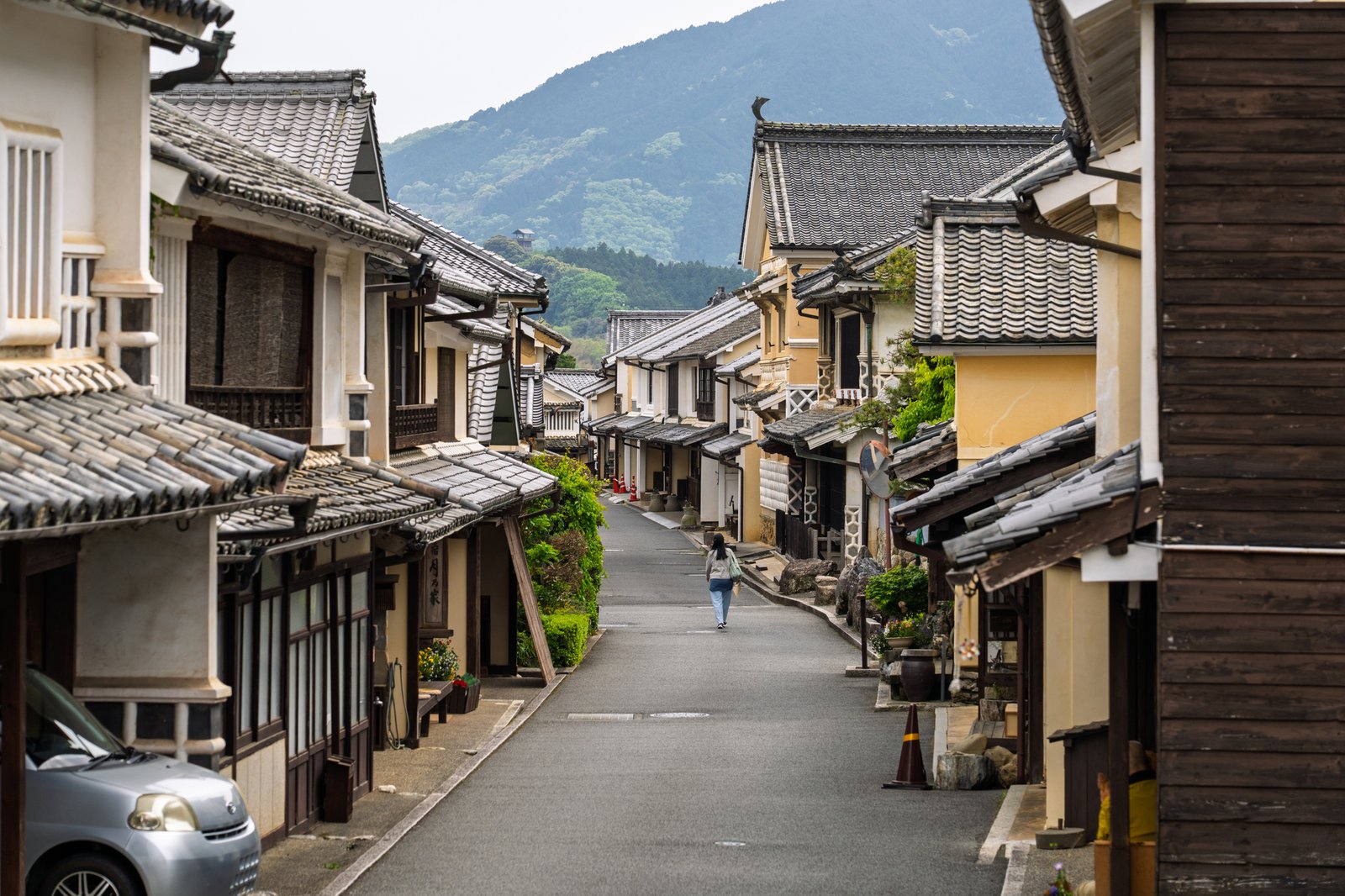
The national designated cultural properties database lists Uchiko-cho Yokaichi-Gokoku as an Important Preservation District for Groups of Traditional Buildings, selected on 17 April 1982 (National designated cultural properties database, preservation district (in Japanese)). It lists the Kami-Haga residence and the Hon-Haga residence as Important Cultural Properties, both designated on 11 September 1990 (National designated cultural properties database, Kami-Haga residence (in Japanese); Hon-Haga residence (in Japanese)). It lists Uchiko-za as an Important Cultural Property, designated on 8 July 2015 (National designated cultural properties database, Uchiko-za (in Japanese)). The town’s English leaflet presents the theatre as Uchiko-za, or Uchiko-za Theatre, and the rooms now open at the back as the Uchiko-za Dressing Room (Introduction to the Uchiko-za Dressing Room (PDF)).
Who this is for: travellers arriving at Uchiko Station who want the historic street, the museum hours and fees, and the dressing room while Uchiko-za is under conservation repair.
The short version: during conservation repair of Uchiko-za, the dressing room at the back of the theatre is open from 9:00 to 16:30, and is closed from 29 December to 2 January. The amounts now printed for that period are 200 yen for adults and 100 yen for children (elementary and junior high school students, our translation). The Japanese wax museum in the Kami-Haga residence is 500 yen and 250 yen, the town museum of commerce and daily life is 200 yen and 100 yen, and a combined ticket for those three is printed at 700 yen and 350 yen. The streetscape preservation centre is free, and is closed on Tuesdays, public holidays and at year-end. Check the town pages for current hours and fees, as they can change.
Street, museums or the dressing room
| If… | Then lean towards… | Check |
|---|---|---|
| You want to walk the historic street | Arrive on foot, and leave the car in the town car park named on the district page; the town asks people other than residents and tradespeople not to drive into the street | Uchiko Town, Yokaichi-Gokoku street (in Japanese) |
| You want hours and fees before you go | The town’s fees page, and the hours on each facility page | Uchiko Town, admission fees (in Japanese) |
| You want train times | JR Shikoku’s Uchiko Station page and the departure timetable it links | JR Shikoku, Uchiko Station (in Japanese) |
| You want to see Uchiko-za during the repair | The dressing-room page; the theatre itself is under conservation repair | Uchiko Town, opening of the Uchiko-za Dressing Room (in Japanese) |
Times, hours and fees
| Item | Time or fee | Where to check |
|---|---|---|
| Uchiko-za Dressing Room hours | 9:00 to 16:30; closed 29 December to 2 January | Uchiko Town, opening of the Uchiko-za Dressing Room (in Japanese) |
| Dressing Room, adults (amount now printed) | 200 yen | Uchiko Town, admission fees (in Japanese) |
| Dressing Room, children (elementary and junior high school students, our translation) | 100 yen | Uchiko Town, admission fees (in Japanese) |
| Japanese wax museum in the Kami-Haga residence | 9:00 to 16:30; closed 29 December to 2 January; 500 yen adults, 250 yen children | Uchiko Town, Kami-Haga residence (in Japanese) |
| Town museum of commerce and daily life | 9:00 to 16:30; closed 29 December to 2 January; 200 yen adults, 100 yen children | Uchiko Town, historical and folklore museum (in Japanese) |
| Combined ticket for the three (amount now printed) | 700 yen adults, 350 yen children | Uchiko Town, admission fees (in Japanese) |
| Streetscape preservation centre | 9:00 to 16:30; closed Tuesdays, public holidays and at year-end; no admission fee | Uchiko Town, streetscape preservation centre (in Japanese) |
| Group discounts and fee exemptions | Check official | Uchiko Town, admission fees (in Japanese) |
| Current fees, including any reduced amounts | Check official | Uchiko Town, admission fees (in Japanese) |
- Where to enter the dressing room: the town page says the entrance is at the back of the front of Uchiko-za. The same page says nearby roads are restricted during the conservation repair; check that page (Uchiko Town, opening of the Uchiko-za Dressing Room (in Japanese)). What to do: confirm hours, closed days and the amounts now printed before you go. Where to verify: the town fees page (in Japanese) and the facility pages in the table.
Getting there and how long it takes
- By train: JR Shikoku’s station page lists Uchiko Station, reading Uchiko, as station number U10, on the Yosan and Uchiko lines in the town’s wording. Use the operator’s departure timetable for current times (JR Shikoku, Uchiko Station (in Japanese); JR Shikoku, Uchiko Station departure timetable (PDF, in Japanese)).
- On foot from the station: the town pages for the streetscape preservation centre and for the Japanese wax museum in the Kami-Haga residence both print a 20-minute walk from Uchiko Station (Uchiko Town, streetscape preservation centre (in Japanese); Uchiko Town, Kami-Haga residence (in Japanese)).
- Cars and the historic street: the town’s district page asks people other than residents and tradespeople not to drive into the street, and names a municipal car park below the temple on that page, at 300 yen per visit for ordinary cars and 1,040 yen for buses, or nearby coin-operated parks (Uchiko Town, Yokaichi-Gokoku street (in Japanese)). The preservation centre page says it has no car park of its own.
What to do: go to Uchiko Station and walk, and leave a car in the town car park named on the district page. Where to verify: the JR Shikoku station page (in Japanese) and the town district page (in Japanese).
What to see
The town describes a historic street in the Yokaichi-Gokoku district, selected as a national preservation district for groups of traditional buildings (Uchiko Town, Yokaichi-Gokoku street (in Japanese)). The streetscape preservation centre, which the town says is free to enter, introduces the history and the working of that preservation (Uchiko Town, streetscape preservation centre (in Japanese)). The town operates the Kami-Haga residence as a Japanese wax museum, and says that part of the grounds can be seen without a fee (Uchiko Town, Kami-Haga residence (in Japanese)). During conservation repair of Uchiko-za, the dressing room is open to the public, with exhibitions and screenings about the theatre (Uchiko Town, opening of the Uchiko-za Dressing Room (in Japanese)). The town’s English leaflet says photography or video recording of the performers’ signatures on the walls by the service entrance is not permitted (Introduction to the Uchiko-za Dressing Room (PDF)).
What to do: walk the street, and choose the preservation centre, the wax museum or the dressing room according to the hours in the table. Where to verify: the town district page (in Japanese) and the facility pages above.
A wax-making town on an old highway
The commentary in the national designated cultural properties database describes Uchiko-cho Yokaichi-Gokoku as an old highway that opened as a route to Konpira and as a Shikoku pilgrimage road, and says the place developed through the wax-making trade from the Edo period into the Meiji period, with houses of plastered exterior walls standing in a row for 750 metres (National designated cultural properties database, preservation district (in Japanese)). The same commentary names the Hon-Haga house, the Kami-Haga house and the Omura house among the central buildings (National designated cultural properties database, preservation district (in Japanese)). The entry for the Kami-Haga residence says the Haga family laid the foundations of wax production in Uchiko and was at the centre of its development, and that the main house is commonly called Hon-Haga and the branch house, up the highway, Kami-Haga (National designated cultural properties database, Kami-Haga residence (in Japanese)). It describes a main building of plastered-wall construction facing the east side of the highway, with living quarters behind it, and to the south and east a vat room, a shop storehouse, an earthen storehouse and other buildings used in wax-making, together with a wide bleaching ground (Cultural Heritage Online, Kami-Haga residence (in Japanese)). The database dates the main house of the Kami-Haga residence to the 27th year of Meiji, A.D. 1894, in its own dating, and the main house of the Hon-Haga residence to the 17th year of Meiji, A.D. 1884 (National designated cultural properties database, Kami-Haga residence (in Japanese); Hon-Haga residence (in Japanese)). On Uchiko-za, the database says Uchiko prospered through the wax-making and paper-making trades throughout the Meiji period, and that the theatre was built in the 5th year of Taisho, A.D. 1916, in the database’s dating, to mark the accession of the Taisho Emperor, as a place of entertainment for the townspeople (National designated cultural properties database, Uchiko-za (in Japanese)).
What to do: walk the highway frontage and look at how the plastered houses and the wax-making buildings sit together, as the database describes. Where to verify: the district entry (in Japanese) and the Kami-Haga entry (in Japanese).
Official sources
| Topic | Source | Checked |
|---|---|---|
| Preservation district, selected 17 April 1982, commentary | National designated cultural properties database, preservation district | 2026-11-14 |
| Kami-Haga residence, designated 11 September 1990, commentary | National designated cultural properties database, Kami-Haga residence | 2026-11-14 |
| Kami-Haga commentary | Cultural Heritage Online, Kami-Haga residence | 2026-11-14 |
| Hon-Haga residence, designated 11 September 1990 | National designated cultural properties database, Hon-Haga residence | 2026-11-14 |
| Uchiko-za, designated 8 July 2015, commentary | National designated cultural properties database, Uchiko-za | 2026-11-14 |
| English names of Uchiko-za and the dressing room; photography note | Introduction to the Uchiko-za Dressing Room (PDF) | 2026-11-14 |
| Dressing-room hours, entrance, road restrictions | Uchiko Town, opening of the Uchiko-za Dressing Room | 2026-11-14 |
| Fees, children’s ages, groups, exemptions, combined ticket | Uchiko Town, admission fees | 2026-11-14 |
| Wax-museum hours, fee, 20-minute walk | Uchiko Town, Kami-Haga residence | 2026-11-14 |
| Museum of commerce and daily life, hours and fee | Uchiko Town, historical and folklore museum | 2026-11-14 |
| Streetscape preservation centre, hours, free admission, walk | Uchiko Town, streetscape preservation centre | 2026-11-14 |
| Historic street, car-park rule and fees | Uchiko Town, Yokaichi-Gokoku street | 2026-11-14 |
| Uchiko Station, station number U10, timetable link | JR Shikoku, Uchiko Station | 2026-11-14 |
| Operator departure timetable | JR Shikoku, Uchiko Station departure timetable (PDF) | 2026-11-14 |
What we have not verified
- Current departure times at Uchiko Station. The operator’s timetable PDF is linked from the station page; check that PDF for the day you travel (JR Shikoku, Uchiko Station departure timetable (PDF, in Japanese)).
- Official English names for the preservation district, the Kami-Haga and Hon-Haga residences, the Japanese wax museum, the streetscape preservation centre, the town museum of commerce and daily life, the temple beside the town car park, and the station, beyond the town’s print of Uchiko, Uchiko-za, Uchiko-za Theatre and Uchiko-za Dressing Room (Introduction to the Uchiko-za Dressing Room (PDF)).
- Whether the Hon-Haga residence can be entered; we have the database entry, but we have not fetched a page that prints visiting hours (National designated cultural properties database, Hon-Haga residence (in Japanese)).
- The detail of road restrictions near Uchiko-za during the conservation repair; the dressing-room page points to a further town page, which we have not fetched (Uchiko Town, opening of the Uchiko-za Dressing Room (in Japanese)).