Place name in Japanese: 鞆の浦, Tomonoura.
Tomonoura, Fukuyama: the Tomotetsu bus from Fukuyama Station, the city ferry to Sensuijima, what the city asks of visitors in the old streets, the Korean embassies at Fukuzenji, and a port that waited on the tide
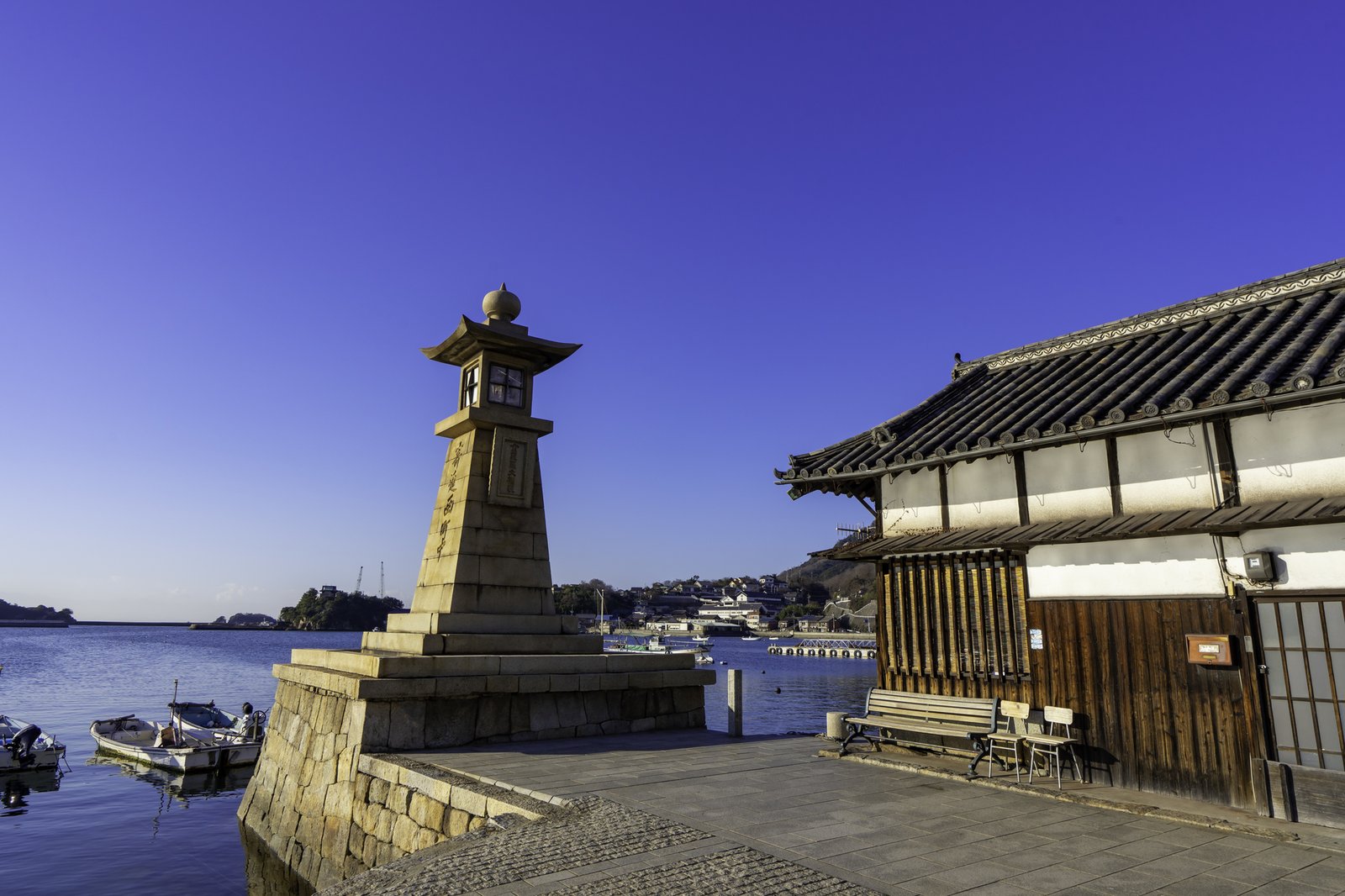
The Agency for Cultural Affairs database records Fukuyama-shi Tomo-cho as an Important Preservation District for Groups of Traditional Buildings of the port-town type, 8.6 ha, selected on 28 November 2017 (Agency for Cultural Affairs database, Fukuyama-shi Tomo-cho (in Japanese)). It records Tomo Park, also given as Tomo harbour and the Sensui islands, as a Place of Scenic Beauty designated on 8 October 1925, with additions in 1928 and 1951 (Agency for Cultural Affairs database, Tomo Park (in Japanese)), and the precinct of Fukuzenji as part of the Historic Site of the Korean embassies, designated on 11 October 1994 and enlarged on 6 February 2007 (Agency for Cultural Affairs database, sites of the Korean embassies (in Japanese)). A Ministry of the Environment table of a 1927 selection of scenic places lists Tomonoura, in Hiroshima, in its coasts category among the twenty-five places it records as recommended (Ministry of the Environment table (in Japanese)).
Who this is for: travellers staying around Fukuyama with half a day or a day and no car, who want to take the bus down to Tomo, walk the old port streets, and cross to Sensuijima by the city ferry.
The short version: The Tomotetsu Bus Tomo Line leaves bus stop #5 at Fukuyama Station from 6:40 to 22:00 on weekdays; the 9:30 reaches the Tomonoura stop at 10:00 and Tomo Ko at 10:02. From the city’s ferry landing at Tomo, boats cross to Sensuijima in 5 minutes, usually three times an hour, from 7:30 to 20:00, and the city gives the adult return fare as 240 yen. In the preservation district the city asks visitors not to walk side by side on the narrow, busy streets.
What to plan for
| If… | Then lean towards… | Check |
|---|---|---|
| You start from Fukuyama Station | The Tomo Line from bus stop #5, to the Tomonoura or Tomo Ko stop | Tomotetsu Bus, Tomo Line timetable in English |
| You come back late on a Saturday, Sunday or holiday | The last bus from Tomo Ko at 20:28, against 21:18 on weekdays | Tomotetsu Bus, Tomo Line timetable (in Japanese) |
| You want to cross to Sensuijima | The city ferry from the municipal ferry landing at Tomo | Fukuyama City, ferry timetable (in Japanese) |
| You mean to walk the old streets | The city’s requests to visitors in the preservation district | Fukuyama City, Tomo-cho preservation district (in Japanese) |
Getting there: the Tomotetsu Bus Tomo Line from Fukuyama Station
Tomotetsu’s Tomo Line timetable, revised on 1 October 2026, has weekday buses leaving bus stop #5 at Fukuyama Station from 6:40 to 22:00; the 6:40 reaches the Tomonoura stop at 7:10 and Tomo Ko at 7:12, and the 22:00 reaches them at 22:28 and 22:30. Some buses run by way of Myoo-in or by way of the gymnasium and Sanshinden, and a few end at Takegahana short of Tomo; the timetable marks them. On Saturdays, Sundays and holidays buses leave from 7:30 to 21:10, and the Sunday and holiday timetable also runs from 13 to 16 August. At the arena stop on the way, buses from Fukuyama Station stop to pick passengers up and buses from Tomo Ko stop to let them off, and not the other way round (Tomotetsu Bus, Tomo Line timetable in English).
For the way back, weekday buses leave Tomo Ko from 5:53 to 21:18, and the 21:18 reaches Fukuyama Station at 21:48; on Saturdays, Sundays and holidays they leave from 6:48 to 20:28, the last arriving at 20:58 (Tomotetsu Bus, Tomo Line timetable (in Japanese)). The English timetable asks you to pay the fare as you get off and to change money while the bus is stopped.
What to do: note the last bus from Tomo Ko for your day before you set out. Where to verify: the Tomo Line timetable (in Japanese).
Over to Sensuijima: the city ferry
Fukuyama City runs the ferry between its municipal ferry landing at Tomo and Sensuijima. It says the crossing takes 5 minutes and that boats arriving at the Sensuijima pier turn straight round (Fukuyama City, using the city ferry (in Japanese)). The timetable, revised on 1 April 2023, lists departures from Tomo at 7:30 and 7:50, then at 10, 30 and 50 past each hour from 8:10 to 18:50, apart from 12:10, and then at 19:30 and 20:00. It charges nothing for children under 1, lets one child aged 1 to 5 travel free with each adult, and charges the child fare from 6 to 11 and the adult fare from 12 (Fukuyama City, ferry timetable (in Japanese)).
The city’s page on Sensuijima gives the return fare between Tomonoura and the island as 240 yen for adults and 120 yen for children. It calls Sensuijima an uninhabited island, tells the legend that a hermit once lived there and that the name is said to mean an island lovely enough to make a hermit drunk, and says that along the southern shore rocks of five colours, blue, red, yellow, white and black, run for more than 200 m and are called Goshiki-iwa (Fukuyama City, Sensuijima (in Japanese)).
What to do: before you cross, note the times of the boats back. Where to verify: the city ferry timetable (in Japanese).
In the old streets: houses, eaves and what the city asks
The Agency for Cultural Affairs database describes the district as the part of the Edo-period townsmen’s quarter that formed the core of the coastal shipping trade, with narrow plots of about two ken alongside merchant houses that grew by buying up their neighbours; it names the Ota family residence and its Chosotei as Important Cultural Properties of that kind. The town houses are as a rule gabled, entered on the long side and of two storeys; the older form, from the Edo period into the Meiji era, has a lean-to roof called “odare” across the front under tiled roofs, and a row of eaves running on from house to house is one feature of the streets (Agency for Cultural Affairs database, Fukuyama-shi Tomo-cho (in Japanese)).
Fukuyama City asks visitors to the district not to drop litter, to avoid eating as they walk and to leave rubbish at the shop where they bought the food, not to walk side by side because the streets are narrow and carry a lot of traffic, and not to feed the stray cats (Fukuyama City, Tomo-cho preservation district (in Japanese)).
What to do: walk in single file where the street narrows and cars come through. Where to verify: the city’s preservation district page (in Japanese).
Lodging the envoys: the Korean embassies at Fukuzenji
The Agency for Cultural Affairs database explains that the Korean embassies were missions sent to Japan by the king of Korea. In the Edo period the series began in 1607 with an embassy of 504 members by one count and 467 by another, and twelve came in all up to 1811, to mark a new shogun or the birth of an heir. Their usual route ran by sea from Tsushima through ports including Bingo Tomo and Bizen Ushimado to Osaka, and on by land from there (Agency for Cultural Affairs database, sites of the Korean embassies (in Japanese)).
At Tomo, the database says, the Fukuyama domain received them, and the three envoys stayed in the guest hall of Fukuzenji, Taichoro. In 1711, on the embassy marking Ienobu’s succession, the junior envoy Yi Bang-eon stayed there and wrote out a large inscription, and the view from Taichoro towards Sensuijima was something the embassy looked forward to. In 1748 the lord of Fukuyama was serving at Osaka Castle, so the Date lord of Uwajima received the embassy in his place and, being new to it, did not lodge the envoys at Taichoro, which caused trouble. The ridge tag of the main hall is dated 1694; the guest hall is said to date from the Genroku era and was repaired in 1805.
What to do: at Fukuzenji, look out from the guest hall towards Sensuijima, the view the envoys came for. Where to verify: the Agency for Cultural Affairs database (in Japanese).
A port that waited on the tide: steps, mooring stones and a lamp
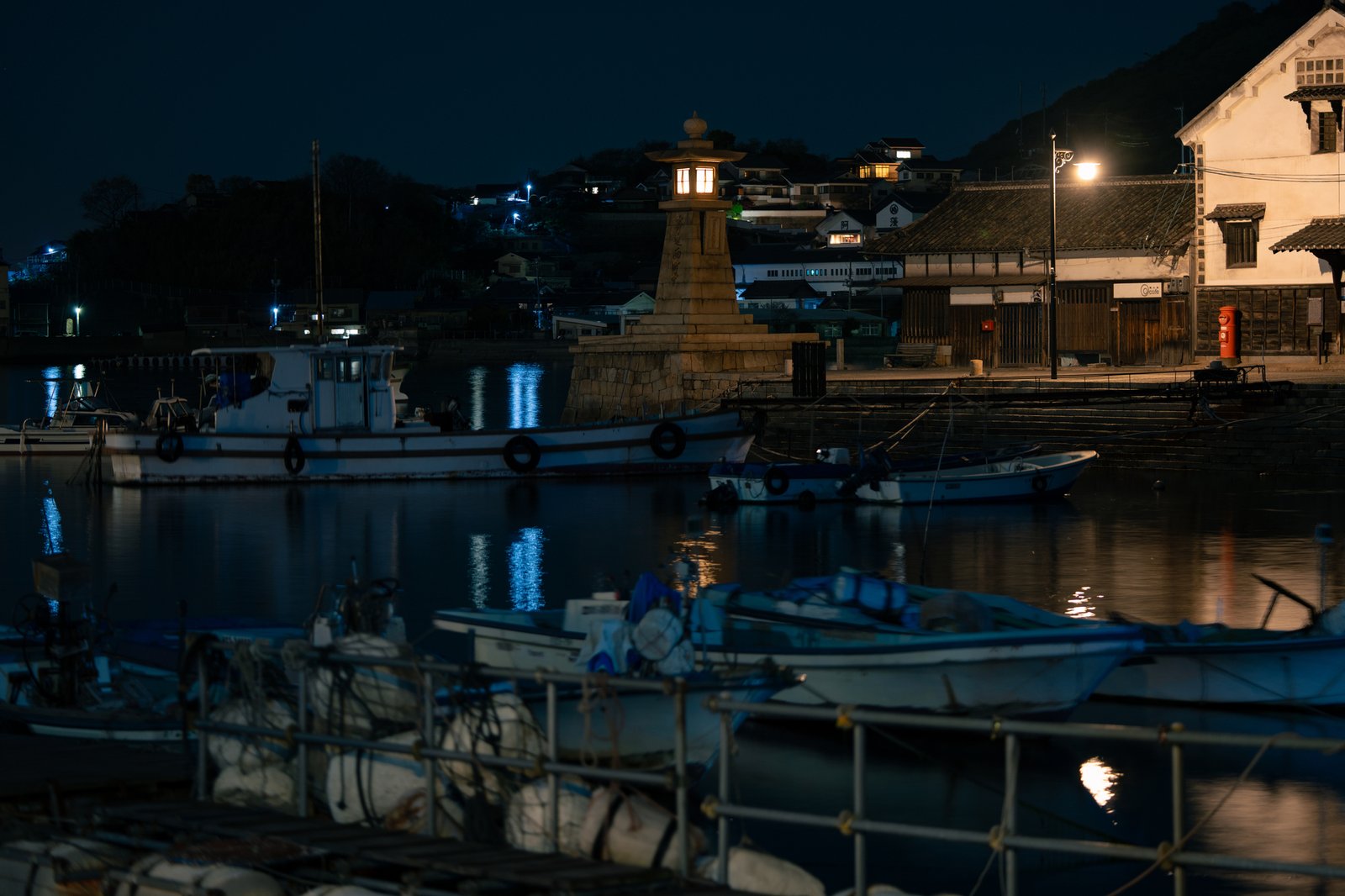
The Agency for Cultural Affairs database places Tomo at the south-eastern tip of the Numakuma Peninsula, says that with the islands around it the place forms the scenery called Tomonoura, and traces the name to a poem by Otomo no Tabito in the Man’yoshu. From ancient times, it says, Tomo was a port where ships waited for the tide, and it prospered as a key point of sea traffic in the Seto Inland Sea; in the early modern period brewing and the making of ship fittings, farm tools and fishing nets also thrived, and these trades kept the town going after shipping declined from the middle of the Meiji era. At the harbour, gangi stone steps, mooring stones, a stone lamp called the joyato and shore storehouses survive from the late Edo to the early Meiji period (Agency for Cultural Affairs database, Fukuyama-shi Tomo-cho (in Japanese)).
The designation text for Tomo Park, written in the classical style of 1925, says the place had been known as a famous sight since early times, had been kept as a prefectural park open to the public since 1873, and that a park taking in islands was a special case (Agency for Cultural Affairs database, Tomo Park (in Japanese)).
What to do: at the harbour, follow the stone steps down to the water and look for the mooring stones. Where to verify: the Agency for Cultural Affairs database (in Japanese).
What we have not verified
Check official before you go: the bus fare from Fukuyama Station to Tomo (Tomotetsu Bus, Tomo Line fare table (in Japanese)). Check official before you go: whether the ferry is running on the day (Fukuyama City, using the city ferry (in Japanese)).
- Fukuzenji and Taichoro: visiting hours and fees were not read on the temple’s or the city’s pages.
- From the bus stops to the ferry landing: no walking times were read on the pages above.
- Sensuijima’s paths and the boats back: the island’s paths and the departures from the island pier were not read.
- Other designations and selections: the Agency for Cultural Affairs database and the Ministry of the Environment table above are the ones read for designations and selections.
- Names: the ferry landing, the stops other than the English timetable’s, the temple, the guest hall, the harbour works and the people are given in this site’s renderings.
Official sources
| Topic | Source | Checked |
|---|---|---|
| Preservation district, houses, harbour works | Agency for Cultural Affairs database, Fukuyama-shi Tomo-cho | 2026-11-11 |
| Place of Scenic Beauty | Agency for Cultural Affairs database, Tomo Park | 2026-11-11 |
| Korean embassies and Fukuzenji | Agency for Cultural Affairs database, sites of the Korean embassies | 2026-11-11 |
| 1927 selection: Tomonoura | Ministry of the Environment table | 2026-11-11 |
| Bus times, English | Tomotetsu Bus, Tomo Line timetable in English | 2026-11-11 |
| Bus times | Tomotetsu Bus, Tomo Line timetable | 2026-11-11 |
| Bus fares | Tomotetsu Bus, Tomo Line fare table | 2026-11-11 |
| Ferry crossing | Fukuyama City, using the city ferry | 2026-11-11 |
| Ferry times and child fares | Fukuyama City, ferry timetable | 2026-11-11 |
| Sensuijima and the return fare | Fukuyama City, Sensuijima | 2026-11-11 |
| Requests to visitors | Fukuyama City, Tomo-cho preservation district | 2026-11-11 |