Tojinbo, Fukui: the bus from Mikuni, the cliffs of columnar rock and the boat below them
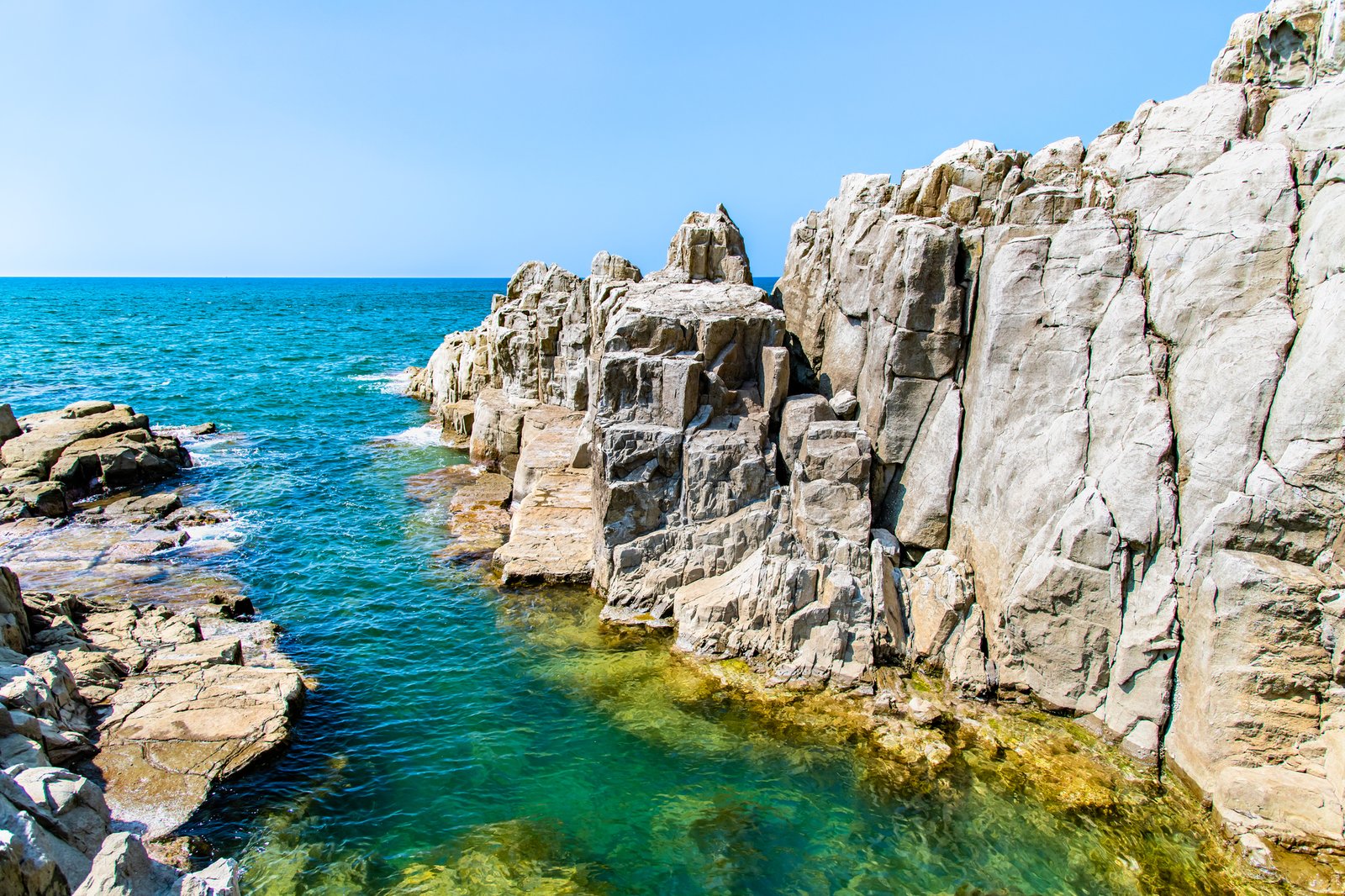
Tojinbo is a stretch of sea cliffs in Mikuni, Sakai City, in Fukui. The city’s tourism guide says the rock wall runs for about 1 km along the Sea of Japan and is made of columnar rock formed by volcanic activity, and that the cliffs stand more than 20 metres above the sea (Sakai City Tourism Guide, Tojinbo and Oshima; Sakai City Tourism Guide, Tojinbo (in Japanese)). The Agency for Cultural Affairs database lists Tojinbo as a Natural Monument, designated on 7 June 1935 (Agency for Cultural Affairs database (in Japanese)).
Who this is for: travellers in Fukui with half a day for the coast, who want to walk the cliff top and perhaps see the rock from a boat.
The short version: take the Echizen Railway from Fukui to Mikuni, then the Keifuku Bus to the Tojinbo stop. The cliffs are open at all hours and free to enter. The sightseeing boat runs about 30 minutes and depends on the sea. Always follow the official pages linked below.
Train and bus, or bus only
| If… | Then lean towards… | Check |
|---|---|---|
| You start from Fukui | Echizen Railway to Mikuni, then the Keifuku Bus to the Tojinbo stop | Echizen Railway, Mikuni station (in Japanese) |
| You start from the Awara side | A Keifuku Bus on the Tojinbo Line all the way to the Tojinbo stop | Keifuku Bus, Tojinbo Line timetables (in Japanese) |
| You want to see the cliffs from the sea | Tojinbo Cliffs Sightseeing Boats; check the day’s status and boarding point first | Tojinbo Cliffs Sightseeing Boats, boarding points |
| It is raining or snowing | View the cliffs from a safe place, as the tourism guide advises | Sakai City Tourism Guide, Tojinbo (in Japanese) |
Hours, fares and buses
| Item | Time | Fare or fee | Where to check |
|---|---|---|---|
| The cliffs | Open at all hours | Free to enter; car parks charge a fee: Check official | Sakai City Tourism Guide, Tojinbo (in Japanese) |
| Sightseeing boat, April to October | 9:00–16:00; about 30 minutes on board | Adults (13 and over) 2,000 yen, children (elementary school) 1,000 yen | Tojinbo Cliffs Sightseeing Boats, fares and schedule |
| Sightseeing boat, November to March | 9:00–15:30 | As above | Tojinbo Cliffs Sightseeing Boats, fares and schedule |
| Observation tower near the cliffs | 9:00–17:00 (9:00–16:30 in winter) | Adults 500 yen, children 300 yen | Sakai City Tourism Guide, Tojinbo (in Japanese) |
| Keifuku Bus, Mikuni Station to the Tojinbo stop | 12 minutes; departure times: Check official | Check official | Keifuku Bus, Tojinbo Line timetables (in Japanese) |
| Echizen Railway, Fukui to Mikuni | About 50 minutes in the daytime | 780 yen (children 390 yen) | Echizen Railway, Mikuni station (in Japanese) |
- Boat waits: the operator gives a wait of 15 to 20 minutes and says boats sail regardless of the number of passengers (Tojinbo Cliffs Sightseeing Boats, fares and schedule).
- Boat tickets: the operator says advance tickets are non-refundable, and that credit cards are not accepted at the Sunset Beach boarding point, where it takes cash and PayPay (Tojinbo Cliffs Sightseeing Boats, fares and schedule; Tojinbo Cliffs Sightseeing Boats, boarding points).
- Winter break: the operator lists a period in winter with no sailings: Check official (Tojinbo Cliffs Sightseeing Boats, fares and schedule).
- Suspensions: boats can be cancelled or move to another boarding point in rough seas, and buses may not run on some days, so check with the operators before you go.
What to do: on the day, look at the boat operator’s status page before you set out, as it shows whether boats are running and from which point. Where to verify: Tojinbo Cliffs Sightseeing Boats, boarding points.
Getting there and how long it takes
- Fukui to Mikuni by train: Echizen Railway gives about 50 minutes from Fukui to Mikuni in the daytime (Echizen Railway, Mikuni station (in Japanese)). The city’s tourism guide also gives about 50 minutes from Fukui Station (Sakai City Tourism Guide, Tojinbo and Oshima).
- Mikuni Station to the cliffs: Keifuku Bus routes 84 and 96 on the Tojinbo Line run from Mikuni Station to the Tojinbo stop in 12 minutes on the weekday timetable (Keifuku Bus, Tojinbo Line timetables (in Japanese)). The tourism guide says the cliffs are a 5-minute walk from the stop (Sakai City Tourism Guide, Tojinbo and Oshima).
- From the Awara side: routes 85 and 97 start at the far end of the Tojinbo Line and reach the Tojinbo stop in 37 to 43 minutes on the weekday timetable, which lists 13 departures; Saturdays, and Sundays and public holidays, have their own timetables (Keifuku Bus, Tojinbo Line timetables (in Japanese)).
- To the Sunset Beach boarding point: the boat operator names Route 85 from the “Tojinbo” stop to “Sunset Beach Mae”, and says buses are infrequent; the boarding point is 1.5 km from the cliffs, or 25 minutes on foot (Tojinbo Cliffs Sightseeing Boats, boarding points).
What to do: if you come by train, plan the bus from Mikuni Station around the weekday or weekend timetable for your day. Where to verify: Keifuku Bus, Tojinbo Line timetables (in Japanese).
What to see
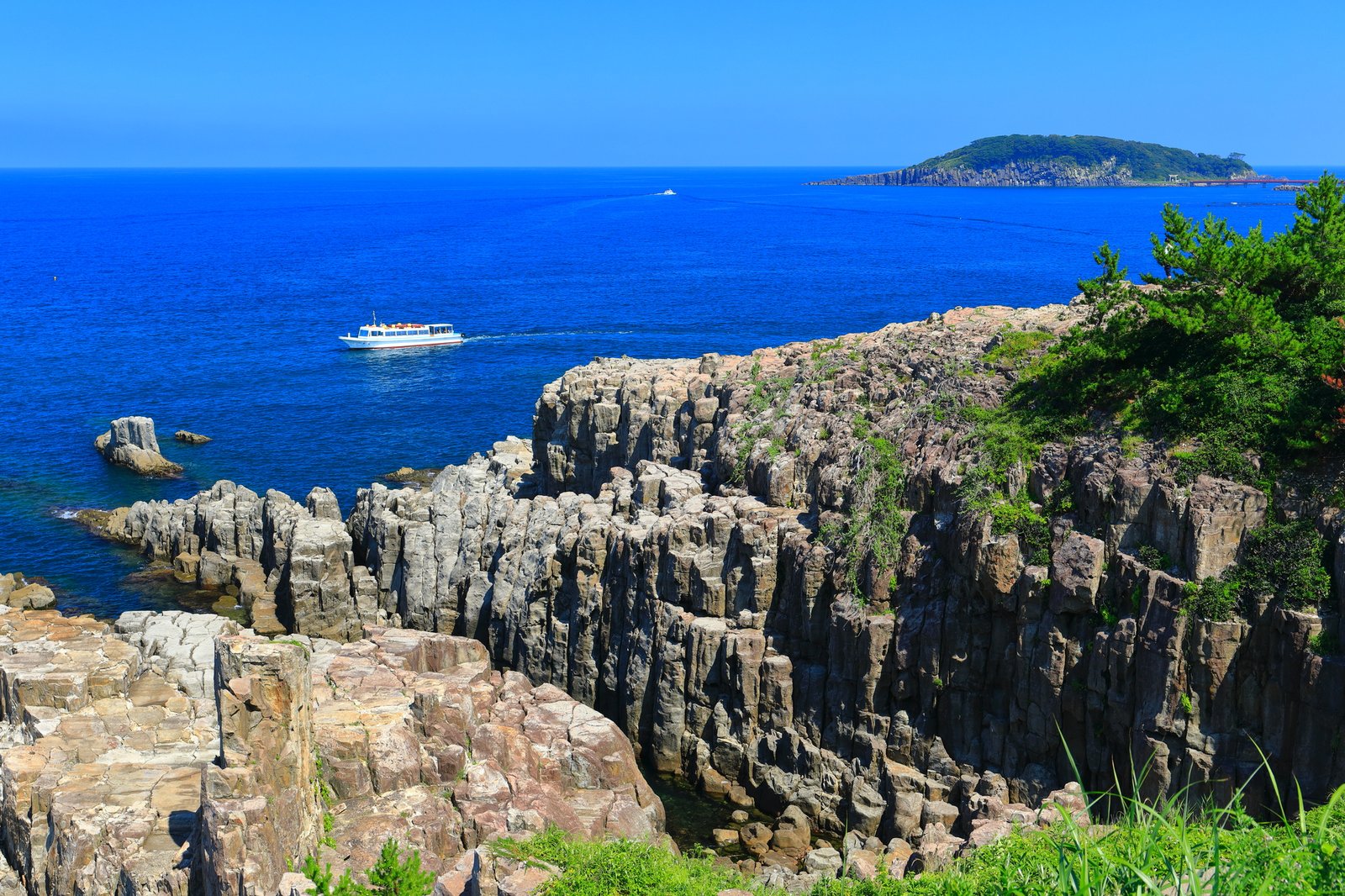
The tourism guide describes a coastal walk of 2.7 km, the Araiso Promenade, from the Tojinbo area to Oshima, with caves shaped by the waves along the way (Sakai City Tourism Guide, Tojinbo and Oshima). It says the island is reached over a vermilion bridge, with a 1.2 km path around it that takes about 40 minutes, and that the boat goes round Tojinbo and the island and, when the waves are calm, into a cove with walls more than 20 metres high.
On wet days, the tourism guide says rain and snow make the rocks slippery, and recommends viewing the cliffs from a safe place (Sakai City Tourism Guide, Tojinbo (in Japanese)).
What to do: allow time for the walk to the island as well as the cliff top, and keep to safe ground in rain or snow. Where to verify: the tourism guide’s Tojinbo page (in Japanese).
What the national record says, and the shrine that looks after it
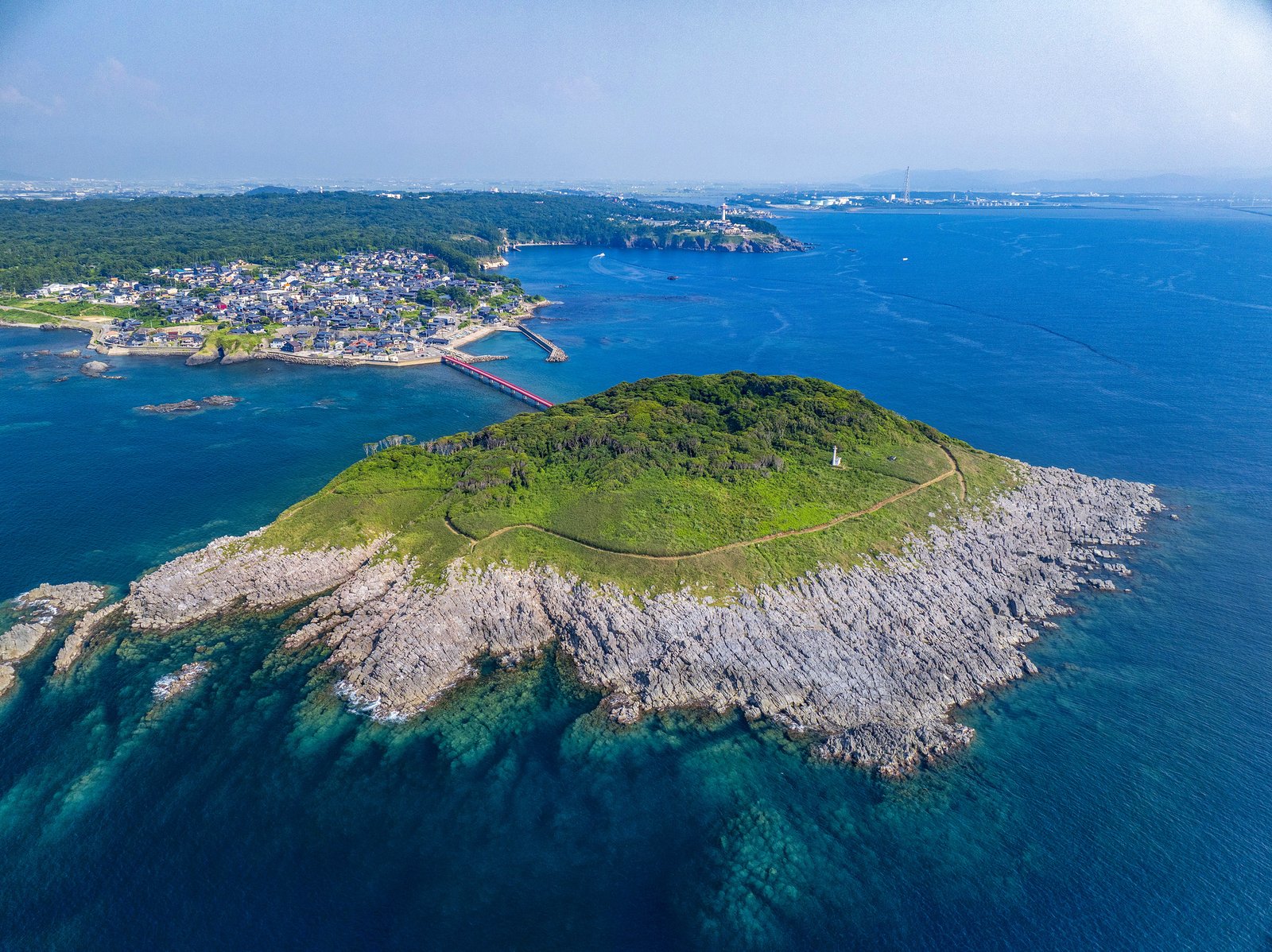
The Agency for Cultural Affairs database carries a short explanation of the site. It describes the coast from the river-mouth port of Mikuni past Oshima as a base of Tertiary strata cut through by volcanic rocks with columnar joints. It says that near the cape the rock is andesite with upright, coarse columns, and that the part forming a cliff over the sea has long been called Tojinbo. It adds that Oshima has columns set at a slant, and that the waves have cut caves and stone arches in the islets further along (Agency for Cultural Affairs database (in Japanese)).
The same record names Ominato Shrine as the body that manages the site. The tourism guide says the shrine’s main hall is on Oshima, at the top of steep stone steps, while a worship hall for practical matters stands on the mainland, because rituals had to go on ashore when bad weather stopped boats crossing to the island (Sakai City Tourism Guide, Tojinbo and Oshima).
What to do: at the cliffs, compare the upright columns with the slanting ones on the island. Where to verify: the Agency for Cultural Affairs database (in Japanese).
Official sources
| Topic | Source | Checked |
|---|---|---|
| Natural Monument (designated 1935), explanation, managing body | Agency for Cultural Affairs database | 2026-11-11 |
| Entry, tower, safety in rain and snow, height | Sakai City Tourism Guide, Tojinbo | 2026-11-11 |
| Length, walks, Oshima, Ominato Shrine, English names | Sakai City Tourism Guide, Tojinbo and Oshima | 2026-11-11 |
| Boat hours, fares, waits, tickets, winter break | Tojinbo Cliffs Sightseeing Boats, fares and schedule | 2026-11-11 |
| Boarding points, bus to Sunset Beach, payment | Tojinbo Cliffs Sightseeing Boats, boarding points | 2026-11-11 |
| Bus from Mikuni Station | Keifuku Bus, Tojinbo Line (routes 84 and 96) | 2026-11-11 |
| Bus from the Awara side | Keifuku Bus, Tojinbo Line (routes 85 and 97) | 2026-11-11 |
| Train time and fare | Echizen Railway, Mikuni station | 2026-11-11 |