Shirakawa-go, Gifu: the Ogimachi settlement, why UNESCO links its steep thatched roofs to silkworms, and how to visit
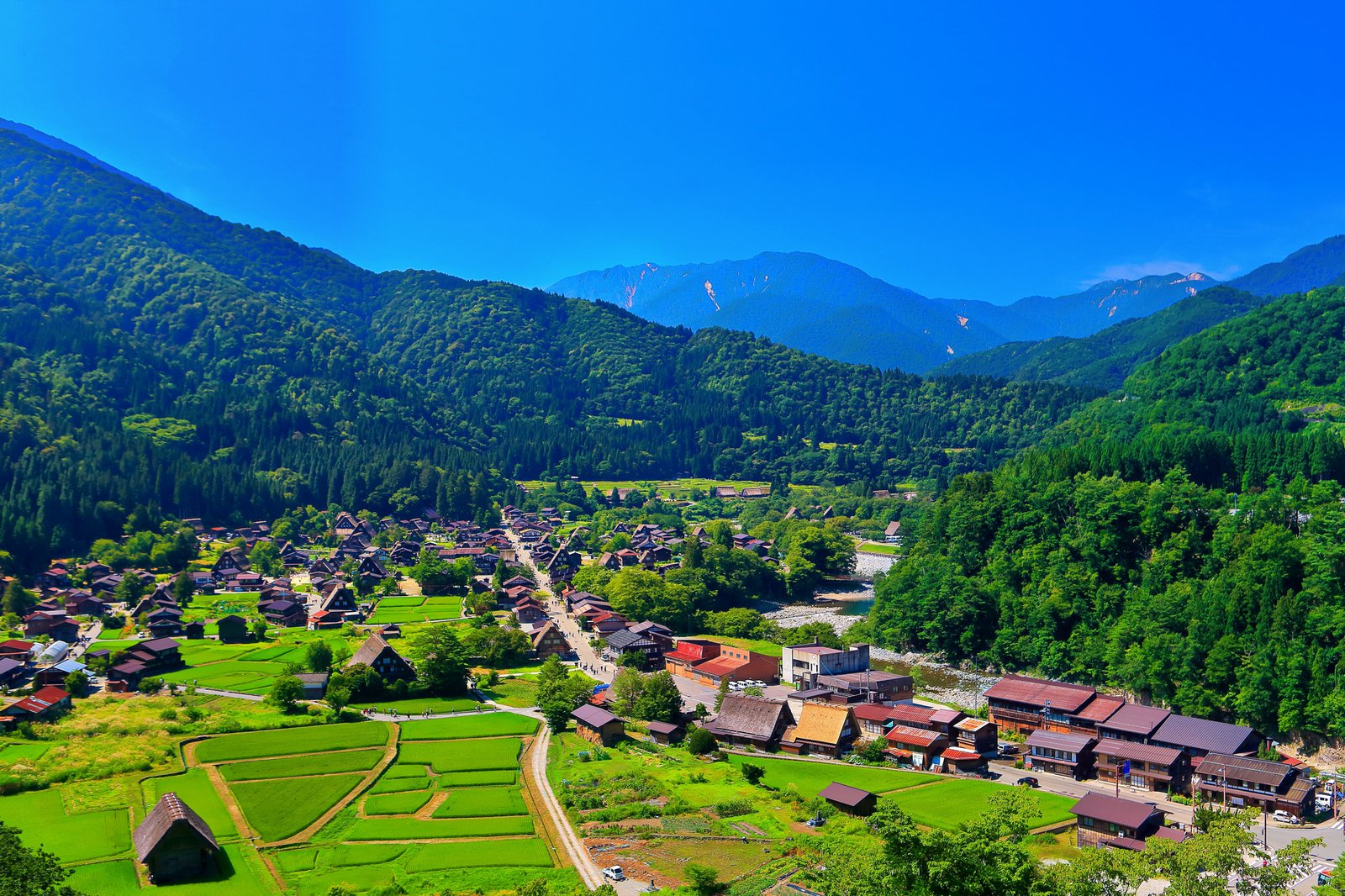
The Ogimachi settlement in Shirakawa-go is a place people live in as well as visit. Shirakawa village’s page on the settlement says the fields, woodland, roads and waterways around its Gassho-style houses are all covered by preservation along with the houses, and the village’s sightseeing page describes one of the houses it lists as still lived in today.
Who this is for: visitors planning a day in Ogimachi in Shirakawa village, Gifu, who want the hours, fees, bus and car park basics and the official pages to check before they go, and a short, sourced account of the roofs and of the preservation movement.
The short version: UNESCO’s page gives 1995 as the date of inscription of the Historic Villages of Shirakawa-go and Gokayama, which comprise Ogimachi in the Shirakawa-go region and Ainokura and Suganuma in the Gokayama region, along the Sho River in Gifu and Toyama Prefectures; this guide is about Ogimachi only. Shirakawa village’s access page gives about 50 minutes by bus from Takayama station to Shirakawa-go, and says buses in Shirakawa-go stop at the bus terminal on the north side of Ogimachi. People live in the settlement, so read the village’s requests to visitors first.
Which way in fits your visit
| If… | Then lean towards… | Check |
|---|---|---|
| You are coming from Takayama | A bus from Takayama station, about 50 minutes to Shirakawa-go on the village’s access page | Village access page |
| You are coming via Johana | The bus from the stop at Johana station to Shirakawa-go (Ogimachi), listed on the village’s bus timetable as of 1 April 2026; check booking, operating days and fares with the operator | Village timetable (PDF) |
| You are driving | The village-run car park, then the bridge, crossed on foot into the settlement | Village page on the car park |
| You want the view over the whole settlement | The observation deck on the old castle site above the settlement | Village page on the observation deck |
The village’s access page carries an older update date, so confirm the bus you plan to use with the bus operator before you travel.
Opening hours, fees and closed days
The table gives the hours, admission or parking fees and closed days as printed on pages of Shirakawa village’s website, retrieved on 2026-11-09. Each facility page carries a note that its details are for reference and may differ from the latest information, and the date it was last updated is shown in the last column.
| Place | Hours | Fee | Closed | Source (page last updated) |
|---|---|---|---|---|
| A Gassho-style house, open in part | 9:00–17:00 | Adult (junior high school age and over) 400 yen; child (primary school age) 200 yen (marked on the page as revised R6.4.1) | Irregular | Village page (27 January 2022) |
| A Gassho-style house | 9:00–17:00 | Adult 400 yen; child 200 yen | Wednesdays (open when Wednesday is a public holiday) | Village page (28 July 2020) |
| A Gassho-style house | 9:00–17:00 | Adult 400 yen; child 200 yen | Irregular | Village page (26 January 2022) |
| A temple building with a local museum upstairs | April–November 8:30–17:00; December–March 9:00–16:00 | Adult 400 yen; child (primary and junior high school age) 200 yen | Irregular | Village page (14 June 2012) |
| An open-air museum of relocated Gassho-style houses | March–November 8:40–17:00; December–February 9:00–16:00 | Adult 800 yen; child 400 yen | April–November: open every day; December–March: Thursdays (the day before, when Thursday is a public holiday) | Village page (18 May 2021) |
| The village-run car park | 8:00–17:00, last entry 16:30 | Ordinary car 2,000 yen; large vehicle 10,000 yen; two-wheeler 500 yen | Check official: car park page | Village page (no date shown) |
| The information centre next to the car park | Information desk 9:30–15:30 (the page says the hours may shift with circumstances); the car park page gives 8:00–17:00 for the building | Check official: information centre page | Check official: information centre page | Village page (24 July 2013) |
| The bus terminal | 8:30–17:30 | Check official: bus terminal page | Check official: bus terminal page | Village page (1 October 2016) |
| The observation deck | Check official: observation deck page | Check official: observation deck page | Check official: observation deck page | Village page (1 February 2022) |
The village’s sightseeing page says the fees for the village-run car parks were revised upwards from 1 October 2025 (village sightseeing page); the car park page does not say whether its figures are before or after that revision, so check the fee on the day. Group fees, reduced fees and the two temporary car parks are on the pages linked in the table.
Getting there
- From Takayama: The bus operator runs buses from the bus centre in Takayama to Shirakawa-go; its route page gives about 50 minutes and says some services need a reservation (bus operator’s route page). The same operator has announced a change to fares and times on this route from 1 December 2026 (operator’s notice). The village’s access page also gives about 50 minutes from Takayama station (village access page).
- From Takaoka and Johana: A bus operator runs a service between Takaoka, Johana, Gokayama and Shirakawa-go; its page says part of the seats can be reserved and that some services are suspended for the time being (bus operator’s route page). The village’s timetable as of 1 April 2026 lists this route from the stop at Johana station (village timetable (PDF)).
- From Kanazawa: the village’s access page gives about 1 hour 15 minutes by bus from Kanazawa station (village access page).
- Arriving by bus: the village’s page says the bus terminal is for route buses only, beside the junction on National Route 156 on the north side of the World Heritage area, and that it has a waiting room, toilets and a tourist information counter that sells bus tickets (bus terminal page).
- Arriving by car: private cars cannot park or drop off at the bus terminal, and the village asks drivers to use the village-run car park (bus terminal page); from there, the bridge is crossed on foot into the settlement (car park page).
- Delays, road closures, extra services and light-up events: these change from day to day and year to year, so no times are given here. Check the Takayama route page, the Takaoka and Johana route page and the operator’s light-up notice.
A settlement that is still lived in
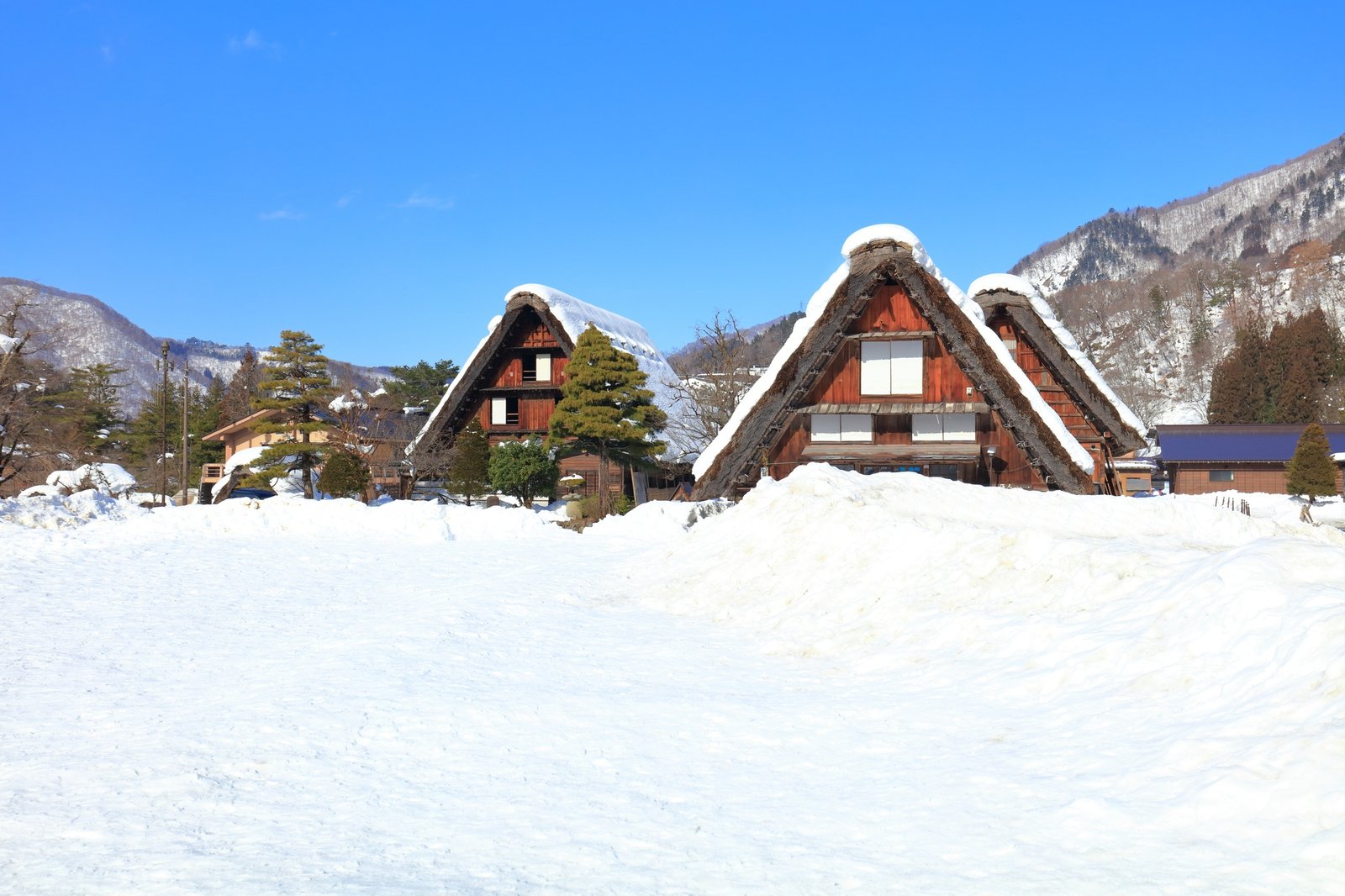
Shirakawa village’s page on the Ogimachi settlement says the buildings at the core of the settlement are Gassho-style houses, and that the fields, woodland, roads and waterways around them are all covered by preservation, keeping the historic landscape of a farming and mountain village (village settlement page). The village’s sightseeing page describes the settlement as a place where tradition and people’s daily lives continue, and lists a Gassho-style house that is still lived in (village sightseeing page). For the hours and fees of the main houses and facilities, see the table above.
What to do: treat the lanes, fields and houses as people’s homes and workplaces, and read the village’s requests to visitors (listed in the sightseeing menu of the village’s pages) before you arrive. Where to verify: the village sightseeing page and the village settlement page.
Why the roofs look the way they do
From the observation deck on the old castle site, the village’s page says, the Ogimachi settlement spreads out below (village page on the observation deck). UNESCO’s page says the large houses “have steeply-pitched thatched roofs and have been preserved in groups” (UNESCO page). The same page says this house type “evolved to adapt to the natural environment and site-specific social and economic circumstances in particular the cultivation of mulberry trees and the rearing of silkworms” (UNESCO page).
What to do: look at the houses together with the fields and waterways around them, not the roofs alone, and use the observation deck for the overall view; the table above links the village’s page on it. Where to verify: the UNESCO page and the village page on the observation deck.
How the residents chose to keep the houses
Shirakawa village’s page on the Ogimachi settlement says that in 1971 residents set up an association to protect the natural environment of the Ogimachi settlement, and drew up a residents’ charter of three principles for the Gassho-style houses: do not sell, do not rent, do not destroy (village settlement page). The village’s overview of the Ogimachi district says the residents formed the association out of concern at the state of the settlement, and that the preservation movement continues today and now covers the houses together with the environment around them (village district overview). Read as a periodization, the village dates this residents’ movement to 1971, and UNESCO’s page dates the inscription to 1995.
What to do: read the village’s district overview before you go for the full account of the preservation scheme. Where to verify: the village settlement page and the village district overview.
What we have not verified
- Which railway station is nearest to Ogimachi, and on what measure: this guide names Takayama station and Johana station only as places where the village’s pages show buses to Shirakawa-go.
- Bus timetables, booking rules, fares and journey times for a given day, and road and car park conditions: check with the operators and the village’s official pages.
- Hours, fees and closed days for houses, shops and facilities not in the table above, and whether the fees on the car park page are those after the revision of 1 October 2025.
- Official English names for the bus terminal, the car park, the bridge, the observation deck and the residents’ association: the first four are given above in Japanese with a short description, and the association by a description only.
Official sources
| Topic | Source | Checked |
|---|---|---|
| UNESCO: date of inscription, the three villages, the Sho River, the house type and its adaptation to mulberry growing and silkworm rearing | whc.unesco.org/en/list/734 | 2026-11-09 |
| Shirakawa village: what is covered by preservation in Ogimachi; the 1971 association and its three principles | www.vill.shirakawa.lg.jp/1346.htm | 2026-11-09 |
| Shirakawa village: the settlement as a lived-in place; the car park fee revision of 1 October 2025 | www.vill.shirakawa.lg.jp/1960.htm | 2026-11-09 |
| Shirakawa village: why residents formed the association; the movement today | www.vill.shirakawa.lg.jp/1998.htm | 2026-11-09 |
| Shirakawa village: observation deck (no hours or fees printed) | www.vill.shirakawa.lg.jp/1284.htm | 2026-11-09 |
| Shirakawa village: bus from Takayama station and from Kanazawa station, and the bus terminal | www.vill.shirakawa.lg.jp/1155.htm | 2026-11-09 |
| Shirakawa village: bus timetable as of 1 April 2026, bus from Johana station | www.vill.shirakawa.lg.jp/secure/1233/R8.4.1jikokuhyou.pdf | 2026-11-09 |
| Shirakawa village: car park, its hours and fees, and the bridge into the settlement | www.vill.shirakawa.lg.jp/2325.htm | 2026-11-09 |
| Shirakawa village: hours, fees and closed days of a Gassho-style house, open in part | www.vill.shirakawa.lg.jp/1279.htm | 2026-11-09 |
| Shirakawa village: hours, fees and closed days of a Gassho-style house (closed on Wednesdays) | www.vill.shirakawa.lg.jp/1280.htm | 2026-11-09 |
| Shirakawa village: hours, fees and closed days of a Gassho-style house (irregular closures) | www.vill.shirakawa.lg.jp/1281.htm | 2026-11-09 |
| Shirakawa village: hours, fees and closed days of a temple building with a local museum upstairs | www.vill.shirakawa.lg.jp/1282.htm | 2026-11-09 |
| Shirakawa village: hours, fees and closed days of an open-air museum of relocated Gassho-style houses | www.vill.shirakawa.lg.jp/1184.htm | 2026-11-09 |
| Shirakawa village: hours of the information centre next to the car park | www.vill.shirakawa.lg.jp/1185.htm | 2026-11-09 |
| Shirakawa village: the bus terminal, its hours and the rule on private cars | www.vill.shirakawa.lg.jp/1172.htm | 2026-11-09 |
| Bus operator: Takayama–Shirakawa-go route, about 50 minutes, reservations on some services | www.nouhibus.co.jp/route_bus/shirakawago/ | 2026-11-09 |
| Bus operator: change to fares and times from 1 December 2026 | www.nouhibus.co.jp/261020-2/ | 2026-11-09 |
| Bus operator: light-up notice (link only) | www.nouhibus.co.jp/2027lu/ | 2026-11-09 |
| Bus operator: service between Takaoka, Johana, Gokayama and Shirakawa-go, seat reservations, suspended services | www.kaetsunou.co.jp/regular/sekaiisan | 2026-11-09 |