Saba (Scomber japonicus and Scomber australasicus): the Anisakis species by production area for Scomber japonicus, and what vinegar does not kill
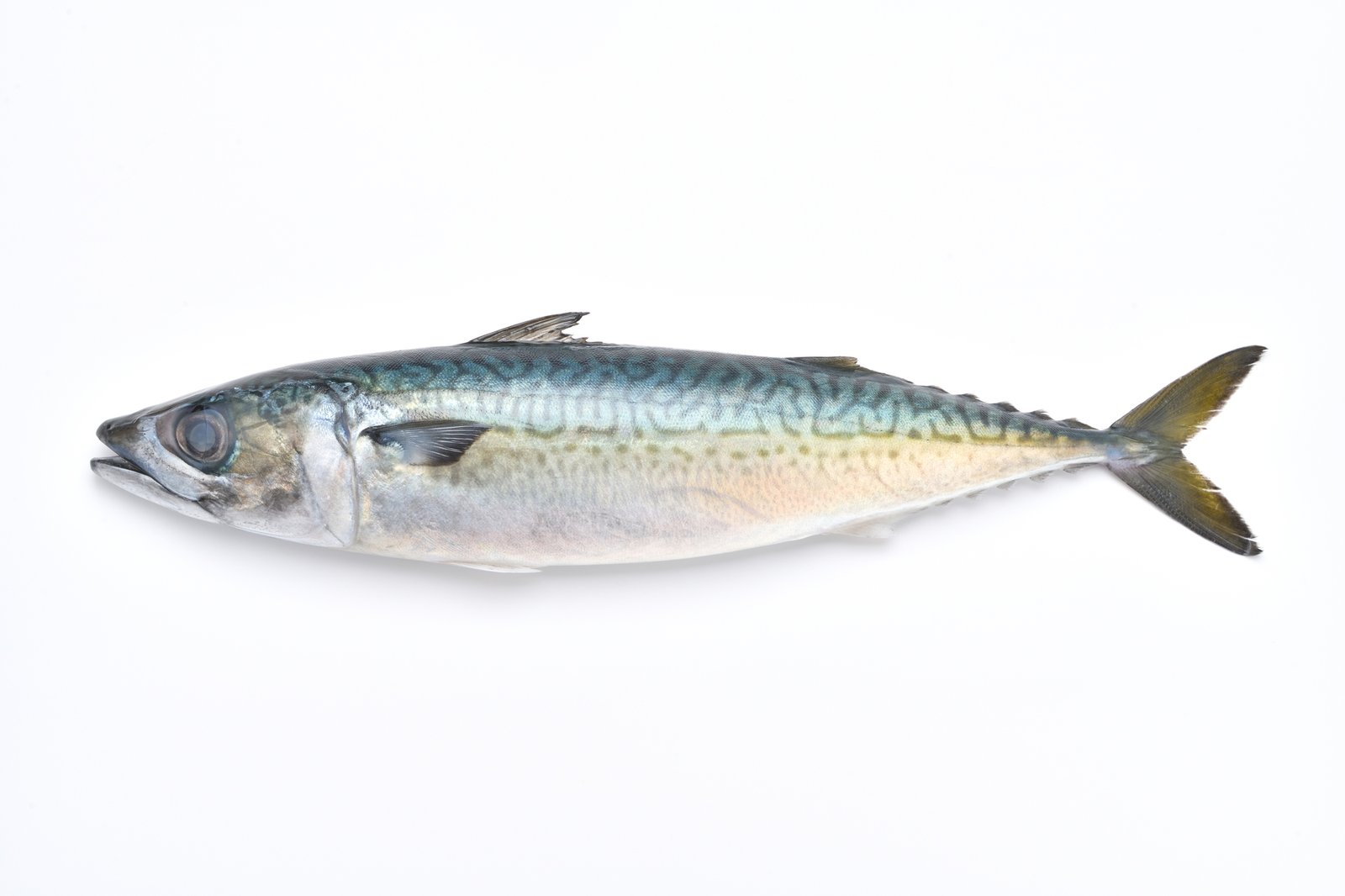
The food naming guideline kept by the Consumer Affairs Agency enters Scomber japonicus under its standard Japanese name, and Scomber australasicus under its standard Japanese name, goma-saba (Consumer Affairs Agency, appendix table 1 of the food naming guideline (PDF, in Japanese)).
Who this is for: readers who want the two mackerel entries from the official guideline, and the official notes on Anisakis in Scomber japonicus by production area and on the vinegar, salt, soy and wasabi that do not kill the larvae.
The short version: the guideline lists Scomber japonicus under its standard Japanese name and Scomber australasicus as goma-saba (Consumer Affairs Agency, appendix table 1 of the food naming guideline (PDF, in Japanese)). A food safety fact sheet says that, for Scomber japonicus by production area, fish from the Pacific side carry mostly Anisakis simplex sensu stricto and fish from the East China Sea and the Sea of Japan carry mostly A. pegreffii (Food Safety Commission of Japan, Anisakis fact sheet (PDF, in Japanese)). Vinegar used in ordinary cooking, salt, soy sauce and wasabi do not kill the larvae (Ministry of Health, Labour and Welfare, Anisakis (in Japanese)). The season, main production areas, and booking or order conditions are not verified here.
The names
The guideline enters the two fish as follows (Consumer Affairs Agency, appendix table 1 of the food naming guideline (PDF, in Japanese)):
| Guideline entry | Scientific name |
|---|---|
| Standard Japanese name (not romanised here) | Scomber japonicus |
| Standard Japanese name: goma-saba | Scomber australasicus |
Season and production areas
| Name | Season | Main production areas |
|---|---|---|
| Scomber japonicus and Scomber australasicus | Not verified | Not verified |
No season or main production area is given on the official pages cited here, so both columns remain not verified.
Points that can affect a reservation or an order
No booking or order condition is given on the official pages cited here (not verified).
Anisakis and production areas
The food safety fact sheet on Anisakis says the final hosts are marine mammals such as dolphins, whales and seals, and names Anisakis simplex, Pseudoterranova decipiens and A. physeteris as the species that cause the illness; it says infection in humans has been confirmed for A. simplex sensu stricto and A. pegreffii (Food Safety Commission of Japan, Anisakis fact sheet (PDF, in Japanese)).
The same fact sheet says that for Scomber japonicus, the dominant Anisakis species differs by production area: fish from the Pacific side carry mostly A. simplex sensu stricto, while fish from the East China Sea and the Sea of Japan carry mostly A. pegreffii (Food Safety Commission of Japan, Anisakis fact sheet (PDF, in Japanese)).
What vinegar, salt, soy and wasabi do not kill
The Ministry of Health, Labour and Welfare lists saba (without specifying a species on that page) among the fish that carry Anisakis larvae. Its page says the larvae pierce the stomach or intestinal wall when the fish is eaten raw, that they are removed by eye, and that fish is frozen at −20 °C for 24 hours or more, or heated to 70 °C or more (or 60 °C for one minute) (Ministry of Health, Labour and Welfare, Anisakis (in Japanese)).
The same page says that treatment with the vinegar used in ordinary cooking, salting, or adding soy sauce or wasabi does not kill Anisakis larvae (Ministry of Health, Labour and Welfare, Anisakis (in Japanese)). This is a safety statement, not a statement of the origin of any preparation method.
Allergy labelling for saba
The Consumer Affairs Agency lists saba (without specifying a species on the allergen list) among the items treated as those next to the designated allergens, for which the number of reported cases is smaller than for the designated allergens and for which labelling is recommended (optional) (Consumer Affairs Agency, allergy labelling (PDF, in Japanese)).
What we have not verified
- The season and the main production areas: not verified on the official pages cited here.
- Booking or order conditions: not verified on the official pages cited here.
- The origin of the preparation method (vinegared mackerel): not yet verified.
- The English form of the two standard Japanese names: the guideline’s appendix table has no English-name column.
Official sources
| Topic | Source | Checked |
|---|---|---|
| Names of Scomber japonicus and goma-saba | Consumer Affairs Agency, appendix table 1 of the food naming guideline (PDF) | 2026-11-11 |
| Anisakis lifecycle and production-area species | Food Safety Commission of Japan, Anisakis fact sheet (PDF) | 2026-11-11 |
| Anisakis removal, freezing, heating, and vinegar, salt, soy and wasabi | Ministry of Health, Labour and Welfare, Anisakis | 2026-11-11 |
| Allergy labelling for saba | Consumer Affairs Agency, allergy labelling (PDF) | 2026-11-11 |