Place name in Japanese: 龍泉洞, Ryūsendō.
Ryusendo, Iwaizumi, Iwate: the limestone cave, the underground lakes and the bus from Morioka Station
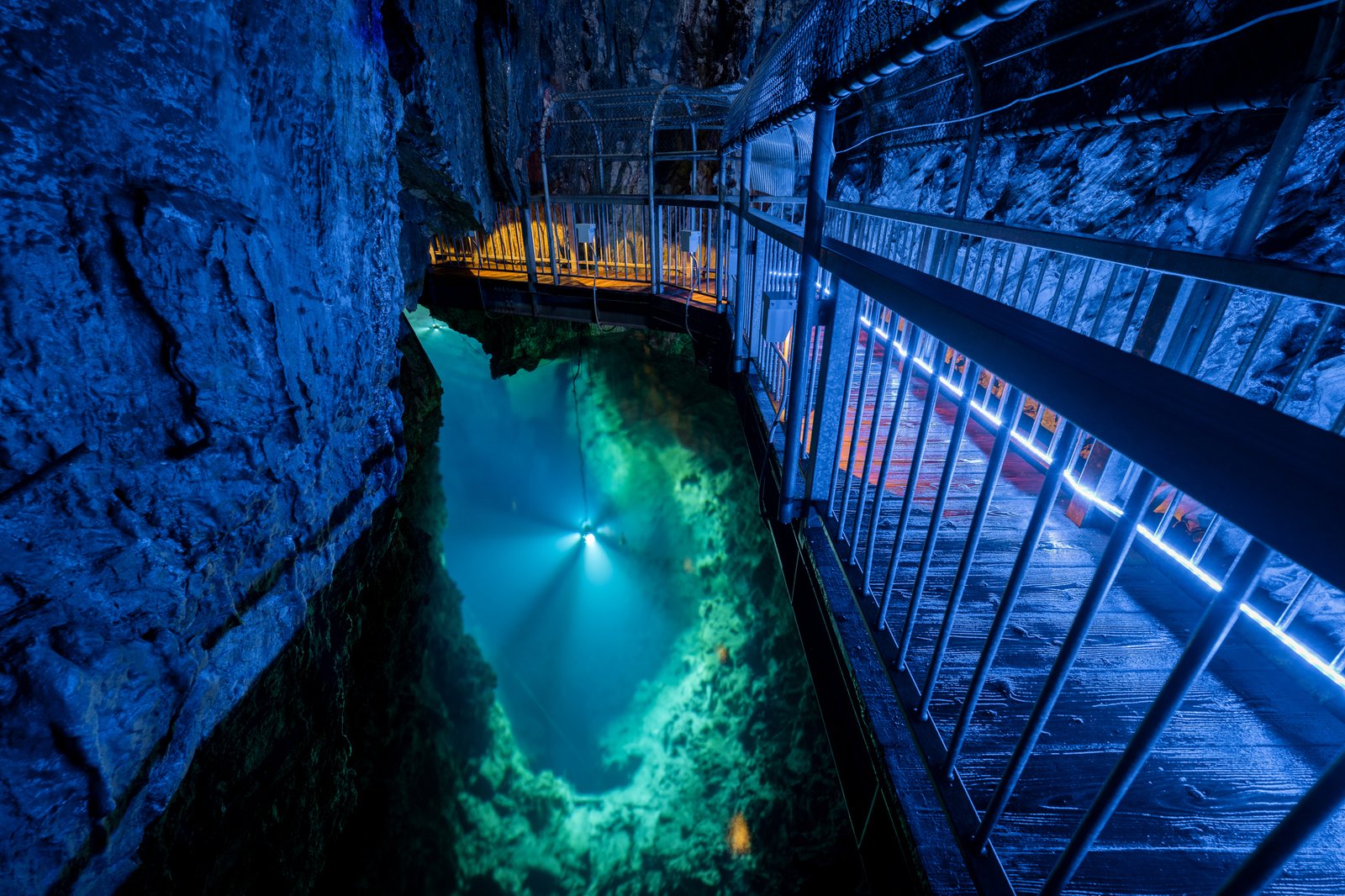
The Agency for Cultural Affairs database records the site as a natural monument under the name Iwaizumi Watsukutsu and Bats, and prints the designation on 14 December 1938, also printed as Showa 13.12.14 in the Agency’s dating (Agency for Cultural Affairs database (in Japanese)). It gives the location as Iwaizumi Town, Shimohei District, in Iwate (Agency for Cultural Affairs database (in Japanese)). The cave site, which titles itself the Iwaizumi Town Ryusendo website and prints the English heading About Ryusendo, says the known length of the cave is 4,088 metres, of which 700 metres are open, and that eight underground lakes have been found, of which three are open (Ryusendo, about the cave (in Japanese)).
Who this is for: travellers arriving at Morioka Station who want the admission charges, the hours, and the bus fare to the cave.
The short version: take a JR Bus Tohoku bus from stop 1 at the east exit of Morioka Station. The operator prints a one-way adult fare of 2,710 yen to Ryusendo. The cave site prints admission of 1,100 yen for adults (high school and above) and 550 yen for elementary and junior high school pupils, with one ticket covering the cave and the science museum, and standing hours of 8:30 to 17:00 from October to April and 8:30 to 18:00 from May to September. For 1 December 2026 to 28 February 2027, the cave site and the town print a last entry at 16:00. Check the operator page for current bus times.
The cave route or the bus from Morioka first
| If… | Then lean towards… | Check |
|---|---|---|
| You want to walk the open cave route and see the underground lakes | The cave, with one ticket that also covers the science museum | Ryusendo, hours and admission (in Japanese) |
| You travel between 1 December 2026 and 28 February 2027 | Plan around a last entry at 16:00 | Ryusendo, winter hours notice (in Japanese) |
| You are arriving by bus from Morioka Station | The JR Bus Tohoku bus from stop 1 at the east exit, to the Ryusendo-mae stop | JR Bus Tohoku, Morioka–Iwaizumi / Ryusendo (in Japanese) |
| You are arriving by car | The four car parks the cave site names, with printed distances and capacities | Ryusendo, hours and admission (in Japanese) |
What to do: check the town and cave notices for the last entry in winter, and the bus operator page for the day’s departures. Where to verify: the winter hours notice (in Japanese), the town notice (in Japanese), and the JR Bus Tohoku page (in Japanese).
Hours, admission and bus fares
| Item | Time or fee | Where to check |
|---|---|---|
| Standing hours, October to April | 8:30 to 17:00; open every day, with temporary closures when the cave floods | Ryusendo, hours and admission (in Japanese) |
| Standing hours, May to September | 8:30 to 18:00; open every day, with temporary closures when the cave floods | Ryusendo, hours and admission (in Japanese) |
| Hours, 1 December 2026 to 28 February 2027 | 8:30 to 16:00; last entry at 16:00 | Ryusendo, winter hours notice (in Japanese) |
| Town print of the winter last entry, December to February | General admission until 16:00 | Iwaizumi Town, winter entry notice (in Japanese) |
| Time on site, as printed on the winter notice | About 30 to 40 minutes in the cave and 10 to 15 minutes in the science museum, or about an hour together | Ryusendo, winter hours notice (in Japanese) |
| Admission, adult (high school and above) | 1,100 yen; one ticket covers the cave and the science museum; tax is included; preschool children are free | Ryusendo, hours and admission (in Japanese) |
| Admission, elementary and junior high school | 550 yen | Ryusendo, hours and admission (in Japanese) |
| Group and disability rates | Printed on the same admission table | Ryusendo, hours and admission (in Japanese) |
| JR EAST PASS or JAPAN RAIL PASS admission discount | 1,100 yen to 930 yen for adults; 550 yen to 380 yen for elementary and junior high school pupils. The operator says that passengers with either pass who ride the Hayasaka Kogen line and alight in Iwaizumi Town or at Ryusendo-mae are given a boarding certificate to submit at the cave window; the certificate is valid only for the person it was issued to, and one certificate is for one person | JR Bus Tohoku, Morioka–Iwaizumi / Ryusendo (in Japanese) |
| Bus, Morioka Station East Exit to Ryusendo, adult one way | 2,710 yen; elementary school pupils pay half; junior high school and above pay the adult fare | JR Bus Tohoku, Morioka–Iwaizumi / Ryusendo (in Japanese) |
| Current bus departure times | Check official | JR Bus Tohoku, Morioka–Iwaizumi / Ryusendo (in Japanese) |
| Town Komoto Line, reference fare from Iwaizumi Fire Station to Ryusendo-mae | 200 yen | Iwaizumi Town, Komoto Line timetable (PDF, in Japanese) |
| Current Komoto Line times | Check official | Iwaizumi Town, Komoto Line timetable (PDF, in Japanese) |
| First car park | About 400 metres from the cave; 80 cars | Ryusendo, hours and admission (in Japanese) |
| Second car park | About 70 metres from the cave; 47 cars | Ryusendo, hours and admission (in Japanese) |
| Science museum car park | About 100 metres from the cave; 20 cars | Ryusendo, hours and admission (in Japanese) |
| Third car park | About 500 metres from the cave; 295 cars | Ryusendo, hours and admission (in Japanese) |
What to do: use the printed admission charges and hours above, and check the bus operator page for the day’s departures. Where to verify: the hours and admission page (in Japanese), the winter hours notice (in Japanese), and the JR Bus Tohoku page (in Japanese).
Getting there and how long it takes
The operator says buses on the Morioka–Iwaizumi / Ryusendo route, the Hayasaka Kogen line, leave from stop 1 at the east exit of Morioka Station (JR Bus Tohoku, Morioka–Iwaizumi / Ryusendo (in Japanese)). The operator’s timetable, printed as revised on 1 April 2024, gives times from Morioka Station East Exit to Ryusendo-mae of about 133 to 134 minutes (JR Bus Tohoku, Morioka–Iwaizumi / Ryusendo (in Japanese)). The cave site’s access page prints a ride of about 120 minutes on that JR bus from Morioka to Iwaizumi (Ryusendo) (Ryusendo, access (in Japanese)). Check official for the day’s times. Iwaizumi Town’s access page points to the same operator’s Hayasaka Kogen line (Iwaizumi Town, transport access (in Japanese)). The town also publishes a Komoto Line timetable, revised on 1 October of Reiwa 8, that includes a stop printed in Japanese, which we romanize as Ryusendo-mae and a reference fare of 200 yen from Iwaizumi Fire Station; only some services on that timetable call at the stop (Iwaizumi Town, Komoto Line timetable (PDF, in Japanese)).
The cave site’s access page prints a drive of about 110 minutes from Morioka to Iwaizumi (Ryusendo) on National Route 455 (Ryusendo, access (in Japanese)).
What to do: take the bus from stop 1 at the east exit, and check the operator page for the day’s times before you travel. Where to verify: the JR Bus Tohoku page (in Japanese) and the cave access page (in Japanese).
What to see
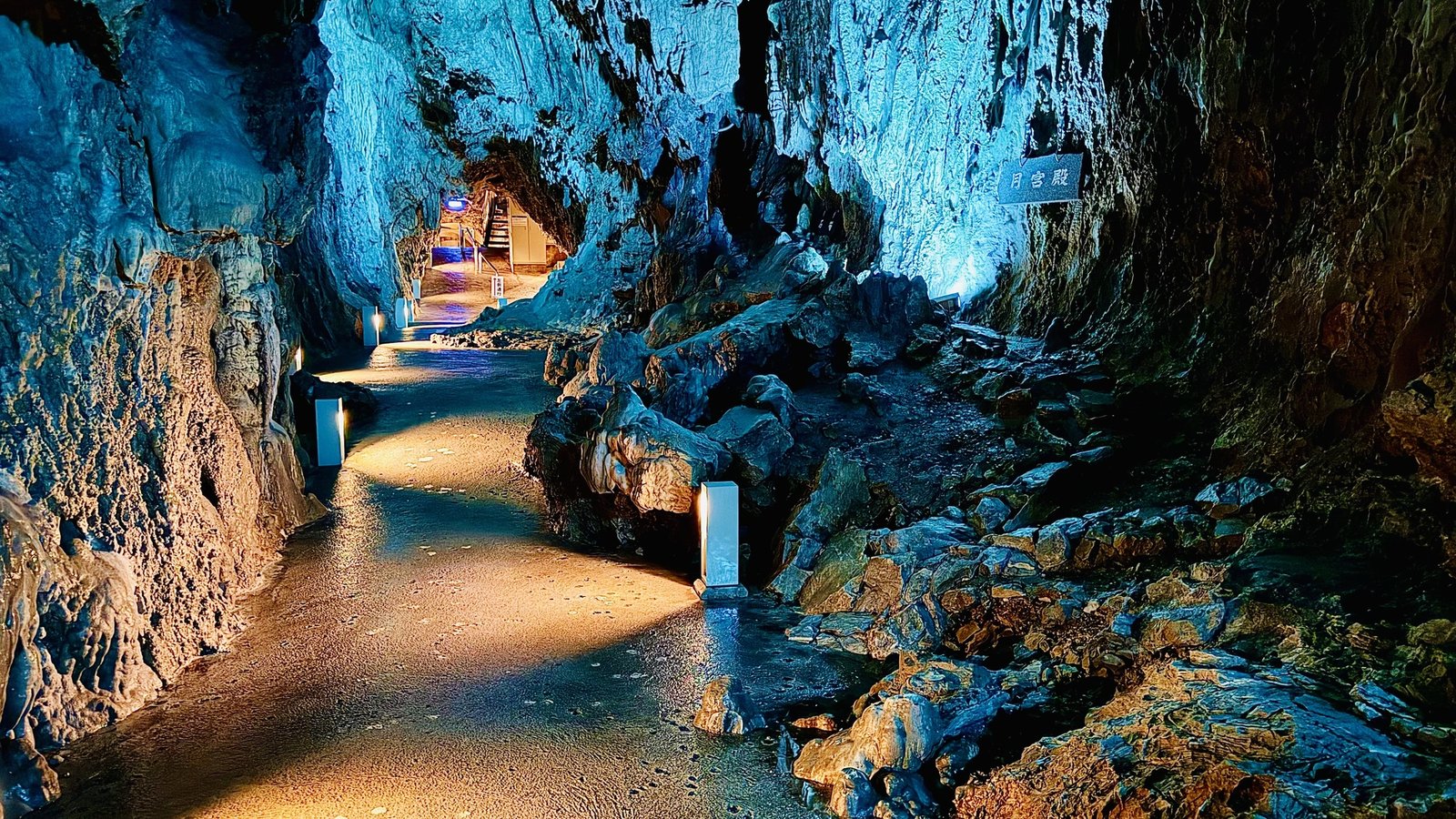
The cave site describes stalactites formed over a long span of time and blue underground lakes, and prints a known length of 4,088 metres, of which 700 metres are open, with eight underground lakes found and three of them open (Ryusendo, about the cave (in Japanese)). Its hours page says the stairs at the far end of the open route, by the third underground lake, have about 270 steps up and down, with a viewpoint over the first underground lake along the way, and that once you start up those stairs you cannot turn back midway because the way beyond is very narrow (Ryusendo, hours and admission (in Japanese)). It advises people who are unwell, unsure of their legs, or uneasy with heights not to climb, and to return from the third lake by the way they came (Ryusendo, hours and admission (in Japanese)). Pushchairs cannot be taken into the cave because of the stairs, and pets are not allowed, in order to protect the cave’s ecology (Ryusendo, hours and admission (in Japanese)). Wheelchair users may enter on the conditions the same page prints, including a turn-back before the first lake and a change to a wheelchair kept at the office, but not on busy days when the route is made one way (Ryusendo, hours and admission (in Japanese)). The hours page says the cave is busiest in Golden Week and Obon (Ryusendo, hours and admission (in Japanese)). In busy periods the route is one way, and visitors leave by a temporary tunnel exit after climbing about 60 steps (Ryusendo, hours and admission (in Japanese)). The cave is still growing and water drips from above; after rain the drips can be heavier, sometimes even once the rain outside has stopped, and a rain jacket may be needed (Ryusendo, hours and admission (in Japanese)). If flooding reaches ground that cannot be made safe, the cave closes and only the science museum stays open (Ryusendo, hours and admission (in Japanese)).
The science museum stands in a cave the site says was found in the 42nd year of Showa (1967) during work to widen a prefectural road, across the river from Ryusendo, and opened in the 50th year of Showa (1975). The same page says visitors show at its gate the ticket bought at the Ryusendo window (Ryusendo, science museum (in Japanese)). The winter notice prints a visit of about 10 to 15 minutes there (Ryusendo, winter hours notice (in Japanese)).
What to do: walk the open cave route as far as you are comfortable going, and use the same ticket for the science museum. Where to verify: the about page (in Japanese) and the hours and admission page (in Japanese).
A limestone cave designated with its bats
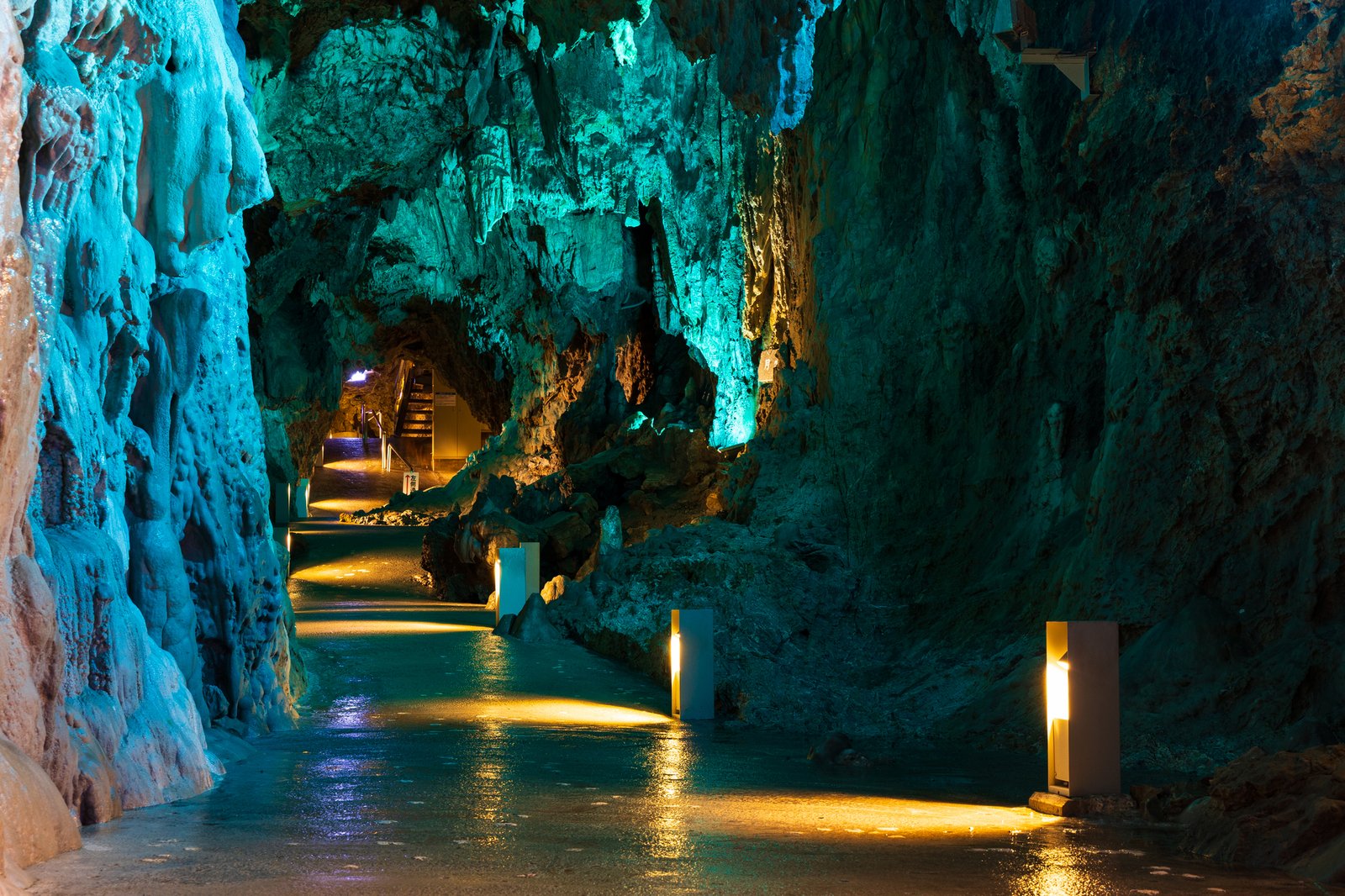
The Agency’s commentary describes a cave that opens at the eastern foot of a mountain named in the commentary; the Agency prints that name in characters only, with no reading, and places the cave in limestone of Palaeozoic strata, issuing a clear spring (Agency for Cultural Affairs database (in Japanese)). It says the cave has many branches, with beautiful stalactites and stalagmites growing in places, and that the caves already surveyed extend about 1,600 metres (Agency for Cultural Affairs database (in Japanese)). Near the entrance, it records, a side cave holds a large group of bats that live and winter there, with a heavy accumulation of droppings (Agency for Cultural Affairs database (in Japanese)). The bats living in the cave, it says, are of two kinds, printed in kana, which we transliterate as usagi-komori and ko-kikugashira-komori, both then known as endemic to this country and of academic value (Agency for Cultural Affairs database (in Japanese)). The same record prints the designation criteria as caves, and as characteristic animals or animal communities in the natural environment (Agency for Cultural Affairs database (in Japanese)). Cultural Heritage Online prints the same name and the same reading in kana (our transliteration: Iwaizumi-watsukutsu oyobi komori), the designation date as 19381214, and the management body as Iwaizumi Town from 13 February of Showa 15 (Cultural Heritage Online (in Japanese)).
What to do: read the monument as the Agency records it, a cave designated together with its bats, and take the owner’s current figures for how much of the cave and how many of the lakes are open. Where to verify: the Agency for Cultural Affairs database (in Japanese) and the about page (in Japanese).
Official sources
| Topic | Source | Checked |
|---|---|---|
| Designation date, location, criteria and commentary on the cave and bats | Agency for Cultural Affairs database | 2026-11-14 |
| Same name, reading, commentary, 19381214 date and management body | Cultural Heritage Online | 2026-11-14 |
| Known length, open length, underground lakes, English heading About Ryusendo | Ryusendo, about the cave | 2026-11-14 |
| Standing hours, admission, parking, stairs, rules and flood closures | Ryusendo, hours and admission | 2026-11-14 |
| Winter hours 1 December 2026 to 28 February 2027, visit times | Ryusendo, winter hours notice | 2026-11-14 |
| Bus ride of about 120 minutes on the cave access page; drive of about 110 minutes | Ryusendo, access | 2026-11-14 |
| Science museum, year found and year opened, ticket at the gate | Ryusendo, science museum | 2026-11-14 |
| Town print of the winter last entry, December to February | Iwaizumi Town, winter entry notice | 2026-11-14 |
| Town link to the operator, and other town bus PDFs | Iwaizumi Town, transport access | 2026-11-14 |
| Komoto Line reference fare and timetable; only some services call at Ryusendo-mae | Iwaizumi Town, Komoto Line timetable (PDF) | 2026-11-14 |
| Bus fare, stop 1, JR pass admission discount with a boarding certificate, timetable of about 133 to 134 minutes | JR Bus Tohoku, Morioka–Iwaizumi / Ryusendo | 2026-11-14 |
What we have not verified
- Current departure times on the JR Bus Tohoku route, and current times on the town Komoto Line. Use the operator page and the town PDF, which print the timetables (JR Bus Tohoku, Morioka–Iwaizumi / Ryusendo (in Japanese); Iwaizumi Town, Komoto Line timetable (PDF, in Japanese)).
- Official English names for the natural monument, the mountain in the Agency commentary, the two kinds of bat, the underground lakes, the science museum, the bus line and the stops, beyond the cave site’s print of Ryusendo, the town’s print of Iwaizumi Town, and the operator’s print of JR Bus Tohoku Co.,Ltd.