Ritsurin Garden, Kagawa: the train from central Takamatsu, hours by month, fees and the garden’s history
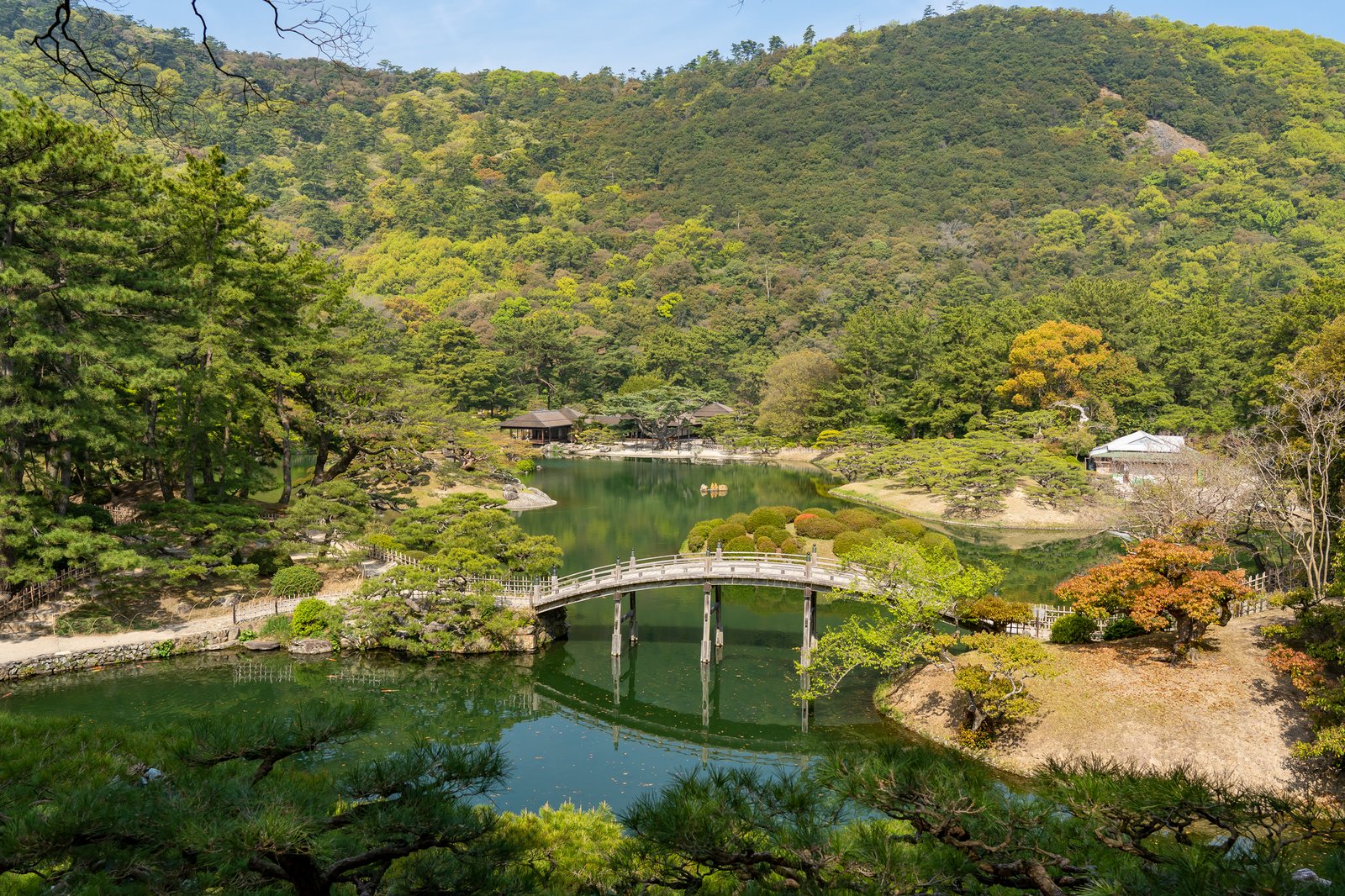
Ritsurin Garden in Takamatsu is a former villa garden of the Matsudaira family, lords of the Takamatsu Domain. The national designated cultural properties database lists it as a special place of scenic beauty, designated on 8 March 1922 and specially designated on 31 March 1953 (National designated cultural properties database (in Japanese)); the Agency for Cultural Affairs heritage site gives the 1922 designation as a place of scenic beauty (Agency for Cultural Affairs database (in Japanese)).
Who this is for: travellers in Takamatsu who want to walk the former garden of the lords of the Takamatsu Domain.
The short version: take the Kotohira Line from Takamatsu-Chikko for about 7 minutes to the station for the garden, then walk. The garden opens every day, with hours that change by month, and charges ¥500 for adults. Always follow the official pages linked below.
Train or JR
| If… | Then lean towards… | Check |
|---|---|---|
| You are starting near Takamatsu-Chikko or Kawaramachi | The Kotohira Line of the Takamatsu-Kotohira Electric Railroad to the station for the garden, then a walk of about 7 to 10 minutes, as the garden gives it | Railway, Kotohira Line timetable (PDF) |
| You are on a JR line | The JR station that the garden lists as a 3-minute walk away; Check official for trains | JR timetable for the station by the garden (PDF) |
Times, hours and fees
- Free admission days: the garden lists 1 January and 16 March, the anniversary of its opening (Ritsurin Garden, General Information and Access).
- Services: the same page lists coin lockers at the North Gate and the East Gate, free rental of wheelchairs, baby strollers and walkers, and a free guide service by volunteer staff.
- Before you go: check the garden’s and the railways’ official pages for changed hours, closures and timetable changes (Ritsurin Garden, General Information and Access; Railway, Kotohira Line timetable (PDF); JR timetable for the station by the garden (PDF)).
What to do: look up the hours for the month of your visit before you set off. Where to verify: the garden’s general information page.
Getting there and how long it takes
- By the Kotohira Line: in the railway’s timetable, trains towards Kotohira leave Takamatsu-Chikko at 6:00 and reach the station for the garden at 6:07, after Kawaramachi at 6:04 (Railway, Kotohira Line timetable (PDF)). For other trains, Check official with the railway.
- From the station for the garden: the garden’s general information page gives a 10-minute walk, and its leaflet gives 7 minutes (Ritsurin Garden, General Information and Access; Ritsurin Garden leaflet (PDF)).
- By JR: both garden pages give a 3-minute walk from the JR station by the garden. For JR trains, Check official with the JR timetable for that station (PDF).
What to do: choose the train that suits your starting point and allow time for the walk. Where to verify: the railway’s Kotohira Line timetable (PDF).
What to see
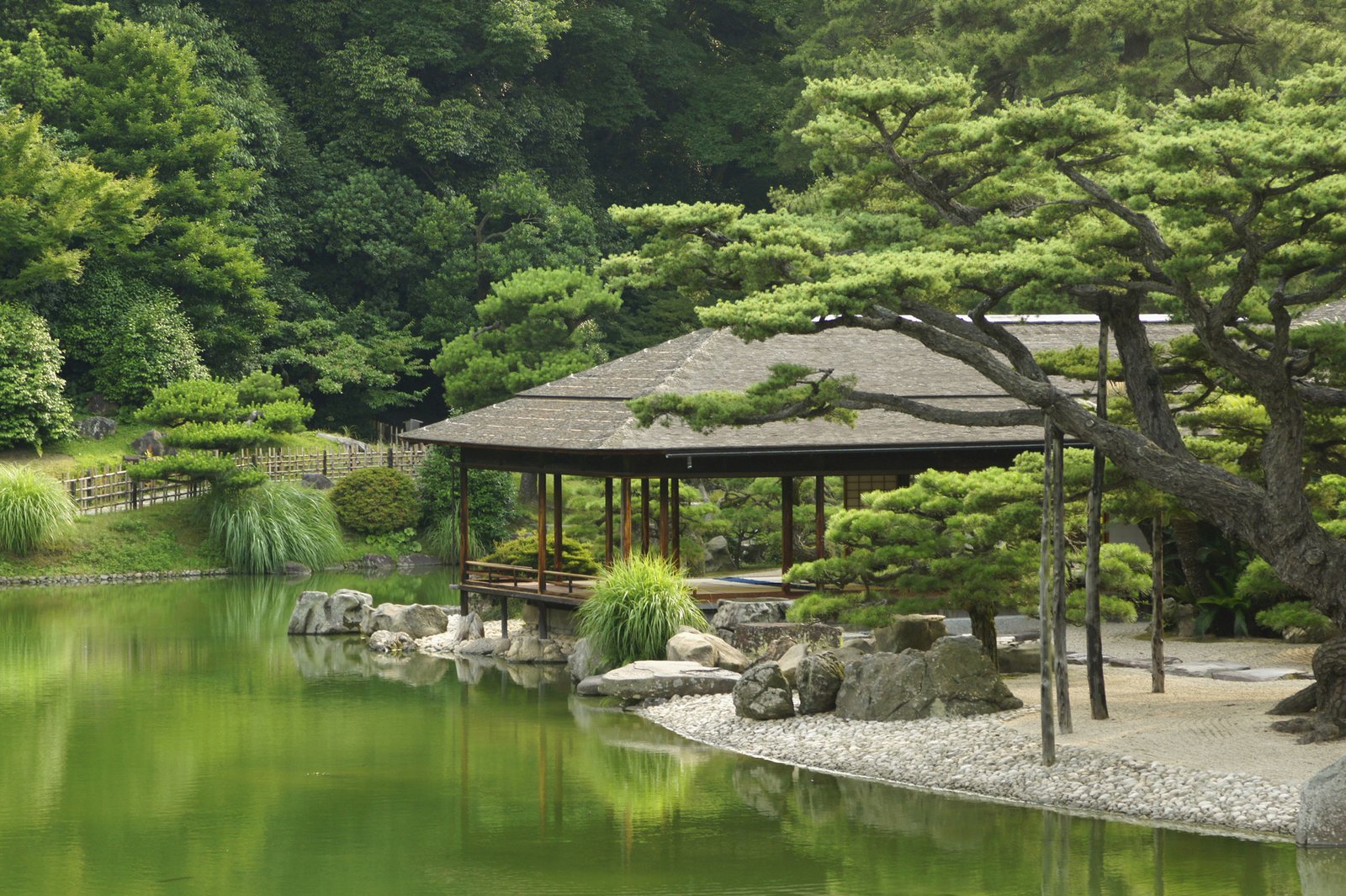
The garden’s leaflet tells its history (Ritsurin Garden leaflet (PDF)). It says the garden is believed to have started in the late 16th century from a garden of the Sato clan in the south-west corner of the present grounds, and that the area of Nanko Pond was formed around 1625, when Takatoshi Ikoma ruled Sanuki Province. In 1642 Yorishige Matsudaira began ruling the Takamatsu Domain and inherited the garden; he and the generations after him kept developing it for over 100 years until it was completed in 1745. Under the fifth lord, Yoritaka Matsudaira, the garden’s 60 scenic spots were named. The leaflet says the family used it as a villa for 228 years before it became a public garden in 1875. Takamatsu City’s cultural property page dates the Ikoma family’s work to around 1631 and gives 16 March 1875 as the day the garden passed to the prefecture and opened to the public (Takamatsu City, cultural property page (in Japanese)).
The garden’s viewing page describes Hirai-ho Hill, a landscaped hill made to resemble Mt. Fuji, with a view over Nanko Pond, the Kikugetsu-tei Teahouse and Engetsukyo Bridge (Ritsurin Garden, Viewing Spots). It also points to the Neagari Goyo-matsu Pine, a Japanese white pine that began as a miniature bonsai presented to the Takamatsu Domain by the 11th Tokugawa Shogun in 1833.
What to do: climb Hirai-ho Hill for the view across Nanko Pond. Where to verify: the garden’s viewing page.
The name of the Kikugetsu-tei Teahouse
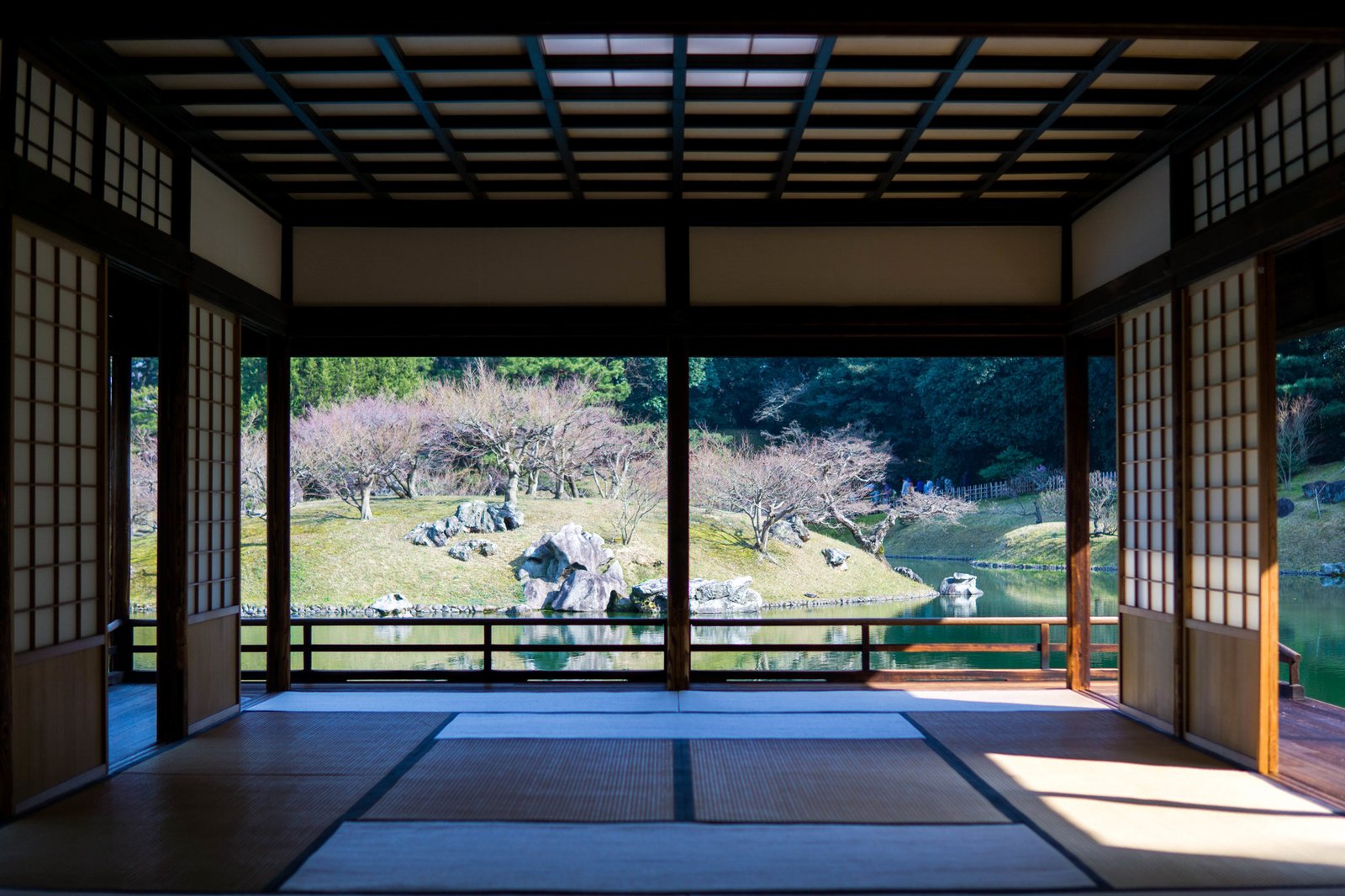
The garden’s viewing page says the Kikugetsu-tei Teahouse was dearly beloved by the successive lords of the Takamatsu Domain, and that its name comes from a line in a Chinese poem of the Tang Dynasty, which reads, “When I scoop up the water, I hold the moon in my hands.” (Ritsurin Garden, Viewing Spots). The leaflet tells the same story and calls the building a sukiya-zukuri style teahouse (Ritsurin Garden leaflet (PDF)).
What to do: look across Nanko Pond to the teahouse from Hirai-ho Hill. Where to verify: the garden’s viewing page.
Official sources
| Topic | Source | Checked |
|---|---|---|
| Special place of scenic beauty, designation dates | National designated cultural properties database | 2026-11-11 |
| Place of scenic beauty, 1922 designation | Agency for Cultural Affairs database | 2026-11-11 |
| Hours, fees, free days, services, walking times | Ritsurin Garden, General Information and Access | 2026-11-11 |
| History, walking times, teahouse | Ritsurin Garden leaflet | 2026-11-11 |
| Hirai-ho Hill, pine, teahouse name | Ritsurin Garden, Viewing Spots | 2026-11-11 |
| Ikoma family date, transfer and opening in 1875 | Takamatsu City, cultural property page | 2026-11-11 |
| Kotohira Line times | Railway, Kotohira Line timetable | 2026-11-11 |
| JR trains | JR timetable for the station by the garden | 2026-11-11 |