Place name in Japanese: 大谷, Ōya.
Oya, Utsunomiya, Tochigi: the underground quarry of the Oya History Museum
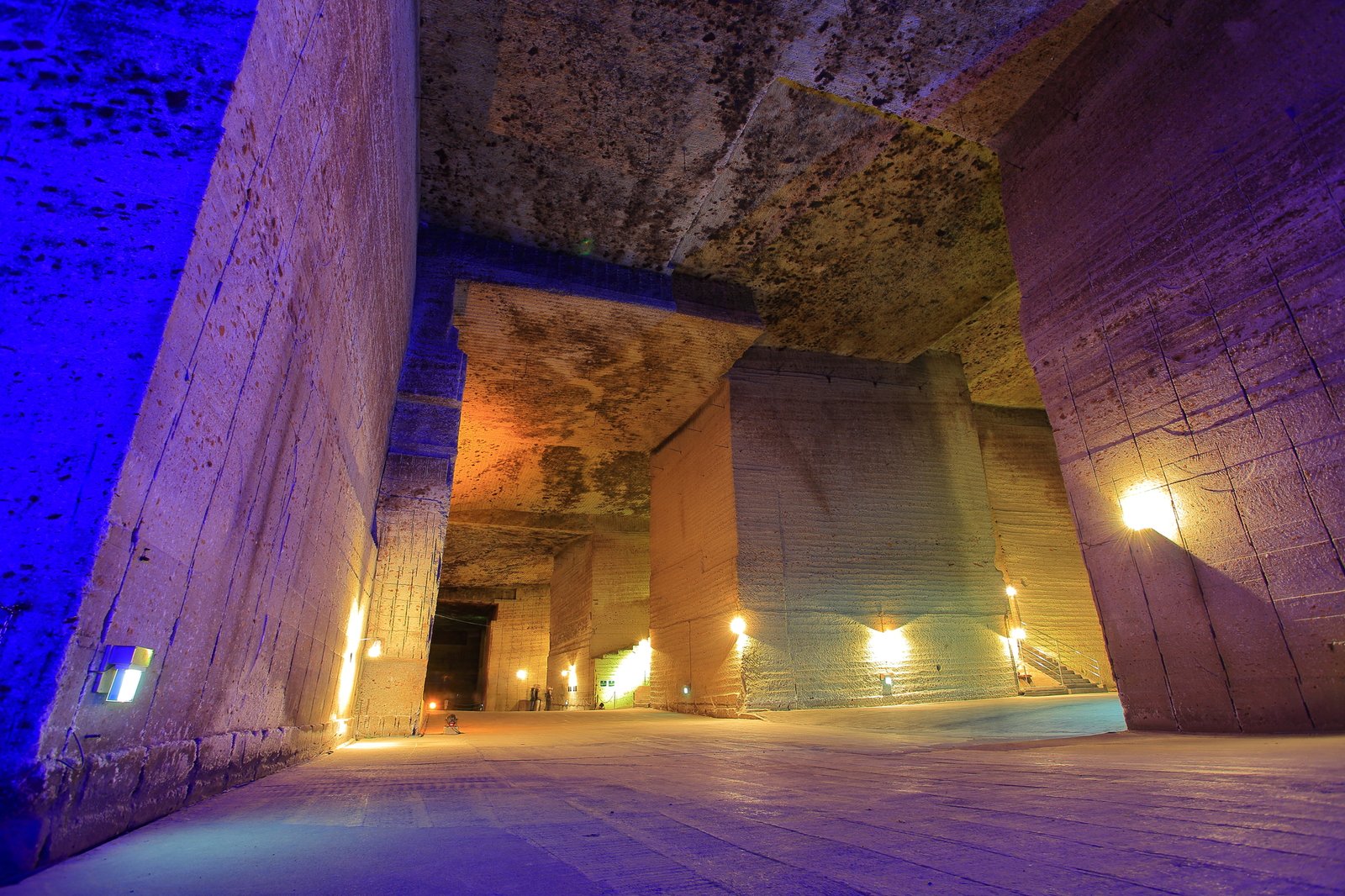
The Agency for Cultural Affairs database records the Cultural Landscape of the Oya Rock Formations and the Quarrying Industry as an important cultural landscape, and prints the selection on 11 October 2024, also printed as Reiwa 6.10.11 in the Agency’s dating, in Utsunomiya, Tochigi (Agency for Cultural Affairs database (in Japanese)). The commentary places the Oya area at the northern edge of the Kanto Plain, as a source of the soft tuff known as Oya stone, and describes a rural district that turned a farmers’ sideline in the early modern period into a local quarrying industry in modern times, and that still quarries stone today (Agency for Cultural Affairs database (in Japanese)).
Who this is for: travellers going to Utsunomiya who want the printed hours and fares for the underground quarry at the Oya History Museum, and what official pages say about the landscape around it.
The short version: from the west exit of JR Utsunomiya Station, the museum prints a ride of about 30 minutes on the Oya-Tateiwa bus from stop 6, then a walk of about five minutes from the stop it names Shiryokan-iriguchi. Hours are printed as 9:00 to 17:00 from April to November, with last entry at 16:30, and 9:30 to 16:30 from December to March, with last entry at 16:00. The museum prints an adult ticket of 1,000 yen from April 2026, and a year-end closing from 26 December to 3 January. Check official for those values on the museum access page (in Japanese). The underground rooms are described as cool; the museum asks visitors to bring a jacket.
The quarry first, or the rocks around it
| If… | Then lean towards… | Check |
|---|---|---|
| You want the underground quarry | The Oya History Museum, a former working quarry opened to visitors in 1979 | Oya History Museum, access (in Japanese) |
| You want the printed hours and ticket | The museum access page, which prints the hours, the adult fare and the year-end closing | Oya History Museum, access (in Japanese) |
| You want the rocks and the wider stone district | The place the Agency records as a scenic site and as an important cultural landscape | Agency for Cultural Affairs database, scenic site (in Japanese) |
What to do: go first to the museum if the underground quarry is your aim, and check official for the fare on the museum access page (in Japanese). Where to verify: the museum access page (in Japanese).
Hours, admission and fares
| Item | Time or fee | Where to check |
|---|---|---|
| Hours, April to November | 9:00 to 17:00; last entry at 16:30; no regular closed day | Oya History Museum, access (in Japanese) |
| Hours, December to March | 9:30 to 16:30; last entry at 16:00; closed on Tuesdays, or the next day if Tuesday is a holiday | Oya History Museum, access (in Japanese) |
| Year-end closing | 26 December to 3 January | Oya History Museum, access (in Japanese) |
| Adult admission | 1,000 yen from April 2026; 400 yen for elementary and junior high school pupils; free for children below school age; 800 yen and 350 yen for groups of 20 or more | Oya History Museum, access (in Japanese) |
| The fare and the year-end closing on the day you go | Check official | Oya History Museum, access (in Japanese) |
| Ordinary-car parking, as printed by the museum | Free in the general car parks | Oya History Museum, access (in Japanese) |
| Oya one-day sightseeing ticket, as printed by the city | 2,200 yen for adults, 1,400 yen for junior high school pupils, 700 yen for elementary school pupils, including the bus and admission to the museum | Utsunomiya City, Oya one-day ticket (in Japanese) |
What to do: use the printed hours and fares above, and check official for the adult fare and the year-end closing on the day you go. Where to verify: the museum access page (in Japanese).
Getting there and how long it takes
The museum prints a ride of about 30 minutes from stop 6 at the west exit of JR Utsunomiya Station on the bus bound for Oya and Tateiwa, and about 20 minutes from the Tobu-ekimae stop at Tobu Utsunomiya Station, then a walk of about five minutes from the stop it names Shiryokan-iriguchi (Oya History Museum, access (in Japanese)). Utsunomiya City names the operator as Kanto Jidosha, and the route as the line from JR Utsunomiya Station to Oya and Tateiwa (Utsunomiya City, Oya one-day ticket (in Japanese)). The same city page prints a one-day ticket for that bus, sold together with admission to the museum and a ticket for Oya-ji, at 2,200 yen for adults (Utsunomiya City, Oya one-day ticket (in Japanese)). By car, the museum prints about 12 minutes from the Utsunomiya interchange on the Tohoku Expressway, and about 20 minutes from the Kanuma interchange (Oya History Museum, access (in Japanese)). It gives the address as 909 Oya-machi, Utsunomiya, and asks drivers to search by the facility name or the telephone number, not by the address alone (Oya History Museum, access (in Japanese)).
What to do: take the printed Oya-Tateiwa bus from JR Utsunomiya Station if you are travelling by public transport. Where to verify: the museum access page (in Japanese) and the city ticket page (in Japanese).
What to see
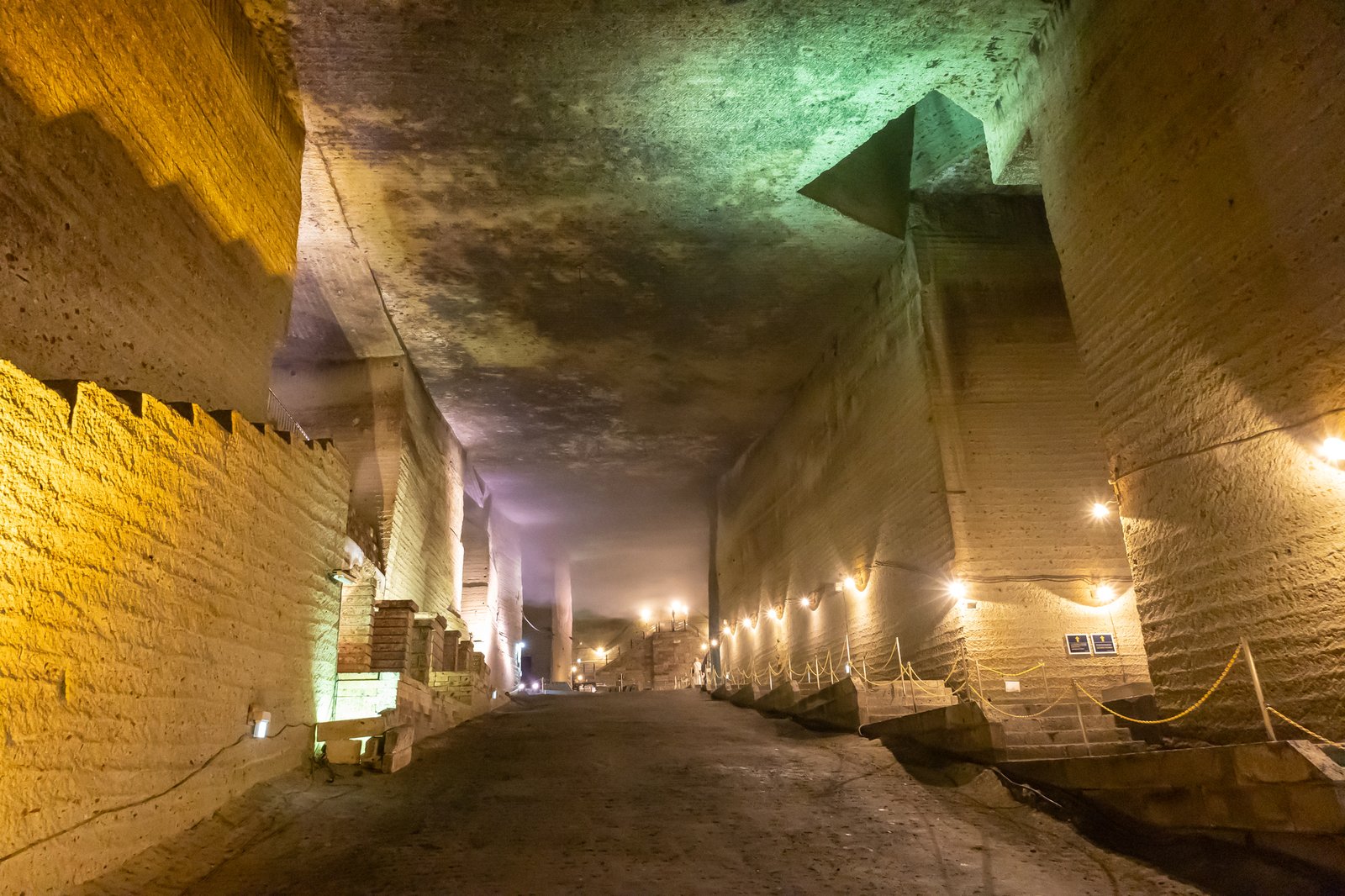
The museum describes the underground quarry as a space of 20,000 square metres, about 140 metres by 150 metres, cut for Oya stone from 1919, the 8th year of Taisho, to 1986, the 61st year of Showa, and first opened to visitors in 1979, the 54th year of Showa (Oya History Museum, underground quarry (in Japanese)). Utsunomiya City likewise prints an area of about 20,000 square metres, an average depth of 30 metres, and a greatest depth of 60 metres, and calls the museum a private facility that shows the history of Oya-stone quarrying (Utsunomiya City, Oya History Museum (in Japanese); Utsunomiya City, frequently asked questions (in Japanese)). The museum asks visitors to bring a jacket, and says that payment is in cash only (Oya History Museum, access (in Japanese)).
A neighbouring page on the museum site describes two methods of cutting the stone, hiraba-bori, working downwards, and kakine-bori, working sideways, the latter brought from the Izu-Nagaoka blue-stone trade in the late Meiji and early Taisho years (Oya History Museum, quarrying methods (in Japanese)).
What to do: allow time for the underground rooms, and take a jacket as the museum asks. Where to verify: the quarry page (in Japanese) and the access page (in Japanese).
A cultural landscape of soft stone, and a scenic cluster of rocks
The Agency’s commentary on the important cultural landscape says that the Uga River cuts south through a hill of tuff and leaves odd rocks on both banks; that quarrying began as a farmers’ sideline in the early modern period, when the flood-plain fields were poor; that in modern times wholesalers who also owned the hills brought in masons, built a masons’ town, and opened a market towards Tokyo; and that after the war, mechanisation led to a peak in the 40s of Showa, then a sharp fall in shipments, though quarrying continues (Agency for Cultural Affairs database (in Japanese)). It lists, as traces of that history, the odd rocks formed by erosion and by cutting, working quarries and former quarries now used for visitors, roads that follow the old tramway, stone storehouses with carved ornament on quarry-owners’ house lots, and temples and shrines, including cliff carvings and shrines to a mountain god (Agency for Cultural Affairs database (in Japanese)). Cultural Heritage Online prints the same name, the reading Oya no kigangun to saiseki sangyo no bunkateki keikan, the same short commentary, and the selection date as 20241011 (Cultural Heritage Online (in Japanese)). Utsunomiya City prints the selection on 11 October of Reiwa 6, and says it is the first important cultural landscape in Tochigi (Utsunomiya City, cultural landscape (in Japanese)).
A separate Agency record, dated 28 July 2006, also printed as Heisei 18.07.28, designates the Oya rock formations, Otome-yama and Koshiji-iwa, as a scenic site, under the criterion for rocks and caves, in Utsunomiya (Agency for Cultural Affairs database (in Japanese)). The commentary describes the rocks around Oya-ji, whose principal image is the Oya magaibutsu, as a group of green tuff standing in farmland, long known, from the early modern period into modern times, by the name Riku no Matsushima; it gives the tuff a thickness of about 300 metres, and a formation about 24 million years ago from a submarine volcano, and says the soft stone was cut for burial chambers and, later, for roofs and walls (Agency for Cultural Affairs database (in Japanese)). Cultural Heritage Online prints the same name and the designation date as 20060728 (Cultural Heritage Online (in Japanese)). The museum’s own quarry page says the rooms were used as a secret factory in wartime and as a store for government rice after the war, before the public opening in 1979 (Oya History Museum, underground quarry (in Japanese)).
What to do: read the place first as the Agency records it, a landscape of quarrying and odd rocks, then walk the rooms the museum opened in 1979. Where to verify: the Agency landscape record (in Japanese) and the museum quarry page (in Japanese).
Official sources
| Topic | Source | Checked |
|---|---|---|
| Important cultural landscape, date and commentary | Agency for Cultural Affairs database | 2026-11-14 |
| Same name, reading, short commentary and 20241011 date | Cultural Heritage Online | 2026-11-14 |
| Scenic site of the Oya rocks, Otome-yama and Koshiji-iwa, 2006.07.28 | Agency for Cultural Affairs database | 2026-11-14 |
| Same scenic-site name and 20060728 date | Cultural Heritage Online | 2026-11-14 |
| Hours, address and telephone | Utsunomiya City, Oya History Museum | 2026-11-14 |
| Private facility, area and depth | Utsunomiya City, frequently asked questions | 2026-11-14 |
| Selection as the first important cultural landscape in Tochigi | Utsunomiya City, cultural landscape | 2026-11-14 |
| One-day bus ticket, operator and route | Utsunomiya City, Oya one-day ticket | 2026-11-14 |
| Hours, museum-printed fare, bus walk times, parking and jacket request | Oya History Museum, access | 2026-11-14 |
| Quarry dates, area, wartime use and opening in 1979 | Oya History Museum, underground quarry | 2026-11-14 |
| Methods of cutting the stone | Oya History Museum, quarrying methods | 2026-11-14 |
What we have not verified
- The bus timetable and the single-ride fare. We have not fetched a page of the operator that prints those figures.
- Official English names for the rocks, the landscape, the bus route and the bus stop, beyond the city’s print of Utsunomiya City and the museum’s print of OYA HISTORY MUSEUM, with OYA MUSEUM OF ART in the footer.