Place name in Japanese: 尾道, Onomichi.
Onomichi, Hiroshima: the ropeway up Senkojiyama, the park on top and the Path of Literature
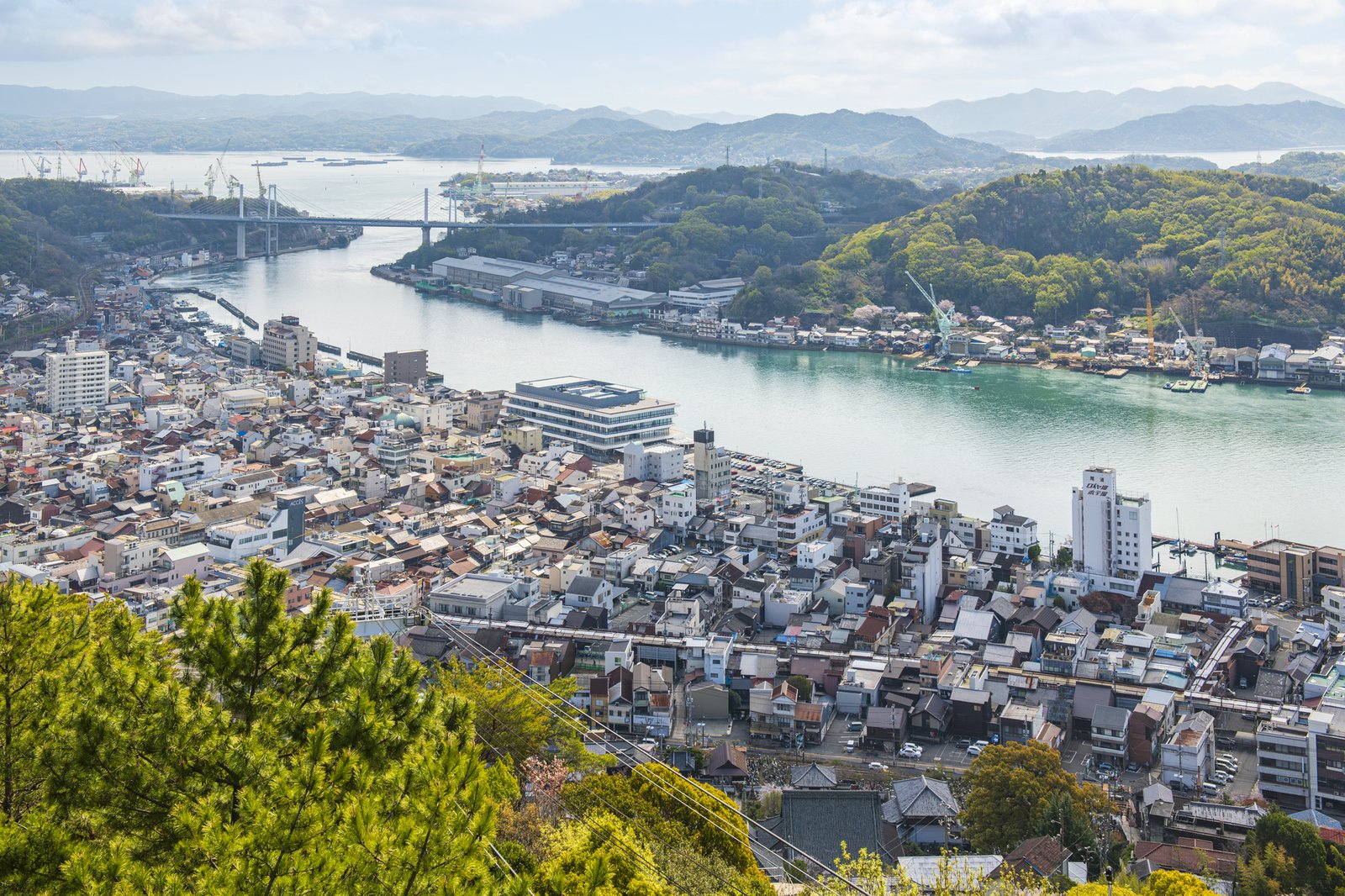
North of Onomichi Station on the Sanyo Line rises Senkojiyama, a hill 144.2 m high, and Senkoji Park spreads from its summit down its slopes (Onomichi City, Senkoji Park (in Japanese)). The city says the park holds the Onomichi City Museum of Art and the Path of Literature, and that from the observation deck on top you can see over the city to the islands of the Seto Inland Sea, and on clear days as far as the mountains of Shikoku. It describes the park as a place for the night view over the Onomichi Channel too.
Who this is for: travellers stopping in Onomichi who want to ride up the hill, look out over the water and walk down past stones carved with poems.
The short version: take a short bus ride from Onomichi Station to the Nagaeguchi stop and ride the Senkojiyama Ropeway to the top, which takes 3 minutes. From the top, walk down the Path of Literature, about 1 km. The city has announced that the ropeway will stop for maintenance for part of December, so look at its notice if you travel then.
Up the hill: choose your way
| Your situation | Our suggestion | Where to check |
|---|---|---|
| You want the easiest way up | Bus from Onomichi Station to Nagaeguchi, then the ropeway | Onomichi City, Senkojiyama Ropeway (in Japanese) |
| You would rather walk | The city’s map gives about 20 minutes on foot from the ropeway’s lower station to the PEAK observation deck | Onomichi City, Senkojiyama map (PDF, in Japanese) |
| You come by car | Park at the Senkoji Park car park; cars can go no further, and the walk on to the deck or the temple is steep | Onomichi City, Senkoji Park (in Japanese) |
| You want the night view | The city names the park as a spot for the night view; check the opening hours in the table below | Onomichi City, Senkoji Park (in Japanese) |
Hours, fares and closures to confirm
| Item | Value | Where to check |
|---|---|---|
| Ropeway hours and fares | Check official | Onomichi City, Senkojiyama Ropeway (in Japanese) |
| Ropeway maintenance closure in December | Check official | Onomichi City, ropeway closure notice (in Japanese) |
| Bus fare from Onomichi Station to Nagaeguchi | Check official | Onomichi City, Senkojiyama Ropeway (in Japanese) |
| Park opening hours and the lift in the PEAK observation deck | Check official | Onomichi City, Senkoji Park (in Japanese) |
| Senkoji Park car park fees | Check official | Onomichi City, Senkoji Park (in Japanese) |
| Senkoji temple visiting hours | Not verified (see below) | Onomichi City, Senkoji Park (in Japanese) |
| Onomichi City Museum of Art hours and admission | Not verified (see below) | Onomichi City, Senkoji Park (in Japanese) |
- How the ropeway runs: the city’s page says the ropeway runs between Nagaeguchi and the summit of Senkojiyama, that the ride takes 3 minutes, that a car holds 29 people, and that when it is busy the cars run back and forth without a break (Onomichi City, Senkojiyama Ropeway (in Japanese)). It says hours are extended in some seasons and that the ropeway may stop in stormy weather, and sends you to the ropeway’s own website for information on stoppages.
- Discounts: the ropeway’s fare page lists a discounted ticket for holders of the JR-WEST RAIL PASS and some other cards, and asks you to show the card to staff before you buy, not after (Senkojiyama Ropeway, fares (in Japanese)). It also says one child below school age rides free with a guardian.
- December closure: the city’s notice says the ropeway will close for maintenance work on its facilities for a set period in December (Onomichi City, ropeway closure notice (in Japanese)).
- Before you go: if your visit falls in December, open the city’s closure notice and plan to walk up if the ropeway is not running.
What to do: if you hold a JR-WEST RAIL PASS, show it at the ticket window before you pay. Where to verify: the ropeway’s fare page (in Japanese).
Getting there
- Bus and ropeway: the city’s ropeway page says buses leave from stops 1 or 5 in front of Onomichi Station and take about 5 minutes to the Nagaeguchi stop, and that the lower station is about 15 minutes on foot from JR Onomichi Station (Onomichi City, Senkojiyama Ropeway (in Japanese)). The city’s park page gives the bus as 3 minutes (Onomichi City, Senkoji Park (in Japanese)), and its map gives 3 minutes by bus plus 1 minute on foot from the station to the lower station (Onomichi City, Senkojiyama map (PDF, in Japanese)).
- By car: the city gives about 15 minutes from the Fukuyama-nishi interchange of the Sanyo Expressway and about 20 minutes from the Onomichi interchange, both ending on the Senkojiyama Driveway (Onomichi City, Senkoji Park (in Japanese)). It says cars can go only as far as the car park, that the walk from there to the summit deck or to Senkoji temple takes about 5 to 10 minutes up steep slopes, and that the car park can fill up in the holiday seasons.
What to do: in the holiday seasons, leave the car in town and take the bus and the ropeway. Where to verify: the city’s park information (in Japanese).
On top of the hill
The city’s map gives 3 minutes on foot from the PEAK observation deck to the Onomichi City Museum of Art, and 5 minutes to Senkoji temple (Onomichi City, Senkojiyama map (PDF, in Japanese)). The city’s park page says a viewpoint called MiTeMi opened on 11 March 2022 and the new PEAK observation deck reopened on 29 March 2022 (Onomichi City, Senkoji Park (in Japanese)). It lists cherry blossoms and azaleas in spring and wisteria in purple and pink in early summer, and names the park in a selection of 100 cherry blossom spots.
What to do: go up to the deck first, then walk on to the temple and the start of the Path of Literature. Where to verify: the city’s map (PDF, in Japanese).
Designation: the pagoda of Tenneiji
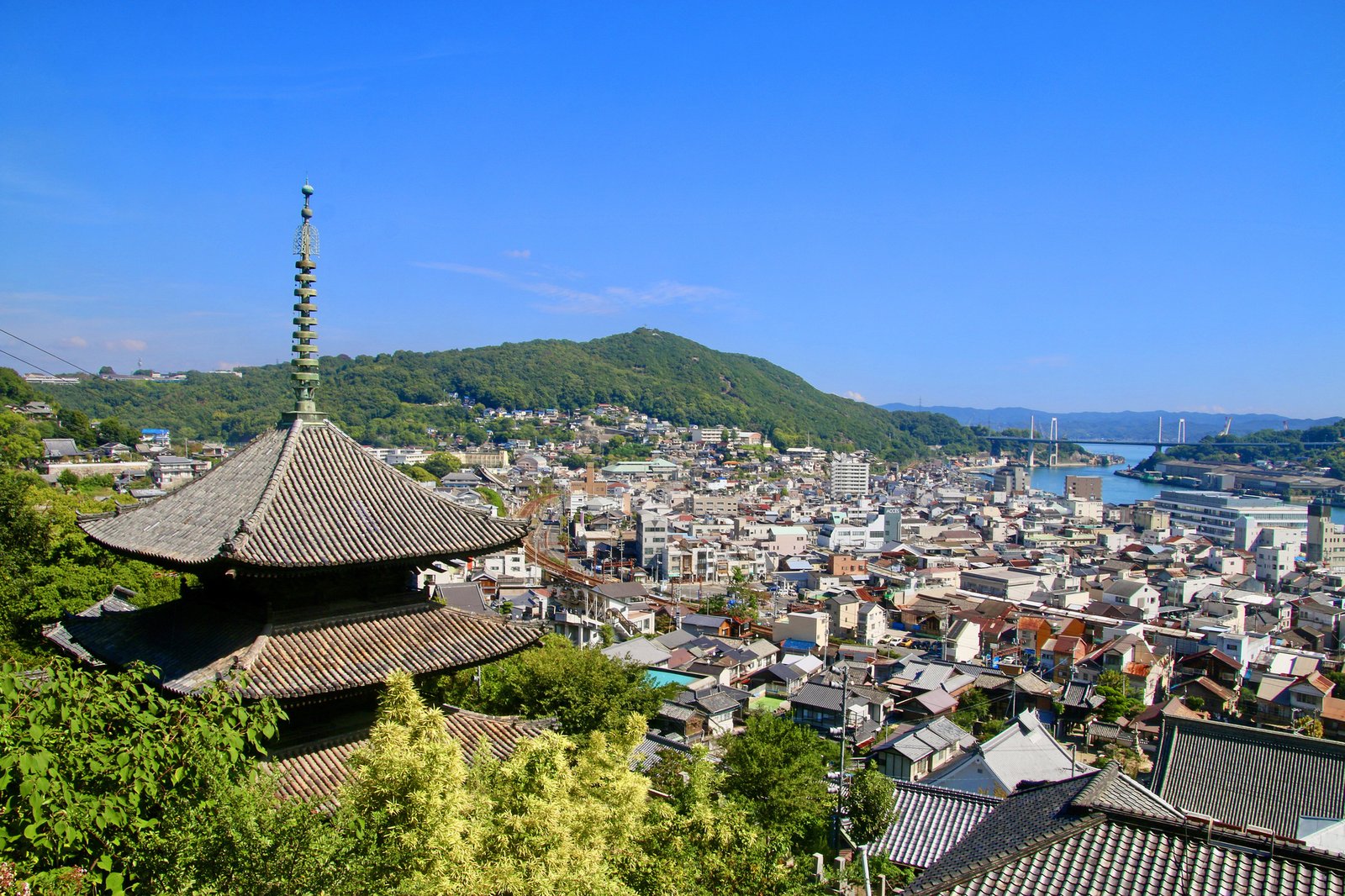
The national cultural properties database lists the pagoda of Tenneiji in Onomichi as an Important Cultural Property, designated on 18 February 1949 (Agency for Cultural Affairs, Tenneiji pagoda entry (in Japanese)). The entry dates it to 1388, in the early Muromachi period, describes it as a three-storey pagoda three bays wide with a tiled roof, and notes that it originally had five storeys. It gives the temple, Tenneiji, as the owner. The city’s map of Senkojiyama marks the three-storey pagoda of Tenneiji on the hillside (Onomichi City, Senkojiyama map (PDF, in Japanese)).
The Path of Literature
The city says it carved fragments of poems, songs and novels by 25 writers and poets connected with Onomichi on natural stones scattered from the summit of Senkojiyama down its slopes, and named the quiet walk the Path of Literature (Onomichi City, Path of Literature (in Japanese)). It gives the path as running from beside the ropeway’s summit station to near the Tsuzumi Rock, about 1 km long and about an hour on foot. The page prints the text of each stone. On the stone for Shiga Naoya, the passage from his novel A Dark Night’s Passing describes the bell of Senkoji struck at six o’clock and its echoes coming back from far away, one after another, and then the lighthouse on Hyakkanjima, which shows its head between the hills of Mukaishima, beginning to flash. On the stone for Hayashi Fumiko, the passage from her book Horoki describes seeing the sea of Onomichi again after five years from the train, the roofs of the town spreading out, and the red pagoda of Senkoji.
What to do: walk the path downhill from the summit station and look for these two stones along the way. Where to verify: the city’s list of the stones (in Japanese).
The bell on the stones
Shiga Naoya is not the only writer on the path to write about the bell of Senkoji. On the city’s page, the stone of a folk song says the bell is heard one ri away and echoes for two, the tanka of Nakamura Kenkichi tells of the time bell of Senkoji close to his ear all night so that he could not sleep, and the tanka of Yanagihara Byakuren hears in the temple bell ringing over the Seto sea something like the voices of a father and mother (Onomichi City, Path of Literature (in Japanese)).
A list of a 1927 selection of scenic places, published by the Ministry of the Environment, includes Senkojiyama, in Hiroshima, among its hundred scenic places in the mountains category (Ministry of the Environment, 1927 selection list (PDF, in Japanese)).
What to do: count how many of the 25 stones mention the bell as you walk down. Where to verify: the city’s list of the stones (in Japanese).
Official sources
| Topic | Source | Checked |
|---|---|---|
| The hill, the park, views, flowers, opening hours, car park, driving routes | Onomichi City, Senkoji Park | 2026-11-14 |
| Ropeway route, ride time, capacity, intervals, hours, fares, bus from the station | Onomichi City, Senkojiyama Ropeway | 2026-11-14 |
| December closure | Onomichi City, ropeway closure notice | 2026-11-14 |
| Discounts, free ride for a young child | Senkojiyama Ropeway, fares | 2026-11-14 |
| Walking times on the hill, pagoda on the map | Onomichi City, Senkojiyama map (PDF) | 2026-11-14 |
| Tenneiji pagoda designation | Agency for Cultural Affairs, Tenneiji pagoda entry | 2026-11-14 |
| Path of Literature, the texts on the stones | Onomichi City, Path of Literature | 2026-11-14 |
| 1927 selection: Senkojiyama | Ministry of the Environment, 1927 selection list (PDF) | 2026-11-11 |
What we have not verified
- Senkoji temple: the city’s park page names the temple and the walk to it but gives no visiting hours or fees for it (Onomichi City, Senkoji Park (in Japanese)).
- The art museum: the city’s park page links to the museum’s own site, which we did not read (Onomichi City, Senkoji Park (in Japanese)).
- The bus company: the city’s ropeway page gives the stops, the time and the fare for the bus to Nagaeguchi but does not name the company (Onomichi City, Senkojiyama Ropeway (in Japanese)).
- Extended ropeway hours: the city says hours are extended in some seasons but gives no dates (Onomichi City, Senkojiyama Ropeway (in Japanese)).
- When the cherry trees flower: the city’s park page names the flowers by season but gives no dates (Onomichi City, Senkoji Park (in Japanese)).
- Names: Onomichi, Senkojiyama, Shiga Naoya, Hayashi Fumiko, Nakamura Kenkichi, Yanagihara Byakuren, Senkoji, Nagaeguchi, Tenneiji, Tsuzumi Rock, Hyakkanjima, Mukaishima, Horoki, MiTeMi, Fukuyama-nishi and the Senkojiyama Driveway are our romanizations, and the Path of Literature and A Dark Night’s Passing our translations, of the Japanese names on the pages above.