Place name in Japanese: 近江八幡, Ōmihachiman.
Omihachiman, Shiga: the bus to Hachiman-bori, a boat along the moat, the merchant houses of Shinmachi, the ropeway up Hachimanyama, and the reed beds beyond the town
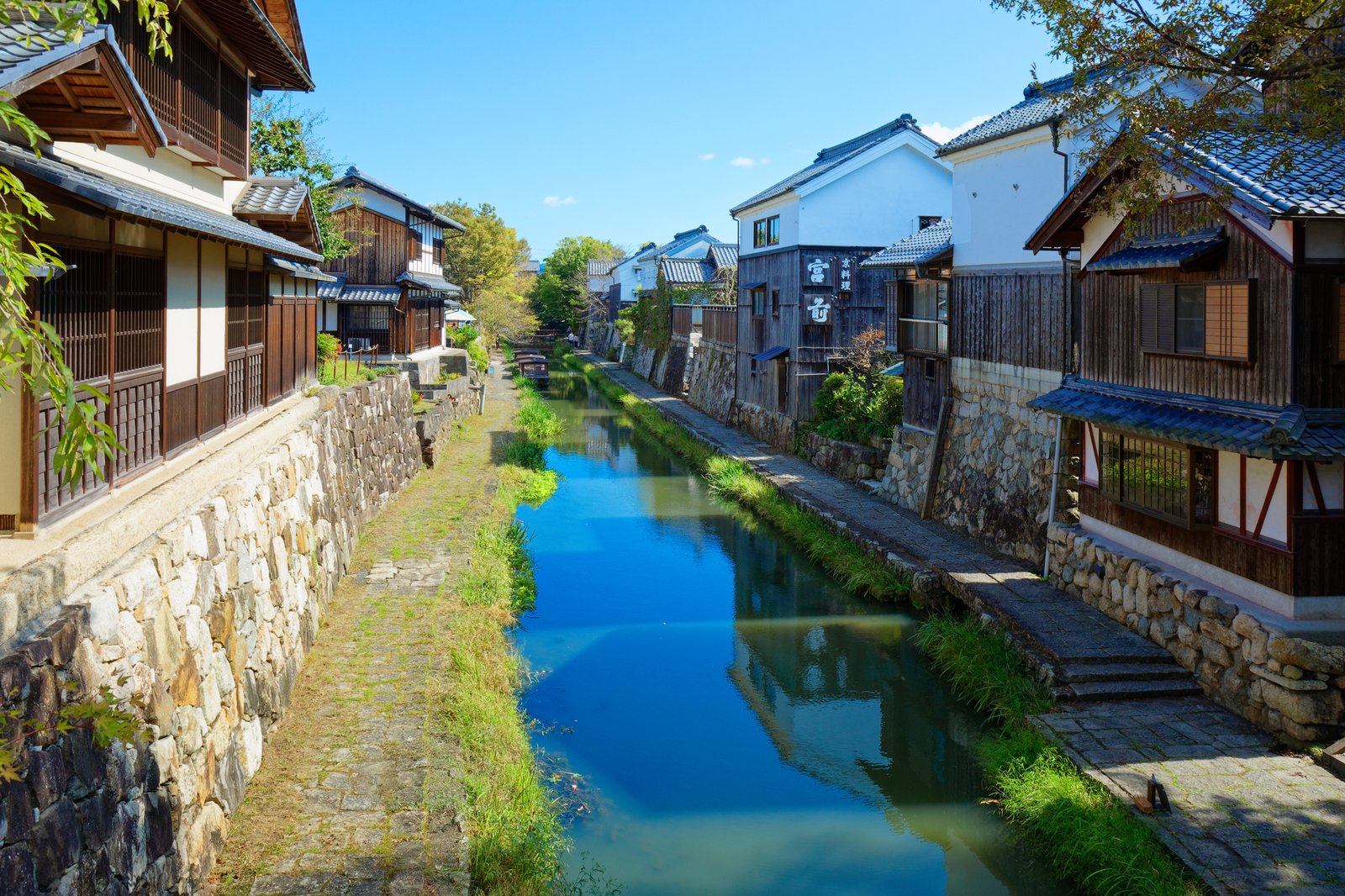
The Agency for Cultural Affairs database records Omihachiman-shi Hachiman as an Important Preservation District for Groups of Traditional Buildings of the merchant-town type, 13.1 ha, selected on 30 April 1991 (Agency for Cultural Affairs database, Omihachiman-shi Hachiman (in Japanese)). It records the water villages of Omihachiman (our translation) as an Important Cultural Landscape selected on 26 January 2006, with the settlements of Maruyama-cho and Shirao-cho added on 28 July 2006 and a further entry on 26 July 2007 (Agency for Cultural Affairs database, water villages of Omihachiman (in Japanese)), and it lists the main house of the former Nishikawa residence in Shinmachi among Important Cultural Properties, with a designation date of 7 January 1983 (Agency for Cultural Affairs database, former Nishikawa residence (in Japanese)).
Who this is for: travellers on the JR line along Lake Biwa with half a day in Omihachiman, who want to ride a boat on the moat, step inside a merchant’s house and take the ropeway up the hill behind the town, without a car.
The short version: from the north exit of Omi-Hachiman Station, Ohmi Railway buses run to the Hachiman-bori stop for a fare of 260 yen. The moat boats run from 10:00 to 16:00 for 1,500 yen an adult, and the ropeway runs from 9:00 to 17:00, the last car up leaving at 16:30.
What to plan for
| If… | Then lean towards… | Check |
|---|---|---|
| You arrive by train | The bus from stand 6 or 7 at the north exit to the Hachiman-bori stop | Ohmi Railway, buses to Hachiman-bori (in Japanese) |
| You want to see the moat from the water | A shared boat that leaves once two or more people are waiting | Waden, Hachiman-bori boats: questions and answers (in Japanese) |
| You mean to go inside a merchant house | The former Nishikawa residence, open to the public as part of the city museum | Omihachiman City, a town of trade (in Japanese) |
| You want the view over the town | The ropeway, with the last car up at 16:30 | Hachimanyama Ropeway, hours and fares (in Japanese) |
Getting there: the bus from Omi-Hachiman Station
Ohmi Railway tells visitors to the moat to use the stop it names Hachiman-bori (Osugi-cho) Hachimanyama Ropeway-guchi (our romanization), served from stand 6 or 7 at the north exit of Omi-Hachiman Station, for a fare of 260 yen (Ohmi Railway, buses to Hachiman-bori (in Japanese)). The timetable it links, revised on 1 October 2024, has weekday buses leaving the station from 7:00 to 20:45 and buses on Saturdays, Sundays and holidays from 7:10 to 20:45; during the Obon and New Year periods the holiday timetable runs (Ohmi Railway, station to Hachiman-bori timetable (PDF, in Japanese)). Going back, weekday buses leave the stop for the station from 6:40 to 20:38, and at weekends and on holidays from 7:05 to 20:30 (Ohmi Railway, Hachiman-bori to station timetable (PDF, in Japanese)).
What to do: note the last bus back for your day before you leave the station. Where to verify: the operator’s page for Hachiman-bori (in Japanese).
On the moat: the Hachiman-bori boats
Waden, which runs the boats, gives the fare as 1,500 yen for adults and 1,000 yen for children, tax included, and its hours as 10:00 to 16:00 with no closing day; heavy rain, strong wind or events can stop the boats (Waden, Hachiman-bori boats (in Japanese)). Its questions page says a trip takes about 35 minutes including getting on and off. The boats are shared, seat 12 and are not on a timetable: they leave every 10 to 15 minutes once two or more passengers have gathered, and you write your name in the book at the landing. Groups of 10 or more are asked to book two weeks ahead, and payment is in cash on the day. The landing is not step-free: about ten stone steps lead down to a gangplank, and passengers take off their shoes to sit, so wheelchairs and pushchairs cannot come aboard (Waden, Hachiman-bori boats: questions and answers (in Japanese)).
What to do: carry cash for the fare and wear shoes you can slip off. Where to verify: the operator’s questions page (in Japanese).
Inside the merchant town: the city museum and the Nishikawa house
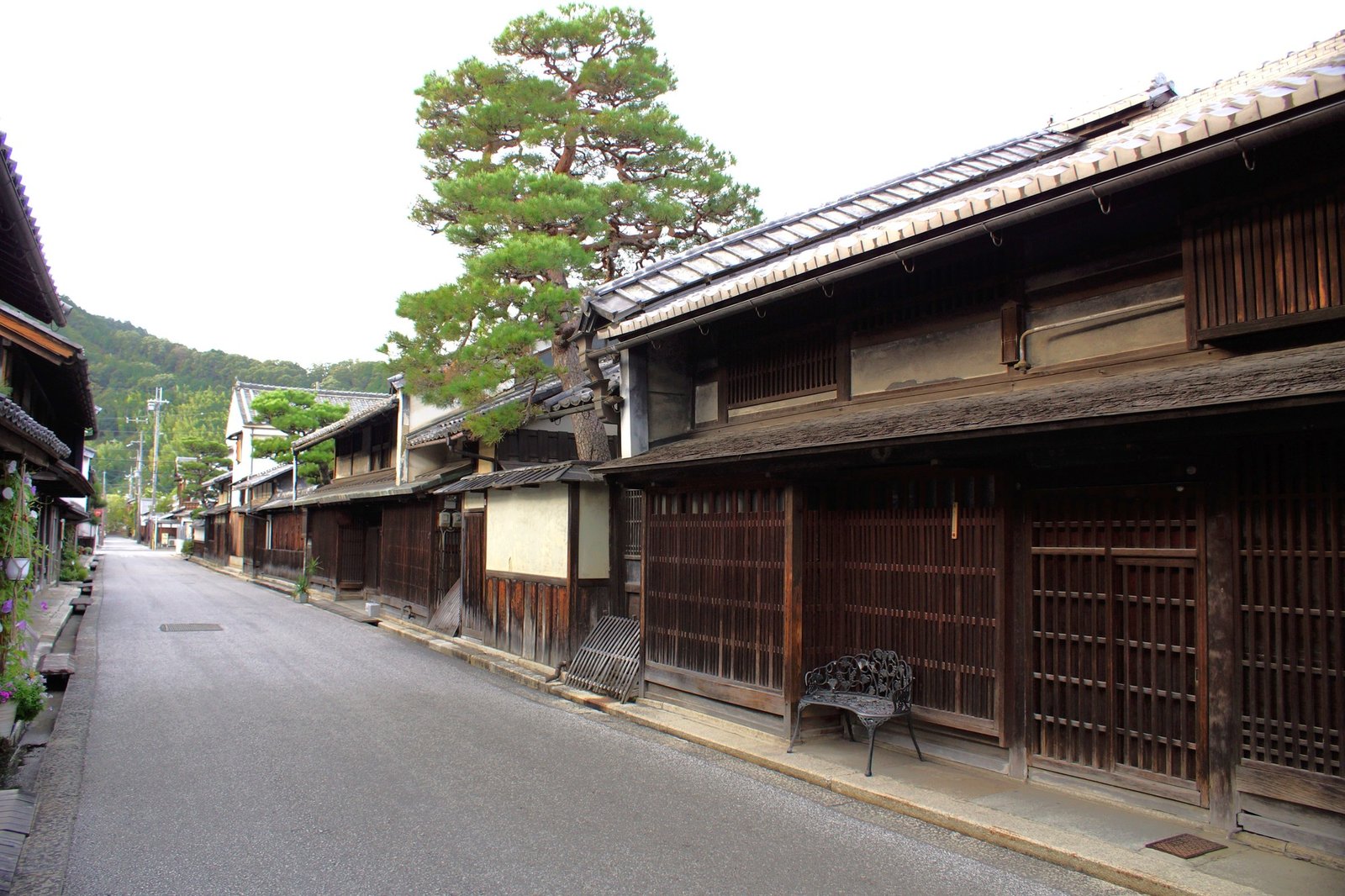
Omihachiman City’s page on the town of trade says the former house of Nishikawa Riemon is open to the public as part of the city museum. The same page lists the city museum, which shows the archaeology, folk life, art and crafts and documents of Omihachiman, and the museum of history and folklore, which shows the counting rooms, ways of life and folk material of the Hachiman merchants (our translations) (Omihachiman City, a town of trade (in Japanese)).
What to do: confirm the opening hours and closing days for your date before you plan the visit. Where to verify: the city’s page on the town of trade (in Japanese).
Up Hachimanyama: the ropeway
Ohmi Railway says its ropeway is open all year, from 9:00 to 17:00, the last car up leaving at 16:30; cars leave every 15 minutes from the hour, more often for groups or crowds, and hours are extended at some seasons and events. The adult fare, from age 12, is 540 yen one way and 950 yen return, and the child fare, from 6 to 11, is 270 yen and 480 yen; one child aged 1 to 5 rides free and a second pays the child fare, and babies under 1 ride free (Hachimanyama Ropeway, hours and fares (in Japanese)). Its visitor page gives about 4 minutes for the ride, about 5 minutes on foot from the Hachiman-bori bus stop, and a closure of about ten days in winter for inspection (Hachimanyama Ropeway, visitor guide (in Japanese)).
What to do: in winter, look for the inspection closure before you plan the ride. Where to verify: the ropeway’s visitor guide (in Japanese).
The Daimonjiya house: a merchant family on Shinmachi
The Agency for Cultural Affairs database says the Nishikawa family are Omi merchants said to have settled in Omihachiman when Toyotomi Hidetsugu laid out the castle town, and that they traded widely in tatami facings and mosquito nets. The main house, dated 1706, is a large dwelling with four rooms in a line along a wide earth-floored passage, the living rooms in two rows and a reception wing projecting from them; behind it stands a three-storey storehouse. The database calls the house plain on the whole despite its developed plan, and an important survival for understanding the main residence of an Omi merchant (Agency for Cultural Affairs database, former Nishikawa residence (in Japanese)).
Omihachiman City’s page on the town of trade gives the same house a name and a trade: Nishikawa Riemon, a wealthy merchant of the Edo period, dealt in tatami facings and mosquito nets under the house name Daimonjiya (our romanization) (Omihachiman City, a town of trade (in Japanese)).
What to do: compare what you see with the database’s account of the passage, the rooms beside it and the three-storey storehouse behind. Where to verify: the Agency for Cultural Affairs database (in Japanese).
A moat to the lake, and the reeds that travelled with the merchants
Omihachiman City’s page on the preservation district says that Toyotomi Hidetsugu, nephew of Toyotomi Hideyoshi, built a castle on Hachimanyama in 1585 and at the same time dug Hachiman-bori around the hill, connecting it with Lake Biwa; the moat is said to have served both trade on the lake and defence. The castle town was split by the moat between samurai and townspeople, and the townspeople’s quarter was laid out as a grid of 12 streets running north to south and 4 running east to west; the city links the later rise of the Hachiman merchants to this planning and to the measures protecting trade and industry, such as free markets, seen in the town regulations of 1586 (Omihachiman City, preservation district (in Japanese)).
The Agency for Cultural Affairs database takes the story out to the water. It says the moat ran by way of Nishinoko to Lake Biwa, that the streets along it carried on as a country trading town after the castle was abandoned, and that the goods Omi merchants dealt in at Nihonbashi in Edo included many made from wetland plants, among them Omi-omote matting and Omi-jofu cloth. Through the trade routes the merchants built, the settlement of Maruyama on the northern shore of Nishinoko became known for its reeds; blinds and reed screens are still made there, and work such as burning the reed beds keeps to the old methods, though the makers are fewer (Agency for Cultural Affairs database, water villages of Omihachiman (in Japanese)).
What to do: from the boat or the stone steps by the moat, look along the storehouses that back onto the water. Where to verify: the city’s preservation district page (in Japanese).
What we have not verified
Check official before you go: whether the moat boats are running on the day (Waden, Hachiman-bori boats: questions and answers (in Japanese)). Check official before you go: whether the ropeway is running, and the dates of its winter closure (Hachimanyama Ropeway, visitor guide (in Japanese)). Check official before you go: the opening hours, closing days and fees of the city museum and the former Nishikawa residence, and whether a ticket covering more than one site is sold (Omihachiman City, a town of trade (in Japanese)). Check official before you go: whether the bus timetable has changed since its revision of 1 October 2024 (Ohmi Railway, buses to Hachiman-bori (in Japanese)).
- Himure Hachimangu and Zuiryuji on the summit: visiting details were not read on their own pages.
- The water-village boats on Nishinoko: operators, times and fares were not read.
- Walking times in the old town: beyond the bus stop and ropeway figures above, none were read.
- Other designations and selections: the Agency for Cultural Affairs database entries above are the ones read; the storehouse of the Nishikawa house has its own entry, not read here.
- Names: the bus stops, the boat operator, the museums, the streets and the people are given in this site’s renderings.