Obon and mid-August crowding patterns
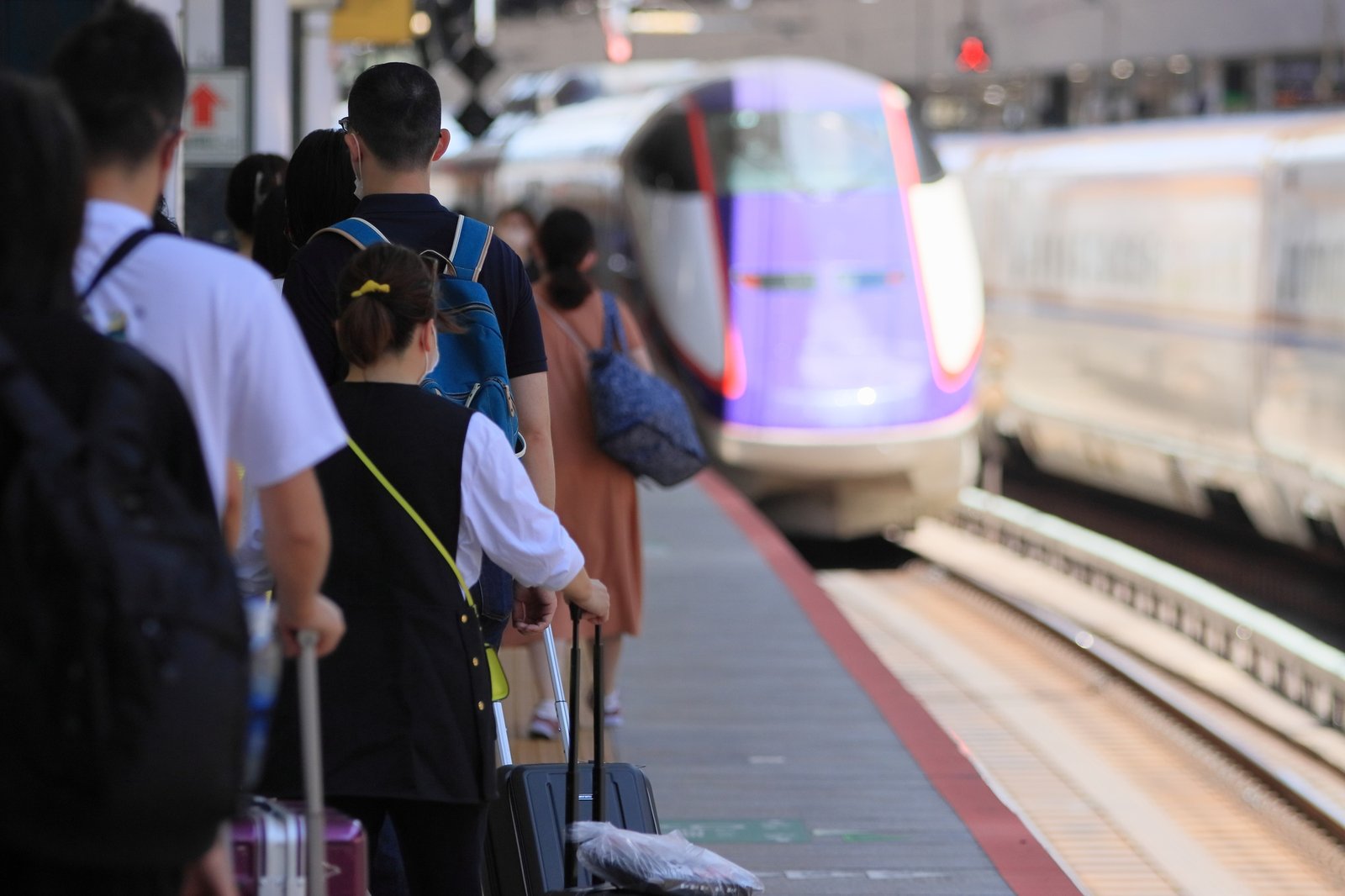
The Japan National Tourism Organization (JNTO) places Obon in mid-August and counts it among the holiday seasons “when domestic travel peaks”. For a visitor, the practical consequences are institutional before they are scenic: transport fills, seats sell out in advance, some services may be reservation-only, and on one high-speed line the rules on unreserved cars can change for the season.
Who this is for: visitors planning a trip to Japan that may overlap with Obon, especially anyone who expects to take long-distance trains or needs a room.
The short version: if your dates can move, JNTO’s advice is to travel outside the major holiday periods or to book well in advance. If they cannot, book transport and accommodation early. If you plan to ride that high-speed line, read that year’s announcement from the rail companies: for fiscal 2026 the rail companies announced that one train type on that line would run with all seats reserved in the busiest periods, Obon included, while the other train types would keep unreserved cars. Check the operator’s own website for the latest information.
Match your situation to the next step
| If… | Then… |
|---|---|
| Your dates can move | JNTO’s advice for the major holiday periods: “Travel outside these periods for a quieter experience or book well in advance.” It gives Obon as “mid-August” |
| You will travel during Obon | JNTO’s FAQ lists summer vacation, “especially around the Obon holiday (usually mid-August)”, as a peak travel season, and says of those peak periods: “During these times, expect higher prices, crowded transportation, and fully booked accommodations.” It highly recommends booking flights and accommodation well in advance if you travel in peak seasons. JNTO’s August guide adds that seats on planes, trains and highway buses sell out in advance |
| You plan to ride the high-speed line | For fiscal 2026, Central Japan Railway Company (JR Central) and West Japan Railway Company (JR-West) announced that, in the periods of heaviest use, Obon included, one train type on that line would switch its unreserved cars to reserved and run with all seats reserved; the other train types would keep unreserved cars as usual. These are the 2026 arrangements; read the companies’ announcement for the year you travel |
| You wonder whether a service needs booking | JNTO notes that during the major holiday periods “some services may be reservation-only due to popular demand”, and asks you to check the relevant operator’s website for the latest information |
| You want the crowd figures or the busiest days | The rail companies’ 2026 reports give the figures and the busiest days; they are linked in the sources below |
When Obon is, and why it fills
JNTO describes Obon as “A traditional family holiday where many people travel back to their hometowns”, one of three major holiday seasons when domestic travel peaks and many businesses may close or shorten their hours. Its FAQ places the Obon holiday at “usually mid-August”, inside a wider summer vacation period that leads to increased domestic travel. The rail companies’ announcements give the dates of their Obon period for 2026; they are linked below.
Long-distance trains in fiscal 2026
The joint announcement from JR Central and JR-West set out the periods in fiscal 2026 when one train type on the high-speed line would run with all seats reserved and no unreserved cars, so that more passengers could book and sit. Obon was one of those periods, alongside other holiday periods including the year-end and New Year holidays. Every other train type on the line would keep unreserved cars as usual.
In its report on seat bookings for Obon 2026, JR-West restated the all-reserved arrangement for that year’s Obon period. It said it would run more trains at times outside the peak days and hours, to make it easier to travel on other days or at other times, and asked passengers to check which times had seats to spare and to avoid the crowds.
These are statements about 2026, and arrangements for later years are not in these announcements; check the companies’ announcement for the year you travel before you choose a train. For how reserved and unreserved seats work on high-speed trains, see our checklist for booking reserved seats.
When something does not go to plan
- You cannot get a seat on the all-reserved train type: for fiscal 2026 the companies announced that the other train types on the line would keep unreserved cars during the all-reserved periods, and for Obon 2026 JR-West said it would run more trains outside the peak days and hours. Neither statement means an unreserved seat will be free.
- You cannot find a room: JNTO’s advice for peak seasons is to book accommodation well in advance.
- You are not sure whether a service is reservation-only: check the operator’s own website for the latest information, as JNTO advises.
What we have not verified
- Next year’s Obon period, next year’s all-reserved periods and next year’s busiest days.
- Day-by-day passenger numbers, and how full unreserved cars become.
- JR Central’s own report on Obon reserved-seat bookings, and the rail companies’ seat-availability pages.
- Room availability and prices, motorway and air crowding figures, and government explanations of Obon congestion.
Official sources
| Topic | Source | Date on the source | Checked |
|---|---|---|---|
| Holiday periods and Obon | JNTO — business hours and holidays | — | 2026-11-01 |
| Obon in August | JNTO — Japan in August | — | 2026-11-01 |
| Peak travel season | JNTO — FAQ | — | 2026-11-01 09:46:20 JST |
| All-reserved periods, fiscal 2026 | JR Central and JR-West — periods when one train type runs all-reserved in fiscal 2026 (PDF, Japanese) | 2026-01-07 | 2026-11-01 |
| Obon seat bookings, 2026 | JR-West — reserved-seat bookings for the Obon period (PDF, Japanese) | 2026-07-24 | 2026-11-01 |
| Obon use and busiest days, 2026 | JR Central — use during the Obon period, fiscal 2026 (PDF, Japanese) · JR-West — use during the Obon period (PDF, Japanese) | 2026-08-17 | 2026-11-01 |