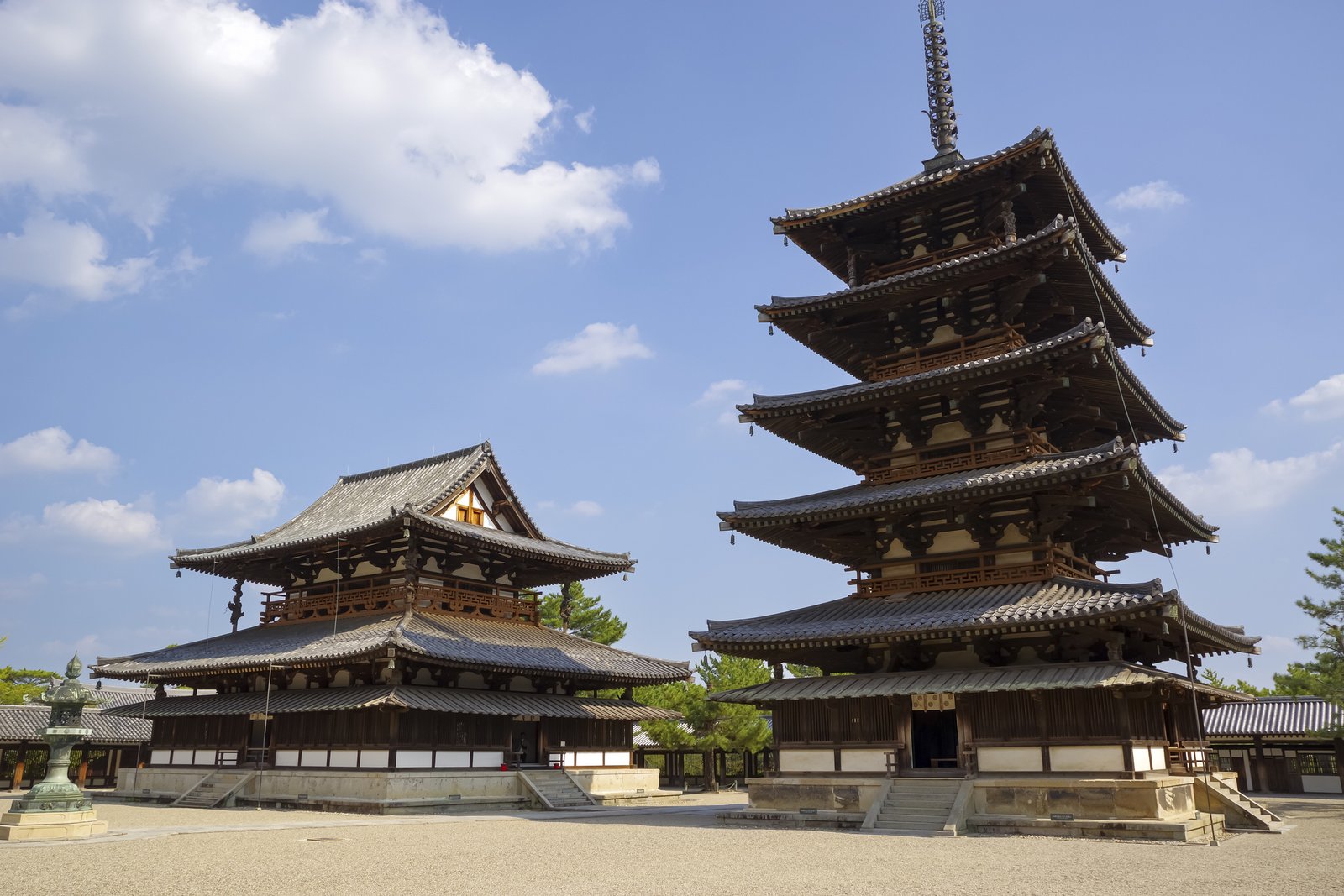
Home › Guides › Nara Prefecture
Place name in Japanese: 奈良, Nara.
Nara Prefecture
Some hotel names below link to their Expedia pages. If you book through these links, Margins & Maps may earn a commission at no extra cost to you. See our affiliate disclosure.
Overview
Nara Prefecture sits in the Kansai region of Japan (JNTO). Its official English portal spans Nara’s World Heritage sites, seasonal highlights, history, accommodation, and transport (Visit Nara). For central Nara City, JNTO offers an official English guide to the city and its surroundings (JNTO Nara City & Around). Further south, the Yoshino area carries cherry blossoms on Mount Yoshino and mountain pilgrimage routes (Visit Nara Yoshino).
Who This Is For / The Short Version
- Travellers arriving from Tokyo can take the JR Shinkansen to Kyoto Station (around 142 minutes), then transfer either to a JR rapid train to Nara Station (around 41 minutes) or to a Kintetsu limited express train to Kintetsu-Nara Station (around 34 minutes) (Visit Nara Travel to Nara).
- From Kansai International Airport, Nara is around 90 minutes away, with highway bus options also listed on the official portal (Visit Nara Travel to Nara).
- Within the prefecture, Kintetsu and JR West railway lines and Nara Kotsu local and sightseeing buses cover travel (Visit Nara Getting Around).
Illustrated Map
Map Pins (1–7)
- Kumano Hongu Taisha — Hongu, Hongu-cho, Tanabe-shi, Wakayama Prefecture (Kumano Hongu Taisha).
- Todai-ji — 406-1 Zoshi-cho, Nara-shi, Nara 630-8587 (Todai-ji Access).
- Horyu-ji — Horyu-ji area (Horyu-ji).
- Yoshino — Yoshino area in southern Nara Prefecture (Visit Nara Yoshino).
- Nara Park — Central Nara City (660 hectares) (Visit Nara Nara Park).
- Yakushiji Temple — Nishinokyo area, Nara City (JNTO Yakushiji).
- Asuka — Asuka Village (Visit Nara Asuka).
Key Places
1. Kumano Hongu Taisha
Kumano Hongu Taisha is one of the three Kumano Sanzan grand shrines—alongside Kumano Hayatama Taisha and Kumano Nachi Taisha—with Ketsumimiko-no-Okami (Susanoo-no-Mikoto) as its principal deity (Kumano Hongu Taisha). It stands in Hongu, Hongu-cho, Tanabe-shi, Wakayama Prefecture (outside Nara Prefecture), tied to Yoshino and Omine in Nara Prefecture within the Sacred Sites and Pilgrimage Routes in the Kii Mountain Range, a UNESCO World Heritage site inscribed in 2004 (Kumano Hongu Taisha).
2. Todai-ji
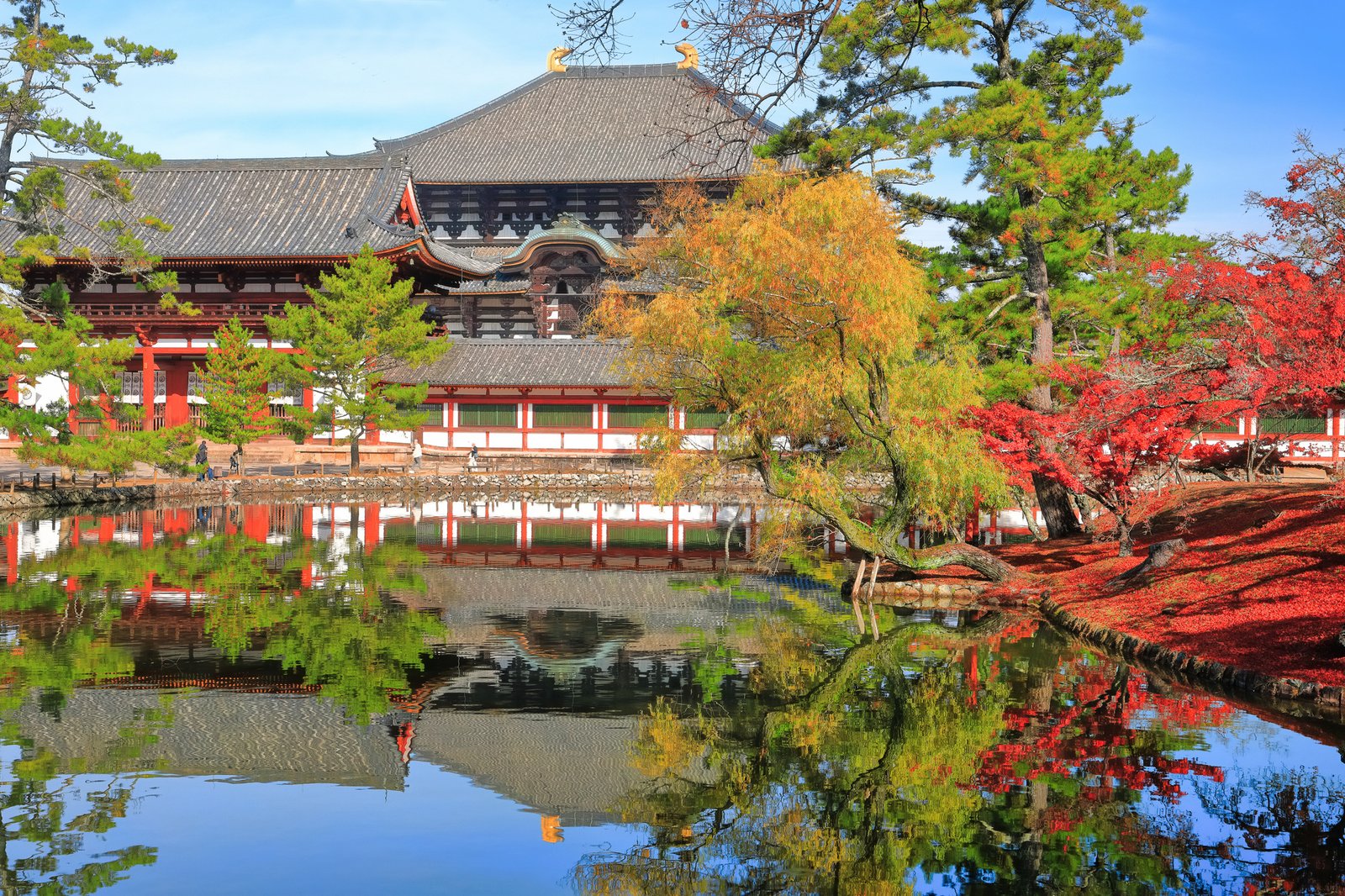
Todai-ji’s history reaches back to its founding in the 8th century, with official guides detailing its temple halls (Todai-ji). The Great Buddha Hall (Daibutsuden) is open from 8:00 to 17:00 between November and March and from 7:30 to 17:30 between April and October (Todai-ji). The temple stands at 406-1 Zoshi-cho, Nara-shi, Nara 630-8587: around a 20-minute walk from Kintetsu-Nara Station, a 5-minute walk from the Todaiji Daibutsuden / Kasuga Taisha-mae city loop bus stop, or directly at the Daibutsuden-mae Parking stop on the Gurutto Bus (Todai-ji Access). Detailed admission fees and hall-specific hours appear on the official English information page (Todai-ji Admission).
3. Horyu-ji
Horyu-ji is the head temple of the Shotoku-shu sect (Horyu-ji). In 1993, the Buddhist Monuments in the Horyu-ji Area—including Horyu-ji and Hokki-ji—became Japan’s first UNESCO World Heritage site, and Hokki-ji’s three-storey pagoda (a National Treasure) dates from the early 8th century (Horyu-ji Hokki-ji). From the Nara Park area, Horyu-ji lies under 30 minutes away by train and bus, with a shuttle bus running from the south exit of JR Horyuji Station (Visit Nara Horyuji). JNTO adds further English visitor information (JNTO Horyuji).
4. Yoshino
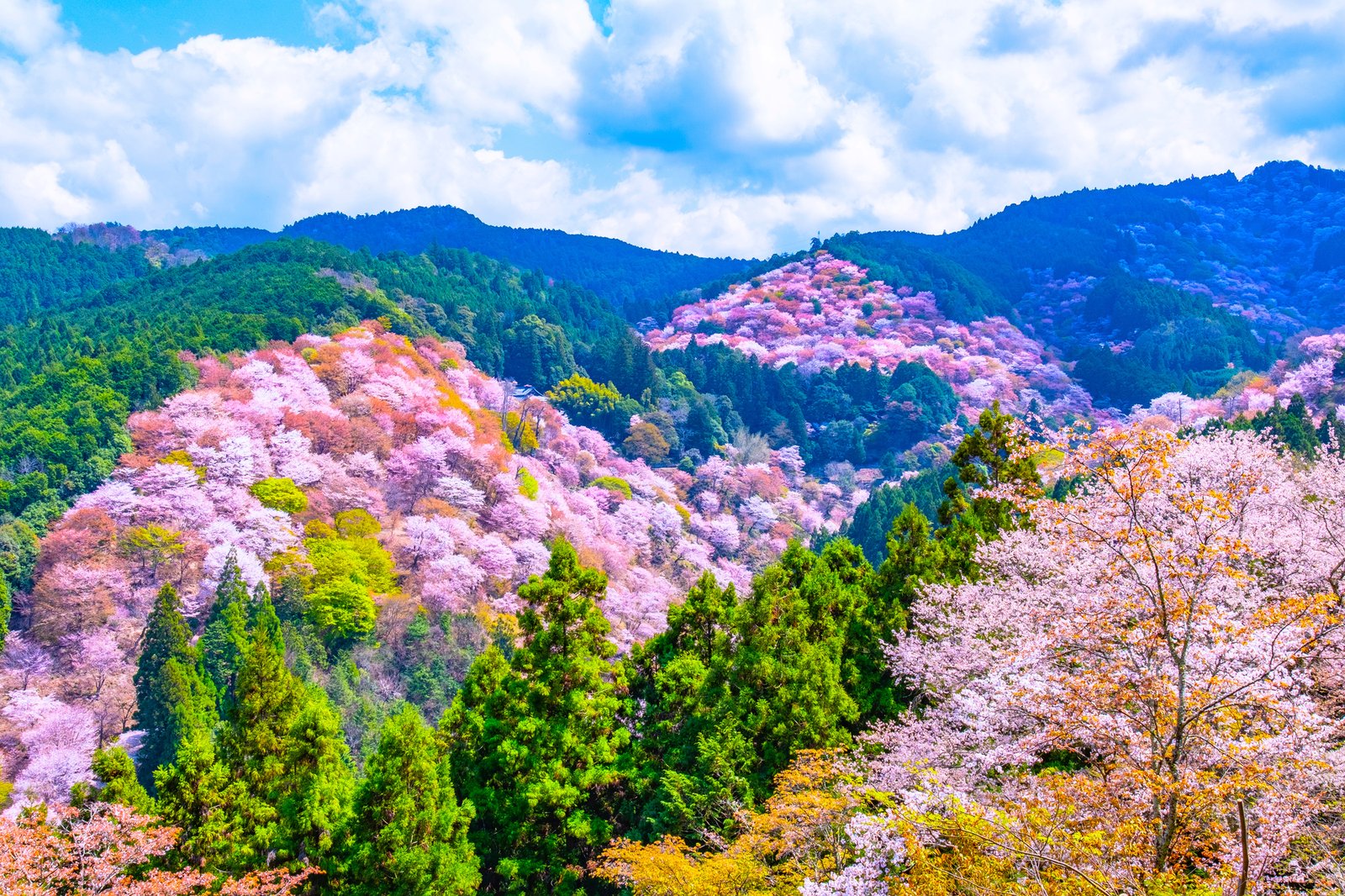
In southern Nara Prefecture, the Yoshino area holds around 30,000 cherry trees on Mount Yoshino, viewpoints such as Yoshimizu Shrine and Hanayagura Observatory, and sites including Kinpusen-ji Temple, Yoshino Mikumari Shrine, and the Omine Okugakemichi trail (Visit Nara Yoshino). Nara Prefecture’s official tourism guide places the bloom of the lower, middle, and upper cherry blossom areas (Shimo-, Naka-, and Kami-Senbon) typically from early to mid-April and the inner area (Oku-Senbon) from mid to late April; the area was inscribed in 2004 as part of the UNESCO World Heritage “Sacred Sites and Pilgrimage Routes in the Kii Mountain Range” (Nara Tabi Net Seasons).
5. Nara Park
Nara Park is a 660-hectare park area in central Nara City inhabited by wild deer, with major historic sites—Todai-ji, Kasuga Taisha Shrine, and Kofuku-ji Temple—in and around the grounds (Visit Nara Nara Park).
6. Yakushiji Temple
Yakushiji Temple, in the Nishinokyo area of Nara City, is one of the constituent properties of the UNESCO World Heritage “Historic Monuments of Ancient Nara” (JNTO Yakushiji). Official visitor information comes from the head temple of the Hosso sect (Yakushiji Temple).
7. Asuka
Asuka Village, introduced by Visit Nara as a centre of ancient Japanese history, gathers sites such as the Ishibutai Kofun tumulus, Oka-dera Temple, Amakashi Hill, and the Nara Prefecture Complex of Man’yo Culture, with cycling routes for touring the area (Visit Nara Asuka).
Getting Around — Key Points
- From Tokyo Station, the JR Shinkansen runs to Kyoto Station (around 142 minutes), with a transfer to a JR rapid train to Nara Station (around 41 minutes) or a Kintetsu limited express train to Kintetsu-Nara Station (around 34 minutes) (Visit Nara Travel to Nara).
- From Kansai International Airport, Nara is around 90 minutes away, with highway bus connections also listed (Visit Nara Travel to Nara).
- Within Nara Prefecture, Kintetsu and JR West railway lines and Nara Kotsu local and sightseeing buses link destinations across the prefecture, with transit times to areas such as Yamatokoriyama detailed on the official getting-around page (Visit Nara Getting Around).
- Nara Tabi Net publishes additional access details for Kintetsu trains and Nara Kotsu buses (Nara Tabi Net Access).
Seasons
- Visit Nara’s seasonal highlights note spring from late March to June and feature locations such as Yoshino, Mitarai Valley, Mount Odaigahara, and Soni Highland (Visit Nara Seasons).
- According to Nara Tabi Net, cherry blossoms on Mount Yoshino typically bloom from early to mid-April in Shimo-, Naka-, and Kami-Senbon and from mid to late April in Oku-Senbon, while Takigi Noh performances are held at Kasuga Taisha Shrine and Kofuku-ji Temple in Nara City on the third Friday and Saturday of May (Nara Tabi Net Seasons).
Transport Summary
| Route | Detail | Time | Source |
|---|---|---|---|
| Tokyo Station to Kyoto Station | JR Shinkansen | Around 142 minutes | Visit Nara Travel to Nara |
| Kyoto Station to Nara Station | JR rapid train | Around 41 minutes | Visit Nara Travel to Nara |
| Kyoto Station to Kintetsu-Nara Station | Kintetsu limited express | Around 34 minutes | Visit Nara Travel to Nara |
| Kansai International Airport to Nara | Airport access | Around 90 minutes | Visit Nara Travel to Nara |
| Highway buses to Nara | Options listed on the travel page | — | Visit Nara Travel to Nara |
| Rail within Nara Prefecture | Kintetsu and JR West | — | Visit Nara Getting Around |
| Bus within Nara Prefecture | Nara Kotsu local and sightseeing buses | — | Visit Nara Getting Around |
| Yamatokoriyama and other areas | Journey times are given on the getting-around page | — | Visit Nara Getting Around |
| Kintetsu trains and Nara Kotsu buses | Further access notes | — | Nara Tabi Net Access |
| Kintetsu-Nara Station to Todai-ji | On foot | Around 20 minutes | Todai-ji Access |
| City loop bus to Todai-ji | Todaiji Daibutsuden / Kasuga Taisha-mae stop, then on foot | Around 5 minutes | Todai-ji Access |
| Gurutto Bus to Todai-ji | Daibutsuden-mae Parking stop | Directly at the stop | Todai-ji Access |
| Nara Park area to Horyu-ji | Train and bus | Under 30 minutes | Visit Nara Horyuji |
| JR Horyuji Station to Horyu-ji | Shuttle bus from the south exit | — | Visit Nara Horyuji |
Where to Stay (Base Options)
- Nara Hotel, at 1096 Takabatake-cho, Nara-shi, Nara 630-8301, is a classic hotel founded in 1909 and operated by JR West Hotels (Nara Hotel; Nara Hotel on Expedia (affiliate link)).
- Noborioji Hotel Nara, at 40-1 Noborioji-cho, Nara-shi, Nara 630-8213, publishes accommodation plans and rates on its official website (Noborioji Hotel Nara).
- Chikurinin Gunpoen, at 2142 Yoshinoyama, Yoshino-cho, Yoshino-gun, Nara 639-3115, is an accommodation on Mount Yoshino with the Gunpoen garden, one of the three major gardens of Yamato (Chikurinin Gunpoen).
- Compare Nara hotels on Expedia (affiliate link).
Accommodation statistics
- According to the Japan Tourism Agency’s 2025 Accommodation Travel Statistics Survey (final figures, verified 31 October 2026), Nara Prefecture recorded 520,130 foreign guest-nights, ranking 28th in Japan, down 2.8% compared with 2019 and up 30.1% year on year (Japan Tourism Agency).
What we have not verified
Checked on 22 November 2026 (JST).
- Street addresses and map coordinates for Horyu-ji, sites in Yoshino, the boundary of Nara Park, Yakushiji Temple, and sites in Asuka, and the street number for Kumano Hongu Taisha in Tanabe City, Wakayama Prefecture.
- Opening hours, admission fees, and regular closing days for Kumano Hongu Taisha, Horyu-ji, sites in Yoshino, Yakushiji Temple, and facilities in Asuka. Hall-by-hall admission fees at Todai-ji beyond the seasonal hours of the Great Buddha Hall. Maintenance closures and seasonal timetables for individual facilities.
- Fares, timetables, and more exact journey times for buses from Kansai International Airport, for Yoshino, Asuka, and Yakushiji Temple, and for travel from Nara to Kumano Hongu Taisha.
- Related guides on Margins & Maps, links for emergency and medical help, and an attractiveness ranking for Nara Prefecture.
Official sources
- JNTO Nara: https://www.japan.travel/en/destinations/kansai/nara/ (checked 2026-11-22)
- JNTO Nara City & Around: https://www.japan.travel/en/destinations/kansai/nara/nara-city-and-around/ (checked 2026-11-22)
- Visit Nara (Official English Portal): https://www.visitnara.jp/ (checked 2026-11-22)
- Visit Nara Seasons: https://www.visitnara.jp/seasons/ (checked 2026-11-22)
- Nara Tabi Net Seasons: http://yamatoji.nara-kankou.or.jp/season/ (checked 2026-11-22)
- Visit Nara Travel to Nara: https://www.visitnara.jp/travel-to-nara/ (checked 2026-11-22)
- Visit Nara Getting Around Nara: https://www.visitnara.jp/getting-around-nara/ (checked 2026-11-22)
- Nara Tabi Net Access: https://yamatoji.nara-kankou.or.jp/access/ (checked 2026-11-22)
- Japan Tourism Agency Accommodation Travel Statistics Survey 2025 (final): https://www.mlit.go.jp/kankocho/content/002026763.pdf (checked 2026-10-31)
- Kumano Hongu Taisha: https://www.hongutaisha.jp/ (checked 2026-11-22)
- Todai-ji (English): https://www.todaiji.or.jp/en/ (checked 2026-11-22)
- Todai-ji Admission Information (English): https://www.todaiji.or.jp/en/information/haikan/ (checked 2026-11-22)
- Todai-ji Access: https://www.todaiji.or.jp/access/ (checked 2026-11-22)
- Horyu-ji: https://www.horyuji.or.jp/ (checked 2026-11-22)
- Horyu-ji Hokki-ji (English): https://www.horyuji.or.jp/en/hokiji/ (checked 2026-11-22)
- Visit Nara Horyuji Guide: https://www.visitnara.jp/destinations/destination/horyuji-temple/ (checked 2026-11-22)
- JNTO Horyuji Temple: https://www.japan.travel/en/destinations/nara/horyuji-temple/ (checked 2026-11-22)
- Visit Nara Yoshino Area Guide: https://www.visitnara.jp/destinations/area/yoshino/ (checked 2026-11-22)
- Visit Nara Nara Park Area Guide: https://www.visitnara.jp/destinations/area/nara-park/ (checked 2026-11-22)
- JNTO Yakushiji Temple: https://www.japan.travel/en/spot/996/ (checked 2026-11-22)
- Yakushiji Temple: https://yakushiji.or.jp/ (checked 2026-11-22)
- Visit Nara Asuka Area Guide: https://www.visitnara.jp/destinations/area/asuka/ (checked 2026-11-22)
- Nara Hotel: https://jrwest-hotels.jp/narahotel/ (checked 2026-11-22)
- Noborioji Hotel Nara: https://www.noborioji.com/ (checked 2026-11-22)
- Chikurinin Gunpoen: https://chikurinin.com/ (checked 2026-11-22)