Place name in Japanese: 門司港, Mojikō.
Mojiko Retro, Kitakyushu: the station built as a gate, the harbour buildings and the ferry to Shimonoseki
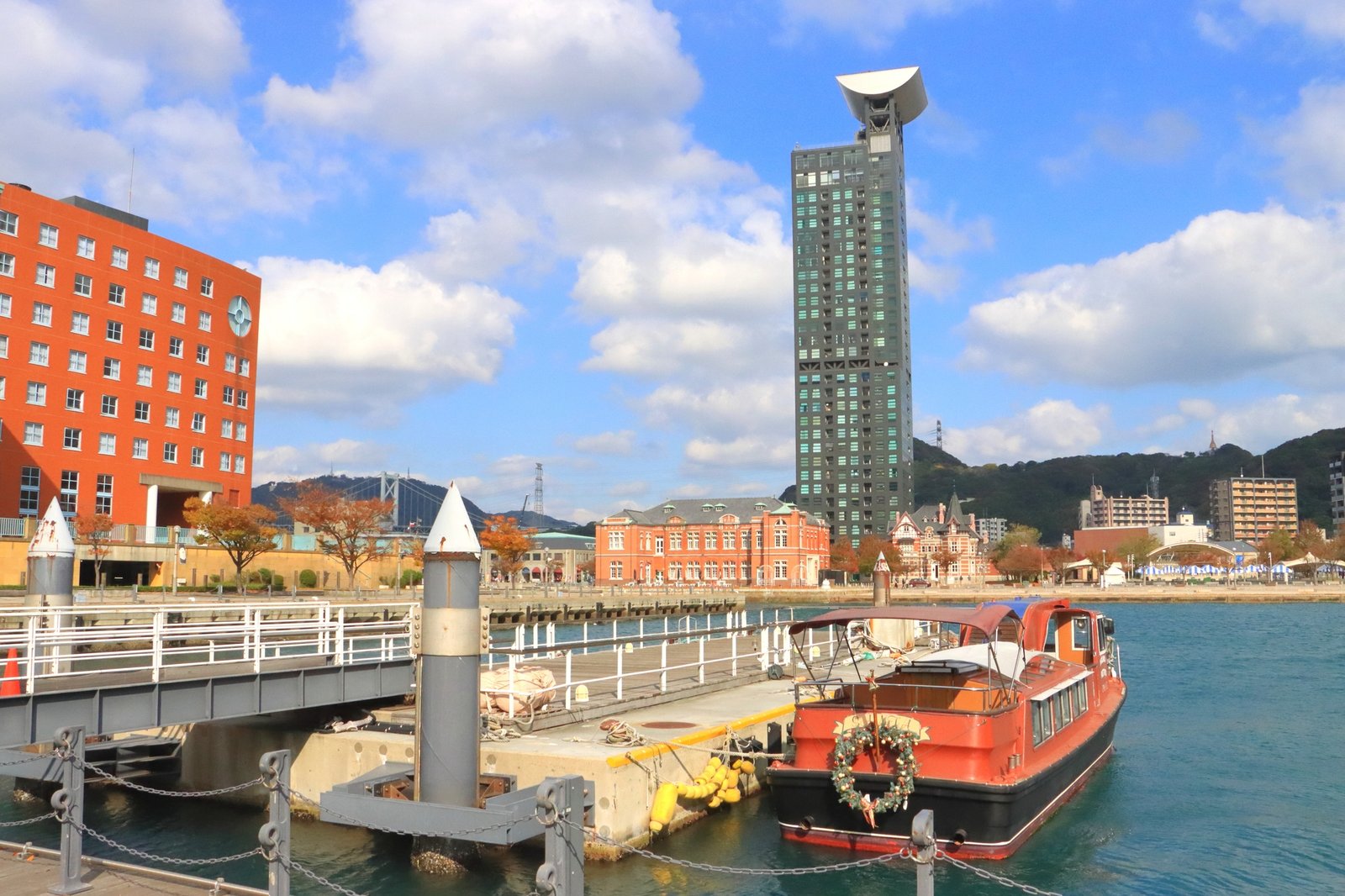
Mojiko Retro is the harbour district of Moji, in the city of Kitakyushu, where Kitakyushu City guides visitors around Mojiko Station, the former Moji Mitsui Club and the former Moji Customs building (Kitakyushu City, Mojiko Retro (in Japanese)). The database of the Agency for Cultural Affairs records the main building of Mojiko Station (former Moji Station) as an Important Cultural Property, designated on 19 December 1988 (Agency for Cultural Affairs, Mojiko Station (in Japanese)), and the main building of the former Moji Mitsui Club as an Important Cultural Property, designated on 19 March 1990 (Agency for Cultural Affairs, former Moji Mitsui Club (in Japanese)).
Who this is for: travellers staying in Kitakyushu or Fukuoka who want a half day on foot among harbour buildings of the early twentieth century, with the option of a short crossing to Honshu.
The short version: take the JR Kagoshima Line to Mojiko Station. Kitakyushu City lists the former Moji Mitsui Club and the former Moji Customs building among the sights of Mojiko Retro. The Kanmon ferry crosses to Karato in Shimonoseki in about five minutes.
What to plan for
| If… | Then lean towards… | Check |
|---|---|---|
| You arrive by train | Mojiko Station, where the station building itself is one of the sights | JR Kyushu, Mojiko Station (in Japanese) |
| You want to go inside a building | The former Moji Mitsui Club, where Kitakyushu City lists the room where Einstein and his wife stayed and the Hayashi Fumiko memorial room | Kitakyushu City, Mojiko Retro (in Japanese) |
| You want a free stop by the water | The former Moji Customs building, where the customs exhibition room on the ground floor is free to enter | Moji Customs, exhibition room (in Japanese) |
| You want to cross to Shimonoseki | The Kanmon ferry to Karato, about five minutes each way | Kanmon Kisen, Kanmon ferry (in Japanese) |
Getting there: the Kagoshima Line and the ferry
- By train: JR Kyushu’s timetable for Mojiko Station lists departures on the Kagoshima Line towards Kokura and Hakata, and says times change with the date, with some trains cancelled or added on certain days (JR Kyushu, Mojiko Station timetable (in Japanese)). Times: Check official.
- At the station: JR Kyushu’s station page lists the ticket office, the coin lockers and the station facilities (JR Kyushu, Mojiko Station (in Japanese)). Ticket office hours: Check official.
- By ferry: Kanmon Kisen says its Kanmon ferry runs between Karato in Shimonoseki and Mojiko in about five minutes, and that sailings can change with the weather (Kanmon Kisen, Kanmon ferry (in Japanese)). Times and fares: Check official. It marks some sailings as not running on Sundays and public holidays.
What to do: look up the return train or ferry before you set off round the harbour, as the two timetables are separate. Where to verify: the Mojiko Station timetable (in Japanese).
Around the harbour: the club and the customs building
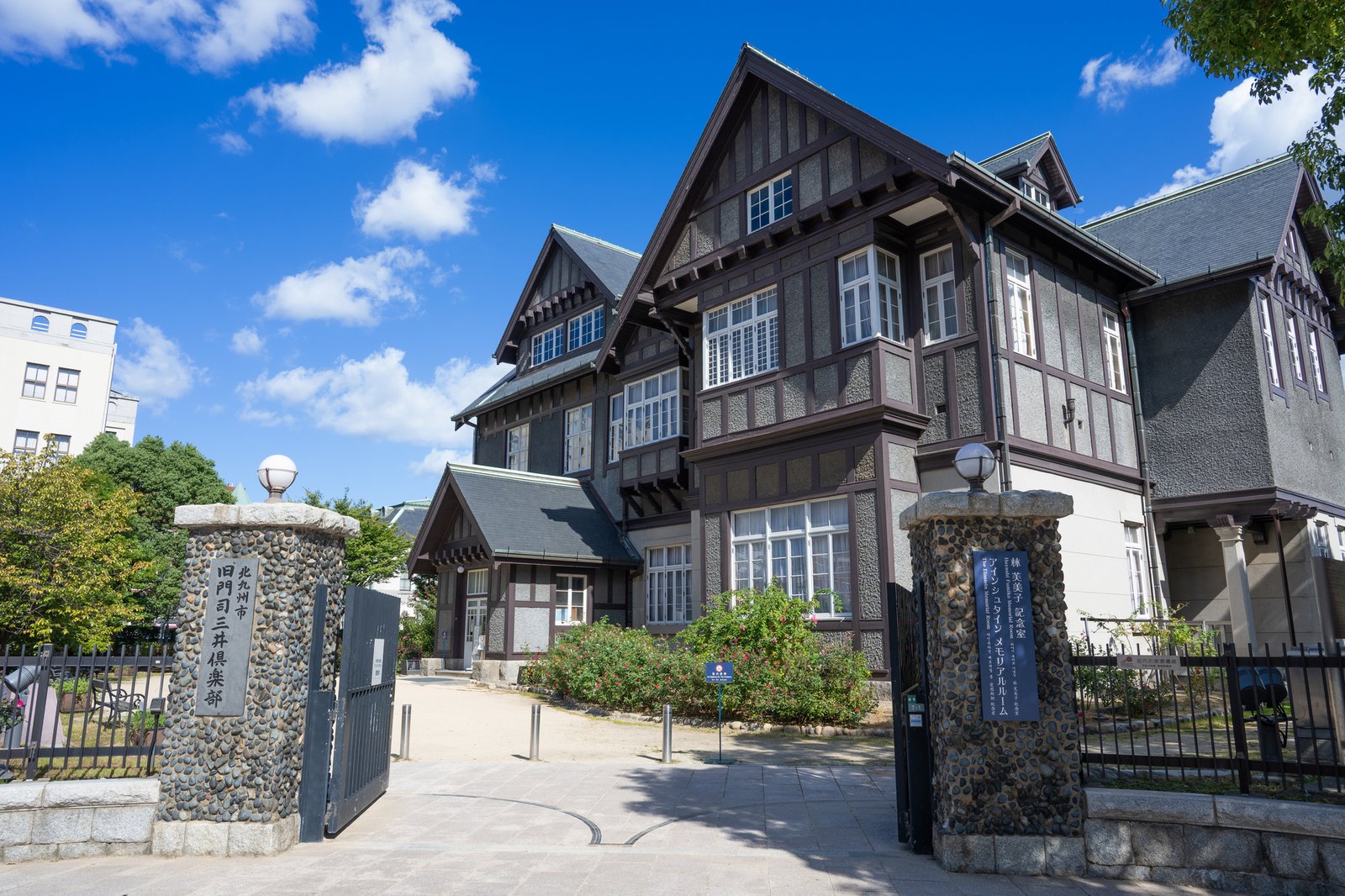
- The former Moji Mitsui Club: Kitakyushu City says the club has the room where Einstein and his wife stayed when they came to Japan, and the Hayashi Fumiko memorial room (Kitakyushu City, Mojiko Retro (in Japanese)).
- The former Moji Customs building: Moji Customs says the building was put up in 1912 as its second office, on the site of the earlier office, which had burnt down, and was used until 1927 (Moji Customs, exhibition room (in Japanese)). It says the building was then sold and used as a warehouse, and was restored in 1995 as one of the projects to revive Mojiko; the customs exhibition room on the ground floor is free to enter. Hours: Check official.
- The drawbridge: Kitakyushu City says the pedestrian drawbridge Blue Wing Moji opens and closes six times a day (Kitakyushu City, Mojiko Retro (in Japanese)).
What to do: visit the club and the customs building on foot, and allow for the drawbridge being raised when you want to cross it. Where to verify: Moji Customs’ page on the exhibition room (in Japanese).
The club where Einstein stayed, as the official records tell it
The Agency for Cultural Affairs database says the Mitsui Club was built by the Moji branch of Mitsui & Co. to receive and lodge the company’s guests, that it passed to the national railways after the break-up of the zaibatsu after the war, and that the building is now owned by Kitakyushu City (Agency for Cultural Affairs, former Moji Mitsui Club (in Japanese)). It describes a Western-style main building in half-timbering, with a Japanese-style service wing joined on behind it.
Kitakyushu City dates the building to 1921, in Tanimachi on the hillside above the harbour, and says Einstein and his wife stayed there in 1922; their bedroom and sitting room have been restored, and the building was moved to its present site in 1995 to preserve it (Kitakyushu City, former Moji Mitsui Club (in Japanese)).
What to do: look for the restored bedroom and sitting room that the city links to the 1922 stay. Where to verify: the city’s page on the club (in Japanese).
Why the station looks like a gate, and why it changed its name
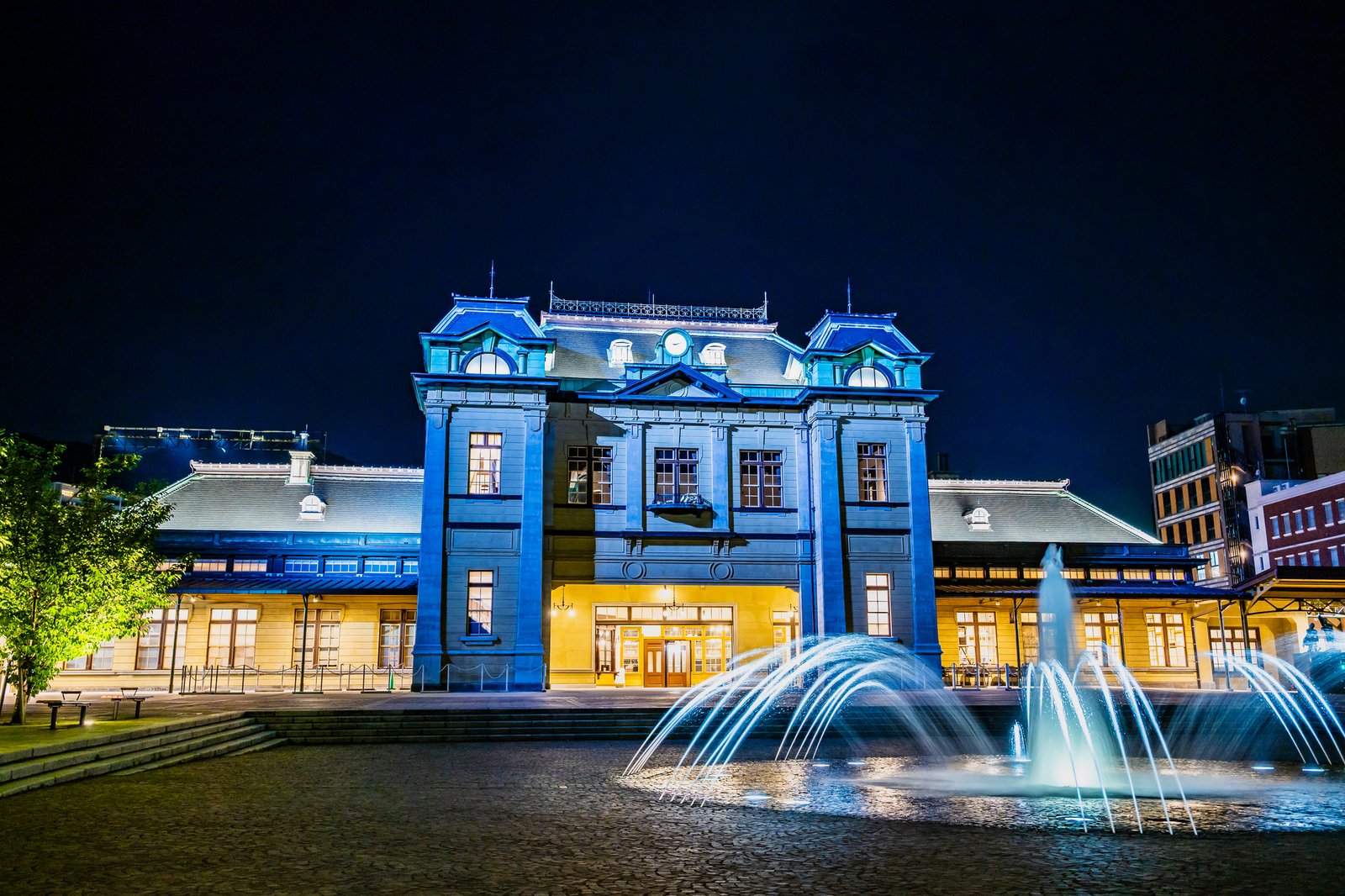
The Agency for Cultural Affairs database says the central part of the station building is two storeys high and was designed on the image of a gate, with single-storey wings on either side in a symmetrical design (Agency for Cultural Affairs, Mojiko Station (in Japanese)). It says Moji Station was opened in 1891 as the station at the entrance to Kyushu, was renamed Mojiko Station when the Kanmon railway tunnel opened in 1942, and is still in use as a station.
Kitakyushu City says the present building, the second station building, was built in 1914, about 200 m west of the station that opened in 1891, and that when the tunnel opened in 1942, Moji Station became Mojiko Station and Dairi Station became Moji Station (Kitakyushu City, Mojiko Station (in Japanese)). The city says the building reopened on 10 March 2019 after about six years of conservation work from 2012 (Kitakyushu City, Mojiko Retro (in Japanese)).
What to do: stand back from the station front to see the two-storey centre and the lower wings either side. Where to verify: the city’s page on the station (in Japanese).
What we have not verified
- JR Kyushu fares to Mojiko Station, which the pages we fetched do not print.
- The opening times of the Blue Wing Moji drawbridge, which the city page we fetched does not print.
- The hours, fees and any paid areas of the former Moji Mitsui Club, which the official pages we fetched do not print.
- Walking times from Mojiko Station to the club and the customs building, and parking at either, which the official pages we fetched do not print.
- The English forms of the station, the club, the customs building and the ferry piers, which the pages we fetched do not print (NAMES pending).
- The Kanmon tunnel footpath and the other buildings in the district, which this page does not cover.
Official sources
| Topic | Source | Checked |
|---|---|---|
| The district, the club’s rooms, the drawbridge, the station’s reopening | Kitakyushu City, Mojiko Retro | 2026-11-14 |
| Station designation, the gate design, the 1942 renaming | Agency for Cultural Affairs, Mojiko Station | 2026-11-14 |
| Club designation, the owners, the building | Agency for Cultural Affairs, former Moji Mitsui Club | 2026-11-14 |
| The 1914 building, the move west, the two renamings | Kitakyushu City, Mojiko Station | 2026-11-14 |
| The 1921 club, the 1922 stay, the 1995 move | Kitakyushu City, former Moji Mitsui Club | 2026-11-14 |
| Customs building history, exhibition room | Moji Customs, exhibition room | 2026-11-14 |
| Trains from Mojiko Station | JR Kyushu, Mojiko Station timetable | 2026-11-14 |
| Station facilities | JR Kyushu, Mojiko Station | 2026-11-14 |
| Ferry to Karato, times, fares | Kanmon Kisen, Kanmon ferry | 2026-11-14 |