Matsue’s castle keep, Shimane: completed by 1611, a national treasure again since 2015, and visiting details
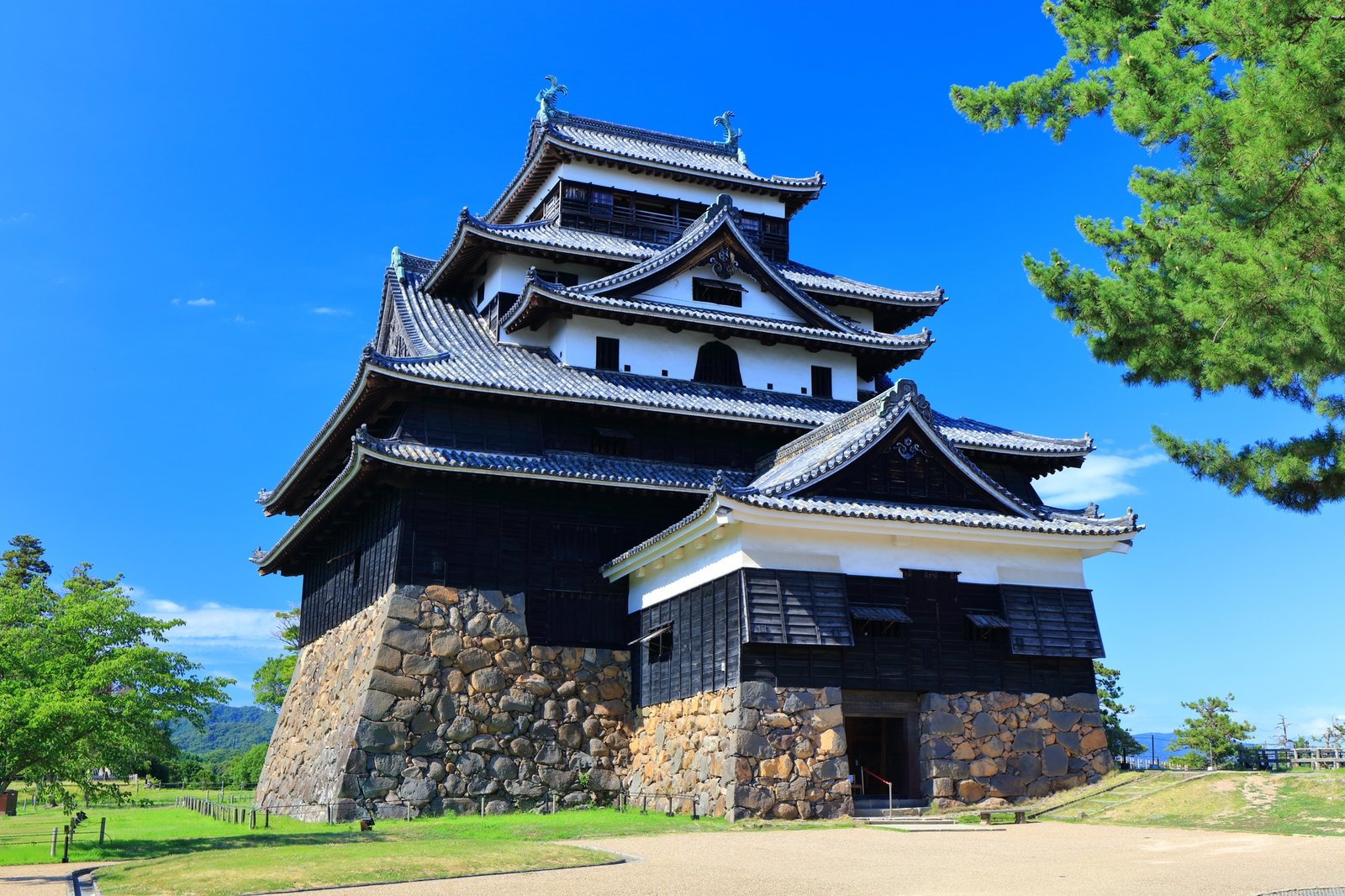
Who this is for: A reader planning a visit to Matsue’s castle in Matsue, Shimane prefecture, who wants to know from the castle’s official site and Matsue city what the keep is, how it came through the 19th and 20th centuries, and what the hours, fees and climb involve, as listed when we checked on 2026-11-09.
The short version: The keep of Matsue’s castle is one of 12 keeps in Japan that survive from the Edo period or earlier, the castle’s official site says, and it was designated a national treasure in 2015. Work began in 1607 beside the lake, and the castle was complete by New Year 1611. From 1 July 2026, entry to the keep costs 1,200 yen for adults and is free for elementary and junior high school students; the inner castle grounds are free. Check the official pages for your date.
What the official pages answer, and what they leave to you
| If… | Then lean towards… | Check |
|---|---|---|
| You want to know how old the keep is | Building began in 1607 and the castle was complete by New Year 1611, as the official history gives it | Official site, history |
| You want the keep’s designation history | National treasure in 1935, an important cultural property from 1950, and a national treasure again in 2015 | Official site, history |
| You are planning the day | The hours and fees below, as listed on 2026-11-09, and about 40 to 50 minutes from the main entrance to the keep and back | Official site, hours and fees |
| You use a wheelchair | The keep’s interior cannot be visited in a wheelchair, and there are steps up to the inner castle grounds | Official site, FAQ |
A keep chosen by the lake, sold and bought back
The official history begins in 1600, but the castle itself starts later. In 1607 a site beside the lake at Matsue was chosen and building work began; by New Year 1611 the castle was complete.
The castle came close to being lost in 1875. That year, the history says, the order to abolish castles reached Matsue: the turrets, gates and palace buildings inside the castle were pulled down and sold, and the keep itself was given a price of 180 yen at the time. It was bought back through the efforts of a local wealthy farmer and his son, and a former retainer of the domain, and others.
The designations followed a long arc across the 20th century. Under the former national-treasure preservation law the keep became a national treasure in 1935. In 1950, when the law changed to the cultural-property protection law, it was reclassified as an important cultural property, and a major dismantling repair ran from 1950 to 1955. In 2015, the rediscovery of the prayer boards used when the keep was completed established the year it was finished, and it was designated a national treasure again. The history also notes that castles across Japan burned in the Second World War and that Matsue’s castle escaped.
Read the official history page for the full timeline before you go.
- Official: Official site, history
Reading the keep: a lookout on top, a turret at the door, and the roof ornaments
From outside, look at the shape of the keep. The official site describes the watchtower type of keep as a turret with a hip-and-gable roof carrying a lookout on top, a form often seen in early keeps, and says that Matsue’s castle is said to be of this type.
Then look at the entrance. The keep is also of the composite type, the site explains: another turret is attached to the keep, and you cannot enter the keep itself without passing through it. At Matsue’s castle that is the attached turret at the entrance, and the site gives the purpose as holding back an attacking enemy.
On the roof, look for the shachihoko, the ornaments at each end of the ridge: imaginary creatures with a tiger’s head and a fish’s body. They are said to spout water from their mouths in a fire, the site writes, and are placed as charms to protect the building from fire. The two at Matsue’s castle differ in size; the larger one, popularly called the male, is 2.08 metres tall.
To see these for yourself, walk round the keep from outside before you go in through the attached turret, and read the official site’s notes on the keep before you go.
- Official: Official site, highlights
Hours, fees and the climb (as listed on 2026-11-09)
These figures come from the castle’s official site and Matsue city’s fee page (updated 2026-06-30), checked on 2026-11-09. The fees were revised on 1 July 2026, the official site says, to fund major repairs to the keep.
| Item | 1 April to 30 September | 1 October to 31 March |
|---|---|---|
| Keep | 8:30–18:00 (ticket desk closes 17:30) | 8:30–17:00 (ticket desk closes 16:30) |
| Inner castle enclosure gates (free entry) | 8:00–18:30 | 8:00–17:30 |
| Keep admission from 1 July 2026 | Price listed on 2026-11-09 |
|---|---|
| Adults | 1,200 yen |
| Elementary and junior high school students | Free |
| Groups of 30 or more: adults | 960 yen |
| Matsue residents: adults (Matsue city’s page) | 600 yen |
| Holders of a disability certificate or similar, and one carer | Free |
| Web ticket for three facilities (the castle, a writer’s memorial museum, and a samurai residence): adults | 1,760 yen, usable for 10 days including the day of purchase |
| The same three-facility web ticket: elementary and junior high school students | 400 yen |
- Open days: every day of the year; hours may change for events.
- Shoes: you take off your shoes at the keep entrance and carry them in a shoe bag.
- Time: about 40 to 50 minutes from the main entrance up to the keep and back, as a guide.
- The climb: there is no lift and no toilet inside the keep, and the stairs are steep. Toilets include one near the second gate.
- Wheelchairs: you can reach the upper terrace of the outer enclosure by a gravel detour, but from there to the inner enclosure there are steps, and the keep’s interior cannot be visited in a wheelchair.
- Notices: on 21 October 2026 the official site posted a notice about closing the path between the north gate and the water gate for stone-wall safety work, and Matsue city is planning a major repair of the keep, 70 years after the repair of 1950 to 1955. Check how these affect your route.
Before you go, check the official hours and fees page and the notices on the official site for your date.
- Official: Official site, hours and fees · Matsue city, fees · Official site, FAQ · Matsue city, repair
Getting there
Check the official access page for the castle’s street address and park management office in Matsue. By bus, the city loop bus stops near the castle; for JR Matsue station, the official FAQ points to the prefectural-office and civic-hall stops near the main entrance, about 10 minutes to the station. From the airports, the official access page gives about 35 minutes by airport bus from Izumo Enmusubi Airport to JR Matsue station, and about 45 minutes from Yonago Kitaro Airport. By car, the main car parks are the Otemae car park and the castle-hill west car park, both paid, and the prefectural office car park is opened free on Saturdays, Sundays and public holidays.
Check the route and parking on the official access page before you set out.
- Official: Official site, access · Official site, FAQ
Before you go
- Check the hours, fees and any event changes for your date on the official site.
- Check the official notices for path closures and the repair of the keep.
- Plan for steep stairs inside the keep, and be ready to take off your shoes at the entrance.
Always follow the official pages linked below.
What we have not verified
- The walking route and time from JR Matsue station.
- Matsue resident and group fees on the official site’s own table, which we did not find there.
- How the path closure and the planned repair affect the route on your date.
- Official English names for Matsue’s castle and the facilities named here.
Official sources
| Topic | Source | Checked |
|---|---|---|
| One of 12 surviving keeps; national treasure in 2015; watchtower type (said to be), composite type and attached turret; shachihoko, their size and the fire charm | Official site, highlights | 2026-11-09 |
| Site chosen and work begun in 1607; complete by New Year 1611; 1875 abolition, sale and buying back; 1935, 1950 and 2015 designations; Second World War | Official site, history | 2026-11-09 |
| Keep hours, open every day, inner-enclosure gate hours, keep fees from 1 July 2026, group fee, free entry for disability certificate holders, shoes, three-facility web ticket price and validity | Official site, hours and fees | 2026-11-09 |
| Fee revision from 1 July 2026, including the Matsue resident fee | Matsue city, fees | 2026-11-09 (page updated 2026-06-30) |
| 40 to 50 minutes; no lift or toilet in the keep; steep stairs; wheelchairs; bus stops and 10 minutes to the station; car parks and free opening | Official site, FAQ | 2026-11-09 |
| Airport buses; car park names | Official site, access | 2026-11-09 |
| Contact address; three-facility ticket members; path closure notice of 2026-10-21 | Official site | 2026-11-09 |
| Planned repair, 70 years after the 1950–55 repair | Matsue city, repair | 2026-11-09 (page updated 2026-09-29) |