Place name in Japanese: 香嵐渓, Kōrankei.
Korankei, Aichi: autumn maples in Asuke, the November bus changes and the old merchant town next door
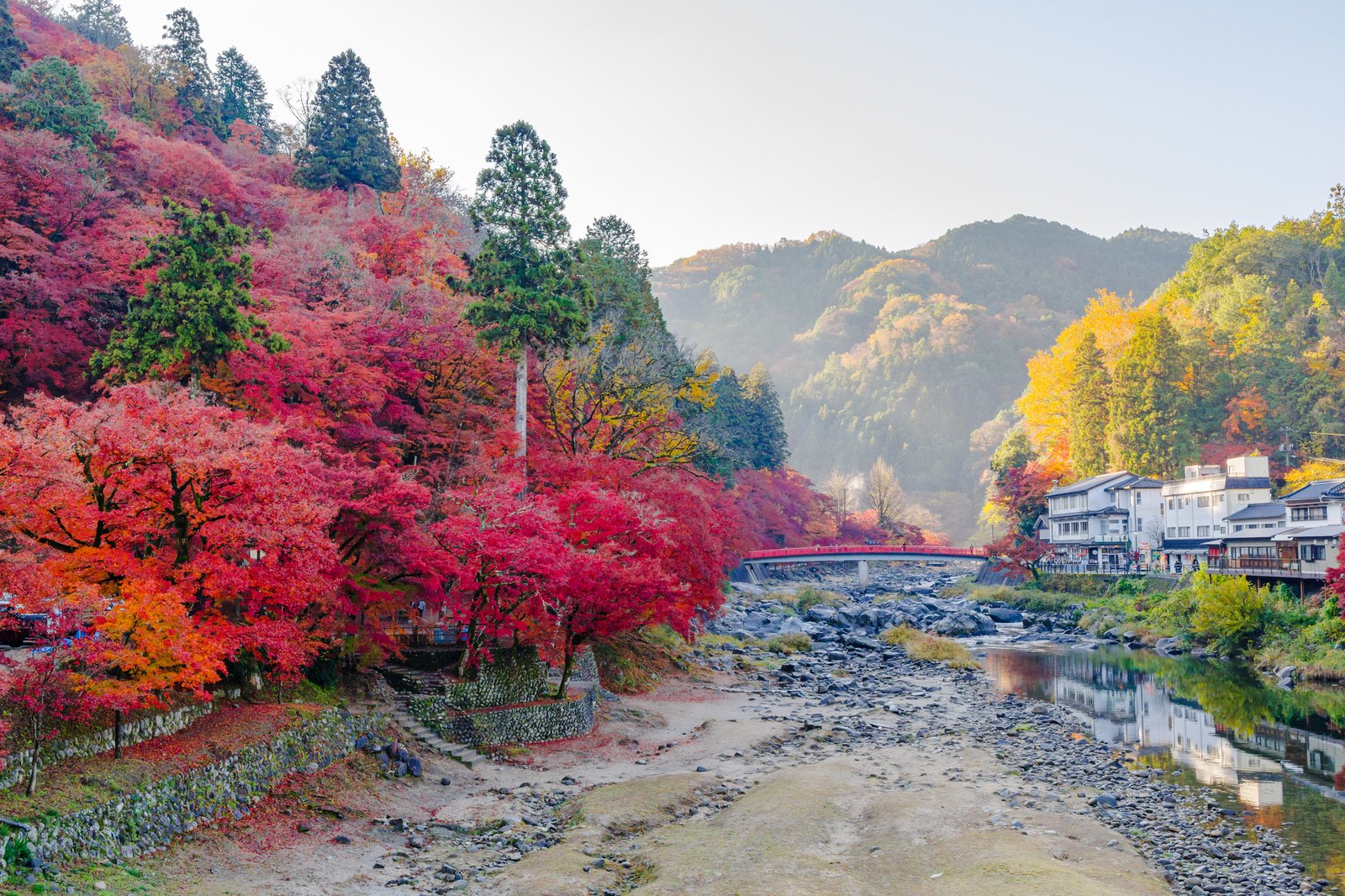
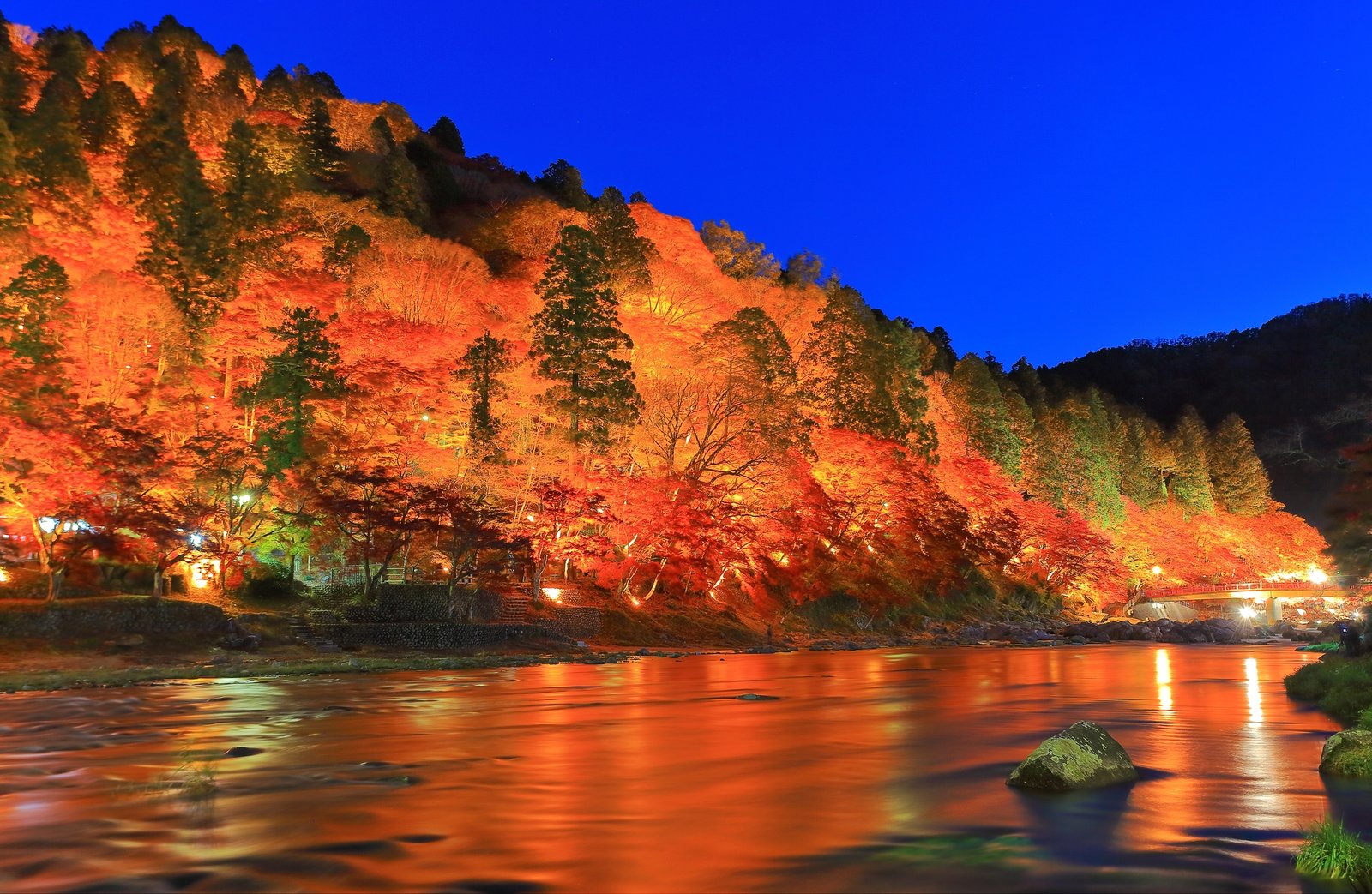
Korankei is a maple valley in the Asuke area of Toyota City, in the hills of Aichi. The city’s page says about 3,000 maples turn red and yellow here, and that the Korankei Momiji Festival is held during November, with the trees lit up in the evening while the colours are at their height (Toyota City, Korankei Momiji Festival (in Japanese)).
Who this is for: travellers who want to see the autumn leaves at Korankei in November and walk the old streets of Asuke on the same day.
The short version: Korankei is busiest in November, during the maple festival. The city’s community bus, the Toyota Oiden Bus, runs to Korankei, but in November some runs are suspended or cut short because of traffic jams, so read the city’s November bus page for your date. The old merchant town of Asuke, a national preservation district, is next to the valley.
Plan by situation
| Your situation | Our suggestion | Where to check |
|---|---|---|
| You want to see the trees lit up | Go on an evening during the festival; the dates and hours change every year | Toyota City, festival listing in the city newsletter (in Japanese) |
| You travel by bus on a November weekend or holiday | Check which runs of the Sanage–Asuke Line stop short of Korankei on your date | Toyota City, Oiden Bus during the festival (in Japanese) |
| You come by car | Use one of the car parks the city lists for the Korankei facilities | Toyota City, Korankei facilities ordinance (in Japanese) |
| You want to see old townhouses as well | Walk the streets of Asuke, a preservation district for groups of historic buildings | Agency for Cultural Affairs, preservation district entry (in Japanese) |
Hours, admission and dates to confirm
| Item | Value | Where to check |
|---|---|---|
| Festival dates and evening light-up hours this year | Check official | Toyota City, festival listing in the city newsletter (in Japanese) |
| When the colours are at their best | Not verified (see below) | Toyota City, Korankei Momiji Festival (in Japanese) |
| Sanage–Asuke Line times in November (weekdays) | Check official | Toyota City, November weekday timetable (PDF, in Japanese) |
| Oiden Bus fares | Not verified (see below) | Toyota City, Oiden Bus during the festival (in Japanese) |
| Sanshu Asuke Yashiki opening days and hours | Check official | Toyota City, Korankei facilities ordinance (in Japanese) |
| Car park fees | Not verified (see below) | Toyota City, Korankei facilities ordinance (in Japanese) |
- The festival: the city’s newsletter page lists this year’s Korankei Momiji Festival, held at Korankei and in the streets of Asuke, with an evening light-up during the festival (Toyota City, festival listing in the city newsletter (in Japanese)). The city’s festival page gives the Asuke Tourist Association as the contact for the festival (Toyota City, Korankei Momiji Festival (in Japanese)).
- Bus changes: the city says that every November, traffic jams around Asuke during the festival cause long delays on the Sanage–Asuke, Asahi–Asuke and Inabu–Asuke lines, and that it suspends some runs or parts of runs for the whole month to keep the buses on time and for the safety and health of passengers and drivers (Toyota City, Oiden Bus during the festival (in Japanese)). It publishes a separate timetable for weekdays, for the first weekend, for other weekends and holidays, and for the three-day holiday weekend.
- Hours can change: the city’s ordinance lets the facility manager change opening days and hours for a time when it finds this necessary (Toyota City, Korankei facilities ordinance (in Japanese)).
- Before you go: open the city’s November bus page and the timetable for your date on the morning you travel.
What to do: if you come by bus on a weekend or holiday in November, find your run in the timetable for that day, as some runs do not reach Korankei. Where to verify: the city’s November bus page (in Japanese).
The city facilities around the valley
The city’s ordinance on the Korankei facilities says they are run by a designated manager, an organisation the mayor appoints (Toyota City, Korankei facilities ordinance (in Japanese)). Its list of facilities includes the Korankei park grounds with their walking paths, a visitor centre, Sanshu Asuke Yashiki, a hands-on centre for the life, work and culture of the mountain villages, two rest houses with tea rooms, and six car parks. It also says the Korankei multipurpose square becomes a temporary car park from 1 November to the first Sunday of December.
- Open all day: the ordinance lists the park grounds, the multipurpose square and the car parks as open all year, all day (Toyota City, Korankei facilities ordinance (in Japanese)).
- Car park fees: the ordinance gives only the highest amounts the manager may charge; the manager sets the actual fee within them with the mayor’s approval (Toyota City, Korankei facilities ordinance (in Japanese)).
What to do: if you drive, check the fee at the car park before you leave the car. Where to verify: the city’s ordinance (in Japanese).
Getting there
- By bus: the city’s page names the Sanage–Asuke Line of the Toyota Oiden Bus, which links Josui Station, Sanage Station and Aikan Yogo Station with Korankei (Toyota City, Oiden Bus during the festival (in Japanese)). The November weekday timetable lists a Korankei stop on the line (Toyota City, November weekday timetable (PDF, in Japanese)).
- By car: the ordinance names the car parks at the Asuke Community Hall, the Asuke Branch Office, Ochibe, the Tourist Centre, Nishimachi and Miyamachi (Toyota City, Korankei facilities ordinance (in Japanese)).
What to do: on festival weekends, plan your return as well as your arrival, since the city’s page shows stops that are skipped at some times of day. Where to verify: the city’s November bus page (in Japanese).
Designation: the merchant town of Asuke
The national cultural properties database lists Toyota City Asuke as an Important Preservation District for Groups of Traditional Buildings, of the merchant town type, covering 21.5 ha and selected on 20 June 2011 (Agency for Cultural Affairs, preservation district entry (in Japanese)). Its summary says the district keeps many solid townhouses from the Edo period onwards, with a mix of houses facing the street on their long side and on their gable end along the old road, and a row of detached guest rooms along the river.
The fire of 1775
The database’s detailed description tells the story of the town (Agency for Cultural Affairs, preservation district entry (in Japanese)). Asuke stood on the Ina Kaido, the road linking Owari, Mikawa and southern Shinano, and was long a relay point for goods moving between the sea and the mountains. In the late Muromachi period, Asuke Castle was built on Mt. Mayumi above the present town, and the first form of the town is thought to date from then. In the Edo period, the streets of Tamachi, Higashimachi, Shinmachi and Nishimachi lined the winding road, with shrines, temples and the local government office at the foot of the hills to the north. In 1775 a great fire burned most of the town, but it went on growing as a merchant town on the road, and remained the centre of the area into modern times.
What to do: walk the old road through the district and look for the two kinds of house fronts, side and gable end, that the database describes. Where to verify: the database entry (in Japanese).
The bridge that kept the old town
The city’s booklet on the preservation district says that in 1930, when Asuke Bridge was completed, the prefectural road on the line of the old Ina Kaido was moved to what is now National Route 153, and the streets of Asuke gradually fell away from the main traffic route (Toyota City, booklet on the Asuke preservation district (PDF, in Japanese)). The booklet calls this one reason the townscape survives today (Toyota City, booklet on the Asuke preservation district (PDF, in Japanese)). Its timeline puts the planting of several thousand maples on both banks of the Tomoe River, and the naming of Korankei, in the Taisho and Showa periods (Toyota City, booklet on the Asuke preservation district (PDF, in Japanese)).
What to do: stand on the river bank and compare the busy main road with the quiet old street behind it. Where to verify: the city’s booklet (PDF, in Japanese).
Official sources
| Topic | Source | Checked |
|---|---|---|
| Number of maples, festival in November, light-up at the height of the colours, contact | Toyota City, Korankei Momiji Festival | 2026-11-14 |
| This year’s festival dates and light-up hours | Toyota City, festival listing in the city newsletter | 2026-11-14 |
| November bus changes, Sanage–Asuke Line | Toyota City, Oiden Bus during the festival | 2026-11-14 |
| November weekday times, Korankei stop | Toyota City, November weekday timetable (PDF) | 2026-11-14 |
| Facilities, designated manager, opening days and hours, car parks, fee limits | Toyota City, Korankei facilities ordinance | 2026-11-14 |
| Preservation district, fire of 1775 | Agency for Cultural Affairs, preservation district entry | 2026-11-14 |
| Asuke Bridge, Route 153, maples on the Tomoe River | Toyota City, booklet on the Asuke preservation district (PDF) | 2026-11-14 |
What we have not verified
- When the colours are at their best: the city’s festival page says the trees are lit up while the colours are at their height, but gives no dates for this (Toyota City, Korankei Momiji Festival (in Japanese)).
- Car park fees: the city’s ordinance gives only upper limits, and we did not find a page confirmed by the city that prints the fees actually charged (Toyota City, Korankei facilities ordinance (in Japanese)).
- Who the designated manager is: none of the city pages we read names the organisation that runs the Korankei facilities (Toyota City, Korankei facilities ordinance (in Japanese)).
- A designation for the valley itself: the database entry above covers the merchant town of Asuke, and we did not find a designation for Korankei itself (Agency for Cultural Affairs, preservation district entry (in Japanese)).
- Bus fares: the city’s November bus page does not print the fares (Toyota City, Oiden Bus during the festival (in Japanese)).
- Who first planted the maples: the city’s booklet gives only the Taisho and Showa planting, and we did not find the story of the first maples on a page we could confirm as official (Toyota City, booklet on the Asuke preservation district (PDF, in Japanese)).
- Names: Korankei, Asuke, Tomoe River, Ina Kaido, Asuke Castle, Mt. Mayumi, Tamachi, Higashimachi, Shinmachi, Nishimachi, Sanshu Asuke Yashiki, Asuke Bridge, Ochibe, Miyamachi, Sanage–Asuke Line, Josui Station, Sanage Station and Aikan Yogo Station are our romanizations of the Japanese names on the pages above.