Itsukushimajinja on Miyajima, Hiroshima: corridors built over the sea, works under way, and visiting details
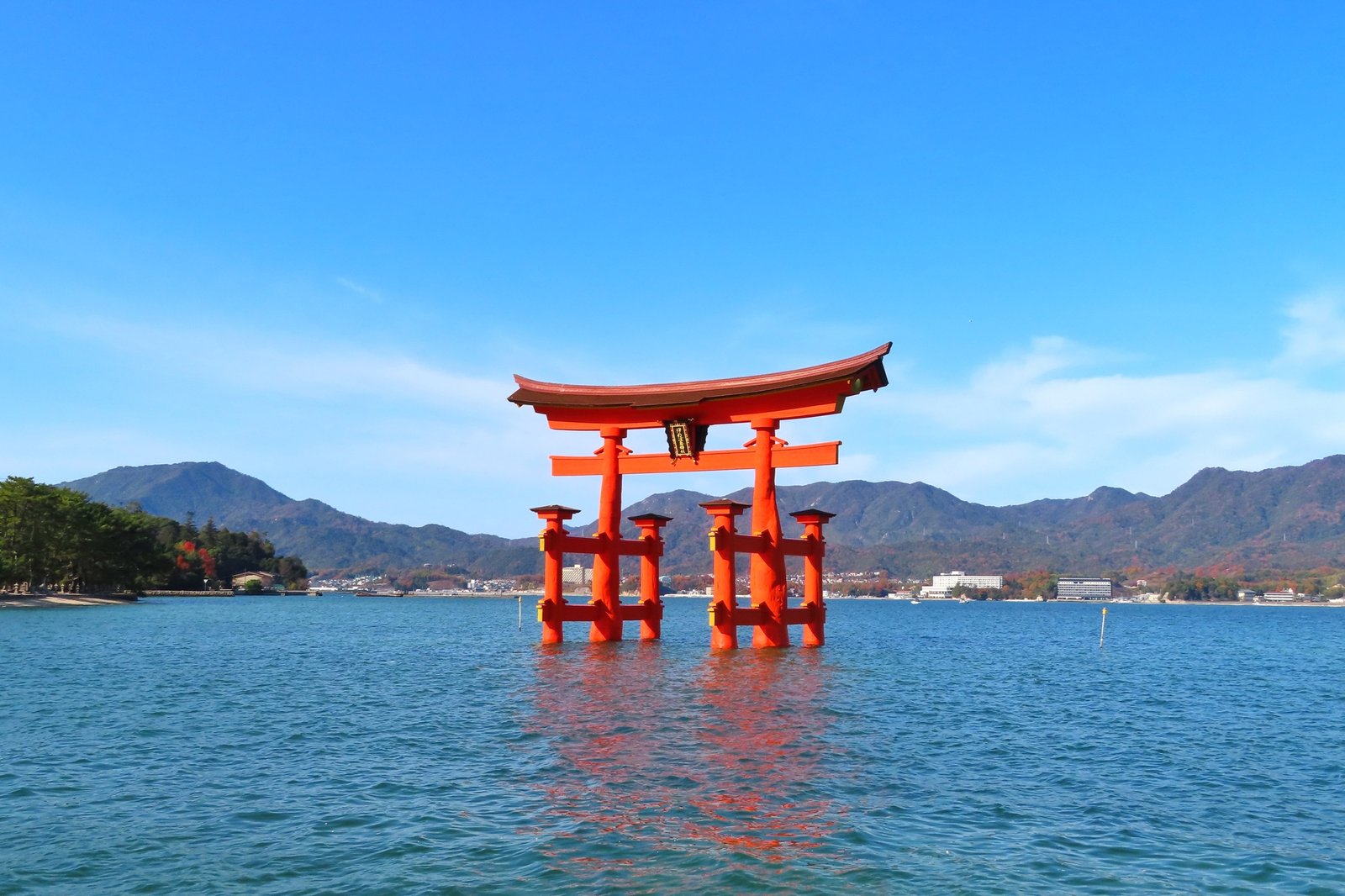
Who this is for: A reader planning a visit to Itsukushimajinja on the island of Miyajima in Hiroshima prefecture, who wants the shrine’s own account of its buildings, the works listed when we checked on 2026-11-09, the hours and fees, and where to check the tides for the day.
The short version: The shrine’s pages say the present shrine buildings were rebuilt by a 12th-century provincial governor, who in 1168 adopted a palace-style architectural form. The corridors have gaps between the boards as a measure against high tides, so the shrine asks visitors to take care with footwear. On 2026-11-09 the shrine listed works on the east corridor and the five-storey pagoda, and entry for adults at 300 yen. The times when you can walk to the offshore gate and when the shrine appears to float change every day; check them on the Miyajima tourist association’s page for your date.
What the official pages answer, and what they leave to you
| If… | Then lean towards… | Check |
|---|---|---|
| You want to walk out to the offshore gate, or see the shrine on the water | The tourist association’s daily times for your date | Miyajima tourist association |
| You want to know why the corridors have gaps | The shrine’s note about high tides and footwear | Visiting route |
| You want to know what is under repair | The shrine’s list of works, as listed on 2026-11-09 | Works and plans |
| You are planning the day | Gate hours and fees below, as listed on 2026-11-09 | Hours and fees |
A shrine established in 593 and rebuilt in 1168
The shrine’s pages give 593, the year an empress came to the throne, as the year the shrine was established. The shrine names three enshrined deities; in its words, they have long been revered as guardians of the peace of the imperial household and of the nation, and as guardians of the sea.
According to the shrine’s history page, when a site for the shrine was being sought on Miyajima, a divine message is said to have come to the ruler of the island. Led by a sacred crow, he is said to have gone round the island’s bays with the deities and chosen the present site, where the sea comes in and goes out, building the shrine there in 593.
The history page says that the governor of the province revered the shrine deeply and in 1168 rebuilt it in buildings that adopted a palace-style architectural form. As his court rank rose, the page says, retired emperors visited in 1174 and in March and September 1180, and many members of the imperial family and nobles came to worship, bringing the culture of the capital. The page says the shrine was registered as a UNESCO World Cultural Heritage site in 1996.
Read the shrine’s history page before you go.
- Official: Shrine history
Why it looks like this
On the visiting route, look down at the floor of the corridors: the shrine’s route page says they are built with gaps as a measure against high tides. The same page asks visitors to take care with footwear, because high heels and similar shoes can get caught in the gaps. The shrine’s history page says the site is the place where the sea comes in and goes out, chosen, it is said, when the shrine was founded. The Miyajima tourist association’s page shows, for each day, the times when you can walk to the offshore gate and the times when the shrine appears to float on the sea. To see this, walk the east corridor and the west corridor on the route, and check the tourist association’s times for your date before you go.
- Official: Visiting route · Shrine history · Miyajima tourist association
Designated buildings and the buildings around the shrine
The shrine says many of its buildings are designated national treasures or important cultural properties: 6 national-treasure buildings, including the main shrine, the guest shrine and the east and west corridors, and 11 important-cultural-property buildings and 3 structures, the 3 being the five-storey pagoda, the two-tiered pagoda and the offshore gate.
The shrine’s page on its buildings describes several outside the shrine buildings:
| Building | What the shrine’s page says |
|---|---|
| Five-storey pagoda | Important cultural property; built in July 1407; a small pagoda just over 29 m tall overall and 4.6 m square, roofed with cypress bark; no entry |
| Two-tiered pagoda | Important cultural property; built in 1523; no entry |
| Treasure storehouse | Important cultural property; a log storehouse of the Muromachi period, with a cypress-bark hipped roof; no entry |
| Book storehouse | Not designated; dedicated to the shrine with its books in 1795; no entry |
| Treasure hall | Registered tangible cultural property; completed in April 1934; concrete coated with lacquer to look like a wooden building; shows part of the shrine’s treasures |
Check the shrine’s page on its buildings before you go.
- Official: Cultural properties
Works under way (as listed on 2026-11-09)
The shrine’s page on works and plans listed the following on 2026-11-09. The dates are as the shrine gives them.
| Work | Started | Scheduled to end |
|---|---|---|
| Structural reinforcement of the east corridor | 10 April 2024 | December 2026 |
| Repair of the five-storey pagoda | 20 January 2025 | 20 November 2027 |
The page says the repair of the offshore gate, carried out from June 2019, was completed in December 2022, and that no further works are planned at present.
Before you go, check the works page for the state of the works on your date.
- Official: Works and plans
The visiting route
The shrine’s route page shows the route in order from the entrance and reception through the guest shrine, the east corridor, the main shrine and its raised stages, the west corridor, an arched bridge and the Noh stage to the exit, and then the offshore gate seen from the shore beyond.
Read the route page before you go.
- Official: Visiting route
Hours and fees (as listed on 2026-11-09)
The hours and fees below come from the shrine’s page on hours and fees, checked on 2026-11-09. The shrine is open every day of the year.
| Shrine gate | Opens | Closes |
|---|---|---|
| 1 January | 0:00 | 18:30 |
| 2 to 3 January | 6:30 | 18:30 |
| 4 January to the end of February | 6:30 | 17:30 |
| 1 March to 14 October | 6:30 | 18:00 |
| 15 October to 30 November | 6:30 | 17:30 |
| 1 to 31 December | 6:30 | 17:00 |
| Fee | Shrine | Treasure hall | Shrine and treasure hall together |
|---|---|---|---|
| Adults | 300 yen | 300 yen | 500 yen |
| High school students | 200 yen | 200 yen | 300 yen |
| Elementary and junior high school students | 100 yen | 100 yen | 150 yen |
| Adults, group of 50 or more | 250 yen | 250 yen | 400 yen |
| High school students, group of 50 or more | 150 yen | 150 yen | 200 yen |
| Elementary and junior high school students, group of 50 or more | 70 yen | 70 yen | 100 yen |
- The page says the ticket for the shrine and the treasure hall together is sold at the shrine entrance only.
- Group rates apply separately to adults, high school students and elementary and junior high school students, each in groups of 50 or more.
- Holders of a disability or rehabilitation certificate are asked to show it.
- The treasure hall is open 8:00–17:00 all year.
- The large wooden pavilion listed on the fees page is open 8:30–16:30 all year: 100 yen for adults and 50 yen for elementary and junior high school students, with no combined ticket or group rate.
Before you go, check the hours and fees for your date.
- Official: Hours and fees
Getting there
Check the access page for the shrine’s street address on Miyajima; the shrine has no car park. By train, the access page names JR-West’s mainland station for the island and the tram operator’s neighbouring stop; from the mainland pier the ferry to the island pier takes about 10 minutes, and you walk from there to the shrine entrance. By car, it is about 15 minutes to the mainland ferry area from the two expressway interchanges named on the access page; the shrine says the time on congested Saturdays, Sundays, holidays and long weekends is unknown.
Check the access page before you set out.
- Official: Access
Before you go
- Check the tourist association’s times for walking to the offshore gate and for the shrine on the water on your date.
- Check the works page and the gate hours for your date.
- Wear shoes that will not catch in the gaps of the corridors.
Always follow the official pages linked below.
What we have not verified
- Travel times and fares from Hiroshima station to the mainland ferry pier, and the tram operator’s route.
- The UNESCO listing and the national designations in their own primary records.
- Official English names for Itsukushimajinja and the buildings and places named here.
Official sources
| Topic | Source | Checked |
|---|---|---|
| Establishment in 593, deities, the founding account, rebuilding in 1168, visits in 1174 and 1180, UNESCO registration in 1996 | Shrine history | 2026-11-09 |
| National treasures and important cultural properties; five-storey pagoda, two-tiered pagoda, treasure storehouse, book storehouse, treasure hall | Cultural properties | 2026-11-09 |
| Gate hours, treasure hall and wooden pavilion hours, fees, combined ticket and group rates | Hours and fees | 2026-11-09 |
| The visiting route; gaps in the corridors and footwear | Visiting route | 2026-11-09 |
| Works on the east corridor and the pagoda; the offshore gate repair | Works and plans | 2026-11-09 |
| Address, no car park, stations, ferry, interchanges | Access | 2026-11-09 |
| Daily times for walking to the offshore gate and for the shrine on the water | Miyajima tourist association | 2026-11-09 |