Place name in Japanese: 伊勢神宮, Ise Jingū.
Ise Jingu, Mie: Geku first, the bus to Naiku, worship hours and the Shikinen Sengu
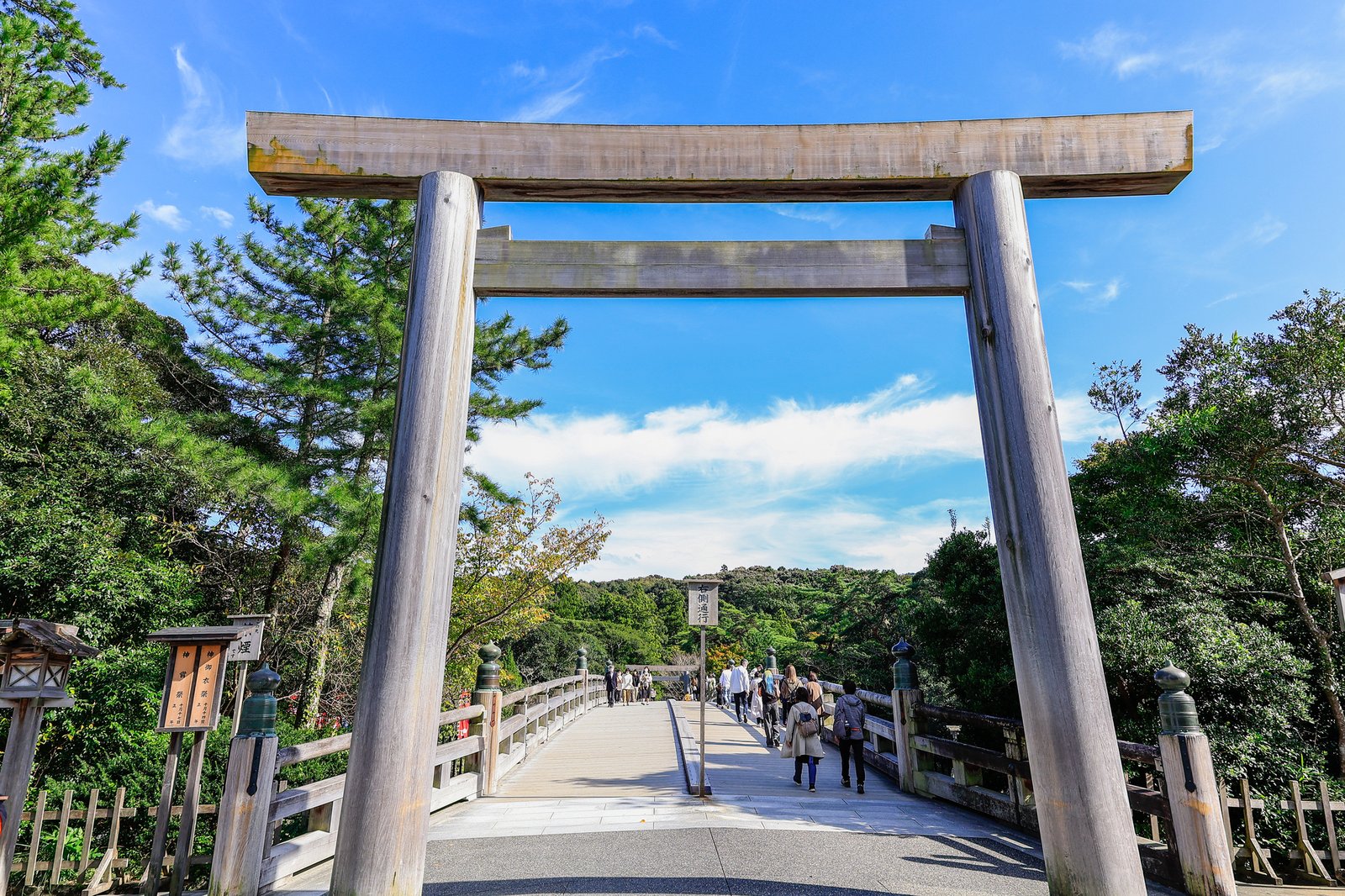
Ise Jingu, in Ise in Mie, is officially called Jingu. The shrine says it includes 125 jinja (Shinto shrines), centred on Kotaijingu (Naiku), dedicated to Amaterasu-Omikami, and Toyo’uke-daijingu (Geku), dedicated to Toyo’uke-no-Omikami (Ise Jingu, About Ise Jingu). It asks visitors to go to Geku first and then to Naiku (Ise Jingu, Access).
Who this is for: travellers coming to Ise by train from Nagoya or Osaka who want a day to visit both Geku and Naiku.
The short version: walk from the station to Geku, then take a Mie Kotsu Bus on route 51 or 55 to Naiku. Both shrines open at 5:00, and closing time changes with the month. Do not take photographs where you pray. Always follow the official pages linked below.
Geku first, then Naiku
| If… | Then lean towards… | Check |
|---|---|---|
| You arrive at the station by train | Walk to Geku first, as the shrine asks, then ride to Naiku | Ise Jingu, Access |
| You want the shortest bus ride between the shrines | Route 55, which the weekday timetable shows taking 10 minutes from the stop in front of Geku to the stop in front of Naiku | Mie Kotsu Bus, Geku-Naiku Loop Line timetable (PDF, in Japanese) |
| You visit on a Saturday, Sunday or public holiday | The weekend and holiday timetable, which differs from the weekday one | Mie Kotsu Bus, Geku-Naiku Loop Line timetable (PDF, in Japanese) |
| You arrive late in the day | Check the closing time for the month before you set out | Ise Jingu, Pray |
Worship hours and buses
| Item | Time | Fare or fee | Where to check |
|---|---|---|---|
| Naiku and Geku, January to April and September | 5:00–18:00 | Check official | Ise Jingu, Pray |
| Naiku and Geku, May to August | 5:00–19:00 | Check official | Ise Jingu, Pray |
| Naiku and Geku, October to December | 5:00–17:00 | Check official | Ise Jingu, Pray |
| Bus, stop in front of Geku to the stop in front of Naiku | 10 minutes on route 55, 16 minutes on route 51 (weekday timetable); departure times: Check official | Check official | Mie Kotsu Bus, Geku-Naiku Loop Line timetable (PDF, in Japanese) |
| Bus, stop in front of Iseshi Station to the stop in front of Naiku | 12 minutes on route 55, 18 minutes on route 51 (weekday timetable) | Check official | Mie Kotsu Bus, Geku-Naiku Loop Line timetable (PDF, in Japanese) |
- Bus names: the shrine lists the bus between the two shrines as the Geku-Naiku Loop Line, route 51 or route 55, run by Mie Kotsu Bus (Ise Jingu, Access). It also says in Japanese that express buses stopping only at main stops run on the line (Ise Jingu, access (in Japanese)).
- Early and school-day runs: the timetable marks some early runs as running only on the first day of each month, and one run as not running on school holidays (Mie Kotsu Bus, Geku-Naiku Loop Line timetable (PDF, in Japanese)).
- Busy periods: the shrine says park-and-ride shuttle buses run from temporary car parks at some times, such as the New Year, Golden Week and long weekends, as the roads around the shrines are expected to be congested (Ise Jingu, access (in Japanese)).
- Changes: the shrine says worship hours change over the New Year, and buses may not run as timetabled on some days, so check the shrine’s news and the bus timetable before you go.
What to do: check the closing time for the month you visit, and leave enough time to see Naiku after Geku. Where to verify: Ise Jingu, Pray.
Getting there and how long it takes
- From Nagoya: the Ise City Tourism Association gives about 1 hour 20 minutes from Nagoya Station to Iseshi Station by Kintetsu Limited Express or JR Rapid Mie (Ise City Tourism Association, Access).
- From Osaka: it gives about 1 hour 45 minutes from Osaka Namba Station to Iseshi Station by Kintetsu Limited Express (Ise City Tourism Association, Access).
- Station to Geku: the tourism association gives about 5 minutes on foot from Iseshi Station to Geku (Ise City Tourism Association, Geku).
- Geku to Naiku: the Mie Kotsu Bus weekday timetable shows 10 minutes on route 55 and 16 minutes on route 51 between the stops in front of the two shrines (Mie Kotsu Bus, Geku-Naiku Loop Line timetable (PDF, in Japanese)).
What to do: after Geku, take the bus from the stop in front of Geku rather than going back to the station. Where to verify: Mie Kotsu Bus, Geku-Naiku Loop Line timetable (PDF, in Japanese).
What to see and how to pray
The shrine says the Holy Mirror, the symbol of Amaterasu-Omikami, is enshrined in the main sacred palace at Naiku, inside four rows of wooden fences, and that pilgrims usually worship in front of the gate of the third row; visitors are not permitted into the courtyard of the main palace (Ise Jingu, About Ise Jingu). At the entrance to Naiku, the Ujibashi Bridge crosses the Isuzugawa River; the shrine gives its length as over 100 metres and says it is rebuilt every twenty years as part of the Shikinen Sengu.
Before praying, the shrine asks visitors to purify their hands and mouth with water (temizu) without touching the dipper to their mouth, and then to bow twice deeply, clap twice and bow once more deeply (Ise Jingu, Pray). It asks visitors not to take pictures at the area to pray, and says eating, drinking and smoking are not allowed in the precinct except in designated areas.
What to do: keep your camera away at the place of prayer, and follow the temizu steps on the shrine’s page. Where to verify: Ise Jingu, Pray.
Rebuilt every twenty years, and fed every day
The shrine says that every twenty years a new divine palace of the same dimensions is built on an alternate site next to the main sanctuary, in about 30 rituals and ceremonies that begin with cutting the first trees, and that the sacred apparel, furnishings and treasures are remade too (Ise Jingu, Rituals and Ceremonies). It says all this takes about eight years, that the first Shikinen Sengu of Naiku was held in 690, in the era of the 41st emperor, Jito, and that the one in 2013 was the sixty-second. In Japanese, the shrine says the 63rd Shikinen Sengu is held over a little more than eight years from 2025 (Ise Jingu, worship (in Japanese)). The shrine also points out the alternate site where the previous divine palace stood, where a new one will be built at the next Shikinen Sengu (Ise Jingu, About Ise Jingu).
At Geku, the shrine says the divine palace is almost the same in style as Naiku’s, but there is a hall called Mikeden that is found only at Geku (Ise Jingu, About Ise Jingu). The shrine’s list of rituals includes Higoto-asa-yu-omike-sai, held every day (Ise Jingu, Rituals and Ceremonies), which the tourism association describes as meals offered to Amaterasu Omikami and other gods twice every day (Ise City Tourism Association, Geku).
What to do: look for the alternate site beside the main sanctuary, where the next palace will be built. Where to verify: Ise Jingu, About Ise Jingu.
Official sources
| Topic | Source | Checked |
|---|---|---|
| 125 jinja, Naiku and Geku, Holy Mirror, fences, Ujibashi Bridge, Mikeden, alternate site | Ise Jingu, About Ise Jingu | 2026-11-11 |
| Geku first, bus line name and operator | Ise Jingu, Access | 2026-11-11 |
| Express buses, park-and-ride | Ise Jingu, access (Japanese) | 2026-11-11 |
| Open hours, temizu, how to pray, pictures, eating and smoking | Ise Jingu, Pray | 2026-11-11 |
| New Year hours, 63rd Shikinen Sengu | Ise Jingu, worship (Japanese) | 2026-11-11 |
| Shikinen Sengu, 690 and 2013, everyday ritual | Ise Jingu, Rituals and Ceremonies | 2026-11-11 |
| Bus times between the stations and the shrines | Mie Kotsu Bus, Geku-Naiku Loop Line timetable (PDF) | 2026-11-11 |
| Train times from Nagoya and Osaka | Ise City Tourism Association, Access | 2026-11-11 |
| Walk from the station to Geku, daily meals | Ise City Tourism Association, Geku | 2026-11-11 |