Place name in Japanese: 犬山城, Inuyama-jō.
Inuyama Castle, Aichi: the train from Nagoya and the donjon floor by floor
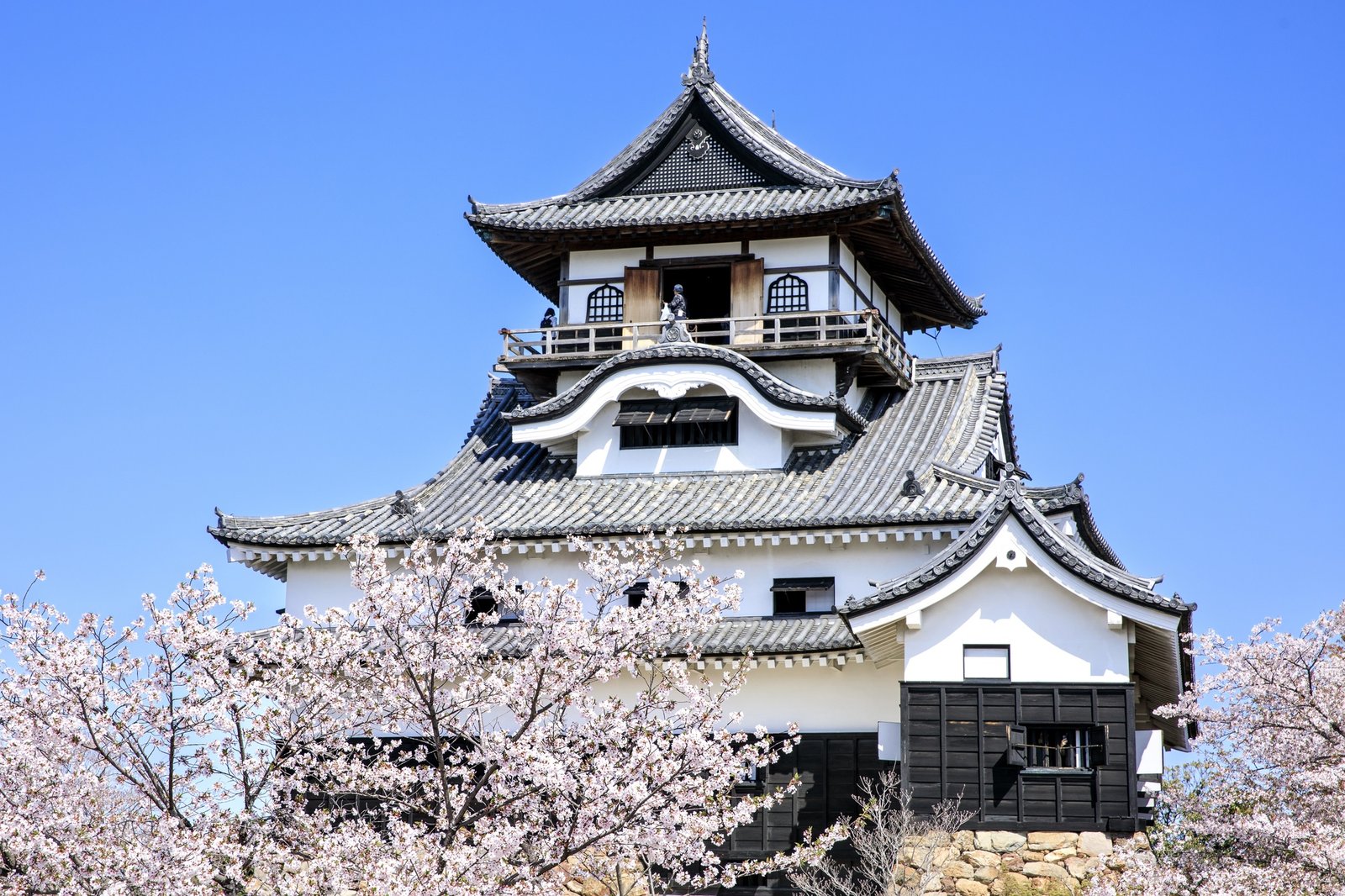
The donjon of Inuyama Castle is listed by the Agency for Cultural Affairs database as a national treasure, designated on 29 March 1952, and dated to 1601 in the Momoyama period (Agency for Cultural Affairs database (in Japanese)). The national database names the owner as a public interest foundation and Inuyama City as the managing body (National designated cultural properties database (in Japanese)).
Who this is for: travellers staying in Nagoya who want to see the castle and climb its donjon.
The short version: take the Nagoya Railroad (Meitetsu) Inuyama Line from Meitetsu Nagoya to Inuyama Station, then walk to the castle.
Train, then on foot
| If… | Then lean towards… | Check |
|---|---|---|
| You start from Nagoya | The Meitetsu Inuyama Line from Meitetsu Nagoya to Inuyama Station | Railway: Nagoya Railroad, Inuyama Station page (in Japanese) |
| You start from Central Japan International Airport | A Meitetsu train from Central Japan International Airport Station to Inuyama Station | Railway: Nagoya Railroad, Inuyama Station page (in Japanese) |
Train times
| Item | Time | Where to check |
|---|---|---|
| Meitetsu Nagoya to Inuyama Station | Check official | Railway: Nagoya Railroad, Inuyama Station page (in Japanese) |
- Train times and fares: Check official with the railway’s Inuyama Station page (in Japanese), which links to its timetable. Fares are not given here.
- The foundation that owns the castle directs inquiries about visiting the castle to the castle management office (the foundation that owns the castle, access (in Japanese)).
Getting there and how long it takes
- Nagoya to Inuyama Station: take the Nagoya Railroad (Meitetsu) Inuyama Line to Inuyama Station. Check official with the railway’s Inuyama Station page (in Japanese).
- From the airport: a Meitetsu train runs from Central Japan International Airport Station to Inuyama Station. Check official with the railway’s Inuyama Station page (in Japanese).
What to see
The Agency for Cultural Affairs database describes the donjon as having three storeys and four floors, with two basement levels (Agency for Cultural Affairs database (in Japanese)). The Agency’s entry says the entrance is on the south face of the front stone wall, and that a narrow route through the second and first basement floors leads to the first floor. It describes the first floor as trapezoidal, with a surrounding aisle and four rooms inside, the main room a raised tatami room in the shoin style; the same entry says this raised floor, and the fittings in that room, were added around 1804–1818.
The foundation that owns the castle describes the floors in order (the foundation that owns the castle, about Inuyama Castle (in Japanese)). The entrance in the front stone wall leads at once to stairs to the first basement, and as far as that floor the building is inside the stone wall. On the first floor, attached turrets stand at the southeast and northwest, four rooms occupy the centre, and a corridor runs around them; of the four rooms, the raised tatami room at the southwest is the one the foundation, like the Agency, dates to a remodeling around 1804–1818. The second floor has a room for arms at the centre, again with a surrounding corridor. The third floor sits inside the hip-and-gable roof, at the lower part of the observation level, with hip-and-gable gables to the east and west and curved gables to the north and south, forming small inner rooms. The fourth floor is the top observation level, with a surrounding walkway and balustrade.
What to do: take the stairs slowly. The fourth floor is the observation level, with a surrounding walkway and balustrade. Where to verify: the foundation that owns the castle, about Inuyama Castle (in Japanese).
Two accounts of when the donjon was built
The Agency’s entry gives 1601 (Agency for Cultural Affairs database (in Japanese)). The Agency’s commentary says that investigations at the time of the dismantling repair of 1965 showed that a two-storey turret was built first, an observation level was placed on it, and curved gables were added at the base of the observation level, and that the donjon reached its present form through these large modifications (Agency for Cultural Affairs database (in Japanese)). The foundation that owns the castle writes that no historical record can fix the date the donjon was first built; that investigations during the major repairs from 1961 to 1965 led to the view that the donjon, originally two storeys and two floors, was enlarged and altered and took its present form around the late 16th to early 17th century; and that recent tree-ring dating of its timber has produced an influential theory that the present donjon was built around 1590 with three storeys and four floors from the start (the foundation that owns the castle, about Inuyama Castle (in Japanese)).
What to do: read both accounts before you climb, and look for the gables on the third floor. Where to verify: the foundation that owns the castle, about Inuyama Castle (in Japanese).
The castle’s other name
The foundation that owns the castle writes that the family that had owned the castle donated it to the foundation in April 2004 (the foundation that owns the castle, about Inuyama Castle (in Japanese)). The foundation’s own page says its name comes from another name for the castle, and that a Confucian scholar of the Edo period is said to have given the castle that name because, rising on a small hill along the river, it called to mind a famous castle in China (the foundation that owns the castle, about the foundation (in Japanese)).
What to do: from the fourth-floor walkway, look toward the river at the foot of the hill. Where to verify: the foundation that owns the castle, about the foundation (in Japanese).
What we have not verified
Check official before you go: train times can change, so use the railway page linked on this page (Railway: Nagoya Railroad, Inuyama Station page (in Japanese)).
- Opening hours, last entrance and closures: no Inuyama City tourism or foundation page that prints the castle’s hours was among the pages used, so they are not given here.
- Entrance fees, payment and pets: no official page used here prints the castle’s fees or pet rules, so they are not given here.
- The walk from Inuyama Station to the castle: no official page used here prints a walking time, so it is not given here.
Official sources
| Topic | Source | Checked |
|---|---|---|
| National treasure designation date, date of the donjon, floors, 1965 repair findings | Agency for Cultural Affairs database | 2026-11-11 |
| Owner and managing body | National designated cultural properties database | 2026-11-11 |
| Railway station and timetable link | Railway: Nagoya Railroad, Inuyama Station page | 2026-11-11 |
| English station names | Railway: Nagoya Railroad, guide maps for major stations; Railway: Nagoya Railroad, from and to the airport | 2026-11-11 |
| Inquiries about visiting the castle | the foundation that owns the castle, access | 2026-11-11 |
| Floors, 1961–1965 repair findings, tree-ring dating theory, foundation ownership | the foundation that owns the castle, about Inuyama Castle | 2026-11-11 |
| Origin of the foundation’s name | the foundation that owns the castle, about the foundation | 2026-11-11 |