Place name in Japanese: 法隆寺, Hōryū-ji.
Horyu-ji, Ikaruga: the train and the route 72 bus, what the records say about the pagoda, and the fire that led to a law
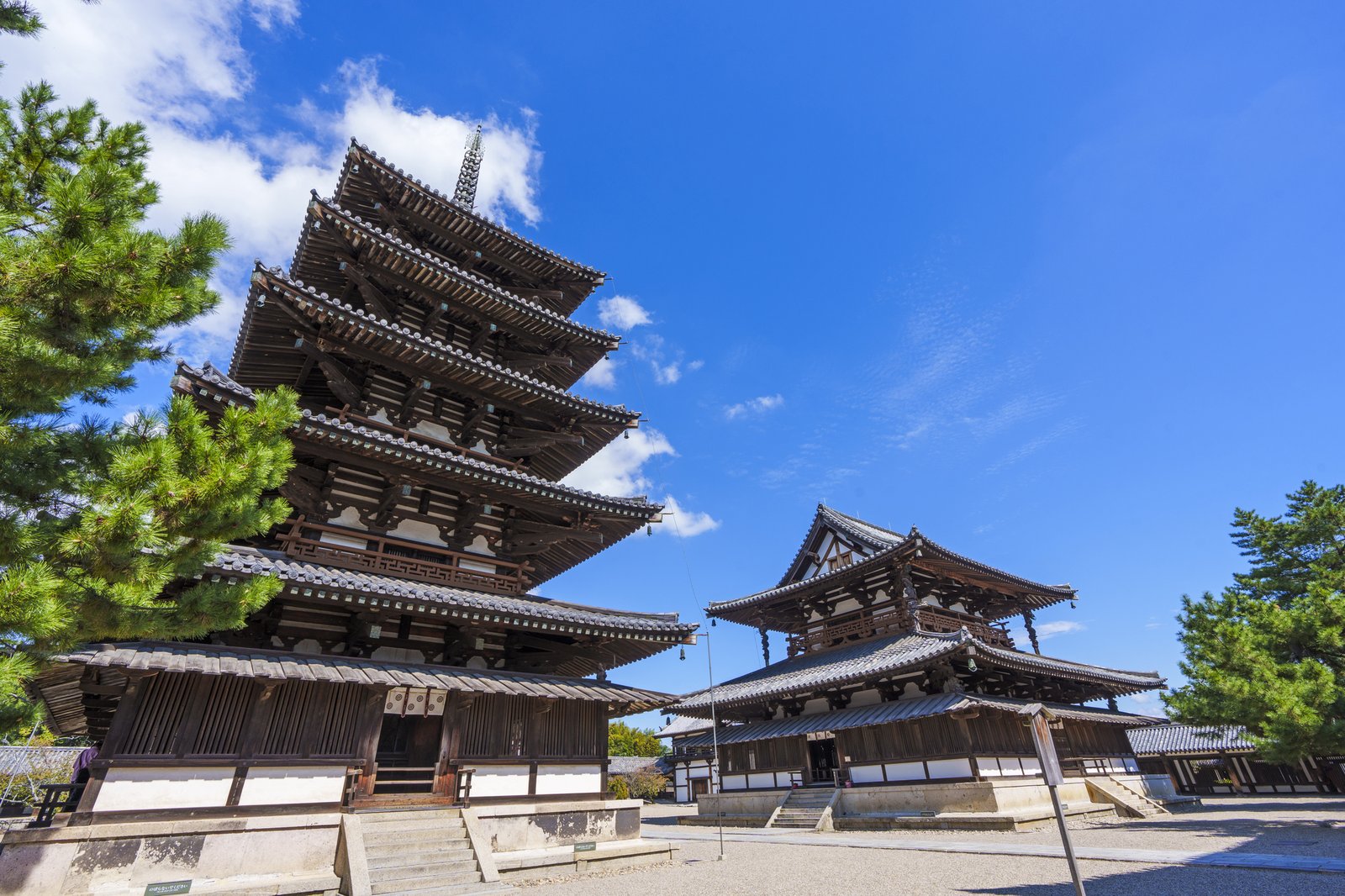
UNESCO lists 1993 as the year the Buddhist Monuments in the Horyu-ji Area were inscribed as World Heritage: a property of 48 ancient wooden structures at Horyu-ji and the smaller Hokki-ji, in Nara Prefecture (UNESCO World Heritage Centre). The national designated cultural properties database lists the temple’s five-storey pagoda as a National Treasure, designated on 9 June 1951; it had been an Important Cultural Property since 28 December 1897 (National designated cultural properties database, pagoda (in Japanese)), and lists the former temple precinct as a Historic Site, also designated on 9 June 1951 (National designated cultural properties database, former precinct (in Japanese)).
Who this is for: travellers reaching Horyu-ji by rail who need to know how long the journey to Ikaruga takes and which bus runs from the station to the temple.
The short version: the town of Ikaruga says the train from Osaka to Horyuji Station takes about 35 minutes, and about an hour from Kyoto via Nara. From the station, the bus company’s route 72 runs from stop 2 to Horyuji-sando in about 8 minutes.
Train, bus and the temple
| If… | Then lean towards… | Check |
|---|---|---|
| You come from Osaka | The JR line from Osaka to Horyuji Station, about 35 minutes | Ikaruga Town, access (in Japanese) |
| You come from Kyoto | The JR line to Nara, then on to Horyuji Station, about an hour in all | Ikaruga Town, access (in Japanese) |
| You want the bus from Horyuji Station | Route 72 from stop 2 to Horyuji-sando, about 8 minutes | Nara Kotsu, Horyu-ji Temple |
| You want to go inside the temple | Confirm current hours and fees with the temple before visiting | The temple |
Times, hours and fees
| Item | Time or fee | Where to check |
|---|---|---|
| Train from Osaka to Horyuji Station | About 35 minutes | Ikaruga Town, access (in Japanese) |
| Train from Kyoto to Horyuji Station, via Nara | About an hour | Ikaruga Town, access (in Japanese) |
| Bus from Horyuji Station to Horyuji-sando | About 8 minutes; about 7 minutes back | Nara Kotsu, Horyu-ji Temple |
| Bus timetable | Check official | Nara Kotsu, timetable at Horyuji Station stop 2 (PDF) |
| Bus fare | Check official | Nara Kotsu, Horyu-ji Temple |
| Temple hours | Confirm current hours with the temple before visiting | The temple |
| Temple admission | Confirm current fees with the temple before visiting | The temple |
- Paying on the bus: the bus company’s timetable says that on route 72 you board by the rear door, leave by the front door and pay when you get off, by cash or IC card.
- Holiday timetables and delays: the bus company says weekdays from 13 to 15 August run on the Saturday timetable, 30 December to 3 January runs on the Sunday and holiday timetable, and buses may be delayed by traffic.
- Before you go: check the bus company’s page for timetables and fares, which can change (Nara Kotsu, Horyu-ji Temple), and confirm current hours and fees with the temple before visiting.
What to do: check the route 72 times for both directions in advance. Where to verify: the bus company’s timetable (PDF).
Getting there and how long it takes
- By rail: the town of Ikaruga says Horyuji Station is about 35 minutes from Osaka on the JR line, and about an hour from Kyoto on the JR line to Nara and onwards (Ikaruga Town, access (in Japanese)).
- By bus: the bus company says route 72 leaves Horyuji Station from stop 2 for Horyuji-sando, taking about 8 minutes, and comes back from stop 3 at Horyuji-sando in about 7 minutes (Nara Kotsu, Horyu-ji Temple). Its timetable lists Chuguji-mae and Horyuji-mae as stops on the way (Nara Kotsu, timetable at Horyuji Station stop 2 (PDF)).
What to do: from Horyuji Station, look for bus stop 2 for route 72. Where to verify: the bus company’s page.
What to see
The database entry for the five-storey pagoda says it was probably built in the late 7th century, following the Golden Hall (National designated cultural properties database, pagoda (in Japanese)). It stands on a two-level base. The bay width of the first storey is about 6.42 m on each side, and the fifth storey is exactly half that. The central pillar was set as an earth-fast post on a foundation stone in the ground, and relics in a container rest in a hole in that stone, although the underground part of the pillar has since become hollow and is now filled with sand. Around the four inner pillars of the first storey stands a clay Mount Sumeru, and the ceiling boards are painted with lotus patterns. UNESCO adds that a fire destroyed the original buildings in 670, that rebuilding began almost at once, and that remains of the earlier temple survive underground at a site called Wakakusa Garan, south-east of the West Temple (UNESCO World Heritage Centre).
What to do: look at how much smaller the top storey of the pagoda is than the first, as the database entry explains. Where to verify: the database entry (in Japanese).
The fire that led to a law, and the blades against lightning
The Agency for Cultural Affairs tells how a fire at the temple changed the protection of cultural properties in Japan (Agency for Cultural Affairs, Cultural Properties Fire Prevention Day (in Japanese)). On 26 January 1949 the Golden Hall of Horyu-ji caught fire and its wall paintings were damaged. The agency says the event shocked the public and raised concern about the danger that fires and other disasters posed to cultural properties, and in the following year, 1950, the Law for the Protection of Cultural Properties was passed as the overall law for their protection. The repair of the Golden Hall was finished on 3 November 1954. In 1955, the then Committee for the Protection of Cultural Properties and the National Fire Defence Headquarters named 26 January Cultural Properties Fire Prevention Day, because it was the day the Golden Hall burned and because January and February are the months when fires break out most often. The agency says a fire prevention campaign has been run around the country each year, centred on that day, since the first one in 1955.
What to do: when you reach the Golden Hall, recall that the building you see was repaired after the 1949 fire, with the work finished in 1954. Where to verify: the agency’s page (in Japanese).
The Japan Tourism Agency’s multilingual text on the pagoda asks visitors to note the scythes attached to its upper roof (Japan Tourism Agency, Five-Story Pagoda). It explains that lightning was once thought of as a celestial monster, so sharp-edged blades were added to keep creatures from the sky from landing on the pagoda, and that this is counted as one of the seven mysteries of Horyuji. The text says the pagoda was struck by lightning in the Kamakura period, after which talismans were hung on each level, and that today lightning rods protect it.
What to do: look up at the top roof of the pagoda for the blades. Where to verify: the agency’s text.
Official sources
| Topic | Source | Checked |
|---|---|---|
| World Heritage inscription, Wakakusa Garan | UNESCO World Heritage Centre | 2026-11-11 |
| Pagoda, National Treasure | National designated cultural properties database, pagoda | 2026-11-11 |
| Former precinct, Historic Site | National designated cultural properties database, former precinct | 2026-11-11 |
| Golden Hall fire, fire prevention day | Agency for Cultural Affairs, Cultural Properties Fire Prevention Day | 2026-11-11 |
| Blades on the pagoda roof | Japan Tourism Agency, Five-Story Pagoda | 2026-11-11 |
| Train times to Horyuji Station | Ikaruga Town, access | 2026-11-11 |
| Route 72, journey time, fare | Nara Kotsu, Horyu-ji Temple | 2026-11-11 |
| Bus timetable, stops, paying on the bus | Nara Kotsu, timetable at Horyuji Station stop 2 | 2026-11-11 |
What we have not verified
- The temple’s hours and admission, because our request for the temple’s visiting page failed with a connection error (Horyu-ji, visiting information (in Japanese)).
- The walking time from Horyuji Station or from Horyuji-sando to the temple gate, and the English name of the JR line, which the town gives only in Japanese (Ikaruga Town, access (in Japanese)).
- The level of the precinct designation, which UNESCO calls a Special Historic Site while the national database lists a Historic Site, and the spelling of the temple’s name, which appears as both Horyu-ji and Horyuji (UNESCO World Heritage Centre; National designated cultural properties database, former precinct (in Japanese)).