Hakone from Tokyo for one night: the hot spring area listed in 1927, the rebuilt checkpoint, and how to get there
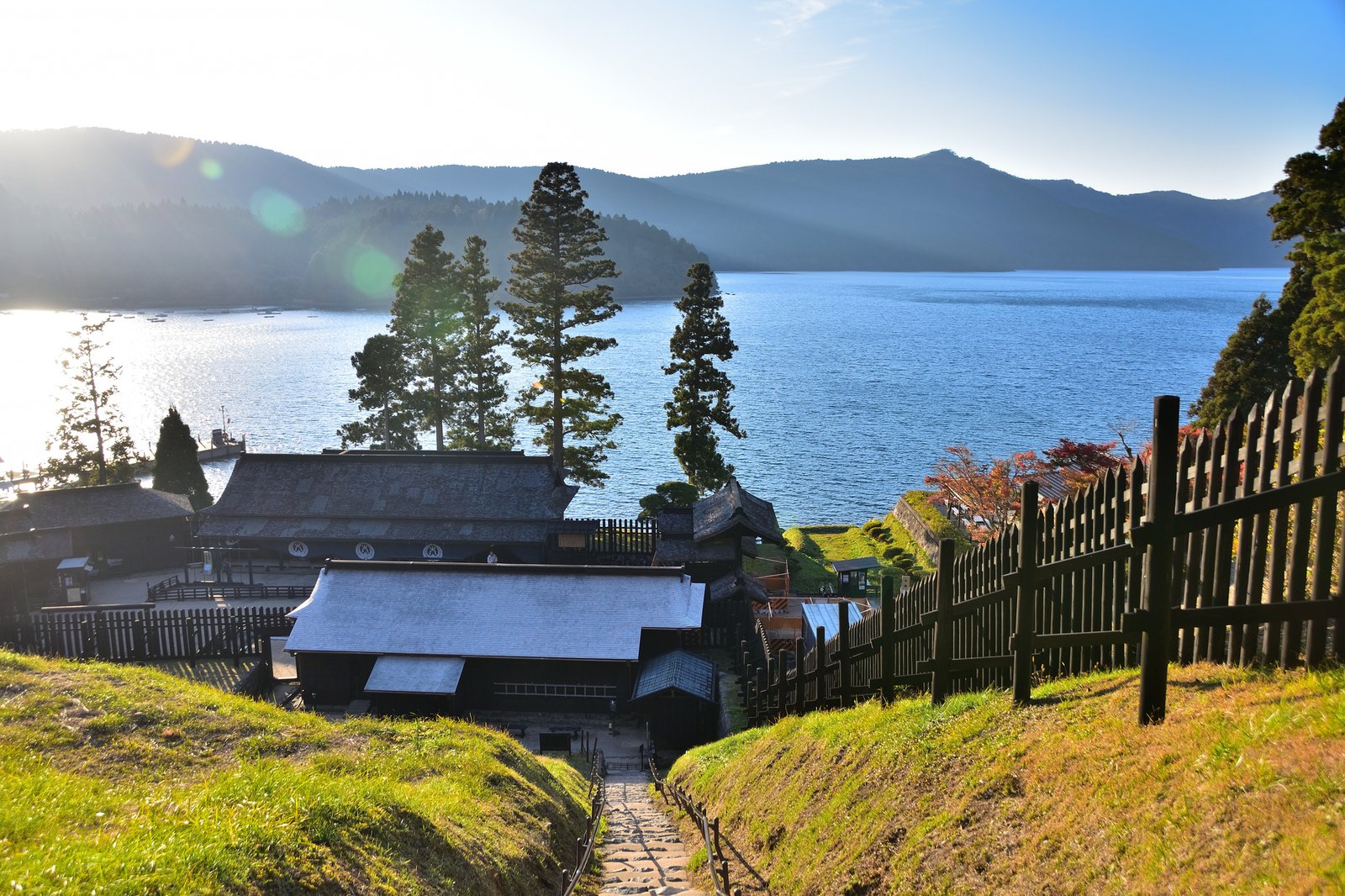
Hakone is a hot spring area in the mountains of Kanagawa, reached from Tokyo by train to Hakone-Yumoto Station. In a 1927 selection run by two newspapers, one in Tokyo and one in Osaka, its hot springs were recommended as one of 25 scenic places alongside a selection of eight, in the hot spring category, and the Hakone checkpoint stands rebuilt on the basis of the report of a repair carried out at the end of the Edo period.
Who this is for: travellers from the United States planning one night in Hakone from Tokyo who want the train and bus to the checkpoint, its hours and admission, and a short account of the hot springs and the checkpoint.
The short version: take the Odakyu Romancecar from Shinjuku Station to Hakone-Yumoto Station, then the Hakone Tozan Bus on route H from platform 2, bound for Moto-Hakone-ko and Hakone-machi-ko. The Hakone checkpoint is open every day; from 1 March to 30 November it opens 9:00 to 17:00 and from 1 December to the end of February 9:00 to 16:30, with last entry 30 minutes before closing, and adult admission is 500 yen (checkpoint pages, retrieved 2026-11-10). Always follow the official pages linked below.
Which part of the trip to check where
| If you want to know… | Then… | Check |
|---|---|---|
| How to reach Hakone from Tokyo | The Odakyu Romancecar runs from Shinjuku Station to Hakone-Yumoto Station | Operators’ Hakone guide: area guide for the station |
| Which bus to take to the checkpoint | Route H of the Hakone Tozan Bus, from platform 2 at Hakone-Yumoto Station | Operators’ Hakone guide: Hakone-Yumoto Station page |
| When the checkpoint is open and what it costs | See the table below | Checkpoint: visitor guide |
| Where the hot spring areas are | The Hakone Tourist Association lists seventeen | Hakone Tourist Association: the 17 hot spring areas |
Opening hours, admission and closed days
The table gives what the checkpoint’s visitor guide and access page print, retrieved on 2026-11-10.
| Place | Hours | Admission | Closed | Check official |
|---|---|---|---|---|
| The Hakone checkpoint, 1 March to 30 November | 9:00 to 17:00; last entry 30 minutes before closing | Adult 500 yen; child (primary school) 250 yen | Open every day of the year | Checkpoint: visitor guide |
| The Hakone checkpoint, 1 December to the end of February | 9:00 to 16:30; last entry 30 minutes before closing | Adult 500 yen; child (primary school) 250 yen | Open every day of the year | Checkpoint: visitor guide |
| The Hakone checkpoint with a Hakone Freepass or similar ticket | As above | Adult 400 yen; child 150 yen | As above | Checkpoint: visitor guide |
| Parking at the checkpoint | The access page says there is no dedicated car park and asks drivers to use nearby car parks | Check official | Check official | Checkpoint: access |
| Hot spring baths in the 17 hot spring areas | Check official | Check official | Check official | Hakone Tourist Association: the 17 hot spring areas |
The visitor guide also lists group rates for 20 or more people and a free-admission scheme for visitors with disabilities, with conditions, on the same page.
On site: the visitor guide asks visitors not to eat, drink or smoke in the grounds, to take their rubbish home, and not to fly drones or radio-controlled aircraft over the checkpoint (checkpoint visitor guide).
Getting there
- Tokyo to Hakone: the operators’ Hakone guide for the station area says the Odakyu Romancecar runs from Shinjuku Station to Hakone-Yumoto Station, where the Odakyu Romancecar, the Hakone Tozan Railway and the Hakone Tozan Bus meet; the journey time it gives is on that page (operators’ Hakone guide: area guide for the station).
- The bus from the station: the operators’ Hakone guide’s station page lists route H of the Hakone Tozan Bus, bound for Moto-Hakone-ko and Hakone-machi-ko, at platform 2 outside Hakone-Yumoto Station (operators’ Hakone guide: Hakone-Yumoto Station page).
- Bus stop to the checkpoint: the operators’ Hakone guide for the Hakonemachi area says to get off route H at the bus stop for the checkpoint and walk about 2 minutes (operators’ Hakone guide: area guide for Hakonemachi).
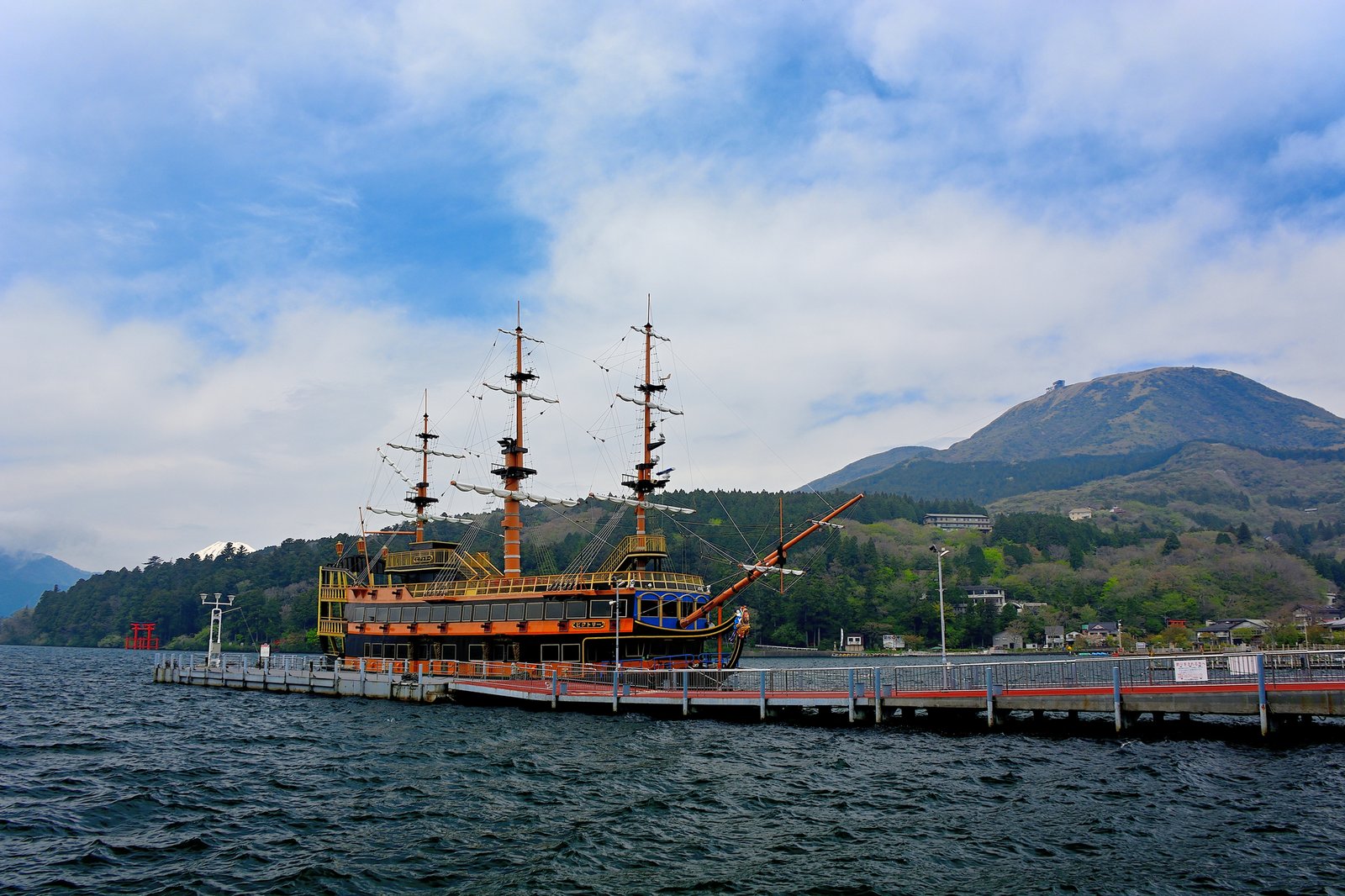
- What the checkpoint itself says: its access page names the Hakone Tozan Bus bound for Hakone-machi-ko or an Izu-Hakone Bus service from Odawara Station or Hakone-Yumoto Station, gives the bus stop under its own wording with a walk of 2 minutes, and lists boat piers on the lake as well (checkpoint access page).
- Fares and timetables: Check official on the operator’s Hakone-Yumoto Station page.
Seven hot springs, then seventeen, and the 1927 listing
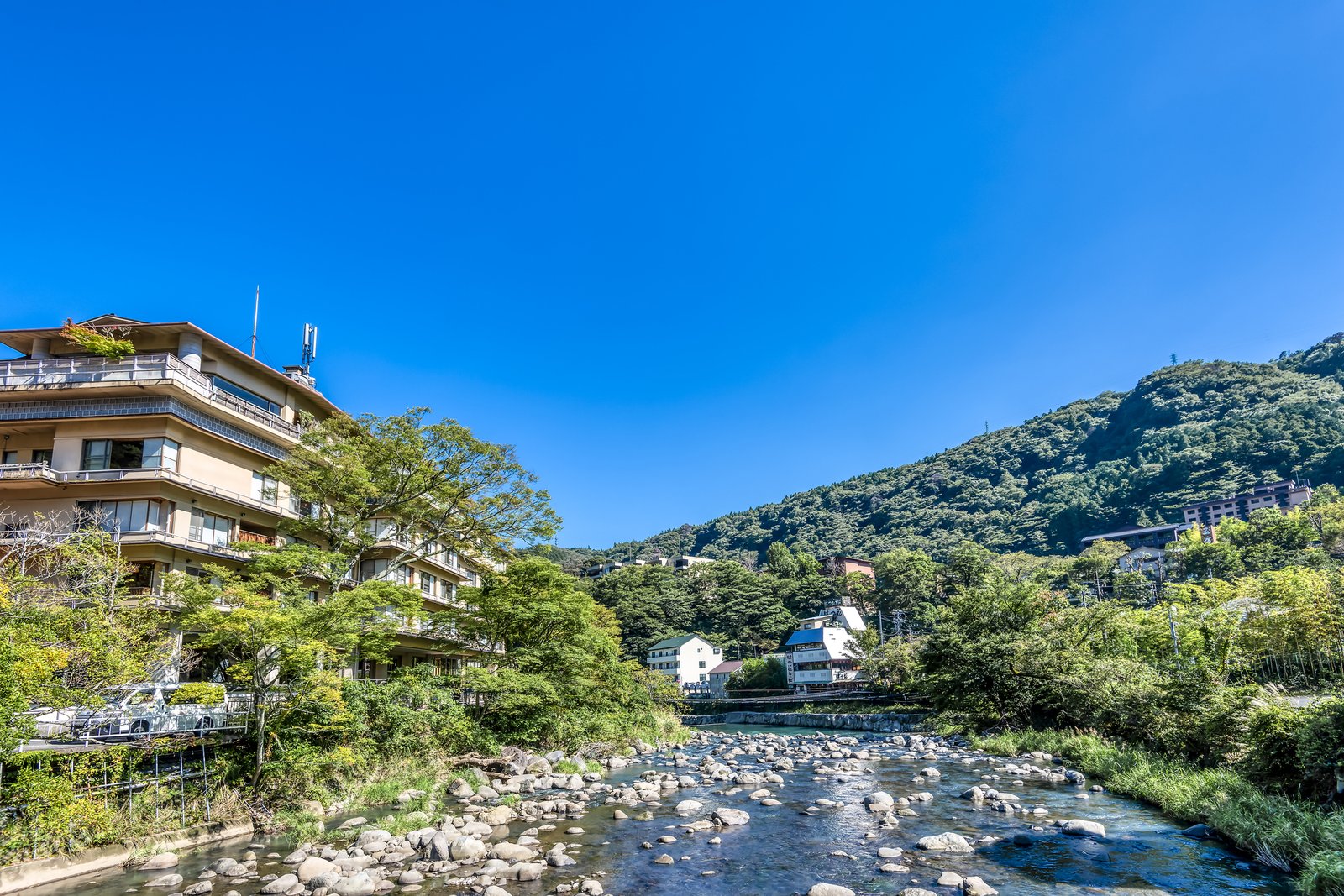
The Hakone Tourist Association writes that the name Hakone comes from the box-like shape of its outer rim of mountains (Hakone Tourist Association: the 17 hot spring areas). It says the area was once known for seven hot springs, which it names, and that it now counts 17 hot spring areas (same page). The association gives the types of spring water as about 20, among them simple alkaline springs and sodium chloride springs (same page).
A Ministry of the Environment document on the 1927 selection names two newspapers, one in Tokyo and one in Osaka, as its organisers, and says that votes were invited in eight categories, among them hot springs, and that the reviewers selected eight scenic places and recommended 25 more and 100 more at the same time (Ministry of the Environment: 1927 selection of eight scenic places (PDF, Japanese)). In its table, the hot springs of Hakone, in Kanagawa, appear among the 25 in the hot spring category (same document).
What to do: pick the hot spring area for your night from the association’s list, and check the baths and their hours with your own lodging. Where to verify: the 17 hot spring areas page.
Why the checkpoint is a rebuilding
The operators’ Hakone guide for the Hakonemachi area says that the present checkpoint was rebuilt on the basis of the report of a dismantling repair carried out at the end of the Edo period (operators’ Hakone guide: area guide for Hakonemachi). The checkpoint’s own site says it is said to have been set up at its present site around 1619 (checkpoint page on its setting up), and that the rebuilt checkpoint was opened in full in spring 2007 (checkpoint page on the restoration project). The checkpoint’s site also lists the same report on its page about the restoration (checkpoint restoration page). The same operators’ Hakone guide says the museum beside the checkpoint shows notice boards and travel passes among its materials (operators’ Hakone guide: area guide for Hakonemachi).
Where to see it: the checkpoint and the museum beside it. For what the admission covers, Check official on the checkpoint visitor guide; the bus from Hakone-Yumoto Station is under Getting there above.
Checking the day’s services: wind suspensions, refunds and crowds
The Hakone Ropeway and the sightseeing cruise can be suspended in strong wind, and the sightseeing areas can be crowded in the busiest periods. The operators publish transportation information in Japanese and English, together with English congestion information. This section says where to look, what suspension conditions are published, and what a Hakone Freepass refunds when a service does not run.
Where to check on the day
The pages below carry the following information:
- Status information (English). Hakone Navi’s English status page carries transportation information and congestion information for the Hakone Ropeway, the Hakone Sightseeing Cruise and Hakone Tozan Bus (Hakone Navi: status information (English)).
- Area status (English). Odakyu Global’s Hakone area status page offers “real-time notifications on transfers and transportation you can use with the Hakone Freepass”; it adds “Applicable only for Odakyu-affiliated lines in Hakone.” (Odakyu Global: Hakone area status).
- Ropeway (Japanese). The operators’ Hakone Navi page is the Hakone Ropeway guide in Japanese (Operators’ Hakone guide: Hakone Ropeway (Japanese)).
- Ropeway (English). The operators publish an English ropeway page (Hakone Ropeway (English)).
- Cruise (English). The operators publish an English cruise page (Hakone Sightseeing Cruise (English)).
- Crowding (English). The crowd forecast page names the busy periods listed below (Hakone Navi: crowd forecast (English)).
When the wind closes the ropeway or the cruise
On the English ropeway page, the published conditions for suspension include wind speeds of 30 m/s or more, extreme weather, and mechanical trouble; the page adds: “Periodic inspection and maintenance is held every year at which time service is suspended.” The Japanese ropeway page puts the same point more generally: the service may be suspended when bad weather is expected, including strong wind, thunder and an approaching typhoon.
For the cruise, the English page states: “In conditions where safe voyage would be hindered, such as heavy fog or strong wind, etc., the departure time or destination might be changed, or the service may be suspended.” A full suspension is not the only outcome: the departure time or destination may simply change.
The Japanese ropeway page also notes that journey times may vary with congestion.
What the Freepass refunds when a service is suspended
The Hakone Freepass covers the ropeway and the cruise among its list of transport, and the operators publish refund rules for bad weather:
- Japanese freepass page. If you could not board a service because it was suspended, a refund is issued at the station where your trip ends — but only if you never rode that service at all.
- English FAQ (online purchase). The FAQ’s online-purchase refund answer says: “If you were not able to use your ticket on a section because the service was suspended or cancelled due to inclement weather, then you will be refunded for that section.” It covers “Tickets other than Limited Express tickets” and directs passengers to “Please contact the EMot support desk.”
Buses in the area
The operators’ Hakone Tozan Bus page says its routes cover the Hakone area and nearby areas widely, and that seasonal services run as well. On a day when the ropeway is not running, the status pages above will show which services are actually operating.
The busy periods
The English crowd forecast has four period headings: Hakone Ekiden (January 2, 3), Golden Week, Obon and Autumn Leaves (November). In Golden Week, sightseeing spots become busy and Hakone is likely to be crowded. During Obon, the sightseeing areas will be crowded. In the autumn leaves season of November, many people visit. Its introduction also refers to the “start of festivals and the peak times for cherry blossoms and azaleas”.
Official sources
| Topic | Source | Checked |
|---|---|---|
| Checkpoint hours, last entry, open every day, admission, Hakone Freepass rate, group and disability rates, on-site requests | Hakone checkpoint: visitor guide (Japanese) | 2026-11-10 |
| Checkpoint access by bus, walk of 2 minutes, no dedicated car park, boat piers | Hakone checkpoint: access (Japanese) | 2026-11-10 |
| Restoration report title | Hakone checkpoint: restoration (Japanese) | 2026-11-10 |
| Checkpoint said to have been set up at its present site around 1619 | Hakone checkpoint: setting up of the checkpoint (Japanese) | 2026-11-10 |
| Rebuilt checkpoint opened in full in spring 2007 | Hakone checkpoint: restoration project (Japanese) | 2026-11-10 |
| Odakyu Romancecar from Shinjuku Station to Hakone-Yumoto Station | Operators’ Hakone guide: area guide for the station (Japanese) | 2026-11-10 |
| Bus platforms at Hakone-Yumoto Station, route H | Operators’ Hakone guide: Hakone-Yumoto Station (Japanese) | 2026-11-10 |
| Route H to the bus stop for the checkpoint and a walk of about 2 minutes; rebuilt from the late-Edo repair report; museum materials | Operators’ Hakone guide: area guide for Hakonemachi (Japanese) | 2026-11-10 |
| Origin of the name Hakone, seven hot springs and 17 hot spring areas, about 20 spring types | Hakone Tourist Association: the 17 hot spring areas (Japanese) | 2026-11-10 |
| 1927 selection: organisers, method, the hot springs of Hakone among the 25 (hot springs) | Ministry of the Environment: 1927 selection of eight scenic places (PDF, Japanese) | 2026-11-10 |
| Operation and congestion information for the ropeway, cruise and bus (English) | Hakone Navi: status information (English) | 2026-11-25 |
| Real-time transfer and transportation notifications for Freepass users (English) | Odakyu Global: Hakone area status | 2026-11-25 |
| Ropeway suspension in bad weather, journey times and congestion notes (Japanese) | Operators’ Hakone guide: Hakone Ropeway (Japanese) | 2026-11-25 |
| Suspension conditions: wind speeds of 30 m/s or more, extreme weather, mechanical trouble (English) | Operators’ Hakone guide: Hakone Ropeway (English) | 2026-11-25 |
| Cruise changes and suspensions in heavy fog or strong wind (English) | Operators’ Hakone guide: Hakone Sightseeing Cruise (English) | 2026-11-25 |
| Freepass coverage and refund for a service suspended by bad weather (Japanese) | Operators’ Hakone guide: Hakone Freepass (Japanese) | 2026-11-25 |
| Refund for a section unusable because of suspension or cancellation in bad weather (English, online purchase) | Odakyu Global: Hakone Freepass | 2026-11-25 |
| Route buses covering the Hakone area, seasonal services (Japanese) | Operators’ Hakone guide: Hakone Tozan Bus (Japanese) | 2026-11-25 |
| Busy periods: Golden Week, Obon, autumn leaves in November (English) | Operators’ Hakone guide: crowd forecast (English) | 2026-11-25 |