Place name in Japanese: 萩, Hagi.
Hagi castle town: the castle ruins under Mt Shizuki, the walled lanes of Horiuchi, and the city’s loop bus
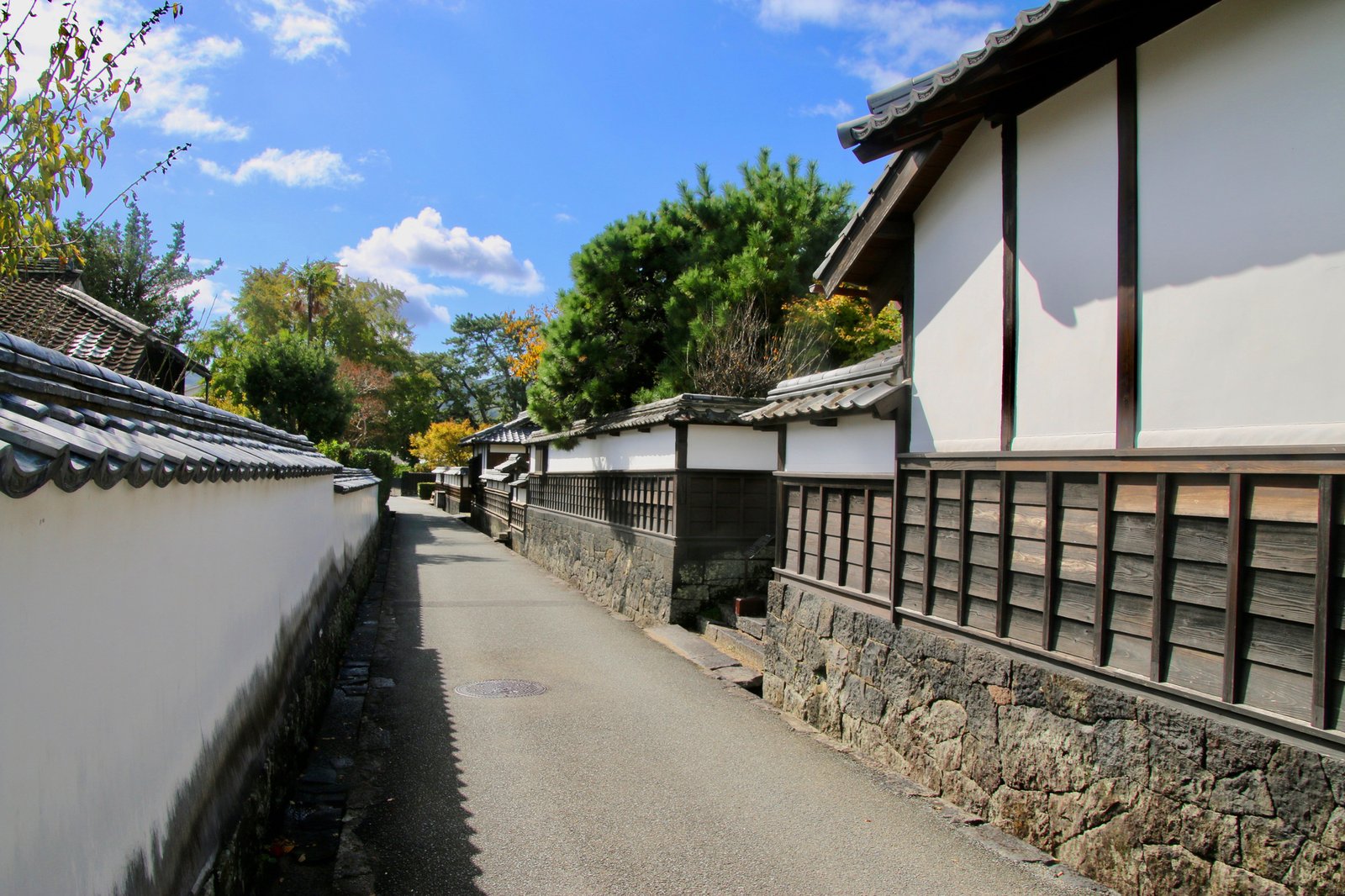
The national designated cultural properties database gives the site of Hagi Castle the category Historic Site, with 9 June 1951 as its date of designation (National designated cultural properties database, Hagi Castle site (in Japanese)), and the Horiuchi district of Hagi as an Important Preservation District for Groups of Traditional Buildings, selected on 4 September 1976 (National designated cultural properties database, Horiuchi district (in Japanese)). UNESCO lists Hagi Castle Town as one of the component parts of Sites of Japan’s Meiji Industrial Revolution: Iron and Steel, Shipbuilding and Coal Mining, inscribed in 2015 (UNESCO World Heritage Centre, maps; UNESCO World Heritage Centre, the property).
Who this is for: travellers in Hagi who want to walk from the castle ruins through the old samurai district, and to know how the city’s loop bus and the castle park’s hours fit together.
The short version: the castle covered Mt Shizuki and the flat land at its foot, and its ruins are now a park with an entrance fee and seasonal hours. Horiuchi, the district of high-ranking samurai inside the outer moat, is a district of long earthen walls with summer oranges behind them. The city’s western loop bus runs through Horiuchi and stops near the park.
Castle park, Horiuchi and the loop bus
| If… | Then lean towards… | Check |
|---|---|---|
| You want to see the castle’s stone walls and moats | The castle ruins park, a five-minute walk from its stop on the western loop | Hagi Public Service, castle ruins park (in Japanese) |
| You want to walk among samurai houses | Horiuchi, the district of the former third enclosure of the castle | National designated cultural properties database, Horiuchi district (in Japanese) |
| You get around by bus | The city’s loop bus, with a western and an eastern route from Hagi City Hall | Hagi City, loop bus (in Japanese) |
| You arrive by train | The city’s English timetable lists Higashi-Hagi Station on both routes | Hagi City, Circular Hop-on Bus timetable (PDF) |
Times, hours and fees
| Item | Time or fee | Where to check |
|---|---|---|
| Castle ruins park hours | Check official | Hagi Public Service, castle ruins park (in Japanese) |
| Castle ruins park admission | Check official | Hagi Public Service, castle ruins park (in Japanese) |
| Loop bus first and last departures | Check official | Hagi City, loop bus (in Japanese) |
| Loop bus fare and passes | Check official | Hagi City, loop bus (in Japanese) |
- Shared ticket: the park’s manager says its ticket also covers the long row house of the former Asa Mori family’s Hagi residence.
- Seasons: the manager gives three sets of park hours, for April to October, November to February, and March.
- Before you go: open the current Japanese timetable on the city’s loop bus page before you rely on the English one (Hagi City, loop bus (in Japanese)).
What to do: plan the castle park inside its opening hours, then walk on into Horiuchi. Where to verify: the park manager’s page (in Japanese).
Getting there and how long it takes
- The loop bus: the city says two routes start and end at Hagi City Hall, the western route and the eastern route, at intervals of about 45 minutes, and each takes 80 minutes to go round (Hagi City, loop bus (in Japanese)).
- Which route: it lists Horiuchi among the areas on the western route and Heianko among the areas on the eastern route (Hagi City, loop bus (in Japanese)).
- To the castle park: the park’s manager gives a five-minute walk from its stop on the western route (Hagi Public Service, castle ruins park (in Japanese)).
- English names: the city’s English timetable calls the service the Hagi City Circular Hop-on Bus, with a Western Bus Route and an Eastern Bus Route (Hagi City, Circular Hop-on Bus timetable (PDF)).
What to do: ask at the stop or on the bus for the stop the park’s manager names, since we give it only by its role. Where to verify: the park manager’s page (in Japanese).
What to see
The database says work on Hagi Castle began in the sixth month of 1604, its lord moved in during the eleventh month, and it was completed in the sixth month of 1608 (National designated cultural properties database, Hagi Castle site (in Japanese)). It stayed the Mori family’s seat until 1863, when the domain government moved to Yamaguchi. The castle covered Mt Shizuki, which juts into the sea at the tip of a peninsula, and the flat land at its foot, with an outer moat dug across the neck of the peninsula. The database notes that all the buildings are now lost and there have been changes, but that the castle keeps its old extent well and its layout is skilful.
The park’s manager says Shizukiyama Shrine and the Hanae tea house stand in the park, and that the stone walls are of granite formed by a volcano about 100 million years ago (Hagi Public Service, castle ruins park (in Japanese)).
Horiuchi, the database says, covers almost all of the third enclosure of the castle, where the domain’s offices and the large houses of the Mori family’s relatives and other high-ranking samurai stood (National designated cultural properties database, Horiuchi district (in Japanese)). It keeps the plot layout of a samurai quarter of the period, and the summer oranges seen over the earthen walls are part of its historic character.
What to do: walk the lanes of Horiuchi and look over the earthen walls. Where to verify: the database’s page (in Japanese).
How summer oranges came to Horiuchi
Hagi City’s plan for maintaining its historic character tells how the oranges arrived (Hagi City, plan for historic character (PDF, in Japanese)). Summer oranges seem to have been planted in samurai gardens under the domain, it says, but when the domain government moved to Yamaguchi at the end of the Edo period, many samurai families fell into poverty. To help them, a Hagi samurai began growing the fruit on former samurai plots in Heianko. Citrus was valuable at the time, so the oranges were sold across the country and became a major industry for Hagi.
The plan says Horiuchi proved the best place to grow them. When the government moved, its buildings were taken down and it became open land; the soil was well-drained sand on an alluvial plain, and the heavy earthen walls left from the samurai houses suited the trees, which are easily damaged by wind.
What to do: look for orange trees behind the earthen walls as you walk. Where to verify: the city’s plan (PDF, in Japanese).
The moat that kept shrinking
Hagi City’s list of the cultural properties in its World Heritage component says the outer moat, which divided Horiuchi from the town, was dug in the early Edo period and was at first 20 ken wide (Hagi City, cultural properties in the component (PDF, in Japanese)). As townhouses pushed in from the town side, it narrowed to 14 ken and then to 8. The list adds that the northern gate, one of three that led from the town into Horiuchi, was restored in 2004 as a gate 7 m high and 5 m wide.
What to do: at the edge of Horiuchi, look at how wide the outer moat is today. Where to verify: the city’s list (PDF, in Japanese).
Official sources
| Topic | Source | Checked |
|---|---|---|
| Historic Site, castle history and layout | National designated cultural properties database, Hagi Castle site | 2026-11-11 |
| Preservation district, Horiuchi | National designated cultural properties database, Horiuchi district | 2026-11-11 |
| World Heritage inscription | UNESCO World Heritage Centre, the property | 2026-11-11 |
| Component part Hagi Castle Town | UNESCO World Heritage Centre, maps | 2026-11-11 |
| Summer oranges | Hagi City, plan for historic character | 2026-11-11 |
| Outer moat, northern gate | Hagi City, cultural properties in the component | 2026-11-11 |
| Loop bus routes, times, fares | Hagi City, loop bus | 2026-11-11 |
| English bus names | Hagi City, Circular Hop-on Bus timetable | 2026-11-11 |
| Castle ruins park hours, fee, stop | Hagi Public Service, castle ruins park | 2026-11-11 |
What we have not verified
- Whether the stops and times in the city’s English timetable file match its current Japanese timetable (Hagi City, loop bus (in Japanese)).
- The designations of the castle town outside Horiuchi and of the Heianko district, whose database pages we did not open (National designated cultural properties database, Hagi Castle site (in Japanese)).
- English names: Mt Shizuki, Horiuchi, Heianko, Shizukiyama Shrine, the Hanae tea house, Hagi Public Service and the former Asa Mori family are our own romanisations from Japanese; the bus names follow the city’s English timetable (Hagi City, Circular Hop-on Bus timetable (PDF)).