Place name in Japanese: 郡上八幡, Gujō Hachiman.
Gujo Hachiman, Gifu: the castle town on the Yoshida River, the Mame Bus loop and the spring named after a poet
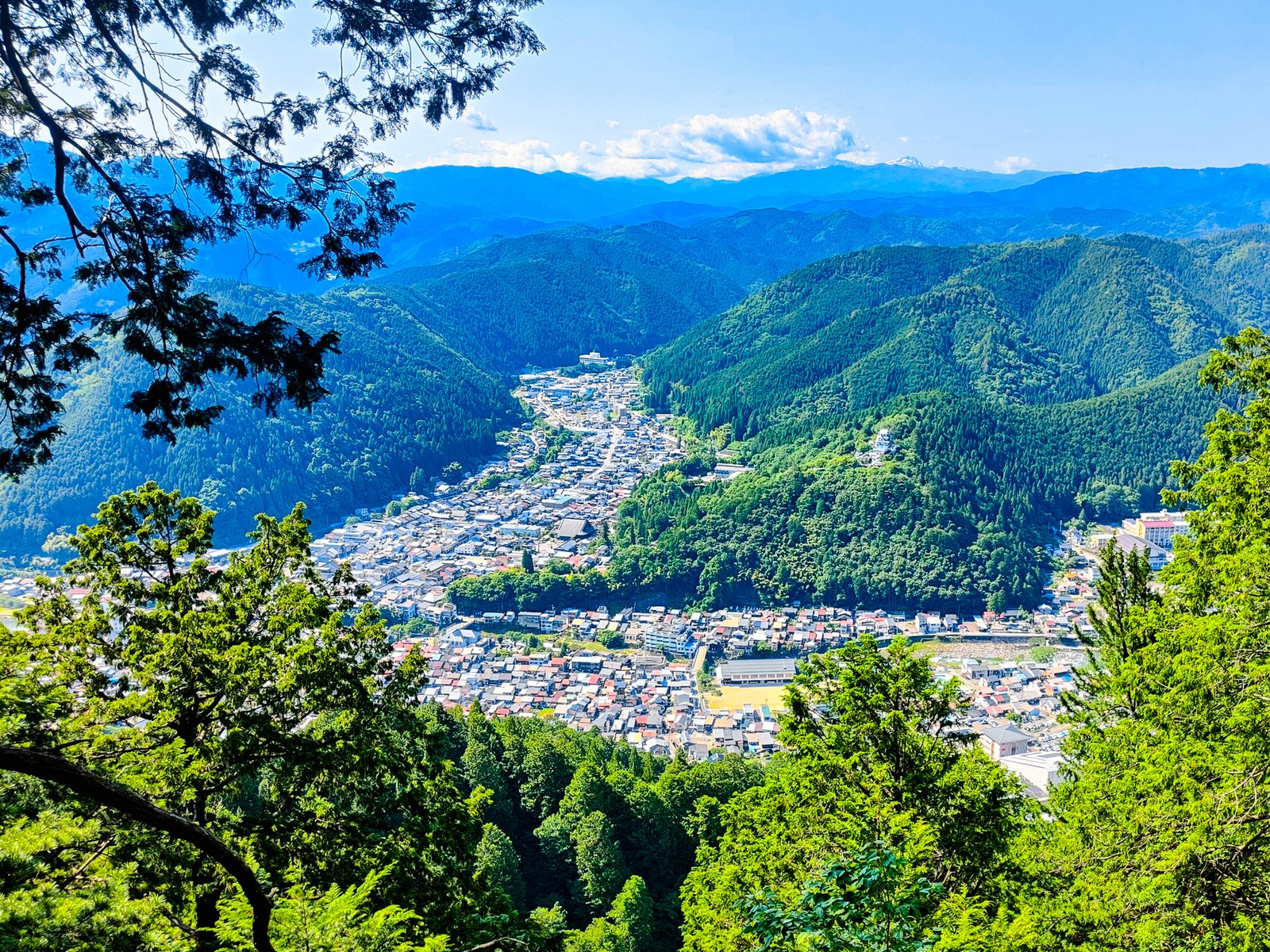
Gujo Hachiman is the old castle town at the centre of Gujo City in Gifu. The national cultural properties database describes its northern part, Kitamachi, as part of a castle town that makes use of its natural setting, surrounded on all sides by mountains and rivers, with townhouses in a common style standing close together and water channels fed by springs (Agency for Cultural Affairs, Kitamachi district entry (in Japanese)). The same entry says that by the late Edo period the town was divided by the Yoshida River into Kitamachi on the north bank and Minamimachi on the south.
Who this is for: travellers who want a day or a night in a small castle town, walking its streets and channels and perhaps joining the summer dance.
The short version: come by the Nagaragawa Railway to Gujo-Hachiman Station, or by express bus, then use the Mame Bus, the town’s community bus, which loops through the centre and stops at the station. Walk the streets of Kitamachi, a national preservation district, and stop at the Sogisui spring. The Gujo Odori dance runs on summer nights; the nights change every year.
Getting into town: choose your way
| Your situation | Our suggestion | Where to check |
|---|---|---|
| You come by train | JR Takayama Line to Mino-Ota Station, then the Nagaragawa Railway to Gujo-Hachiman Station | Gujo City, access guide (in Japanese) |
| You come by bus from Gifu | The Gifu Bus express Hachiman Line from Meitetsu Gifu or JR Gifu to the Atago Koen-mae stop near the city office | Gujo City, access guide (in Japanese) |
| You arrive at Gujo-Hachiman Station | The red route of the Mame Bus, which calls at the station and at Joka-machi Plaza | Gujo City, Mame Bus timetable (in Japanese) |
| You come for the dance | The city describes the Gujo Odori season as about two months each summer | Gujo City, Gujo Odori (in Japanese) |
Times, fares and dates to confirm
| Item | Value | Where to check |
|---|---|---|
| Mame Bus times and fare (weekdays and Saturdays) | Check official | Gujo City, Mame Bus timetable (in Japanese) |
| Train and express bus times | Not verified (see below) | Gujo City, access guide (in Japanese) |
| Gujo Hachiman Castle admission and hours | Not verified (see below) | Gujo City, sights of the Hachiman area (in Japanese) |
| Gujo Odori dance nights this year | Not verified (see below) | Gujo City, Gujo Odori (in Japanese) |
- The Mame Bus: the city’s timetable page lists a red route and a blue route, both starting from Joka-machi Plaza, and says that after the first bus they leave every hour at the same minutes past the hour, for a single flat fare (Gujo City, Mame Bus timetable (in Japanese)). The red route calls at Gujo-Hachiman Station, and both routes call at the Atago Koen-mae stop. The page shown here is for weekdays and Saturdays.
- The access page’s date: the city’s access guide gives routes by car, bus and train, and is dated 2010 (Gujo City, access guide (in Japanese)).
- Before you go: open the Mame Bus timetable for your day of the week, and look up your train or express bus on the operator’s own timetable.
What to do: if you arrive at Gujo-Hachiman Station, take the red route of the Mame Bus into the centre rather than waiting for a taxi. Where to verify: the city’s Mame Bus timetable (in Japanese).
Walking the town
The database entry describes the main houses of Kitamachi as mostly full two-storey buildings with gabled roofs entered on the long side, exposed timber framing painted with red bengala, and plastered walls, usually with short projecting side walls, and roofs of sheet metal or pantiles (Agency for Cultural Affairs, Kitamachi district entry (in Japanese)). Some houses use the slope of the plot for a living room called a shitaya or a store called a muro beneath the ground floor. Water channels run along the streets and are still used for daily needs.
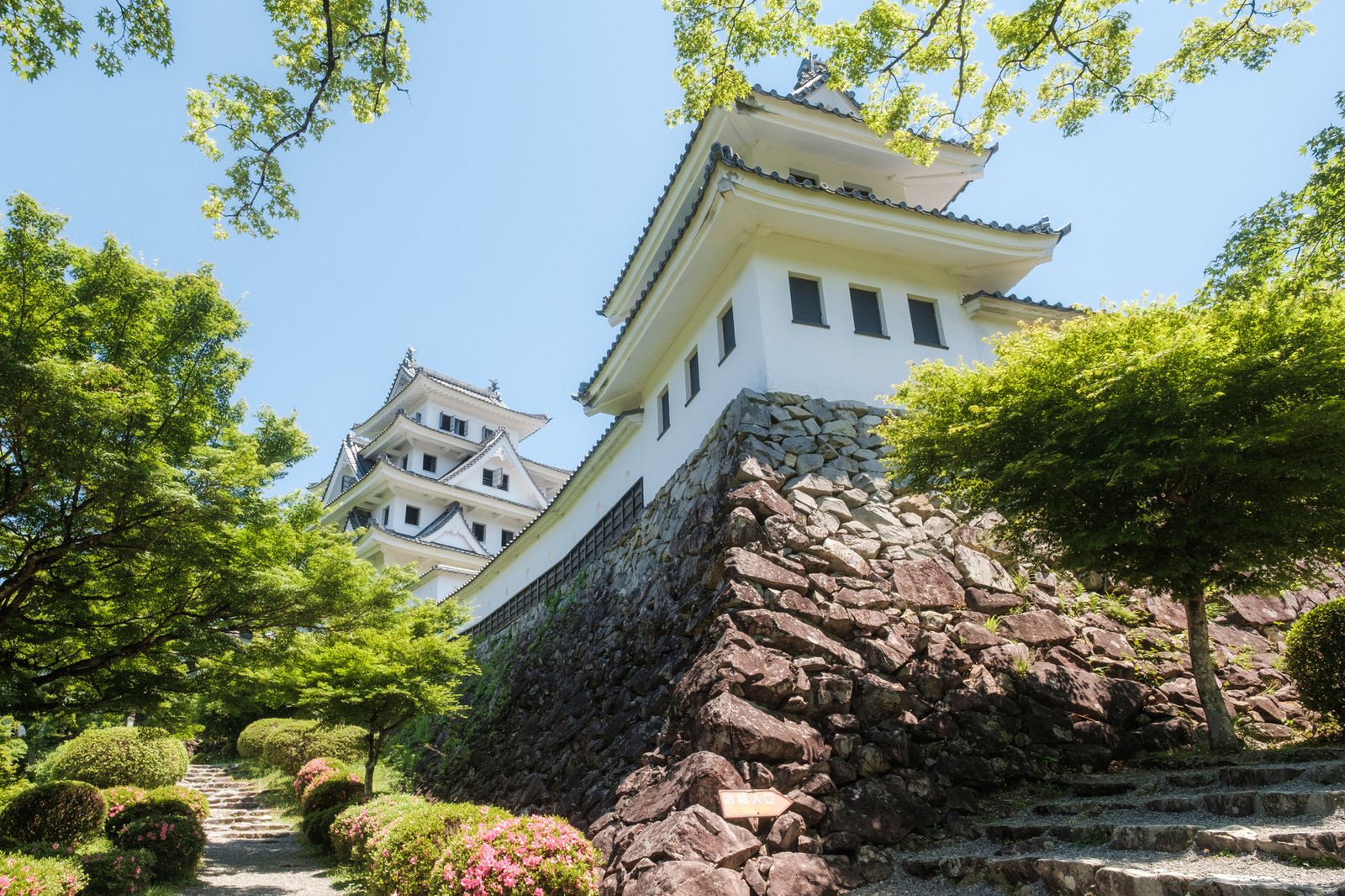
The city’s page on the sights of the Hachiman area names the Igawa Komichi lane, and says the joint work of the public and residents to keep its scenery received an award from the then Minister of Construction (Gujo City, sights of the Hachiman area (in Japanese)). The same page says the wooden keep of Gujo Hachiman Castle, home of successive lords of the Gujo domain, was rebuilt in 1933 with four tiers and five floors.
What to do: walk the streets of Kitamachi slowly and look down at the channels beside the road as well as up at the house fronts. Where to verify: the database entry (in Japanese).
Designations: the district and the dance
The national cultural properties database lists Gujo-shi Gujo Hachiman Kitamachi as an Important Preservation District for Groups of Traditional Buildings, of the castle town type, covering 14.1 ha and selected on 28 December 2012 (Agency for Cultural Affairs, Kitamachi district entry (in Japanese)). It gives the district as about 589 m east to west and 525 m north to south, made up of the former samurai quarter, the former townspeople’s quarter and the castle site.
The database also lists Gujo Odori as an Important Intangible Folk Cultural Property, designated on 20 December 1996, with the Gujo Odori Preservation Society as its preservation body, and notes that on 30 November 2022 it was inscribed by UNESCO as one of the Furyu-odori dances (Agency for Cultural Affairs, Gujo Odori entry (in Japanese)). The city’s page says that in the early Edo period the lord of Gujo Hachiman Castle, Endo Yoshitaka, gathered dances from around the domain into the castle town and encouraged them to bring his people together, and that this is said to be the foundation of the dance today (Gujo City, Gujo Odori (in Japanese)).
The fire of 1919
The database entry tells how Kitamachi came to look as it does (Agency for Cultural Affairs, Kitamachi district entry (in Japanese)). The town began in 1559, when Endo Morikazu set up camp on Mt. Hachiman to attack the Gujo To clan, who had ruled the area since the Sengoku period. Kitamachi lies west of the castle site and is bounded by rivers on three sides, with three streets running north to south: Yanagimachi along the eastern street, Tonomachi along the central street, and Shokuninmachi, Kajiyamachi and Honmachi, from north to south, along the western street. In 1919 a great fire burned the whole of Kitamachi. In the rebuilding, the samurai plots were divided up, townhouses were built on them, and roofs were made fireproof.
What to do: walk the three north-to-south streets, from Yanagimachi on the east to Shokuninmachi, Kajiyamachi and Honmachi on the west, and remember that the great fire of 1919 burned the whole of Kitamachi. Where to verify: the database entry (in Japanese).
The spring and the farewell poem
The city says the Sogisui spring takes its name from Iio Sogi, a master of linked verse, who built a hermitage beside the spring in the Bunmei era and loved its water (Gujo City, sights of the Hachiman area (in Japanese)). Gifu Prefecture’s page tells the story behind it (Gifu Prefecture, Sogisui (in Japanese)). The spring rises beside the Kodara River near Miyagase Bridge. In 1471, To Tsuneyori, lord of Shinowaki Castle, finished passing on to Sogi the secret teachings of the Kokinshu poetry anthology, and while seeing him off on his way back to Kyoto, the two are said to have stopped at this spring and drunk from it. At their parting, Tsuneyori is said to have given Sogi a poem asking him not to forget the autumn leaves of Tatsuta and the cherry blossoms of Yoshino. The prefecture’s page adds that in the Edo period lords of Gujo cared for the spring, that a Chinese poem written at the request of the lord Kanamori Yorikane stands carved on a stone beside it, and that in 1985 the Environment Agency chose it in its first selection of 100 famous waters.
What to do: look for the stone carved with the Chinese poem beside the spring. Where to verify: the prefecture’s page (in Japanese).
Official sources
| Topic | Source | Checked |
|---|---|---|
| Kitamachi district, houses, channels, the fire of 1919 | Agency for Cultural Affairs, Kitamachi district entry | 2026-11-14 |
| Gujo Odori designation and UNESCO inscription | Agency for Cultural Affairs, Gujo Odori entry | 2026-11-14 |
| Origin and season of the dance | Gujo City, Gujo Odori | 2026-11-14 |
| Mame Bus routes, stops and fare | Gujo City, Mame Bus timetable | 2026-11-14 |
| Routes by train and bus | Gujo City, access guide | 2026-11-14 |
| Igawa Komichi, the castle keep, the name of Sogisui | Gujo City, sights of the Hachiman area | 2026-11-14 |
| Sogisui, the farewell, the stone, the 1985 selection | Gifu Prefecture, Sogisui | 2026-11-14 |
What we have not verified
- Train and express bus times: the city’s access guide gives routes but no timetables, and dates from 2010 (Gujo City, access guide (in Japanese)).
- The castle: the city’s page describes the keep but gives no admission fee or hours, and we did not find a city page that confirms who runs the castle (Gujo City, sights of the Hachiman area (in Japanese)).
- This year’s dance nights: the city’s page describes the season in general terms only (Gujo City, Gujo Odori (in Japanese)).
- Mame Bus on Sundays and holidays: we read only the timetable for weekdays and Saturdays (Gujo City, Mame Bus timetable (in Japanese)).
- Names: Gujo Hachiman, Kitamachi, Minamimachi, Yoshida River, Kodara River, Miyagase Bridge, Sogisui, Iio Sogi, To Tsuneyori, Shinowaki Castle, Kanamori Yorikane, Endo Yoshitaka, Endo Morikazu, Mt. Hachiman, Yanagimachi, Tonomachi, Shokuninmachi, Kajiyamachi, Honmachi, Igawa Komichi, Joka-machi Plaza, Atago Koen-mae, Mino-Ota and Mame Bus are our romanizations of the Japanese names on the pages above.