Glover Garden, Nagasaki: the tram to Oura Cathedral, the house on the World Heritage list and what its listings record
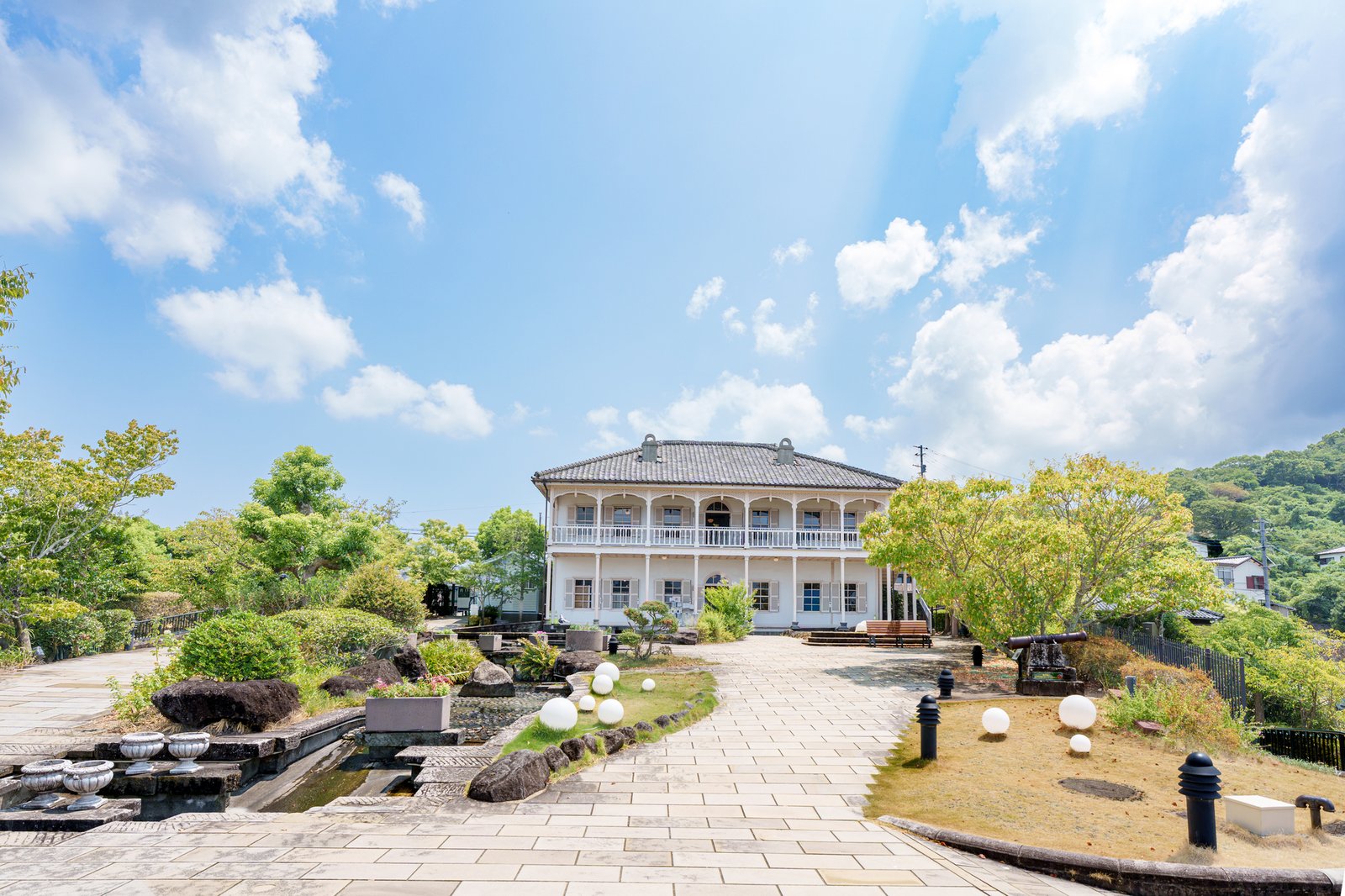
Glover Garden is in the Minamiyamate-machi district of Nagasaki, where the merchant Thomas Blake Glover built a house in 1863, according to Nagasaki City (Nagasaki City, Former Glover House (in Japanese)). UNESCO lists “Glover House and Office” as component 1484-019 of “Sites of Japan’s Meiji Industrial Revolution: Iron and Steel, Shipbuilding and Coal Mining”, inscribed in 2015 under criteria (ii) and (iv) (UNESCO World Heritage Centre, maps and component parts; UNESCO World Heritage Centre, property description). The Agency for Cultural Affairs lists the main house and the annex as Important Cultural Properties, both designated on 7 June 1961 (Agency for Cultural Affairs, Cultural Heritage Online: main house (in Japanese); annex (in Japanese)).
Who this is for: travellers in Nagasaki who want to see Glover’s house and understand why it sits on an industrial World Heritage list, and who will check the tram and the garden’s own details before they go.
The short version: take the tram to the Oura Cathedral stop; the city gives a five-minute walk from there to the house. Inside the garden, the house was built in 1863 and is listed by UNESCO as “Glover House and Office”. Always follow the official pages linked below.
What to plan for
| If… | Then lean towards… | Check |
|---|---|---|
| You are coming by tram | The Oura Cathedral stop, then about five minutes on foot | Nagasaki City, Former Glover House (in Japanese) |
| You are paying the tram fare | The flat fare, or a transport IC card if you change lines | Nagasaki Electric Tramway, English guide |
| You want to know which line serves the stop | The operator’s route map and stop timetables | Nagasaki Electric Tramway, routes and timetables (in Japanese) |
Getting there: the tram to Oura Cathedral
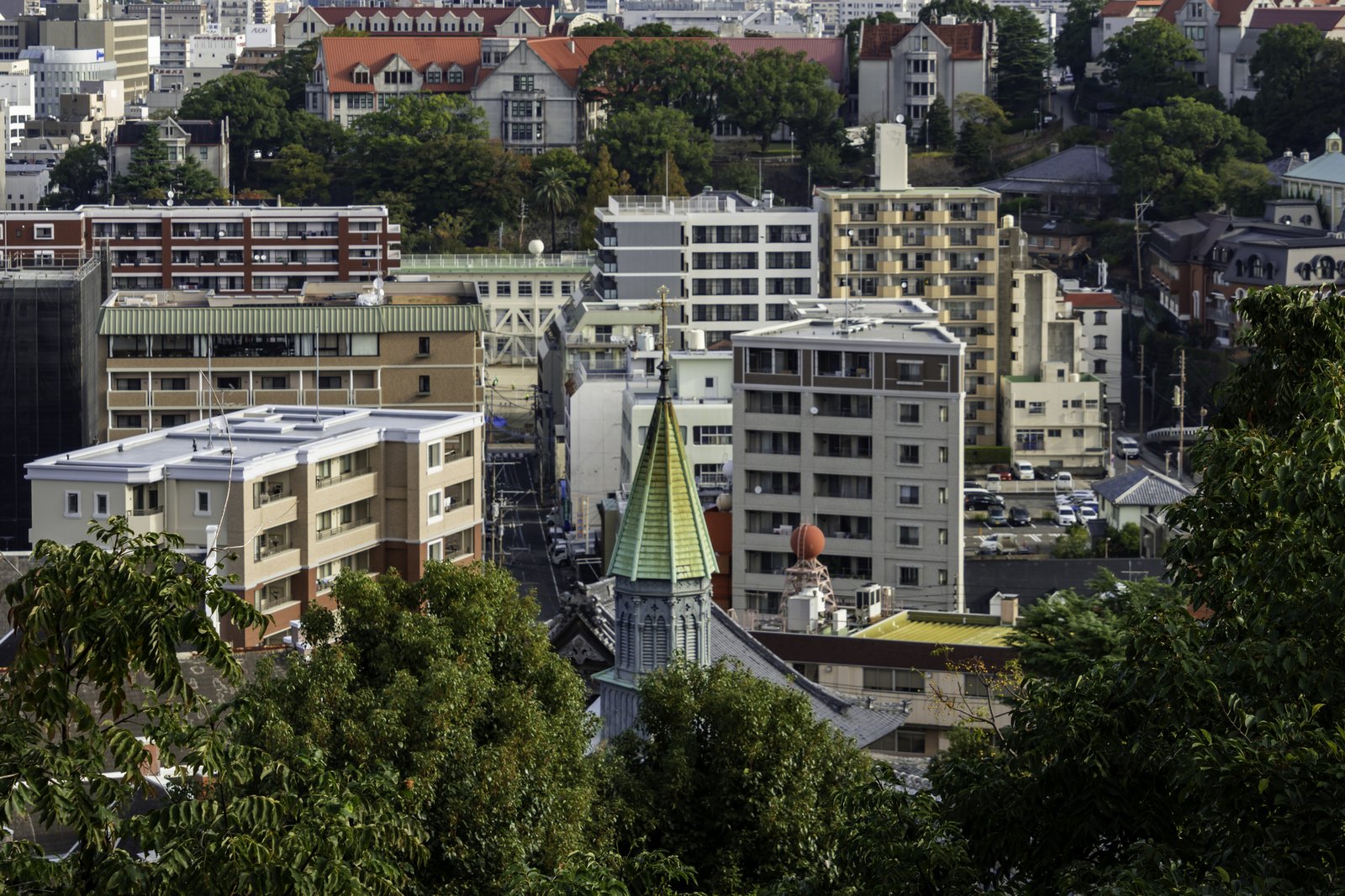
Nagasaki City gives the way in as a five-minute walk from the tram stop named after Oura Cathedral (Nagasaki City, Former Glover House (in Japanese)). The tram operator, Nagasaki Electric Tramway, prints the stop as “Oura Cathedral” (stop 50), and its route map marks Glover Garden and Oura Cathedral among the sights near its stops (routes and timetables (in Japanese); route map (PDF)). The routes page lists Line 5, between Hotarujaya and Ishibashi, at about every 11 minutes between 9:00 and 19:59, and says that Line 4 is suspended for the time being.
The operator’s English guide gives a flat fare of 150 yen for adults and 80 yen for children. Board at the rear door and pay into the fare box as you get off at the front; the change machines on board take only coins and 1,000 yen notes. With one of the ten transport IC cards it accepts, such as nimoca, the second fare is free when you change trams at one of the four stops it lists, including Nagasaki Station, unless more than 30 minutes pass between the two trams (Nagasaki Electric Tramway, English guide).
What to do: look up your line and stop on the operator’s route map, and carry coins, 1,000 yen notes or an IC card. Where to verify: the operator’s English guide.
How a merchant’s house came onto an industrial World Heritage list
Nagasaki City tells the story of the house. Glover came to Nagasaki from Shanghai in September 1859 and set up Glover & Co. to trade. After moving between several places, he built a wooden Western-style house on this site, mainly for receiving guests; a carpenter’s ink inscription confirms that it was built in 1863. He later made it his home, and with additions and alterations it took roughly its present form by the middle of the Meiji era. The city says the master builder was probably Koyama Hide from Amakusa, who also took on the building of Oura Cathedral (Nagasaki City, Former Glover House (in Japanese)).
The Agency for Cultural Affairs, on its World Heritage page for the house, explains why it belongs to the industrial series. It describes the house as the base of Glover’s activities: he cooperated in building and running the Kosuge slip dock and the Takashima coal mine, later advised on the management of the Mitsubishi company, and contributed to modernising coal mining and shipbuilding, then Japan’s main industries. The agency says the house shows Glover’s contribution to the exchange of ideas about technology, and notes that it stands where it looks across the water to the Mitsubishi shipyard in Nagasaki (Agency for Cultural Affairs, World Heritage: Former Glover House (in Japanese)). UNESCO lists the slip dock and the coal mine as components of the same property, as “Nagasaki Shipyard/ Kosuge Slip Dock” and “Takashima Coal Mine/ Takashima Coal Mine” (UNESCO World Heritage Centre, maps and component parts).
What to do: from the house, look across the water towards the shipyard the agency mentions. Where to verify: the agency’s World Heritage page (in Japanese).
What the listings record about the building
The Agency for Cultural Affairs records the main house as a one-storey wooden building of 510.8 square metres with a tiled roof, built in 1863 at the end of the Edo period, and the annex as a one-storey wooden building of 129.2 square metres. Its commentary describes the house as having the bungalow form of tropical regions (Agency for Cultural Affairs, Cultural Heritage Online: main house (in Japanese); annex (in Japanese)). Nagasaki City describes it as the oldest surviving wooden Western-style building in Japan (Nagasaki City, Former Glover House (in Japanese)).
The names differ between the lists. The agency’s World Heritage page gives the component in Japanese as the “Former Glover House” (our translation) (Agency for Cultural Affairs, World Heritage: Former Glover House (in Japanese)), while UNESCO’s list of component parts gives it in English as “Glover House and Office”, with a property area of 0.31 ha (UNESCO World Heritage Centre, maps and component parts).
What to do: at the house, notice the single storey and the tiled roof the agency records. Where to verify: the agency’s listing for the main house (in Japanese).
Official sources
| Topic | Source | Checked |
|---|---|---|
| World Heritage property name, year, criteria | UNESCO World Heritage Centre, property description | 2026-11-11 |
| Component 1484-019 “Glover House and Office”, area; Kosuge and Takashima components | UNESCO World Heritage Centre, maps and component parts | 2026-11-11 |
| Important Cultural Property, main house: date, size, roof, 1863, bungalow form | Agency for Cultural Affairs, Cultural Heritage Online: main house | 2026-11-11 |
| Important Cultural Property, annex | Agency for Cultural Affairs, Cultural Heritage Online: annex | 2026-11-11 |
| Why the house is in the series; master builder; view of the shipyard | Agency for Cultural Affairs, World Heritage: Former Glover House | 2026-11-11 |
| Glover’s arrival, the 1863 ink inscription, master builder, tram stop and walk | Nagasaki City, Former Glover House | 2026-11-11 |
| Fare, boarding, IC card transfers | Nagasaki Electric Tramway, English guide | 2026-11-11 |
| Stop names, Line 5 interval, Line 4 suspension | Nagasaki Electric Tramway, routes and timetables | 2026-11-11 |
| Route map with nearest stops | Nagasaki Electric Tramway, route map (PDF) | 2026-11-11 |