Place name in Japanese: 蒲郡, Gamagōri.
Gamagori coast, Aichi: the shrine island, its protected forest and the bridge across
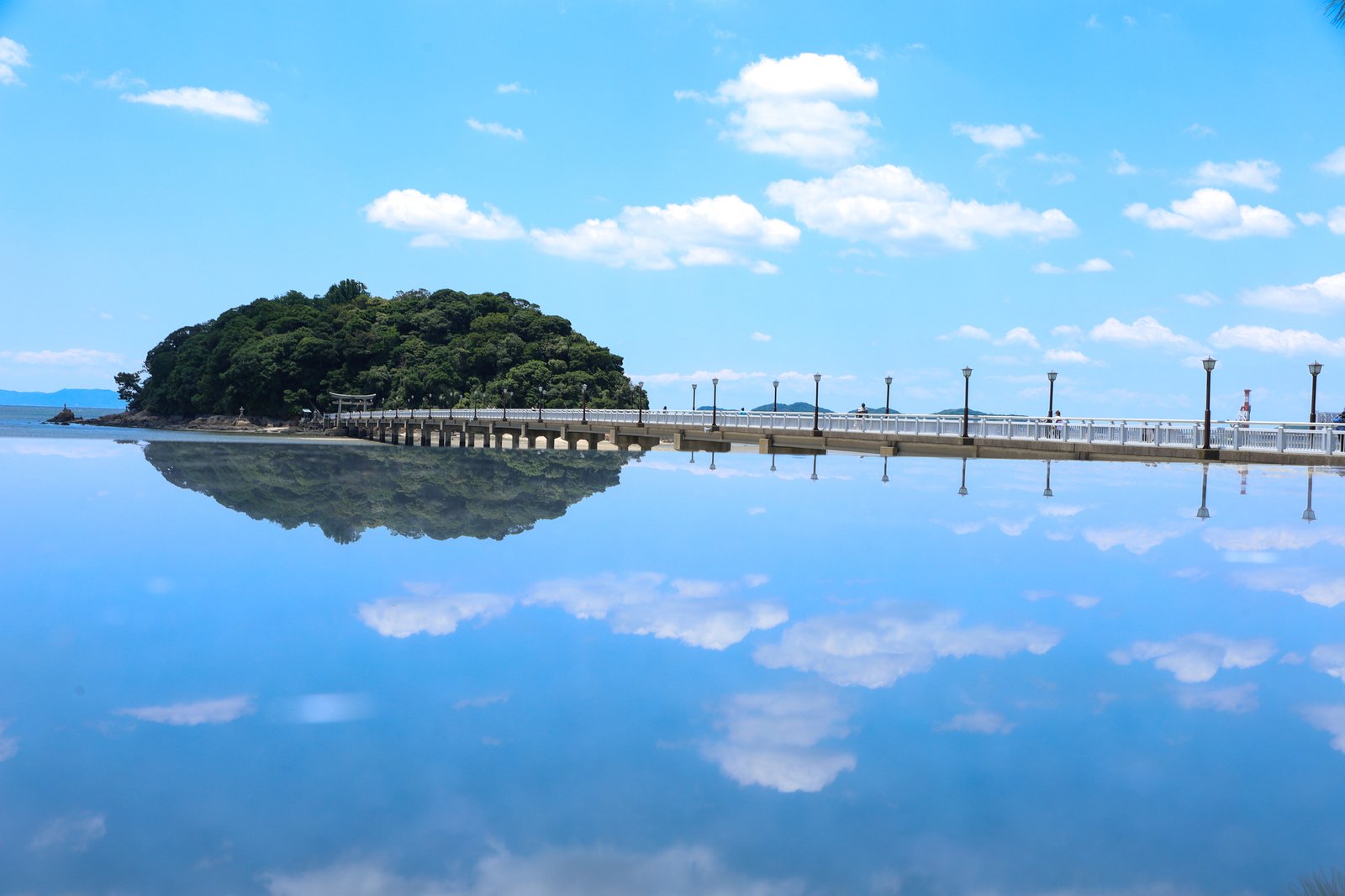
A small island lies off the Gamagori coast in Aichi, and Yaotomi Shrine says the whole island is its sacred ground (Yaotomi Shrine, requests to visitors (in Japanese)). The Agency for Cultural Affairs database lists the shrine’s forest, Yaotomi Jinja Shaso, as a Natural Monument designated on 25 August 1930 (Agency for Cultural Affairs database (in Japanese)).
Who this is for: walkers who want to cross to the island on foot, see why its trees were protected, and visit the shrine on its terms.
The short version: walk the bridge to the island, read the forest as the reason for the 1930 designation, and check the shrine’s rules on photography and pets before you go.
What to plan for
| If… | Then lean towards… | Check |
|---|---|---|
| You plan to take photographs or film | The shrine’s requests on photography, which say filming beyond personal use needs permission in advance | Rules: Check official. Yaotomi Shrine, requests to visitors (in Japanese) |
| You bring a dog | The shrine’s request that pets other than assistance dogs are carried or kept in a cage | Rules: Check official. Yaotomi Shrine, requests to visitors (in Japanese) |
| You want to know why the island is protected | The national database entry and its short explanation | Agency for Cultural Affairs database (in Japanese) |
| You come by train, or want a boat on the bay | See the last section of this page | — |
The island’s forest
- The designation: the Agency for Cultural Affairs database gives the type as Natural Monument, the date of designation as 25 August 1930, and the designation criterion as the one that covers notable and old trees, avenues of trees and shrine forests (Agency for Cultural Affairs database (in Japanese)). The agency’s heritage portal prints the same date and the reading of the name (Cultural Heritage Online (in Japanese)).
- The trees: the shrine says the island is covered by evergreen broadleaf trees typical of warm-temperate forest, and that surveys so far have found 238 species of higher plants in 65 families growing wild there (Yaotomi Shrine, nature (in Japanese)).
- The rock: the shrine says the island is made of a granite-type rock, with white dykes to be seen on the cliffs at its southern end (Yaotomi Shrine, nature (in Japanese)).
As you walk back across the bridge, compare the dense evergreen cover on the island with the black pines on the shore opposite, the contrast the shrine describes. Where to verify: the shrine’s page on the island’s nature (in Japanese).
Visiting the shrine
- Photography: the shrine says personal snapshots and video are fine within ordinary limits, but filming beyond personal use, for work or publication, needs permission applied for in advance with a written plan (Yaotomi Shrine, requests to visitors (in Japanese)). It lists drone filming for a personal hobby among the things it does not permit. Rules: Check official.
- Pets: the shrine asks that pets other than assistance dogs are carried in your arms or kept in a cage, and that you stay away if that is difficult (Yaotomi Shrine, requests to visitors (in Japanese)). Rules: Check official.
Leave the drone at home, and bring a carrier if your dog comes with you. Where to verify: the shrine’s requests to visitors (in Japanese).
The 1930 explanation
The national database keeps the short explanation of the designation. In our translation it reads: the forest is on an island lying no more than 400 metres off the shore of Gamagori town; it is made up of warm-climate tree species, and it is notable because its stand differs from that on the land opposite (Agency for Cultural Affairs database (in Japanese)). The shrine quotes the same wording as the explanation in the official notice of designation (Yaotomi Shrine, nature (in Japanese)).
A Ministry of the Environment table of a 1927 selection of scenic places lists the Gamagori coast, in Aichi, in its coast category among the hyakkei, the hundred views (our translation), which it records as recommended at the same time as the eight views (Ministry of the Environment table (in Japanese, PDF)).
Read the 1930 wording on the island itself, where the warm-climate trees stand a short walk from the shore. Where to verify: the national database entry (in Japanese).
The founding story and the bridges
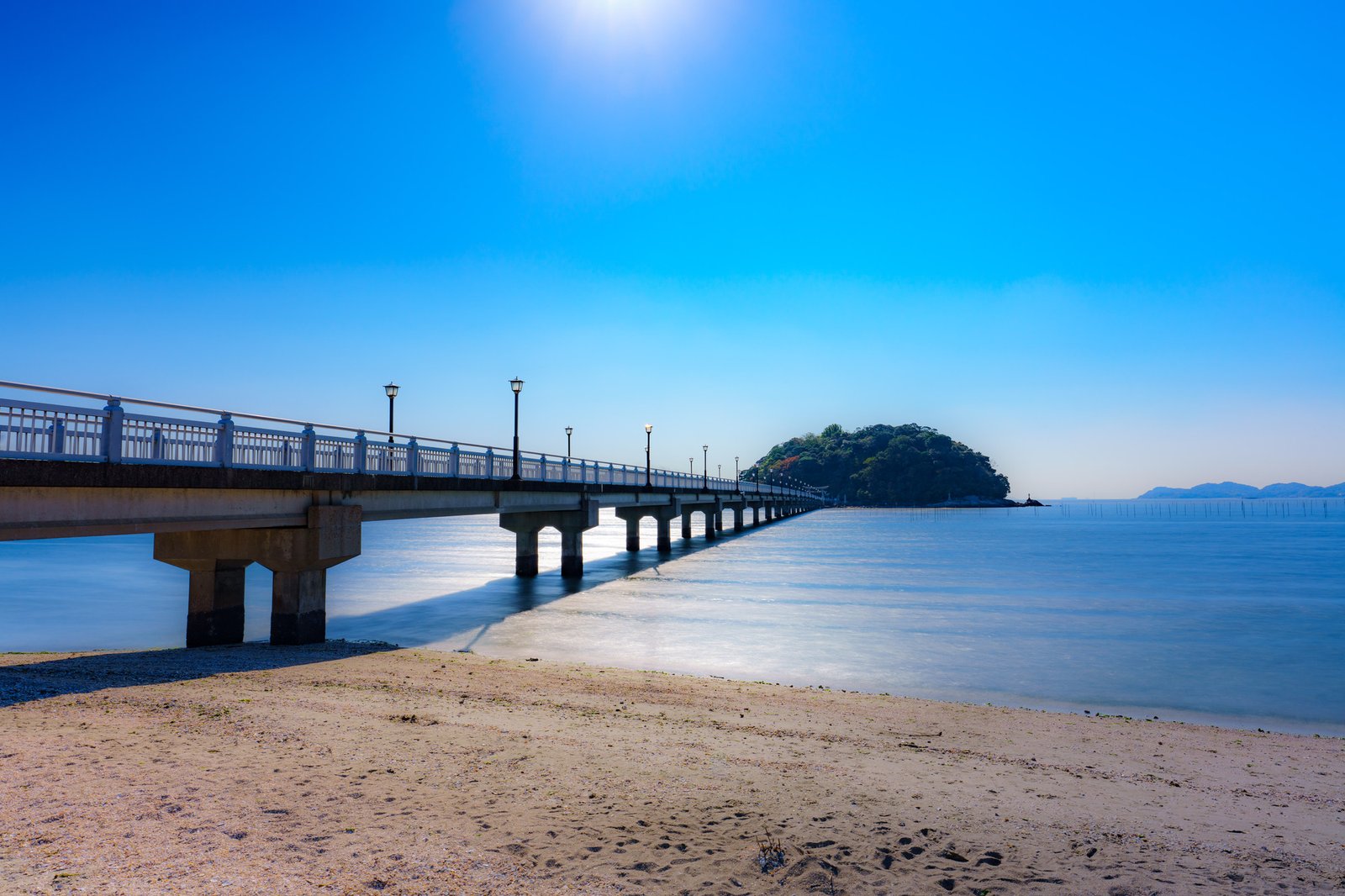
The shrine says it is said to have been founded in 1181 (Yaotomi Shrine, about the shrine (in Japanese)). It traces the founding to the poet Fujiwara no Shunzei, who became governor of Mikawa in 1145 and, while clearing land here, invited the deity of an island shrine in Omi province to this island, which it says looked much like that island (Yaotomi Shrine, about the shrine (in Japanese)). It quotes a record of 1736 saying that two bamboo plants were brought from that island and planted here, and says the island is also said to have taken its name from them (Yaotomi Shrine, about the shrine (in Japanese)). It says there was no bridge until 1932 and that people went to and fro by boat (Yaotomi Shrine, about the shrine (in Japanese)). Its timeline records a reinforced-concrete bridge of 417 m donated in 1932, temporary wooden bridges before that at each unveiling of the deity, and a second bridge of 387 m finished in 1986 after the sea wore away the old one (Yaotomi Shrine, about the shrine (in Japanese)).
What to do: count the bridge as part of the story as you walk it, the latest in a line that began with boats and wooden bridges. Where to verify: the shrine’s history page (in Japanese).
What we have not verified
- How to get to the bridge from the railway station, and how long the walk takes.
- Boats from the coast to the other islands in the bay, with their seasons, times and fares.
- Opening hours and fees of the public facilities near the bridge.
- Whether the coast lies within a quasi-national park.
- The size of the island, as two pages of the shrine give different figures.
- The English forms of the town, the island and the bridge (NAMES pending).
Official sources
| Topic | Source | Checked |
|---|---|---|
| Natural Monument, date, criterion, the 1930 explanation | Agency for Cultural Affairs database | 2026-11-14 |
| Date of designation, reading of the name | Cultural Heritage Online | 2026-11-14 |
| Sacred ground, photography, pets | Yaotomi Shrine, requests to visitors | 2026-11-14 |
| The forest, the plants, the rock | Yaotomi Shrine, nature | 2026-11-14 |
| The founding story, the bridges | Yaotomi Shrine, about the shrine | 2026-11-14 |
| The 1927 hundred views | Ministry of the Environment table | 2026-11-14 |