Place name in Japanese: 福岡, Fukuoka.
Fukuoka
Some hotel names below link to their Expedia pages. If you book through these links, Margins & Maps may earn a commission at no extra cost to you. See our affiliate disclosure.
Fukuoka Prefecture is divided into four tourism areas: Fukuoka, Kitakyushu, Chikugo, and Chikuho (Crossroad Fukuoka). Hakata Station serves as the prefecture’s main rail hub on the Sanyo Shinkansen and Kyushu Shinkansen lines, while Fukuoka Airport sits close to the city centre and Hakata Port operates ferries to South Korea and islands around Kyushu (JNTO Fukuoka). Seasonal highlights range from plum blossoms at Dazaifu Tenmangu in spring and coastal scenery on the Itoshima Peninsula in summer to autumn foliage on Mt. Hikosan and the rivers of Yanagawa in winter (JNTO Fukuoka).
Who this is for / The short version
- Fukuoka Airport has a subway station inside its domestic terminal, linking to Hakata Station in 5 minutes and Tenjin in 11 minutes (JNTO Fukuoka Airport).
- From Hakata Station, the Shinkansen reaches Hiroshima in 1 hour and Tokyo in 5 hours, while flights from Tokyo take 2 hours and trains to Nagasaki take about 2 hours (JNTO Fukuoka).
- Express buses from Fukuoka Airport run to Dazaifu, Oita, Saga, Nagasaki, and Kumamoto (JNTO Fukuoka Airport).
Map
Pin list
- Fukuoka yatai (Fukuoka City) - street food stalls across the city, including the Nagahama area (Yokanavi).
- Mojiko Retro (Moji Ward, Kitakyushu City) - port district with buildings from the Meiji to early Showa eras (Mojiko Retro).
- Yanagawa (Yanagawa City) - river punt cruises running from Shimohyakucho to Ohana (Suigo Yanagawa Kanko).
- Mt. Hikosan (Soeda Town, Tagawa District) - Hikosan Jingu Shrine in Soeda Town (Hikosan Jingu).
- Dazaifu Tenmangu (Dazaifu City) - head shrine of about 12,000 Tenmangu shrines nationwide (Dazaifu City).
- Sakurai Futamigaura (Itoshima City) - twin rocks offshore in Genkai Quasi-National Park (Crossroad Fukuoka).
- Chikugo-Yoshii Traditional Buildings Preservation District (Ukiha City) - historic post-town district along the Bungo Kaido road (Ukiha City).
Main sights
1. Fukuoka yatai (Fukuoka City)
According to Fukuoka City’s official tourism site Yokanavi, around 100 yatai street stalls operate across the city (Yokanavi). The stalls serve dishes including ramen, yakitori, oden, creative cuisine, international food, and bar drinks, with the Nagahama area specifically mentioned (Yokanavi).
2. Mojiko Retro (Moji Ward, Kitakyushu City)
According to the official Mojiko Retro website, the port opened in the early Meiji era 130 years ago and retains buildings from the Meiji through early Showa eras (Mojiko Retro). The area is located in Minatomachi, Moji Ward, Kitakyushu City (Mojiko Retro Access).
3. Yanagawa (Yanagawa City)
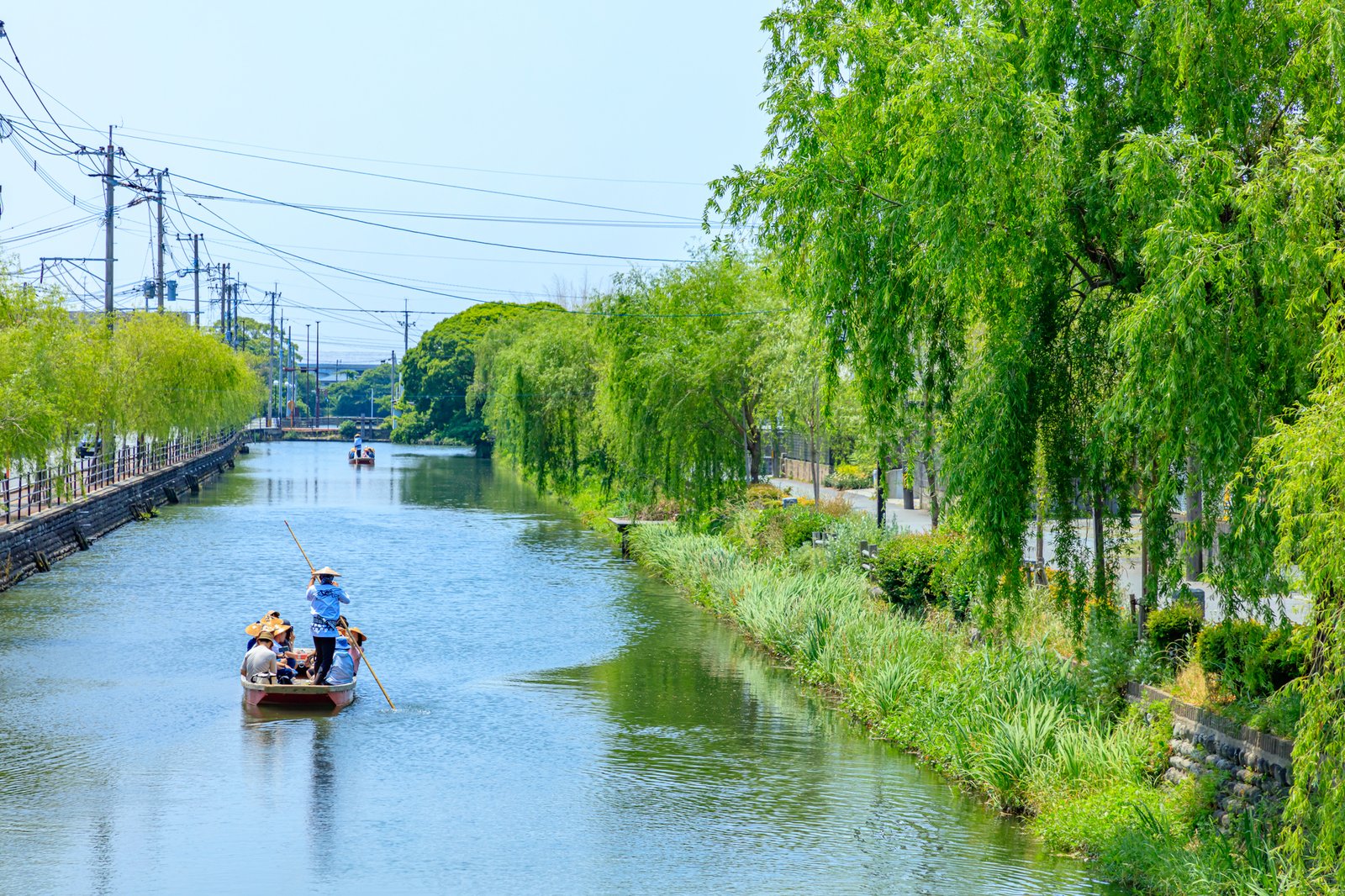
Suigo Yanagawa Kanko Inc. operates river punt cruises from 1-6 Shimohyakucho, Mitsuhashi-machi, Yanagawa City (Suigo Yanagawa Kanko). The one-way trip from Shimohyakucho to Ohana takes about 1 hour (Suigo Yanagawa Kanko). Shared boats run from 09:10 to 15:30 within general operating hours of 09:00 to 17:00, and charter reservations are required after 17:00 (Suigo Yanagawa Kanko).
4. Mt. Hikosan (Soeda Town, Tagawa District)
Hikosan Jingu Shrine is located at 1 Hikosan, Soeda-machi, Tagawa-gun, Fukuoka Prefecture (Hikosan Jingu). The shrine’s access page advises setting car navigation to Hikosan Slope Car or 1487 Hikosan, Soeda-machi, Tagawa-gun, with free parking available at Bessho Parking (Hikosan Jingu).
5. Dazaifu Tenmangu (Dazaifu City)
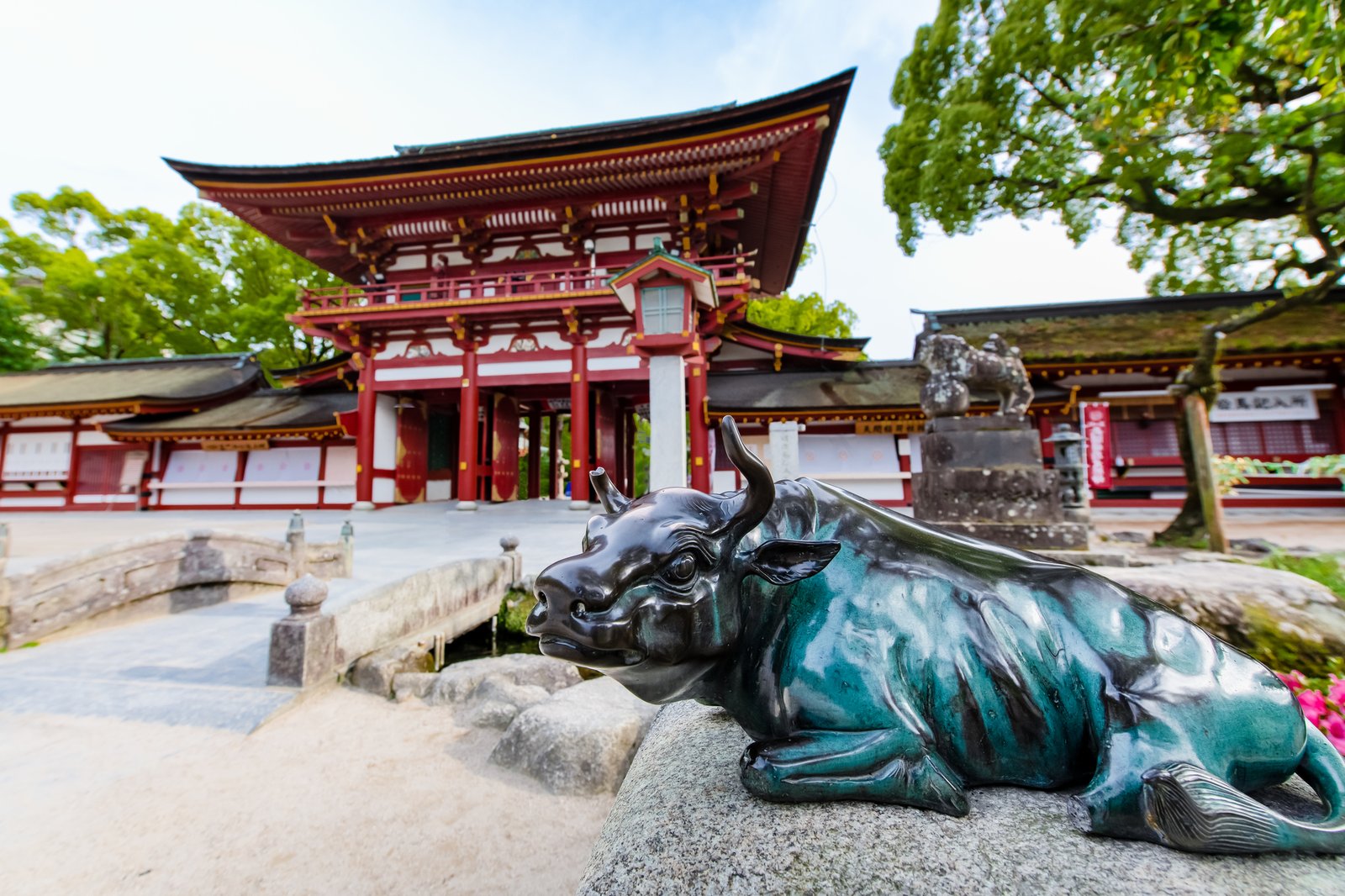
Located at 4-7-1 Saifu, Dazaifu City, Dazaifu Tenmangu enshrines Sugawara no Michizane (Dazaifu City). It is the head shrine of about 12,000 Tenmangu shrines nationwide and receives over 10 million visitors annually (Dazaifu Tenmangu). According to Dazaifu City, a mausoleum was established in 905, a shrine hall was built by imperial order in 919, and the present main hall dates from 1591 and is designated a national Important Cultural Property (Dazaifu City). Around 6,000 plum trees of roughly 200 varieties bloom from February to early March, and the Tobiume plum tree is said to have flown from the capital (Dazaifu City). Entry to the shrine precincts is free (Dazaifu City).
6. Sakurai Futamigaura (Itoshima City)
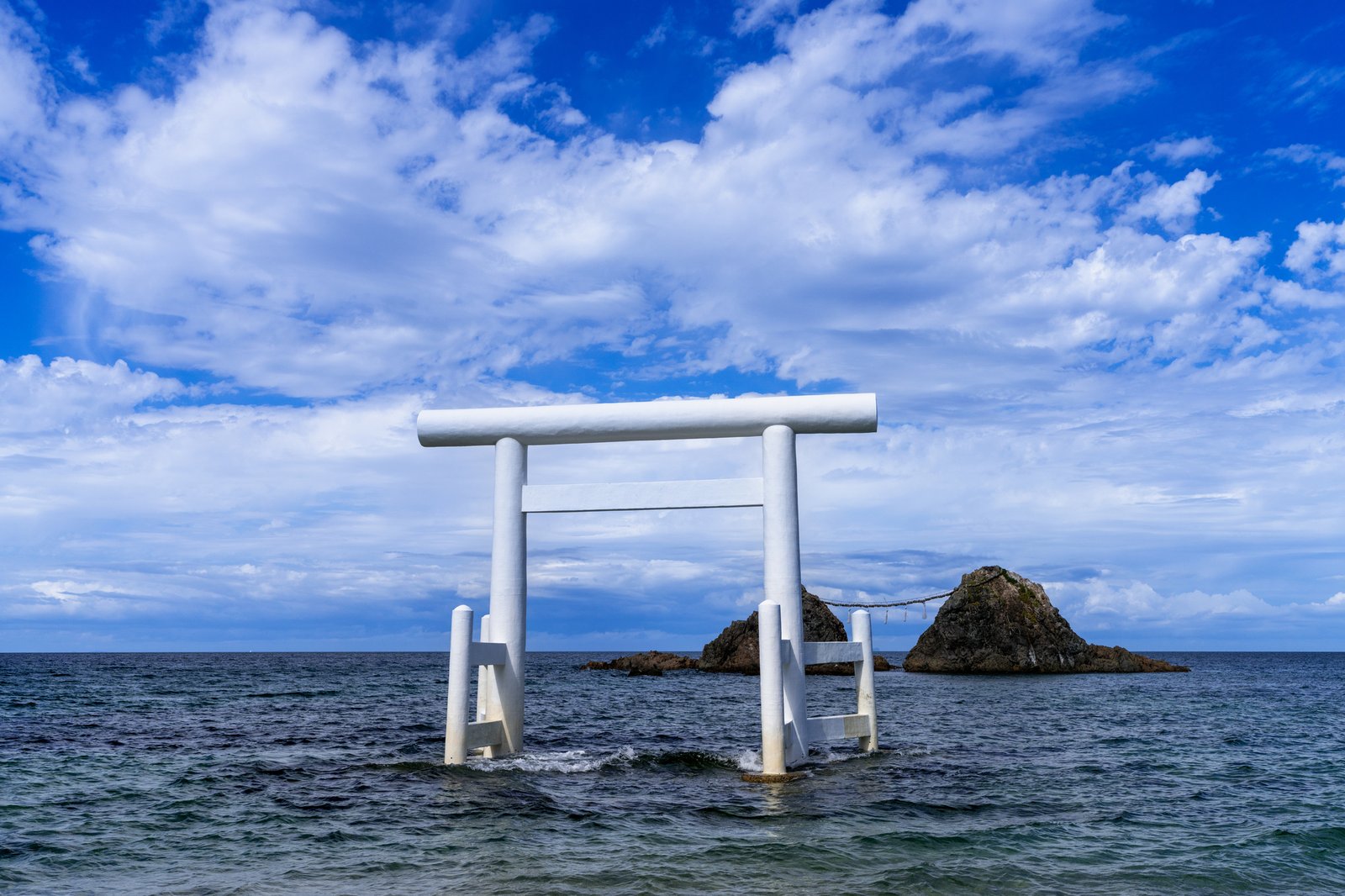
Located at Shima-Sakurai, Itoshima City within Genkai Quasi-National Park, this prefectural scenic spot features twin rocks standing about 150 metres offshore on the grounds of Sakurai Shrine (Crossroad Fukuoka). The rocks measure 11.2 metres and 11.8 metres in height and are linked by a shimenawa rope 30 metres long and weighing 1 tonne, which is replaced each May at a spring low tide (Crossroad Fukuoka). Around the summer solstice, which falls around 21 June in 2026, the sun sets between the rocks, and the coast is listed among Japan’s 100 Selected Beaches and 100 Selected Sunsets (Crossroad Fukuoka).
7. Chikugo-Yoshii Traditional Buildings Preservation District (Ukiha City)
Selected on 10 December 1996, this 20.7-hectare rural merchant town district in Ukiha City contains about 250 traditional buildings (Ukiha City). Historically a post town on the Bungo Kaido road, its tiled-roof earthen-walled merchant houses spread after a major fire in 1869 and formed the current streetscape in the Taisho era (Ukiha City).
Getting there
- Hakata Station is the rail hub for the Sanyo and Kyushu Shinkansen, 1 hour from Hiroshima and 5 hours from Tokyo (JNTO Fukuoka).
- Fukuoka Airport is 5 minutes from Hakata Station and 11 minutes from Tenjin by subway (JNTO Fukuoka Airport).
- From Hakata to Mojiko takes 1 hour 30 minutes by local train, or 16 minutes by Shinkansen to Kokura followed by 15 minutes to Mojiko (Mojiko Retro Access).
- Dazaifu Tenmangu is a 5-minute walk from Nishitetsu Dazaifu Station (Dazaifu City).
- Sakurai Futamigaura is served by Showa Bus from JR Kyudai-Gakkentoshi Station or directly from Hakata and Tenjin via the West Coast Liner (Crossroad Fukuoka).
Seasons and known closures
- Spring: Plum blossoms at Dazaifu Tenmangu (about 6,000 trees) are followed by cherry blossoms and tulips (JNTO Fukuoka).
- Summer: Beaches on the Itoshima Peninsula and yatai street stalls (JNTO Fukuoka).
- Autumn: Autumn foliage on Mt. Hikosan and cosmos flowers on Nokonoshima Island (JNTO Fukuoka).
- Winter: Motsunabe hot pot, the rivers of Yanagawa, and oysters in Itoshima (JNTO Fukuoka).
- Known closures and hours: Suigo Yanagawa Kanko river cruises operate daily throughout the year (Suigo Yanagawa Kanko). Dazaifu Tenmangu’s precincts are open year-round, from 06:30 to 19:00 (06:00 opening from the Vernal Equinox to the day before the Autumnal Equinox, 19:30 closing from June to August, and 18:30 closing from December to March) (Dazaifu City).
Transport overview
| Route / Area | Details | Source |
|---|---|---|
| Tokyo to Fukuoka | About 2 hours by air, or 5 hours by Shinkansen | JNTO Fukuoka |
| Hiroshima to Fukuoka | 1 hour by Shinkansen | JNTO Fukuoka |
| Nagasaki to Fukuoka | About 2 hours by train | JNTO Fukuoka |
| Fukuoka Airport to city centre | Subway from domestic terminal: 5 minutes to Hakata, 11 minutes to Tenjin | JNTO Fukuoka Airport |
| Fukuoka Airport express buses | Direct services to Dazaifu, Oita, Saga, Nagasaki, and Kumamoto | JNTO Fukuoka Airport |
| Kitakyushu Airport to Mojiko | 33 minutes by non-stop bus to Kokura Station, then 15 minutes by train to Mojiko | Mojiko Retro Access |
| Fukuoka Airport to Mojiko | 1 hour 20 minutes by Nishitetsu bus to Kokura, then 15 minutes to Mojiko; or 5 minutes by subway to Hakata and 1 hour 30 minutes by local train (or 16 minutes by Shinkansen to Kokura plus 15 minutes) | Mojiko Retro Access |
| Car access to Mojiko | About 5 minutes from Mojiko IC (from Honshu side only), about 7 minutes from Moji IC (from Kyushu side), or about 5 minutes from Kasuga IC on the urban expressway | Mojiko Retro Access |
| To Dazaifu Tenmangu | 5-minute walk from Nishitetsu Dazaifu Station | Dazaifu City |
| To Sakurai Futamigaura | Showa Bus Nishi-no-ura Line from JR Kyudai-Gakkentoshi Station, or Showa Bus West Coast Liner from Hakata and Tenjin, alighting at Futamigaura (Meotoiwa-mae); 47 paid parking spaces | Crossroad Fukuoka |
Where to stay
- Base area: Hakata Station area (Hakata Ward, Fukuoka City). Toyo Hotel is situated at 1-9-36 Hakataekihigashi, Hakata Ward, Fukuoka City, a 2-minute walk from the Chikushi Exit of Hakata Station (Toyo Hotel; Toyo Hotel on Expedia (affiliate link)). According to Yokanavi, the hotel is about 10 minutes by subway from Fukuoka Airport, with check-in at 14:00 and check-out at 11:00 (Yokanavi Toyo Hotel).
- Compare Fukuoka hotels on Expedia (affiliate link).
Key figures
- Foreign guest overnight stays (2025 final figures, Japan Tourism Agency): 8,421,130 person-nights, up 97.6% compared with 2019 and up 14.0% year on year (Japan Tourism Agency PDF).
What we have not verified
- Exact latitude and longitude coordinates for all seven listed sights (none were provided on the official pages consulted).
- Official wording regarding any prefectural border for Mt. Hikosan (the shrine access page consulted lists only Soeda Town, Fukuoka Prefecture).
- Accommodation candidates near Mojiko, Yanagawa, Mt. Hikosan, and Ukiha (no official facility pages were opened for those areas in this round).
- Individual official page for the Yame City white-walled streetscape listed alongside Ukiha City in the prefectural area guide.
- Attractiveness ranking.