Enoshima, Kanagawa: a day out from Tokyo across the bridge to the shrines, the garden and the caves
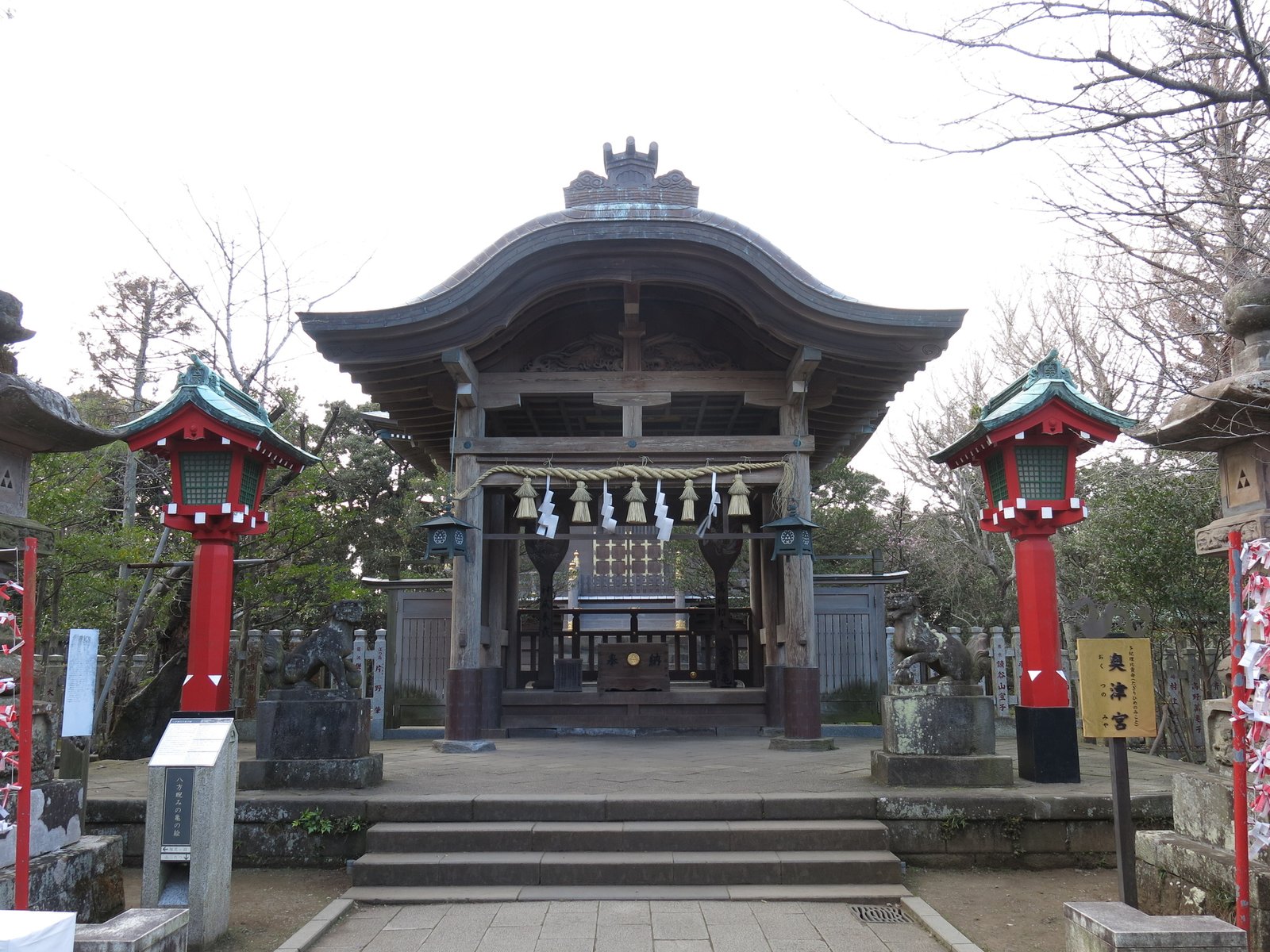
Enoshima is a small island west of Kamakura, joined to the mainland by a 400-metre bridge. Three stations stand near the bridge, and from them you walk across to a bronze gate, three shrines, a garden with an observation tower, and two sea caves at the far end.
Who this is for: travellers based in Tokyo who want a day on the coast by train, with the island crossed on foot.
The short version: ride to Fujisawa, which the city tourist association gives as around 1 hour on direct trains from Shinjuku, Shibuya, Shinagawa, Tokyo and Ueno, then continue to Katase-Enoshima Station or Enoshima Station. Enoshima Shrine is a 15-minute walk from either, and the caves are at the far end of the island. Always follow the official pages linked below.
What to put first
| If… | Then lean towards… | Check |
|---|---|---|
| You want the shrines and their history | Enoshima Shrine, a 15-minute walk from the stations, and the Hoanden hall beside the first shrine | City tourist association, Enoshima Shrine |
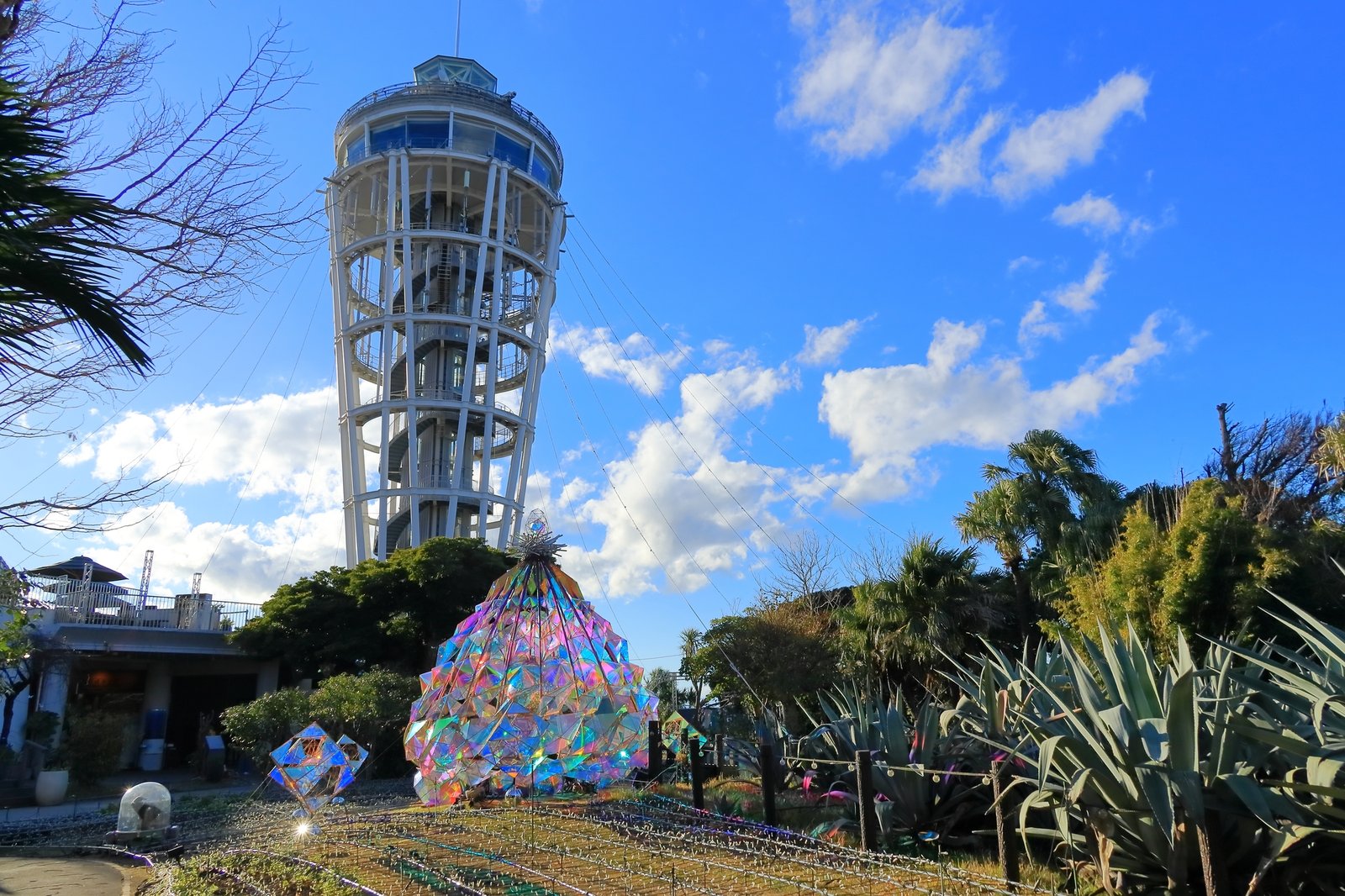
| You want a view from the top | The Samuel Cocking Garden and the Sea Candle tower inside it | Opening hours |
| You want to go underground | The Iwaya Caves at the far end of the island | City tourist association, Iwaya Caves |
| You will ride the escalators, the tower and the caves | The Enoshima 1day ticket | Prices and tickets |
Hours, fees and closures
All values below are from the official pages as fetched on 2026-11-10.
| Item | Hours | Fees | Closures | Where to check |
|---|---|---|---|---|
| Enoshima Escar (outdoor escalators, 3 sections) | 8:50 to 19:05; last entry 30 minutes before closing | All 3 sections: adults (junior high school and older) 500 yen, primary school pupils 250 yen | Check official | Opening hours · Prices and tickets |
| Enoshima Samuel Cocking Garden | 9:00 to 20:00, last admission 19:30; the conservatory remains and exhibition building close at 17:00 | Free from 9:00 to 17:00; free all day when no event is held; during an event, adults 500 yen and children 250 yen to stay after 17:00 | Check official | Opening hours · Prices and tickets |
| Enoshima Sea Candle (observation tower in the garden) | 9:00 to 20:00; last entry 30 minutes before closing; may be extended during events | Adults 800 yen, children 400 yen | Check official | Opening hours · Prices and tickets |
| Enoshima Iwaya Caves | 9:00 to 17:00, varying with the season | Junior high school and older 500 yen, primary school pupils 200 yen; 20 per cent off for groups of 20 or more | Check official | City tourist association, Iwaya Caves (in Japanese) |
| Hoanden (octagonal hall of statues) | Admission 8:30 to 16:30 | Adults 200 yen, ages 13 to 18 100 yen, under 13 50 yen | Check official | City tourist association, Enoshima Shrine |
| Benten-maru boat (bridge to the caves) | Departures are irregular; confirm times on the day | Adults (13 and over) 400 yen, children (6 and over) 200 yen | Check official | City tourist association, Iwaya Caves |
| Enoshima 1day ticket | One day | Adults 1,550 yen, primary school pupils 700 yen | Covers the Escar, the Sea Candle and the Iwaya Caves | City tourist association, access and passes · Prices and tickets |
| Enoshima-Kamakura Freepass | Check official | From Shinjuku: adults 1,640 yen, children 430 yen | Sold at all Odakyu Line stations | City tourist association, access and passes |
- Paying: the railway operator says the Escar, the garden and the Sea Candle take cash, credit cards, transport IC cards and PayPay (Prices and tickets).
- Discounts: holders of a Japanese disability certificate and one companion pay half on the Escar and the Sea Candle and enter the garden free (Prices and tickets); at the caves the city tourist association gives free entry for them and one companion (Iwaya Caves (in Japanese)).
- Where the 1day ticket is sold: the Fujisawa City Tourist Center, the Katase-Enoshima Tourist Information desk and the ticket office at the first section of the Escar (access and passes).
- Hoanden: the shrine’s own pages did not load when we checked; Check official on the shrine’s guide to its grounds (in Japanese).
What to do: reach the caves before 17:00 and the Hoanden before 16:30, then go up to the garden and the tower, which stay open until 20:00. Where to verify: the opening hours page and the Iwaya Caves page (in Japanese).
Getting there: the stations to the island
- From Tokyo: the city tourist association says Fujisawa Station is served by the Odakyu Enoshima Line and two JR lines, and that direct trains from Shinjuku, Shibuya, Shinagawa, Tokyo and Ueno stations take around 1 hour (access and passes). It says the Enoshima Electric Railway (Enoden Line) connects Fujisawa and Kamakura in 30 minutes (access and passes).
- The three stations: the Japan National Tourism Organization says Enoshima Station on the Enoden Line, Katase Enoshima Station on the Odakyu Line and Shonan Enoshima Station on the Shonan Monorail Line are all a short walk from the island (JNTO).
- From the station: the Enoshima Electric Railway gives a 15-minute walk to Enoshima Shrine from Katase-Enoshima Station on the Odakyu Line or from its own Enoshima Station (Enoshima Electric Railway, Enoshima Station). The bronze torii gate stands just over Enoshima Bentenbashi Bridge (City tourist association, Enoshima Shrine).
- Train status on the day: the Train Status Information page for the Kanto area; for the Odakyu, Enoden and monorail lines, Check official through the operators listed on the city tourist association’s access page.
What to do: go out to Katase-Enoshima or Enoshima Station, walk over the bridge, and plan to come back the same way. Where to verify: the Enoshima Station page.
Up the island: the shrines and the garden
The city tourist association says the shrine was first built at the Iwaya caves in 552 on the order of Emperor Kinmei, and that today three shrines, Hetsumiya, Nakatsumiya and Okutsumiya, are together called Enoshima Shrine (City tourist association, Enoshima Shrine). The Japan National Tourism Organization dates Hetsumiya to 1206 and Nakatsumiya to 853, and says Okutsumiya dates from 1841, after the earlier building was destroyed in a storm (JNTO).
- The gate and the street: the bronze torii was first made of wood and rebuilt in bronze in 1821, with the names of its donors carved on it; the street beyond it leads to the Zuishinmon gatehouse, which is modelled on the sea castle in the tale of Urashima Taro (City tourist association, Enoshima Shrine).
- The Hoanden: the octagonal hall beside Hetsumiya is modelled on the Hall of Dreams at Horyu-ji Temple in Nara; it is said that Minamoto no Yoritomo donated the eight-armed Happi-Benzaiten statue in 1182, and the Myoon-Benzaiten statue was donated later, in the Edo Period (City tourist association, Enoshima Shrine).
- The tower: the Japan National Tourism Organization says the Sea Candle rises from the centre of the island, with a view from 100 metres up (JNTO).
What to do: take the Escar or walk up past the three shrines to the garden. Where to verify: the prices and tickets page.
The Iwaya Caves at the far end
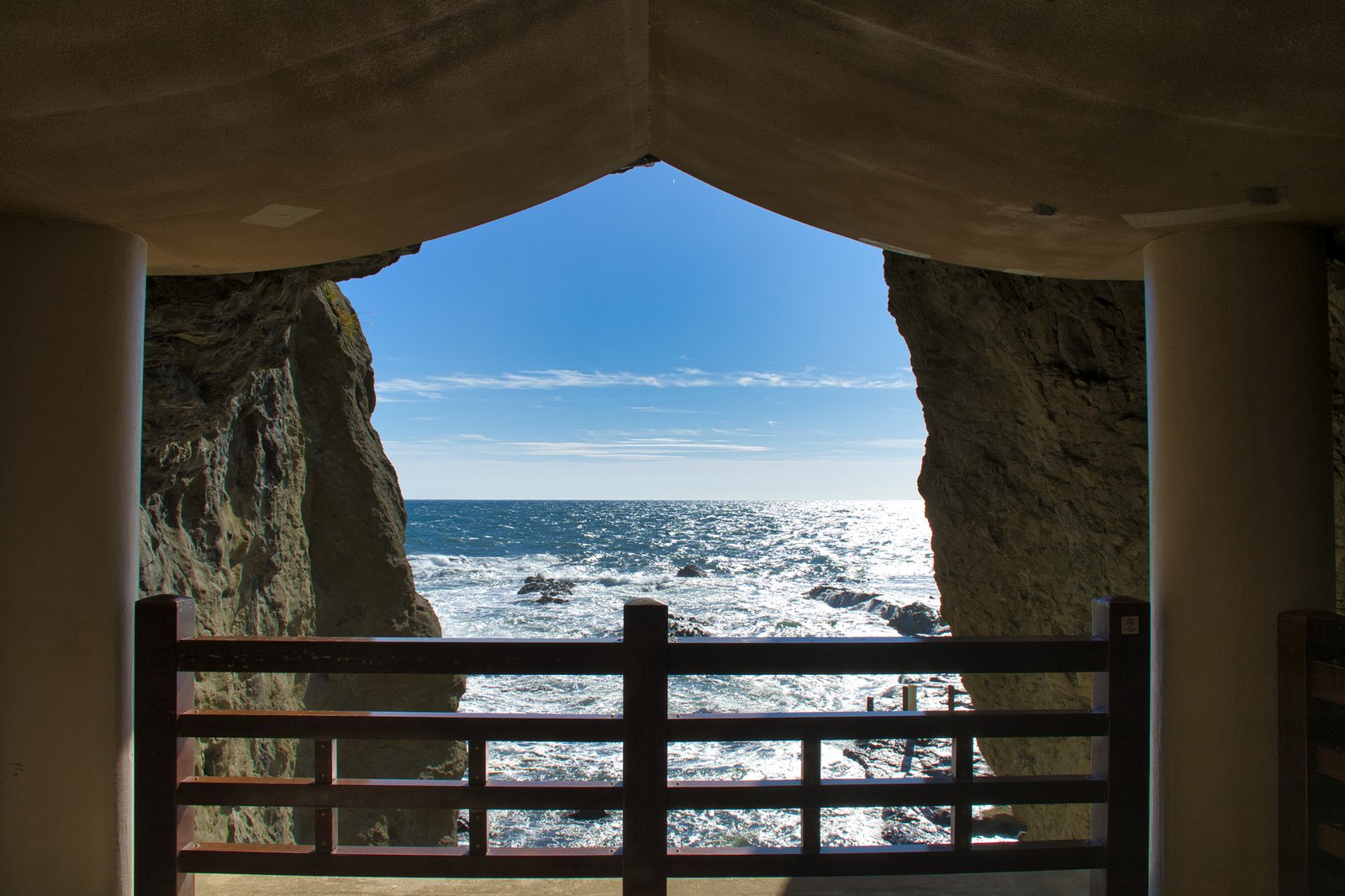
The city tourist association says the caves were carved by tidal erosion and are two caves, 152 metres and 56 metres deep, and that during the Edo Period many worshippers gathered there as a sacred site of the Benzaiten faith (City tourist association, Iwaya Caves). At the back of the right-hand side of Cave 1 is the birthplace of Enoshima Shrine, and it is said that, during a visit to the caves, Benzaiten appeared to the Buddhist monk Kobo Daishi (also known as Kukai), and that Minamoto no Yoritomo came to pray for victory in battle (City tourist association, Iwaya Caves). A Ministry of the Environment table of a 1927 selection of scenic places lists Enoshima in its coasts category among the places it records as recommended (Ministry of the Environment table).
- Inside: candles are handed out free at Cave 1, and the stone statues inside were donated by pilgrims (City tourist association, Iwaya Caves).
- By boat: the Benten-maru runs a 10-minute trip from the foot of Bentenbashi Bridge to the Chigogafuchi Abyss, and the association calls it convenient for the caves (City tourist association, Iwaya Caves).
- In the sea: the Japan National Tourism Organization says swimming off the island itself is prohibited (JNTO).
What to do: walk to the caves first if you arrive late in the day, then climb back for the tower. Where to verify: the Iwaya Caves page (in Japanese).
Where the shrine crest comes from
The city tourist association says the crest of Enoshima Shrine, three scales surrounded by waves, comes from the Legend of the Three Scales (City tourist association, Enoshima Shrine). According to the Taiheiki, it says, in 1190 Tokimasa Hojo, leader of the Kamakura Shogunate, shut himself in the Iwaya caves to pray for the prosperity of his children (City tourist association, Enoshima Shrine). On the last night Benzaiten appeared, promised to grant his wish, became a snake and vanished into the sea, leaving three scales that became the symbol of his family (City tourist association, Enoshima Shrine).
What to do: read the crest as a story set in the Iwaya caves, and visit the caves where it is told. Where to verify: the city tourist association’s shrine page.
Official sources
| Topic | Source | Checked |
|---|---|---|
| Escar, garden, Sea Candle: hours, last entry | en.enoshima-seacandle.com/opening-hours/ | 2026-11-10 |
| Escar, garden, Sea Candle: fees, events, payment, discounts, 1day ticket | en.enoshima-seacandle.com/tickets/ | 2026-11-10 |
| Iwaya Caves: hours, fees, group and disability discounts | fujisawa-kanko.jp/spot/enoshima/17.html | 2026-11-10 |
| Iwaya Caves: depth, history, candles, Benten-maru | discover-fujisawa.jp, Iwaya Caves | 2026-11-10 |
| Enoshima Shrine: founding, gate, Zuishinmon, Hoanden, crest | discover-fujisawa.jp, Enoshima Shrine | 2026-11-10 |
| Trains to Fujisawa, passes | discover-fujisawa.jp/en/access/ | 2026-11-10 |
| Walk from the stations to the shrine | enoden.co.jp, Enoshima Station | 2026-11-10 |
| Bridge, stations, shrine dates, tower, swimming | japan.travel/en/spot/2096/ | 2026-11-10 |
| 1927 selection: Enoshima | Ministry of the Environment table | 2026-11-10 |