Place name in Japanese: 永平寺, Eihei-ji.
Eiheiji, Fukui: the rules inside a Zen training temple, the bus from Fukui Station, and a temple named after an era
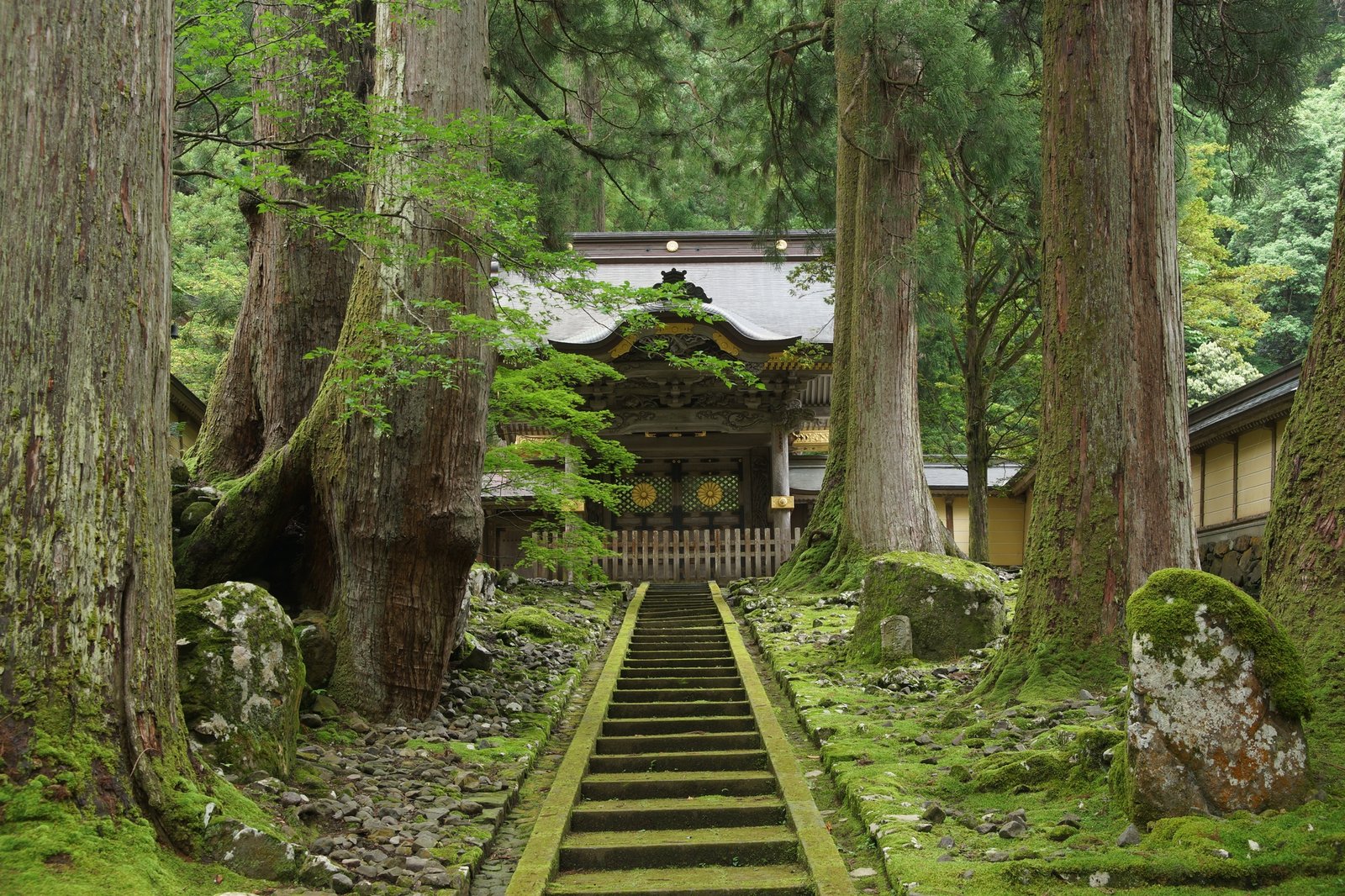
The national register of cultural properties describes Eiheiji as a head temple of the Soto school founded by Dogen in 1244, lying on the upper Eiheiji river, a tributary of the Kuzuryu, and taking up a wide precinct along the valley (Agency for Cultural Affairs, register entry for the Chujakumon gate (in Japanese)). It notes that the temple lost its buildings to fire again and again after its founding, and that the halls standing today were put in order between the early modern and modern periods. Its entry for the Chujakumon gate, one of the temple’s buildings, records an Important Cultural Property listing dated 30 September 2019, with the religious corporation Daihonzan Eiheiji as owner.
Who this is for: visitors coming from Fukui for a few hours who want to walk the halls, know the temple’s rules before they arrive, and time the bus back.
The short version: the temple sets an opening time, a closing time and a latest time to arrive, all on its visiting page. Inside, keep to the left, keep quiet and do not photograph the monks. Keifuku Bus runs the Eiheiji Liner from Fukui Station East Exit straight to the temple, and a local line from Eiheiji-guchi Station.
Liner, local bus, or neither
| Your situation | Our suggestion | Where to check |
|---|---|---|
| Setting out from Fukui Station | The Eiheiji Liner from stop 1 at the East Exit; seats are first come, first served, with no reservations | Keifuku Bus, Eiheiji Liner |
| Arriving by rail at Eiheiji-guchi | The Keifuku Bus Eiheiji line, which the operator cut back from 1 April 2026 | Keifuku Bus, timetable and fares for the Eiheiji line (in Japanese) |
| Travelling with a pushchair | Leaving it at the reception, since the temple asks visitors not to use pushchairs inside | Eiheiji, visiting hours and fees (in Japanese) |
| Travelling with a pet | Another way to get there: the liner refuses pets other than assistance dogs, and the temple wants other pets caged | Keifuku Bus, Eiheiji Liner |
Times and fees to confirm
| Item | Time or fee | Where to check |
|---|---|---|
| Temple gate: opening, closing and latest arrival | Check official | Eiheiji, visiting hours and fees (in Japanese) |
| Admission: adults, primary and junior-high pupils, disability certificate holders, children below school age | Check official | Eiheiji, visiting hours and fees (in Japanese) |
| Days the temple is closed | Check official | Eiheiji, visitor guide (in Chinese) |
| Liner times and fares | Check official | Keifuku Bus, Eiheiji Liner |
| Local bus times and fares | Check official | Keifuku Bus, timetable and fares for the Eiheiji line (in Japanese) |
- Hours may move: the temple adds that its reception hours can change because of its religious observances.
- Time inside: the temple’s answers page says a full, unhurried visit takes a little under an hour, and asks you to allow extra time to rest, because the temple is built on a slope with many stairs.
- Before you go: match your bus to the operator’s timetable on the day you travel (Keifuku Bus, Eiheiji Liner).
What to do: reach the reception before the latest arrival time the temple gives. Where to verify: the temple’s visiting page (in Japanese).
The rules inside the temple
The temple’s visitor guide asks everyone to respect the sanctity of a place of religious practice and lists these points (Eiheiji, visitor guide (in Chinese)):
- Conduct and dress: behave with dignity and dress appropriately.
- Quiet: do not talk loudly, and keep silent especially in the zazen hall, the lecture hall and the main hall where ceremonies are held.
- Route: follow the signed route and keep to the left.
- Hands off: do not touch the bells, drums or other ritual instruments, or the altar platform.
- Smoking: only in the designated places.
- Photographs: photographing or filming the monks is forbidden.
- Entry refused: people who have been drinking, or who disturb the training, may not enter.
- Gardens: keep to the signed route, and do not cross the corridors into the gardens or climb trees for photographs.
The temple’s Japanese visiting page adds two more (Eiheiji, visiting hours and fees (in Japanese)). Assistance dogs may come in as they are; other pets must stay in a cage with their head and body inside, are not to be taken out even briefly for photographs, and cannot come in held in arms, in a sling or in a carrier. Because there are many stairs inside the buildings, the temple asks visitors not to bring pushchairs in; it keeps them at the reception and asks parents to carry their children.
What to do: read the list before you reach the reception. Where to verify: the temple’s visitor guide (in Chinese).
Getting to Eiheiji
- From Fukui Station: Keifuku Bus’s Eiheiji Liner runs every day from stop 1 at Fukui Station East Exit to Eiheiji, on a timetable in effect from 1 October 2026, with one extra early departure on Saturdays, Sundays and holidays (Keifuku Bus, Eiheiji Liner). On that table the ride takes 28 minutes.
- Liner tickets: the operator says tickets from Fukui Station are sold at its ticket window or ticket machines, and tickets from Eiheiji at two shops it names; IC transport cards and contactless credit cards are accepted. It also asks riders to check the temple’s visiting hours before they travel.
- From Eiheiji-guchi Station: the Eiheiji line runs between Eiheiji-guchi Station and Eiheiji (Keifuku Bus, timetable and fares for the Eiheiji line (in Japanese)). Its weekday sheet, in effect from 1 April 2026, shows five buses a day towards the temple, taking 19 minutes (Keifuku Bus, Eiheiji line weekday timetable (PDF, in Japanese)). On its route page the operator points riders to another of its lines that covers the same section as an alternative.
- Delays: the operator warns that traffic on the way can stop the liner keeping to its times, and asks riders to leave a margin.
- Pets on the liner: the operator refuses pets other than guide dogs, hearing dogs and service dogs.
What to do: buy your return liner ticket before the last bus. Where to verify: the operator’s liner page.
Corridors, stairs and halls
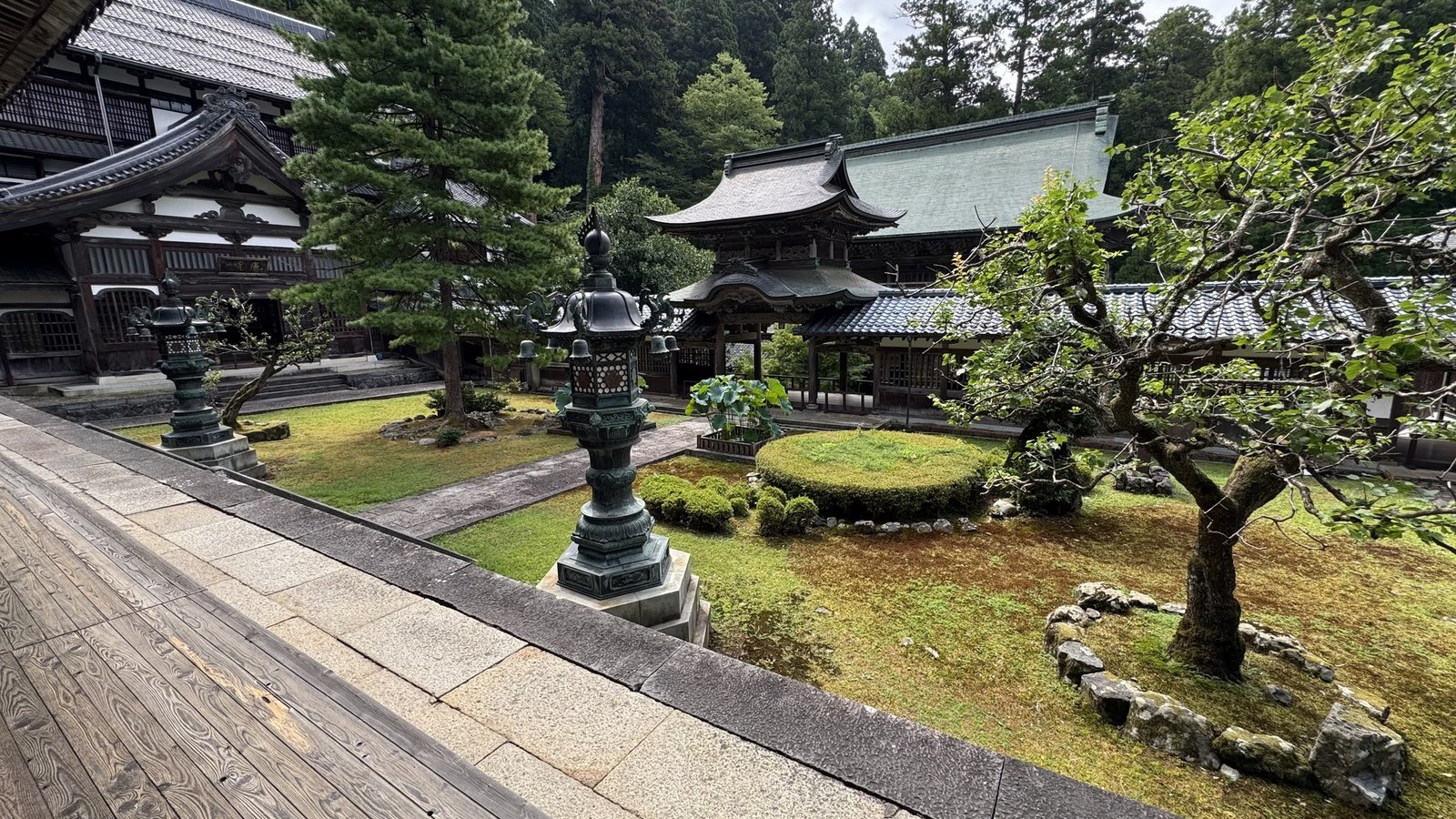
The register’s description sets out the plan: the main gate, the Chujakumon gate, the Buddha hall and the Dharma hall stand in one line, linked by corridors to the kitchen hall and the monks’ hall, and the Joyoden is the mausoleum of Dogen, the founder (Agency for Cultural Affairs, register entry for the Chujakumon gate (in Japanese)). The entry for the Chujakumon gate dates it to around 1852.
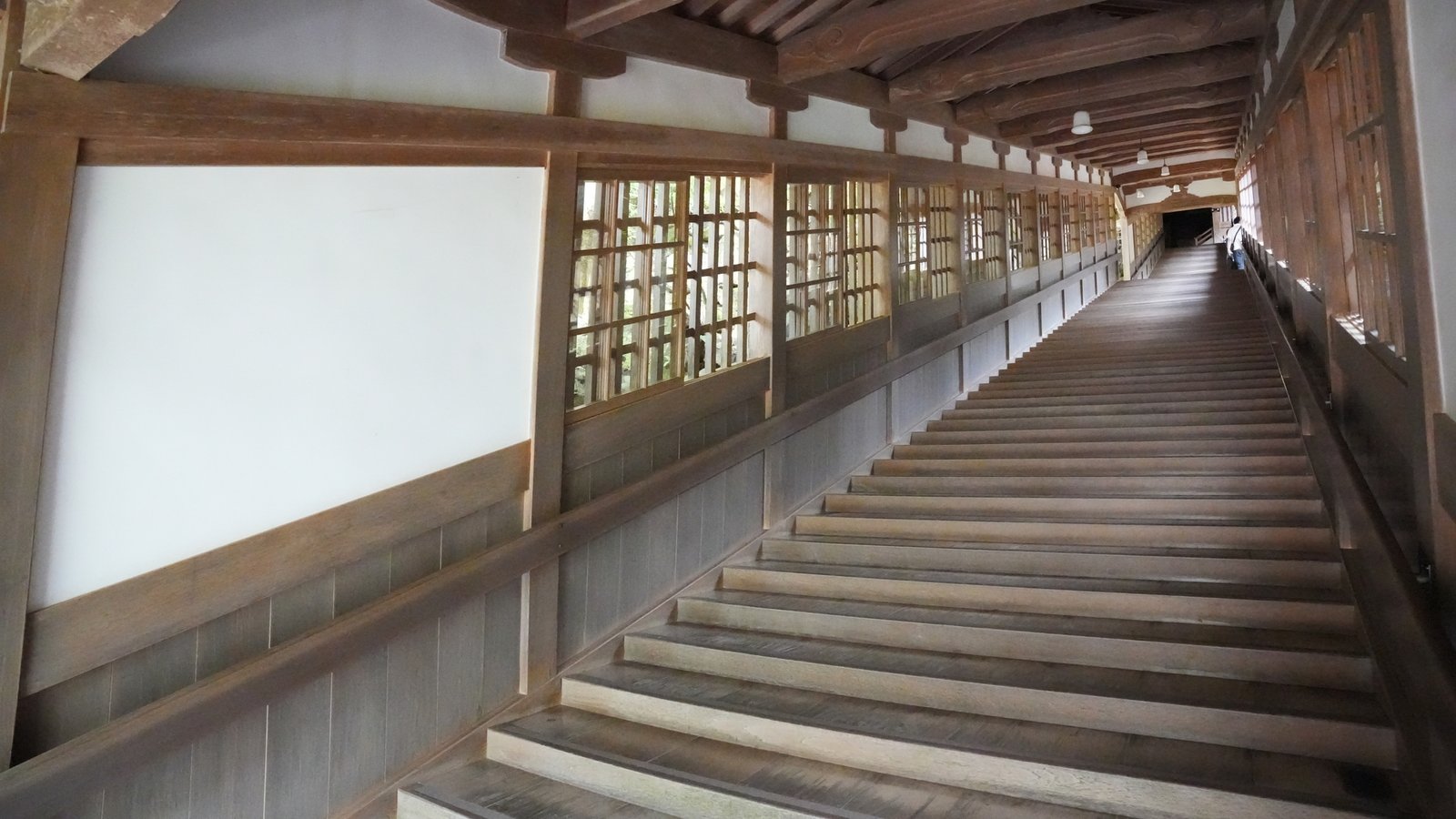
The temple’s answers page says that all the buildings are joined by roofed corridors, so a visit can go ahead in the rain, and that a wheelchair visit is possible only to a few places, such as the hall with the painted ceiling and the main gate (Eiheiji, frequently asked questions (in Japanese)).
What to do: if you use a wheelchair, plan on seeing only part of the temple. Where to verify: the temple’s answers page (in Japanese).
Dogen and the cook from Ayuwang
The temple’s account of its founder says Dogen was born in Kyoto in 1200, and that losing his mother in the winter when he was eight, and watching the smoke of the incense at that time, is said to have led him to become a monk (Eiheiji, Dogen and the temple (in Japanese)). He later sailed to Song China with Myozen, a disciple of Eisai.
Soon after he landed, the account says, Dogen met the tenzo, the head cook, of the temple at Mount Ayuwang, who told him in their exchange that he did not yet understand what practice or the written words of the sutras were. When they met again, Dogen asked what practice was, and the old monk answered that it was right in front of him, his daily life itself. The temple draws from this that practice and awakening cannot be separated.
The same page says that at about 43 Dogen went to Echizen at the invitation of Hatano Yoshishige, a lay follower, opened Daibutsuji the next year, and renamed it Eiheiji two years later. It adds that close to 150 monks train at the temple today.
What to do: read the temple’s account before your visit. Where to verify: the temple’s account (in Japanese).
A name taken from a Chinese era
The Japan Arts Council’s page on the temple says that Dogen, welcomed by Hatano Yoshishige, founded Daibutsuji in Echizen in 1244 and renamed it Eiheiji in 1246, and that the new name is said to come from Eihei, the era name of Emperor Ming of the Later Han, the time when Buddhism first reached China (Japan Arts Council, Eiheiji (in Japanese)).
The same page records that in 1615 Eiheiji became a head temple of the Soto school together with Sojiji (Japan Arts Council, Eiheiji (in Japanese)).
What to do: read the page alongside the temple’s own account. Where to verify: the Japan Arts Council page (in Japanese).
Official sources
| Topic | Source | Checked |
|---|---|---|
| Hours, admission, pets and pushchairs | Eiheiji, visiting hours and fees | 2026-11-14 |
| Rules for visitors | Eiheiji, visitor guide | 2026-11-14 |
| Time needed, corridors, wheelchairs | Eiheiji, frequently asked questions | 2026-11-14 |
| Dogen and the founding | Eiheiji, Dogen and the temple | 2026-11-14 |
| Listing, owner, plan of the halls | Agency for Cultural Affairs, register entry for the Chujakumon gate | 2026-11-14 |
| Eiheiji Liner | Keifuku Bus, Eiheiji Liner | 2026-11-14 |
| Eiheiji line | Keifuku Bus, timetable and fares for the Eiheiji line | 2026-11-14 |
| Eiheiji line weekday sheet | Keifuku Bus, Eiheiji line weekday timetable (PDF) | 2026-11-14 |
| The name and the 1615 status | Japan Arts Council, Eiheiji | 2026-11-14 |
What we have not verified
- Whether the temple’s Japanese pages give the same closing day; the Japanese visiting page we opened prints none (Eiheiji, visiting hours and fees (in Japanese)).
- Train times at Fukui Station and Eiheiji-guchi Station; we fetched no rail timetable (Keifuku Bus, timetable and fares for the Eiheiji line (in Japanese)).
- Which of the temple’s buildings and treasures are listed beyond the Chujakumon gate; we fetched only the register entry for that gate (Agency for Cultural Affairs, register entry for the Chujakumon gate (in Japanese)).
- Day zazen sessions and overnight programmes; the temple’s pages we opened differ on what is running now, so we describe none (Eiheiji, visitor guide (in Chinese)).
- English names: Dogen, the Soto school, the Kuzuryu and Eiheiji rivers, Daihonzan Eiheiji, the Chujakumon gate, the Buddha hall, the Dharma hall, the kitchen hall, the monks’ hall, the Joyoden, Ayuwang, tenzo, Myozen, Eisai, Song China, Echizen, Hatano Yoshishige, Daibutsuji, Eihei, Emperor Ming of the Later Han, Sojiji, Keifuku Bus, the Eiheiji Liner, the Eiheiji line, Eiheiji-guchi Station, Fukui Station East Exit, the Agency for Cultural Affairs and Important Cultural Property are our own romanizations or translations; Eiheiji follows the bus operator’s English print, which also gives the Fukui stop as “Fukui Sta. East” (Keifuku Bus, Eiheiji Liner), and the Japan Arts Council follows that body’s copyright line (Japan Arts Council, Eiheiji (in Japanese)).