Chūson-ji, Hiraizumi: getting there from Ichinoseki, the Konjikidō and checking hours and admission
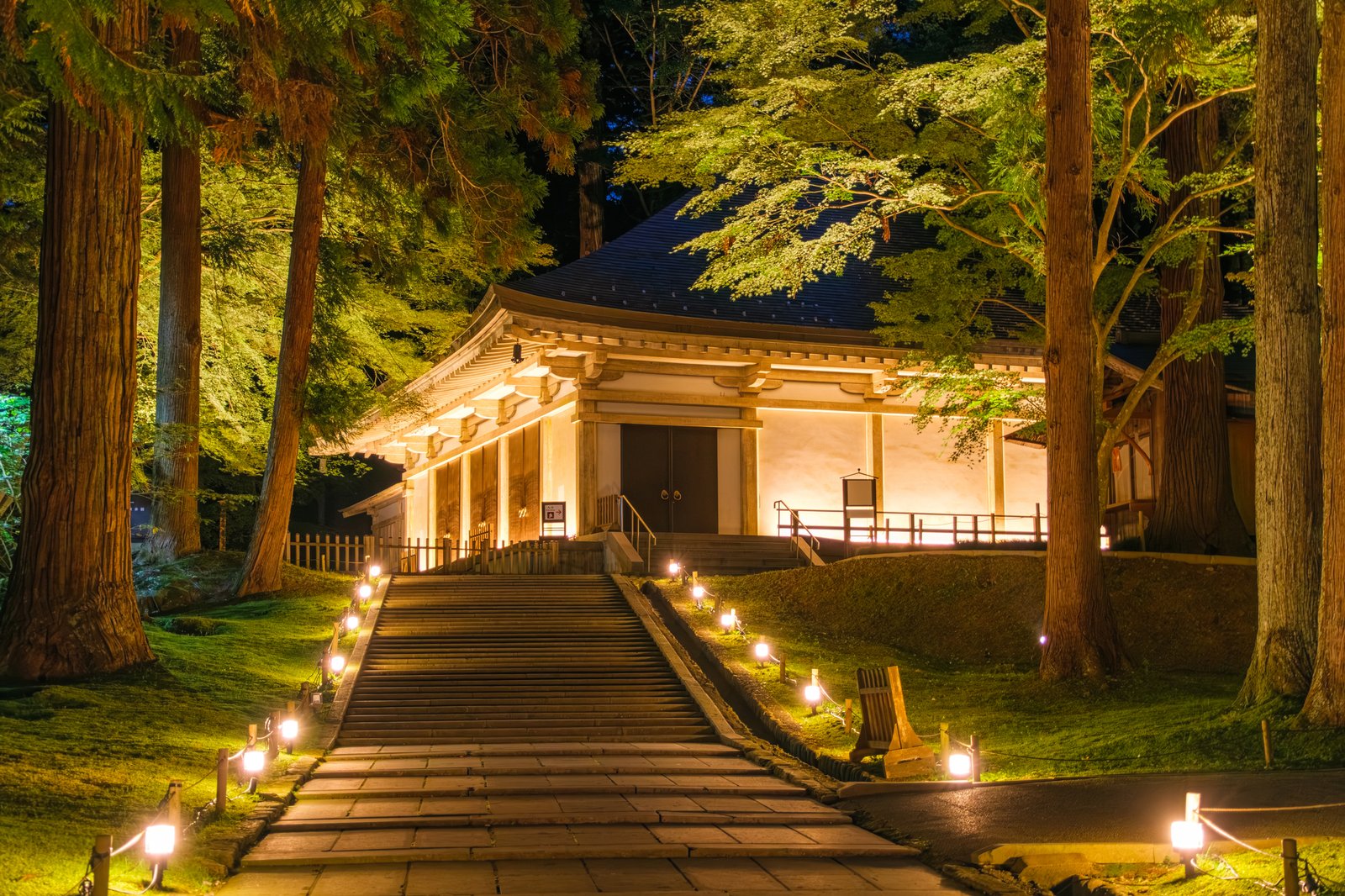
Chūson-ji is a temple in Hiraizumi, in Iwate. The Hiraizumi Tourism Association says that, according to temple records, it was founded in 850 by Ennin (Jikaku Daishi), and that Fujiwara no Kiyohira later built a temple complex here, completing the Konjikidō (golden hall) in 1124 (Hiraizumi Tourism Association, World Heritage Hiraizumi). The temple is part of the World Heritage property Hiraizumi – Temples, Gardens and Archaeological Sites Representing the Buddhist Pure Land, which UNESCO gives as inscribed in 2011 (UNESCO World Heritage Centre, Hiraizumi).
Who this is for: travellers on the Tohoku Shinkansen who want a half day or a day in Hiraizumi to see the temple and its golden hall.
The short version: change at Ichinoseki Station to the JR Tohoku Main Line for Hiraizumi Station, then take a bus or walk to the temple. One standard ticket covers the Konjikidō and the temple’s museum. Hours change between summer and winter, and buses do not run every day, so check before you go. Always follow the official pages linked below.
Bus, walk or car
| If… | Then lean towards… | Check |
|---|---|---|
| You arrive at Hiraizumi Station on a weekday | Iwateken Kotsu’s route bus from the station to the temple | Iwateken Kotsu, Ichinoseki–Hiraizumi line timetable (PDF, in Japanese) |
| You arrive on a weekend or public holiday in the bus season | The town loop bus “Runrun”, which also stops at other heritage sites | Iwateken Kotsu, Runrun loop bus (in Japanese) |
| You prefer to walk | The tourism association gives 1.6 km from Hiraizumi Station to the temple | Hiraizumi Tourism Association, getting to Hiraizumi |
| You come by car | The temple lists car parks with fees; Check official | the temple, access (in Japanese) |
Hours, admission and buses
| Item | Time | Fare or fee | Where to check |
|---|---|---|---|
| Temple grounds | Open all year | Check official | the temple, visiting (in Japanese) |
| Visiting hours, 1 March to 3 November | 8:30–17:00; tickets stop 10 minutes before closing | Standard ticket: adults 1,000 yen, high school 700 yen, junior high school 500 yen, elementary school 300 yen | the temple, visiting (in Japanese) |
| Visiting hours, 4 November to the end of February | 8:30–16:30; tickets stop 10 minutes before closing | As above | the temple, visiting (in Japanese) |
| Route bus, stop in front of Hiraizumi Station to the temple stop | 4 minutes; departure times: Check official | Check official | Iwateken Kotsu, Ichinoseki–Hiraizumi line timetable (PDF, in Japanese) |
| Runrun loop bus | Every 30 minutes from 10:15 to 16:15 at the station stop, 10 minutes to the temple stop; days: Check official | 200 yen a ride (children 100 yen); one-day pass 550 yen | Iwateken Kotsu, Runrun loop bus (in Japanese) |
- What the ticket covers: the temple says the standard ticket admits you to its museum, the Konjikidō, the sutra repository and the former shelter hall (the temple, visiting (in Japanese)). Special viewings with a combined ticket are held at some times: Check official.
- Discounts: the temple says groups of 30 or more get 10% off, and that visitors with a disability certificate pay half price when they show it at the ticket office and buy there rather than online (the temple, visiting (in Japanese)).
- Route bus days: Iwateken Kotsu marks some departures as weekday only (Iwateken Kotsu, Ichinoseki–Hiraizumi line timetable (PDF, in Japanese)).
- Runrun tickets: the operator says IC transport cards can be used, and that the one-day pass is sold on the bus; it also says the route bus has different fares and does not accept the Runrun one-day pass (Iwateken Kotsu, Runrun loop bus (in Japanese)).
- Suspensions: buses may not run on some days, so check with Iwateken Kotsu before you go.
What to do: check the temple’s hours for the season you visit and the bus timetable for your day before you set out. Where to verify: the temple’s visiting page (in Japanese) and the route bus timetable (PDF, in Japanese).
Getting there and how long it takes
- By Shinkansen to Ichinoseki: the tourism association and the temple give about 2 hours 10 minutes to 2 hours 20 minutes from Tokyo and 32 minutes from Sendai to Ichinoseki Station on the JR Tohoku Shinkansen (Hiraizumi Tourism Association, getting to Hiraizumi; the temple, access (in Japanese)).
- Ichinoseki to Hiraizumi: the JR Tohoku Main Line takes about 8 to 9 minutes from Ichinoseki to Hiraizumi Station, by the tourism association’s and the temple’s figures (Hiraizumi Tourism Association, getting to Hiraizumi; the temple, access (in Japanese)).
- From the station to the temple: the route bus takes 4 minutes from the stop in front of Hiraizumi Station to the temple stop (Iwateken Kotsu, Ichinoseki–Hiraizumi line timetable (PDF, in Japanese)). The same route starts at the stop in front of Ichinoseki Station; the timetable gives 29 minutes and a fare of 410 yen from there to the temple stop.
- By car: the tourism association gives the Hiraizumi-Maesawa IC on the Tohoku Expressway (Hiraizumi Tourism Association, getting to Hiraizumi). The temple lists car parks charging 400 yen for a car, and 500 yen at the car park nearest the main hall (the temple, access (in Japanese)).
What to do: if you visit on a weekday, plan around the route bus departures, as the loop bus does not run then. Where to verify: the route bus timetable (PDF, in Japanese).
What to see
The temple says the Konjikidō is the only building that keeps its original form from when the temple was founded, and that it was raised in 1124 by Kiyohira, the first of the Ōshū Fujiwara lords (the temple, about the Konjikidō (in Japanese)). It describes the hall as gold-leafed inside and out, with mother-of-pearl inlay made from turban shells brought along the Silk Road from the southern seas, and with ivory and gems. It also says the remains of Kiyohira and of the three Fujiwara lords after him lie in golden coffins inside the dais.
The standard ticket also covers the temple’s museum, the sutra repository and the former shelter hall (the temple, visiting (in Japanese)).
What to do: leave time for the museum as well as the golden hall, and buy your ticket at least 10 minutes before closing. Where to verify: the temple’s visiting page (in Japanese).
Why one golden hall survived
The Agency for Cultural Affairs database says Kiyohira began building the temple after a war, and that a fire in 1337 burned the original buildings on and below the hill except the Konjikidō and the sutra repository (Agency for Cultural Affairs database (in Japanese)). It says the hall is lacquered black and covered in gold leaf everywhere, inside and out, and that it is very well preserved because screens were fitted under the eaves soon after it was built and a shelter hall was put over it in the Kamakura period. The database records the Konjikidō as a National Treasure, designated on 9 June 1951.
UNESCO describes the temple as heavily gilded and the only one remaining from the 12th century, and says that much of Hiraizumi was destroyed in 1189. It quotes the haiku poet Matsuo Basho, who wrote in 1689: “Three generations of glory vanished in the space of a dream…” (UNESCO World Heritage Centre, Hiraizumi).
What to do: in front of the Konjikidō, look for the black lacquer and gold leaf that the database describes. Where to verify: the Agency for Cultural Affairs database (in Japanese).
Official sources
| Topic | Source | Checked |
|---|---|---|
| Hours, tickets, what the ticket covers, discounts | The temple, visiting | 2026-11-11 |
| Train times, car parks | The temple, access | 2026-11-11 |
| The Konjikidō | The temple, about the Konjikidō | 2026-11-11 |
| Route bus times and weekday-only runs | Iwateken Kotsu, Ichinoseki–Hiraizumi line timetable (PDF) | 2026-11-11 |
| Runrun loop bus | Iwateken Kotsu, Runrun loop bus | 2026-11-11 |
| Train times, distance from the station, expressway | Hiraizumi Tourism Association, getting to Hiraizumi | 2026-11-11 |
| Founding, Kiyohira, the 1124 hall, English names | Hiraizumi Tourism Association, World Heritage Hiraizumi | 2026-11-11 |
| Bus operator name, Runrun | Hiraizumi Tourism Association, getting around Hiraizumi | 2026-11-11 |
| World Heritage name, inscription, Basho | UNESCO World Heritage Centre, Hiraizumi | 2026-11-11 |
| 1337 fire, shelter hall, National Treasure | Agency for Cultural Affairs database | 2026-11-11 |