Beppu from Fukuoka: the seven hot spring hells of the official tour, tickets and the bus from the station
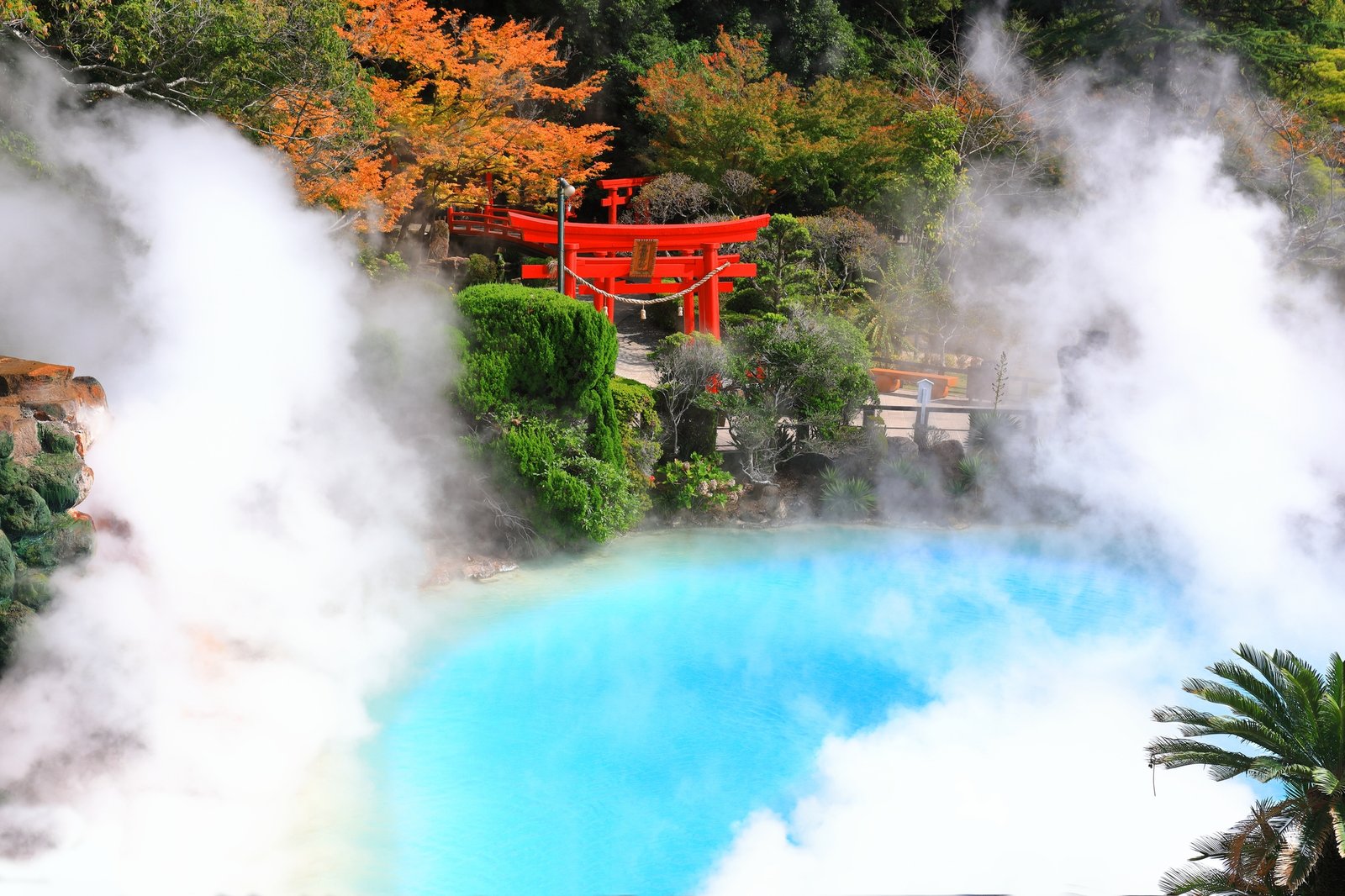
Who this is for: travellers from the United States who are in Fukuoka and want to add Beppu, on the east side of Kyushu, to see the hot spring vents of the seven-hells tour, and need the bus, the shared ticket and the hours before they go.
The short version: from the west exit of Beppu station, take a local bus on route 2, 5, 24 or 41 bound for the hot-spring district; the jigoku association’s access page gives the ride as 20 minutes, then a walk of 1 minute. One shared ticket, 2,400 yen for adults, covers all seven hells, which are open 8:00 to 17:00 every day of the year (official pages, retrieved 2026-11-10). Always follow the official pages linked below.
Which part of the trip to check where
| If you want to know… | Then… | Check |
|---|---|---|
| When the hells are open and what the ticket costs | See the table below | Seven-hells association: hours and fees (Japanese) |
| How to reach them from the station | Local bus from the west exit of Beppu station | Seven-hells association: access (Japanese) |
| How to reach Beppu from Fukuoka | The highway bus needs a seat reservation; for trains, check the operator | Beppu bus operator: highway buses (Japanese) |
| Whether to join the guided bus tour | The operator’s sightseeing bus covers all seven hells, admission included | Beppu bus operator: sightseeing bus (Japanese) |
Hours, tickets and the guided bus
| Item | What the official page prints | Check official | Checked |
|---|---|---|---|
| Hours, all seven hells | 8:00 to 17:00, open every day of the year | Seven-hells association: hours and fees (Japanese) | 2026-11-10 |
| Shared ticket, adults (high school age and over) | 2,400 yen | Seven-hells association: hours and fees (Japanese) | 2026-11-10 |
| Shared ticket, children (primary and junior high school) | 1,200 yen | Seven-hells association: hours and fees (Japanese) | 2026-11-10 |
| Shared ticket, visitors with a disability certificate | Adults 1,200 yen; children 600 yen | Seven-hells association: hours and fees (Japanese) | 2026-11-10 |
| How long the ticket is valid | The day of purchase and the following day | Seven-hells association: hours and fees (Japanese) | 2026-11-10 |
| Guided sightseeing bus, length | About 3 hours | Beppu bus operator: sightseeing bus (Japanese) | 2026-11-10 |
| Guided sightseeing bus, fare including admission | Adults 4,500 yen; junior high school 3,500 yen; primary school and younger 2,300 yen | Beppu bus operator: sightseeing bus (Japanese) | 2026-11-10 |
| Guided sightseeing bus, departure times | Check official | Beppu bus operator: sightseeing bus (Japanese) | 2026-11-10 |
| Local bus fares | Check official | Beppu bus operator: local buses (Japanese) | 2026-11-10 |
The association says each of the seven hells has a ticket office that sells the shared ticket, that you should buy it at the first hell you visit, and that the ticket allows one entry to each hell (hours and fees page). It says visitors with a disability certificate must show it when they buy the ticket (same page).
The guided bus: the operator says the tour visits all seven hells in order, from Umi Jigoku round to Tatsumaki Jigoku, and that its fare includes admission (Beppu bus operator: sightseeing bus (Japanese)). It says passengers walk with the guide for about 60 minutes between five of the hells, that a reservation is needed in advance, and that people without one may not be able to board when it is full (same page). It asks you to leave plenty of time before any onward highway bus, train or ferry, because arrival can be late (same page).
Getting there
- Fukuoka to Beppu by highway bus: the Beppu bus operator lists its highway bus service between Beppu and Fukuoka as seat reservation only, with 12 round trips a day in normal times (Beppu bus operator: highway buses (Japanese)). It gives the trip from Beppu Kitahama to Hakata Bus Terminal as about 2 hours 50 minutes, a guide that depends on the roads and weather (same page). Its Fukuoka stops include Hakata Bus Terminal, Nishitetsu Tenjin Expressway Bus Terminal and Fukuoka Airport International, and its Beppu stops include Kannawaguchi and Beppu Kitahama, in the forms it prints (same page).
- Fukuoka to Beppu by train: check the regional JR rail operator for trains to Beppu station (Regional JR rail operator: trains (Japanese)).
- Beppu station to the first five hells: the association says to take a local bus on route 2, 5, 24 or 41 bound for Kannawa from the west exit of Beppu station, about 20 minutes, getting off at the stop in front of Umi Jigoku or Kannawa, then walk 1 minute (Seven-hells association: access (Japanese)). It says the highway bus stop Kannawaguchi is a short walk away (same page).
- To the other two: it says five of the hells, around Umi Jigoku, are within walking distance of each other in the Kannawa area, while Chinoike Jigoku and Tatsumaki Jigoku are about 3 km away, and it recommends a car or bus for that stretch (Seven-hells association: access (Japanese)). From Kannawa, it gives bus 16 to the stop in front of Chinoike Jigoku; from Kamegawa station, bus 26 to that same stop, about 7 minutes (same page).
- By train to the far pair: it names Kamegawa station as the nearest station, about 5 minutes from Beppu station, with a walk of about 25 minutes to Tatsumaki Jigoku (Seven-hells association: access (Japanese)).
Why they are called hells
The vents here are called hells because of what people saw coming out of the ground. The association writes that an ancient regional chronicle records steam, hot mud and hot water erupting here more than a thousand years ago, on land so dangerous that people could not approach it, and that it came to be called hell (Seven-hells association: about the hells (Japanese)). It says that in the local hot-spring district a hot spring vent is still called a hell today (same page).
Where to see it: the association says the tour shows hot spring sources at close to 100 degrees, and that four of the seven — Umi Jigoku, Chinoike Jigoku, Tatsumaki Jigoku and a fourth hell — are nationally designated as a Place of Scenic Beauty for their varied colours and forms (same page).
Three hells, three colours of water
Umi Jigoku, blue: the association says the pond is cobalt blue, and that the colour comes from iron sulphate dissolved in the water, which it gives as about 98 degrees (Umi Jigoku page). Where to see it: at Umi Jigoku, which the page also says grows giant water lilies using the heat of the spring, in flower from early May to early November (same page).
Chinoike Jigoku, red: the association says the pond is red because hot mud containing iron oxide and magnesium oxide, formed by chemical reactions under heat and pressure, rises from the ground and settles, and gives its temperature as about 78 degrees (Chinoike Jigoku page). Where to see it: at Chinoike Jigoku, where the page says anyone who enters can use the footbath free of charge (same page).
Tatsumaki Jigoku, a geyser: the association says this is a geyser designated as a natural monument by the city, erupting at fixed intervals, and that a roof holds the water down although it has the force to rise about 30 m (Tatsumaki Jigoku page). Where to see it: at the entrance, where the page says a red lamp above the sign is lit when an eruption is close or under way (same page).
The association lists footbaths at Umi Jigoku, Chinoike Jigoku and two of the other hells (Seven-hells association: about the hells (Japanese)).
A guide on the bus from early on
A Beppu city document on its history says that Beppu was chosen first in the hot spring category of a national scenic selection organised by two major newspapers (Beppu city: city history outline (PDF, Japanese)). The same document says the hell area, starting with Umi Jigoku, was opened to visitors, and that a local tourism pioneer set up the bus company and began running a bus round the hells with bus guides (same document). The bus operator gives the year as 1928 and says the bus carried women bus guides (Beppu bus operator: sightseeing bus (Japanese)).
What we have not verified
- Train routes, times and fares between Fukuoka and Beppu station; departure times of the guided bus; local and highway bus fares; the individual pages of the four other hells; rules for the footbaths; English-language support; and official English names for the hells, stops and organisations on this page beyond those the operators print.
Official sources
| Topic | Source | Checked |
|---|---|---|
| Hours, open every day, shared ticket prices and validity, one entry per hell, disability certificate | Seven-hells association: hours and fees (Japanese) | 2026-11-10 |
| Bus routes 2, 5, 24 and 41 from the west exit of Beppu station, 20 minutes and a walk of 1 minute, Kannawaguchi, two areas about 3 km apart, buses 16 and 26, neighbouring JR station | Seven-hells association: access (Japanese) | 2026-11-10 |
| Origin of the name, ancient regional chronicle, four Places of Scenic Beauty, sources close to 100 degrees, footbaths | Seven-hells association: about the hells (Japanese) | 2026-11-10 |
| Umi Jigoku: colour and its cause, about 98 degrees, water lilies | Seven-hells association: Umi Jigoku (Japanese) | 2026-11-10 |
| Chinoike Jigoku: red mud and its cause, about 78 degrees, footbath | Seven-hells association: Chinoike Jigoku (Japanese) | 2026-11-10 |
| Tatsumaki Jigoku: geyser, city natural monument, about 30 m, red lamp | Seven-hells association: Tatsumaki Jigoku (Japanese) | 2026-11-10 |
| Guided sightseeing bus: route, about 3 hours, fares, walking, reservation, 1928 and bus guides | Beppu bus operator: sightseeing bus (Japanese) | 2026-11-10 |
| Highway bus to Fukuoka: reservation, 12 round trips, about 2 hours 50 minutes, stops | Beppu bus operator: highway buses (Japanese) | 2026-11-10 |
| Local bus fares and timetables | Beppu bus operator: local buses (Japanese) | 2026-11-10 |
| Trains | Regional JR rail operator: trains (Japanese) | 2026-11-10 |
| National scenic selection hot spring category, the hell area, local tourism pioneer and the bus with guides | Beppu city: city history outline (PDF, Japanese) | 2026-11-10 |