Akita sits on the Sea of Japan coast in northern Tohoku, roughly 450 kilometres north of Tokyo. The official English portal STAY AKITA and the Japan National Tourism Organization (JNTO) describe the Shirakami-Sanchi beech forests, mountain hot springs such as Nyuto Onsen, the samurai district of Kakunodate, and winter festivals across the inland basins.
Getting there
About 3 hours 45 minutes to 4 hours by Akita Shinkansen from Tokyo to Akita Station (or 2 hours 50 minutes to Tazawako, 3 hours to Kakunodate), or about 1 hour 10 minutes by air from Haneda to Akita Airport. Three daily ANA round-trips also link Haneda and Odate-Noshiro Airport.
How long
Akita City and the Oga Peninsula fit a one- or two-day coastal loop. Kakunodate, Lake Tazawa and Nyuto Onsen sit along the eastern Shinkansen corridor, while Shirakami-Sanchi, Kosaka and Kazuno lie in the north and Masuda and Mt. Chokai in the south.
When to go
Spring brings cherry blossom in Kakunodate; summer opens the lakes and high mountain roads; autumn turns the gorges and onsen valleys red and gold; winter brings snow huts and Namahage festivals. Several outdoor sites and mountain roads close from mid-November to April.
Visitor scale (2025)
The Japan Tourism Agency’s 2025 Accommodation Survey (final figures, PDF) records 148,340 foreign guest-nights in Akita Prefecture, 44th among Japan’s 47 prefectures (+6.4% vs 2019, +24.0% vs 2024).
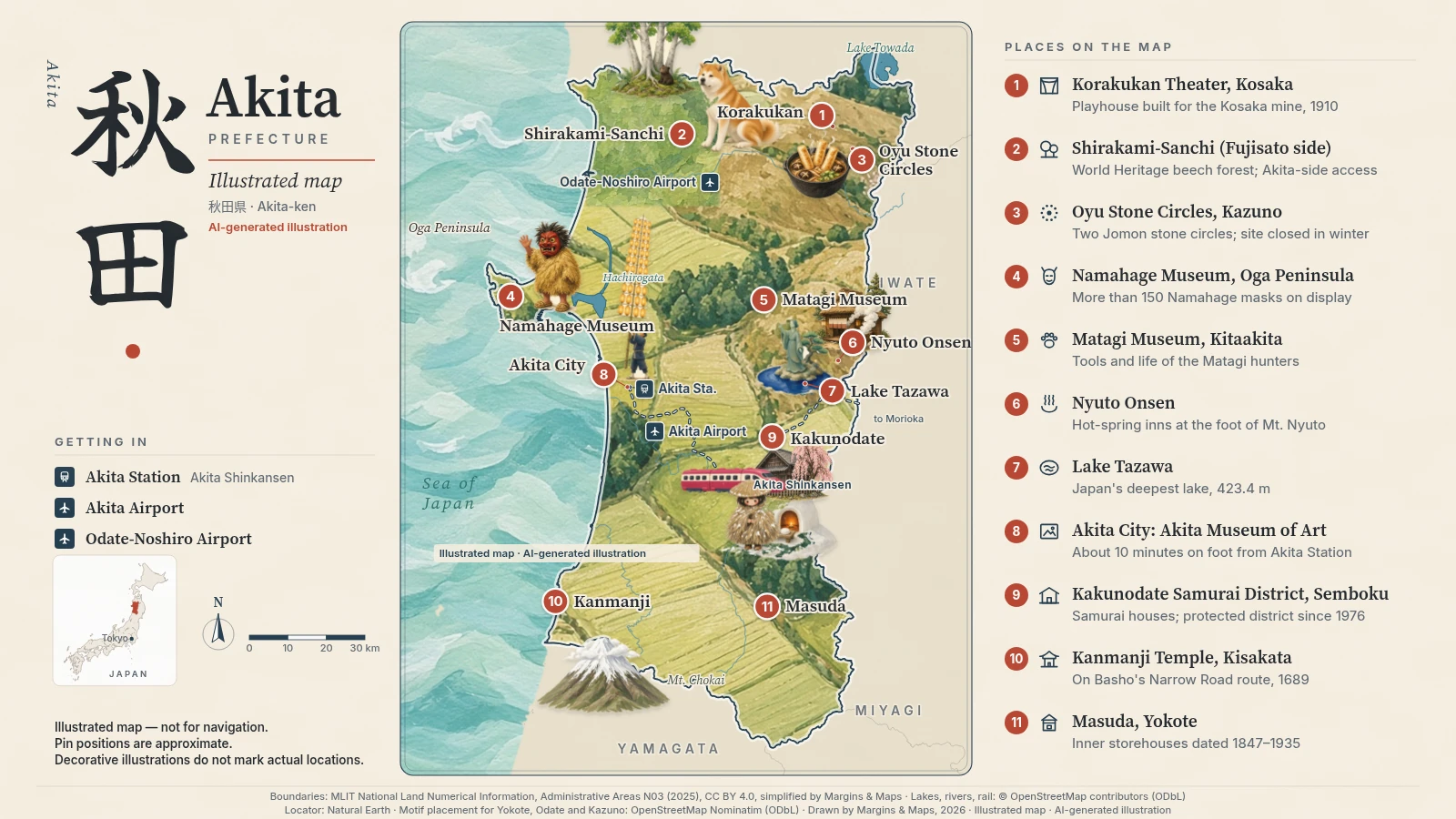
Map of the eleven places
AI-generated illustration. Pin positions are approximate; decorative illustrations do not mark actual locations. Open the Akita map hub for stations, hours, fees and seasonal closures.
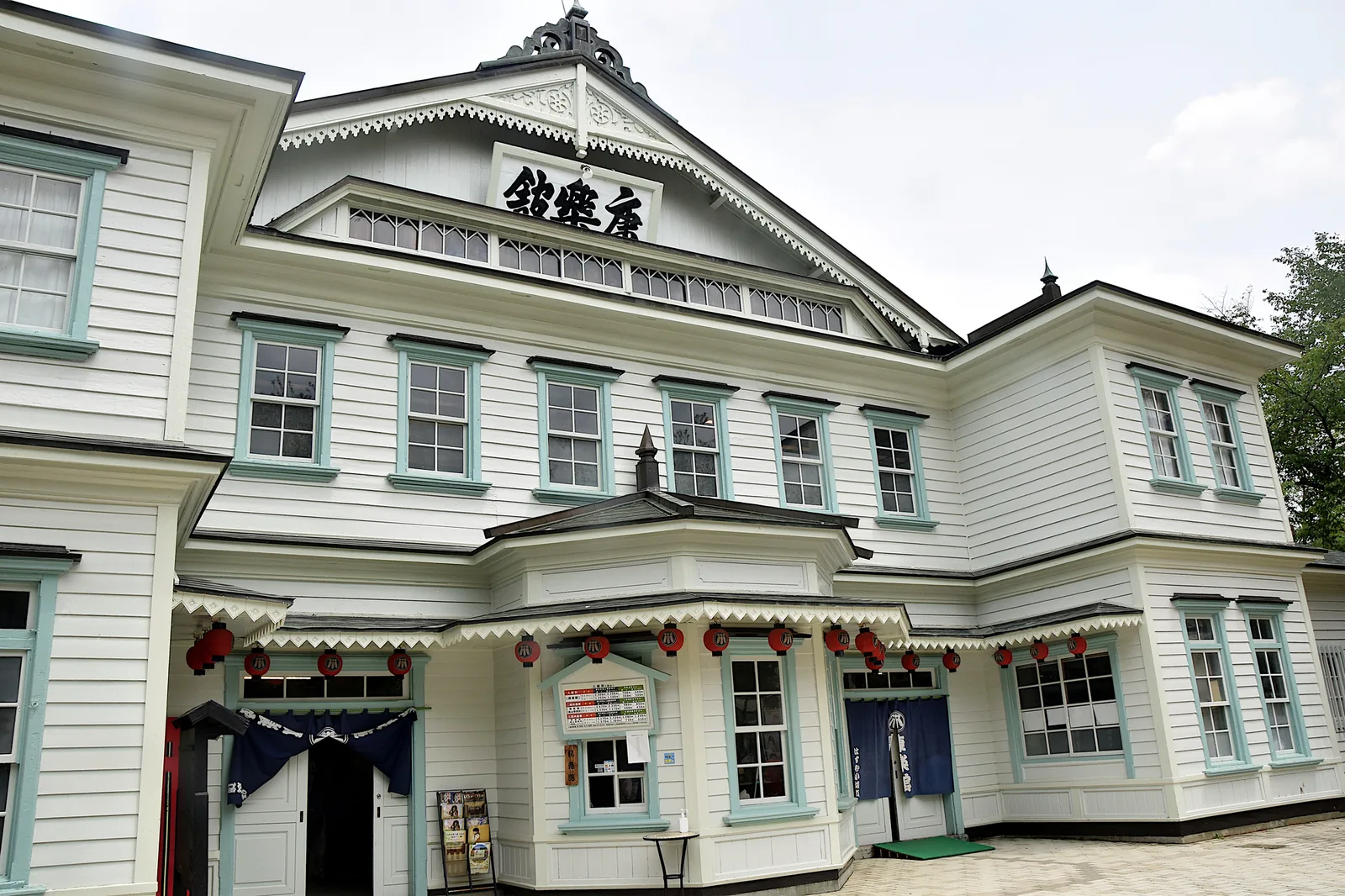
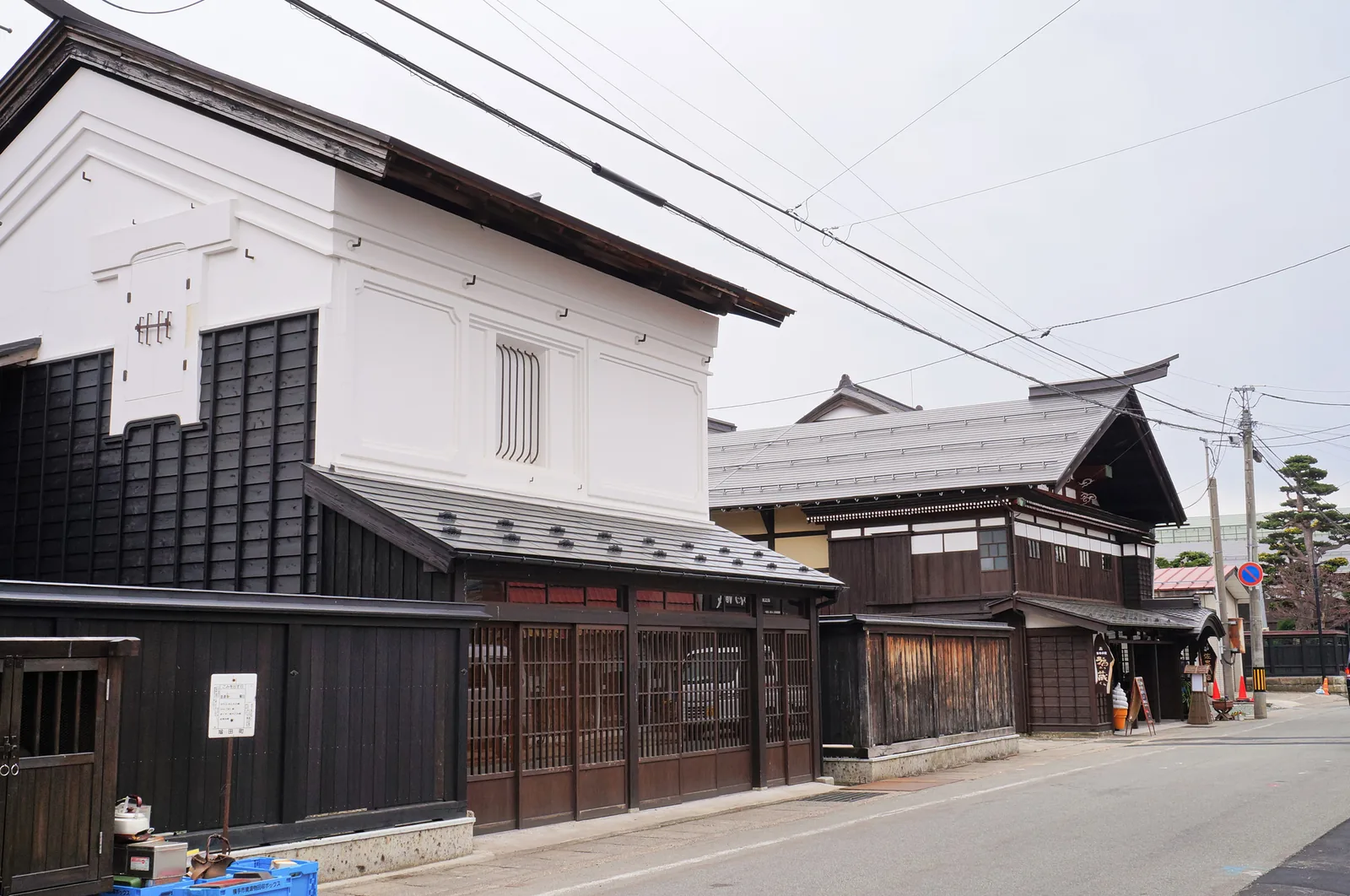
The white wooden facade of Korakukan Theater in Kosaka. Photo: 鳴き砂 / PIXTA
According to Akita Fan, the prefecture’s official tourism site, Korakukan opened in 1910 (Meiji 43) as a welfare facility for the Kosaka mine, pairing a Western-style exterior with a traditional Japanese playhouse interior where kabuki and stage performances still run. The Agency for Cultural Affairs lists it on Cultural Heritage Online as a Nationally Designated Important Cultural Property.
Hours: 9:00 to 17:00 (last entry 16:30); November to March 9:00 to 16:00 (last entry 15:30). Closed 29 December to 3 January. Building tour only: adults 700 yen, primary and junior high school pupils 350 yen (performance and tour: 2,500 yen / 1,250 yen). About 25 minutes by bus from JR Towada-Minami Station to the stop named after the theatre.
2 Shirakami-Sanchi (Akita side: Fujisato-kan)
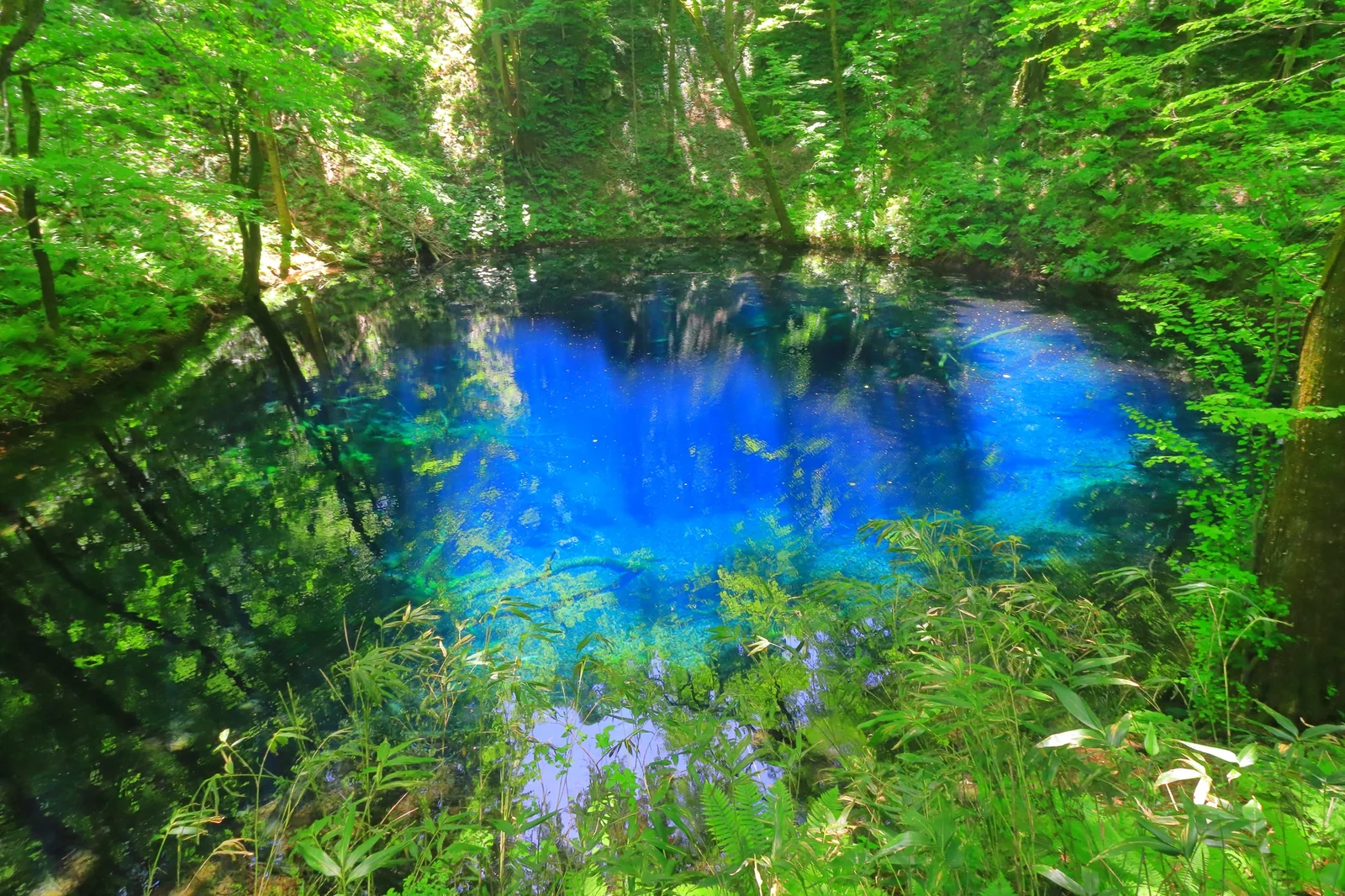
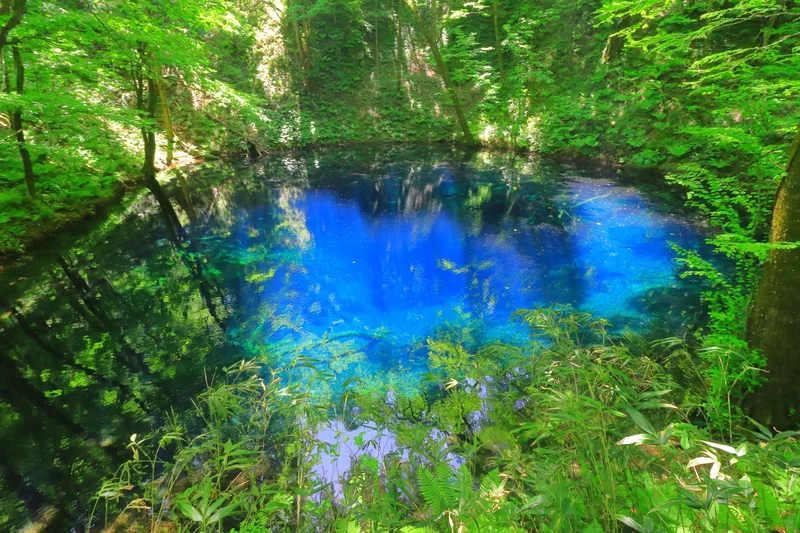
Aoike pond in the Juniko lakes of Shirakami-Sanchi (Aomori side of the border range). Photo: tokomaru7 / PIXTA
UNESCO inscribed Shirakami-Sanchi in 1993 as a 16,971-hectare World Natural Heritage property straddling the Akita–Aomori border. On the Akita side, the Shirakami-Sanchi World Heritage Center (Fujisato-kan) at the southern edge of the range reopened with renewed exhibits in April 2026; those exhibits present the 8,000-year history of the beech forest through dioramas and immersive film.
Fujisato-kan: admission free. Open 9:00 to 17:00 from March to November (closed Tuesdays) and 10:00 to 16:00 from December to February (closed Mondays, Tuesdays and over Year-End / New Year). About 20 minutes by taxi from JR Futatsui Station (or reserve-ahead demand taxis via Fujikoto Omachi on weekdays). Note that the core area has no designated climbing routes on the Akita side.
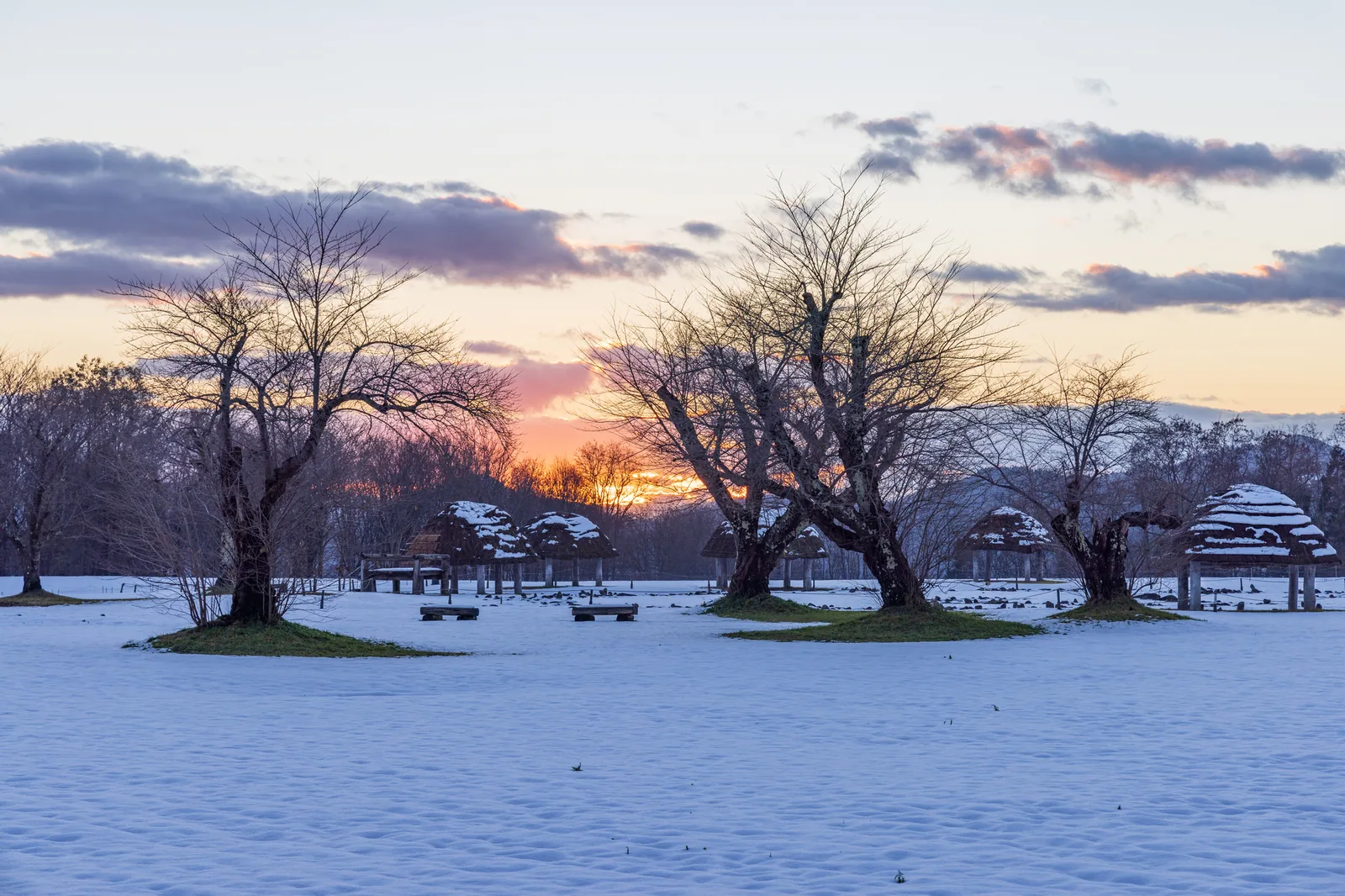
Snow-covered grounds with thatched shelters at dusk at the Oyu Stone Circles site, Kazuno. The stone circles themselves are not visible in this view. Photo: fujita hiroshi / PIXTA
Listed among the Jomon Prehistoric Sites in Northern Japan, the official Oyu Stone Circles page describes two large circles built of river stones — Manza (52 metres across) and Nonakado (44 metres) — surrounded by the remains of buildings, storage pits and graves. A line through the centres of the two circles points towards the summer solstice sunset.
The open-air stone circles close in winter from mid-November to mid-April (and on Mondays in November). The adjoining museum opens April to October 9:00 to 18:00 and November to March 9:00 to 16:00 (closed Mondays in winter and 29 December to 3 January; exhibition hall 320 yen for adults, 110 yen for students up to high school). About 35 minutes by Shuhoku Bus from JR Kazuno Hanawa Station.
4 Namahage Museum, Oga Peninsula
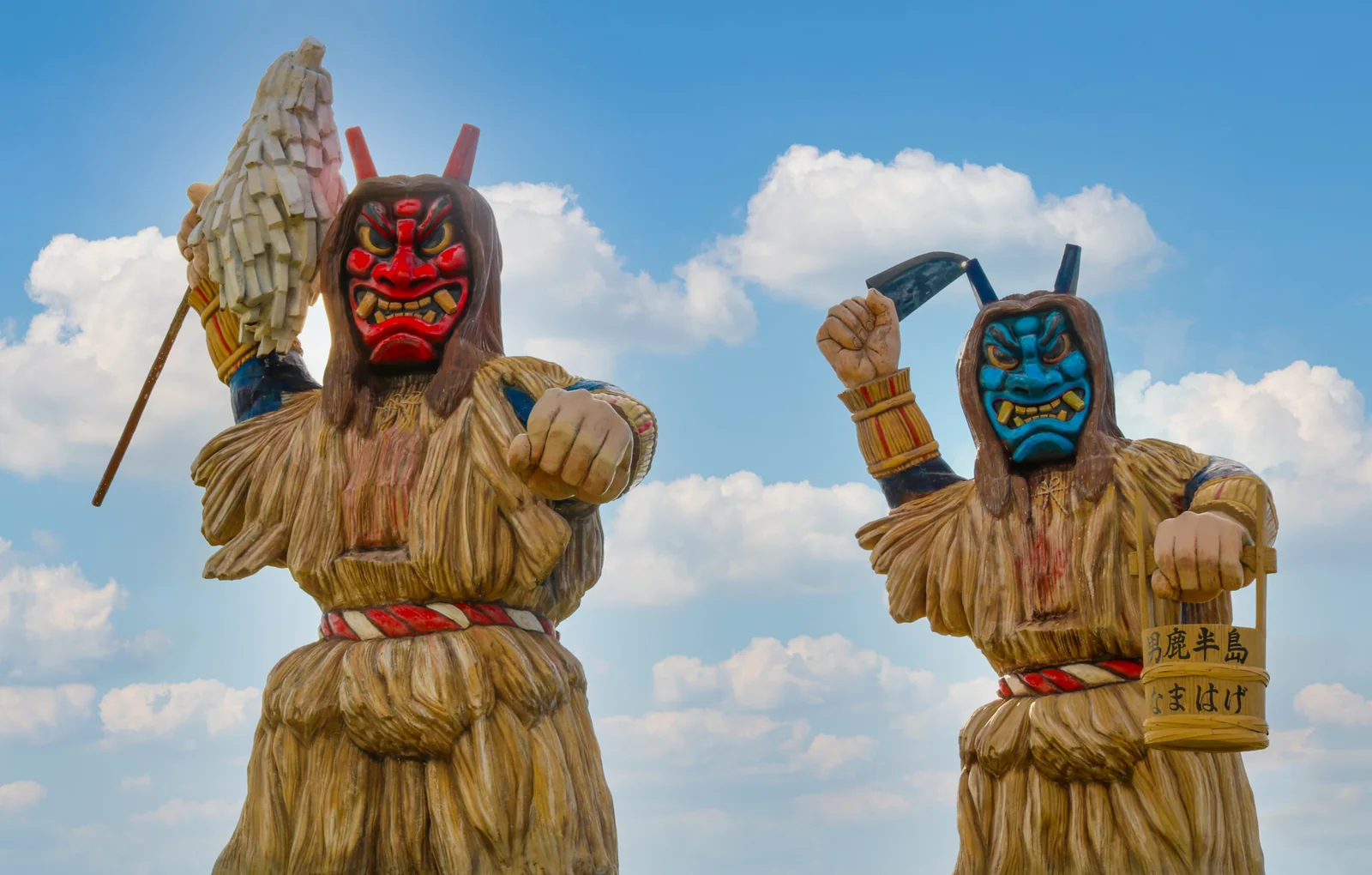
Namahage statue on the Oga Peninsula. Photo: よしだのカメラ / PIXTA
In Kitaura Shinzan on the Oga Peninsula, the Namahage Museum is organised around Oga’s New Year’s Eve masked-visitor custom, designated an Important Intangible Folk Cultural Property and inscribed by UNESCO. Akita Fan records a display hall of more than 150 Namahage masks and costumes, while the neighbouring Oga Shinzan Folklore Museum stages live demonstrations inside a traditional bent-house (magariya) dwelling.
Museum hours: 8:30 to 17:00 daily (hours and fees). Admission: 660 yen for the Namahage Museum, or 1,100 yen combined with the Oga Shinzan Folklore Museum (demonstration sessions run daily on a seasonal schedule). By public transport, take the JR Oga Line from Akita Station to Oga Station (about 55 minutes) and transfer to the reserve-ahead Namahage Shuttle shared taxi (about 25 minutes), or take the Akita Airport Liner Oga Peninsula route (about 95 minutes).
5 Ani Matagi Museum, Kitaakita
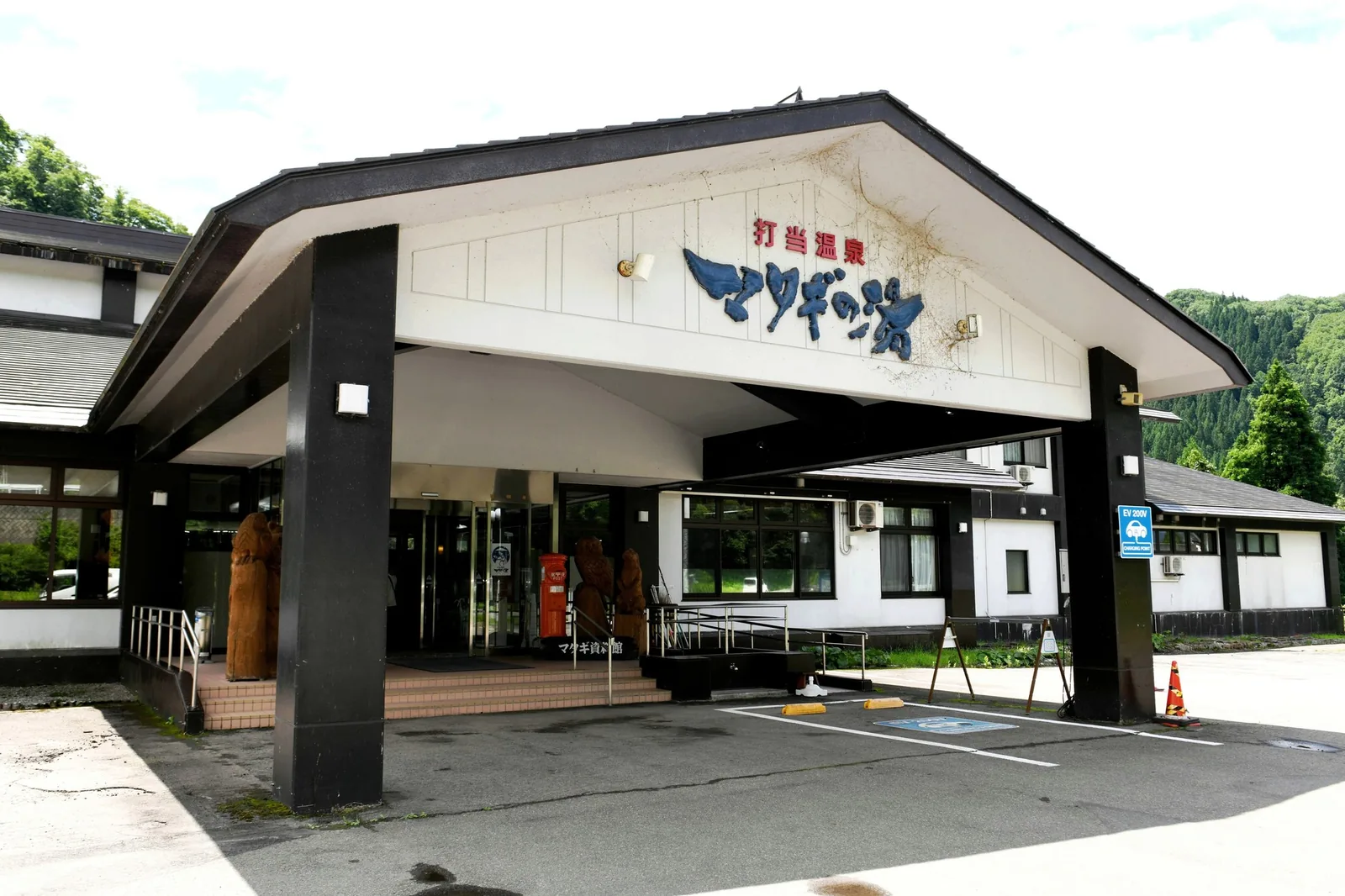
The entrance of the Ani Matagi Museum and Matagi-no-Yu at Ani Onsen, Kitaakita. Photo: drshino / PIXTA
The museum documents the traditions of the Matagi mountain hunters of the snowbound Ani valley, displaying hunting gear, winter clothing and mounted wildlife, as Akita Fan and the Kitaakita City museum page set out.
Hours: 9:00 to 17:00; admission 200 yen for adults, 100 yen for children. Open daily in principle, with closing days in February, June and September for hot-spring inspections. About 5 minutes by car from Ani Matagi Station on the Akita Nairiku Jukan Railway.
6 Nyuto Onsenkyo, Semboku
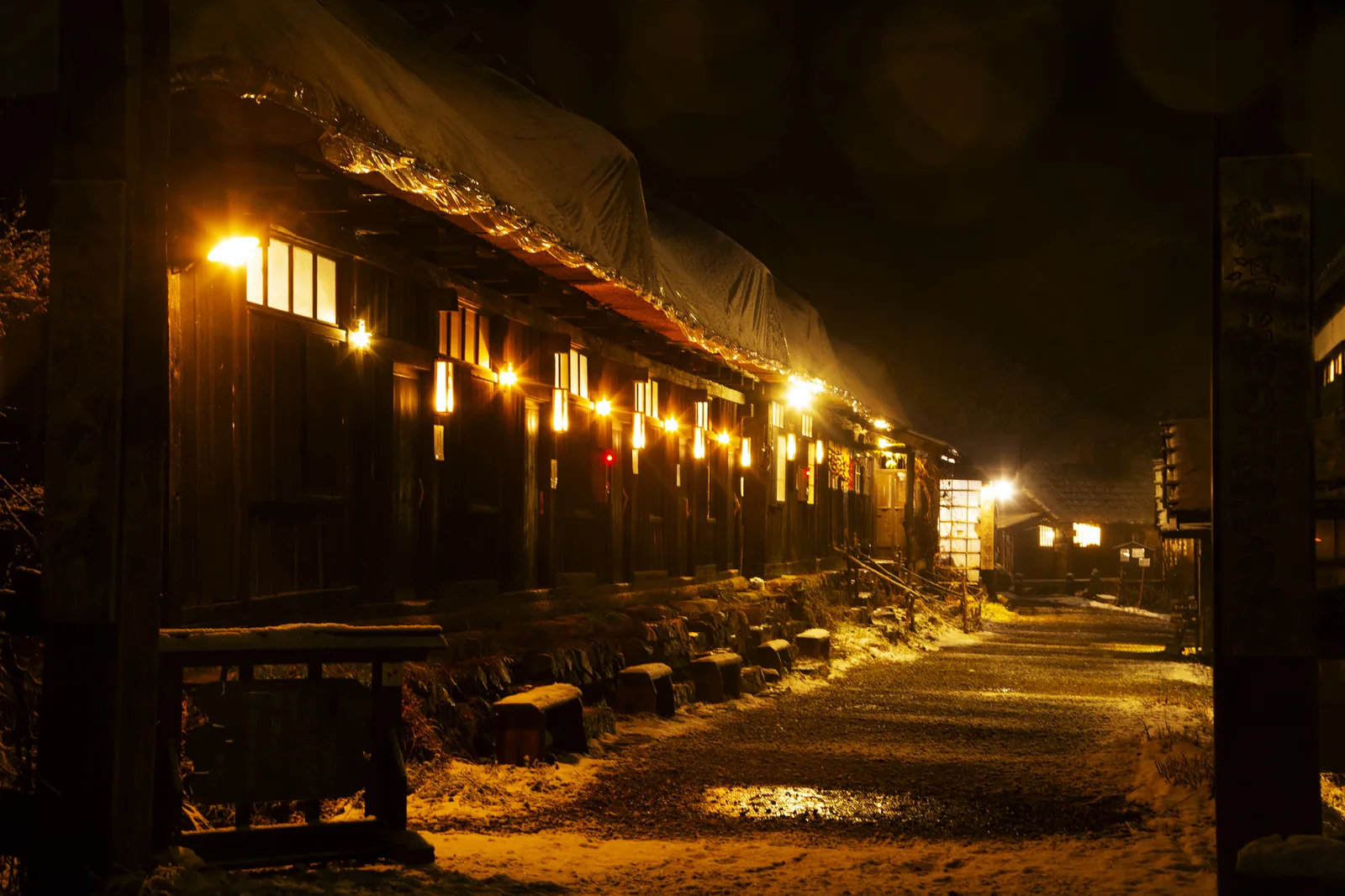
The wooden longhouse at Tsurunoyu Onsen in Nyuto Onsenkyo, photographed at night in the snow. Photo: Photo_N / PIXTA
Set in beech forest at the foot of Mount Nyuto inside Towada-Hachimantai National Park, Nyuto Onsenkyo is a cluster of historic hot-spring inns listed by Semboku City — including Tsurunoyu, Taenoyu, Kyukamura Nyuto-Onsenkyo, Ganiba, Ogama, Magoroku and Kuroyu. According to Tsurunoyu Onsen, the oldest inn in the valley has records of general bathers from the Genroku era (1688–1704) and draws four distinct spring sources within 50 metres of its grounds.
Tsurunoyu day-trip bathing: 700 yen, 10:00 to 15:00 (not available on Mondays); winter room heating charges apply and Kuroyu closes in winter. Access: from JR Tazawako Station on the Akita Shinkansen, take the hourly Ugo Kotsu bus bound for Nyuto Onsen (Tsurunoyu collects guests who call ahead at the Arupa Komakusa stop). The Akita Airport Liner Nyuto-go shared taxi links Akita Airport and Nyuto Onsenkyo in about 130 minutes with advance booking.
7 Lake Tazawa, Semboku
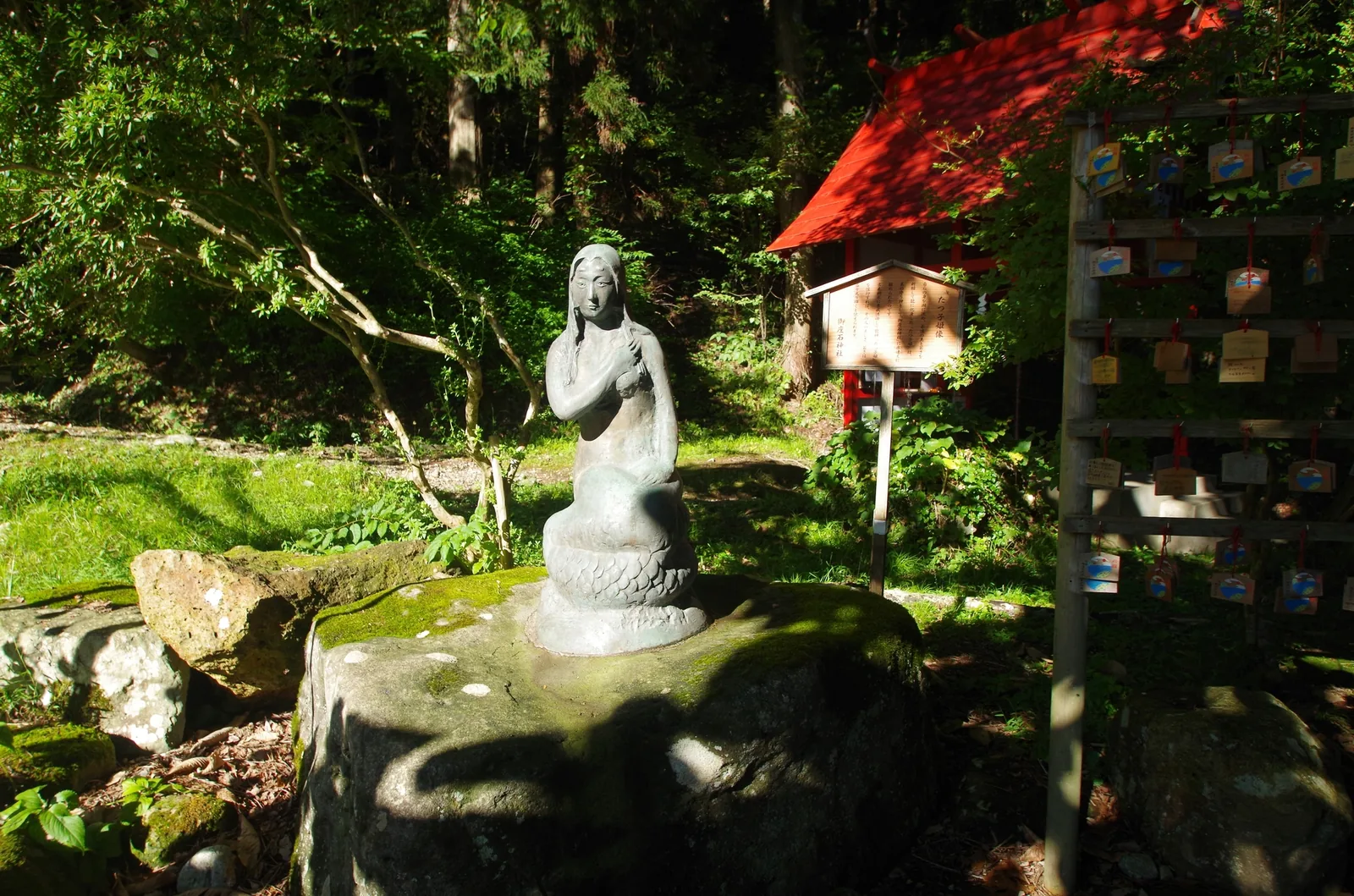
A small stone statue of Princess Tatsuko near Lake Tazawa. Photo: うげい / PIXTA
Semboku City describes Lake Tazawa as a nearly circular caldera lake about 20 kilometres in circumference and 423.4 metres deep, the deepest lake in Japan. The lake is known for its deep cobalt-blue water and the legend of Tatsuko, and was certified in 2022 as one of Japan’s Top 100 Moons.
Access: about 15 minutes by Ugo Kotsu bus (Tazawako loop line) from JR Tazawako Station to the lakeshore, or about 100 minutes by the reserve-ahead Akita Airport Liner from Akita Airport.
8 Akita Museum of Art, Akita City
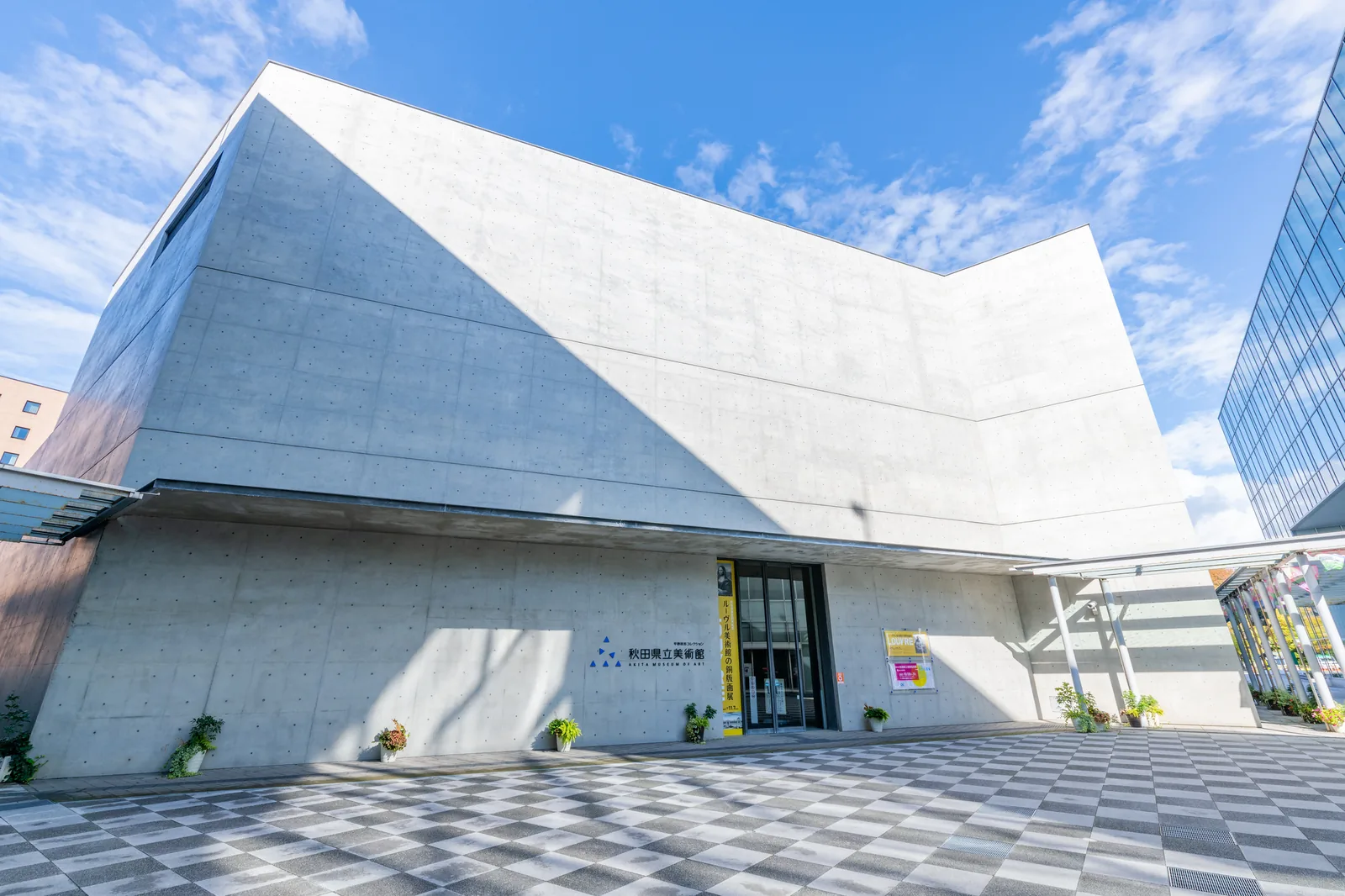
The concrete exterior of the Akita Museum of Art in Akita City. Photo: PIXSTAR / PIXTA
Completed in June 2012 opposite Senshu Park in central Akita City, the Akita Museum of Art was designed by Tadao Ando, as JNTO records. On view are works by Tsuguharu Foujita from the Masakichi Hirano Art Foundation collection, centred on the 20-metre-long mural The Events of Akita.
Hours: 10:00 to 18:00, ticket sales until 17:30 (hours and admission); irregular closures for exhibition changes and maintenance. About 10 minutes on foot from JR Akita Station, or about 40 minutes by bus from Akita Airport (access page; no museum car park).
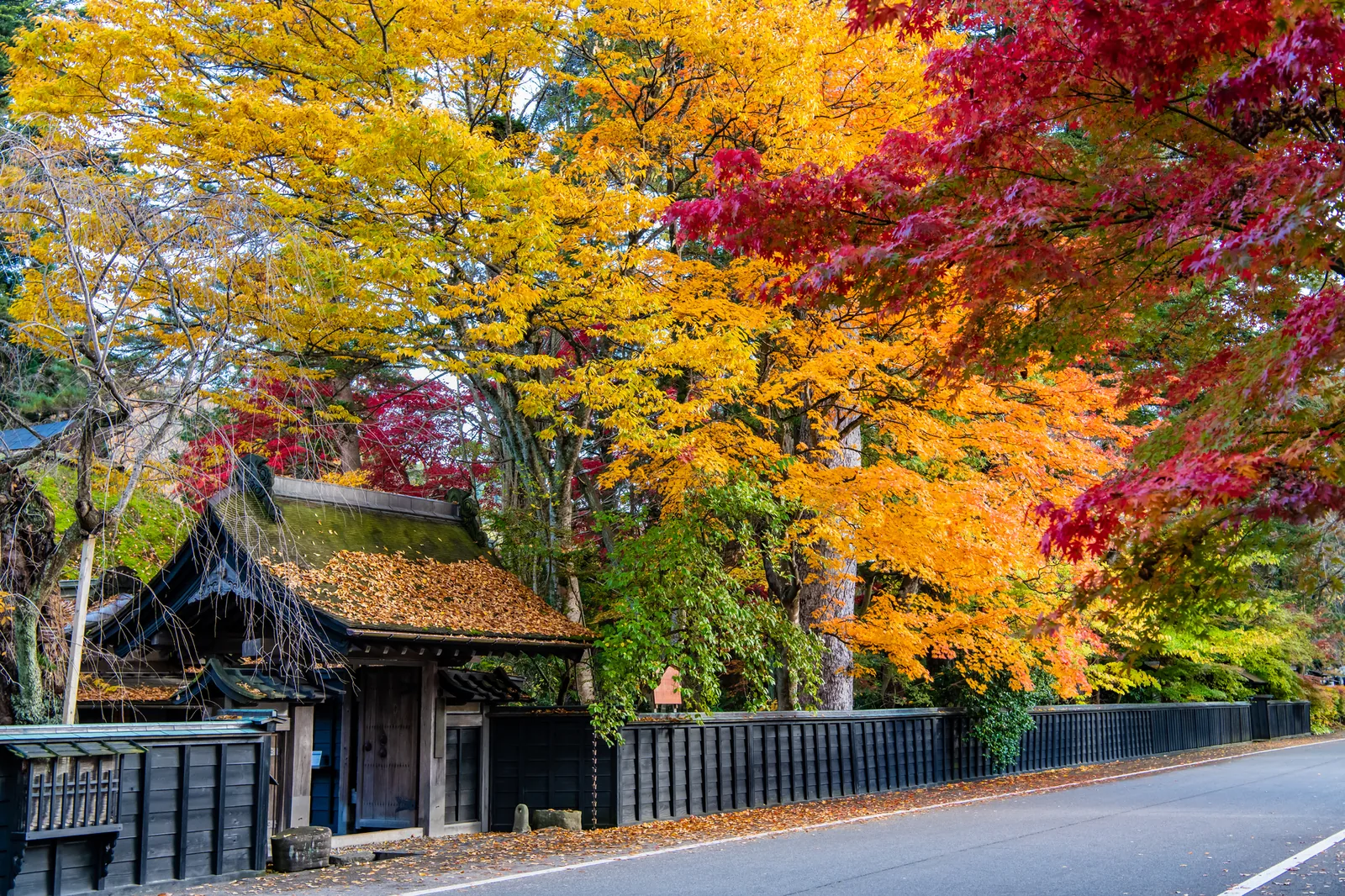
The samurai-district street of Kakunodate in autumn, near the Aoyagi house. Photo: denkei / PIXTA
Founded in 1620 as a castle town, Kakunodate was selected in September 1976 as a Nationally Important Preservation District for Groups of Traditional Buildings, according to the Japan Tourism Agency’s multilingual database. Broad avenues lined with dark wooden fences and weeping cherry trees preserve residences dating back to the Edo period.
Semboku City lists six samurai houses open to visitors: three open year-round (500 yen for adults) and three open seasonally from early April to the end of November. About 15 to 25 minutes on foot from JR Kakunodate Station, or about 60 minutes by the Akita Airport Liner from Akita Airport.
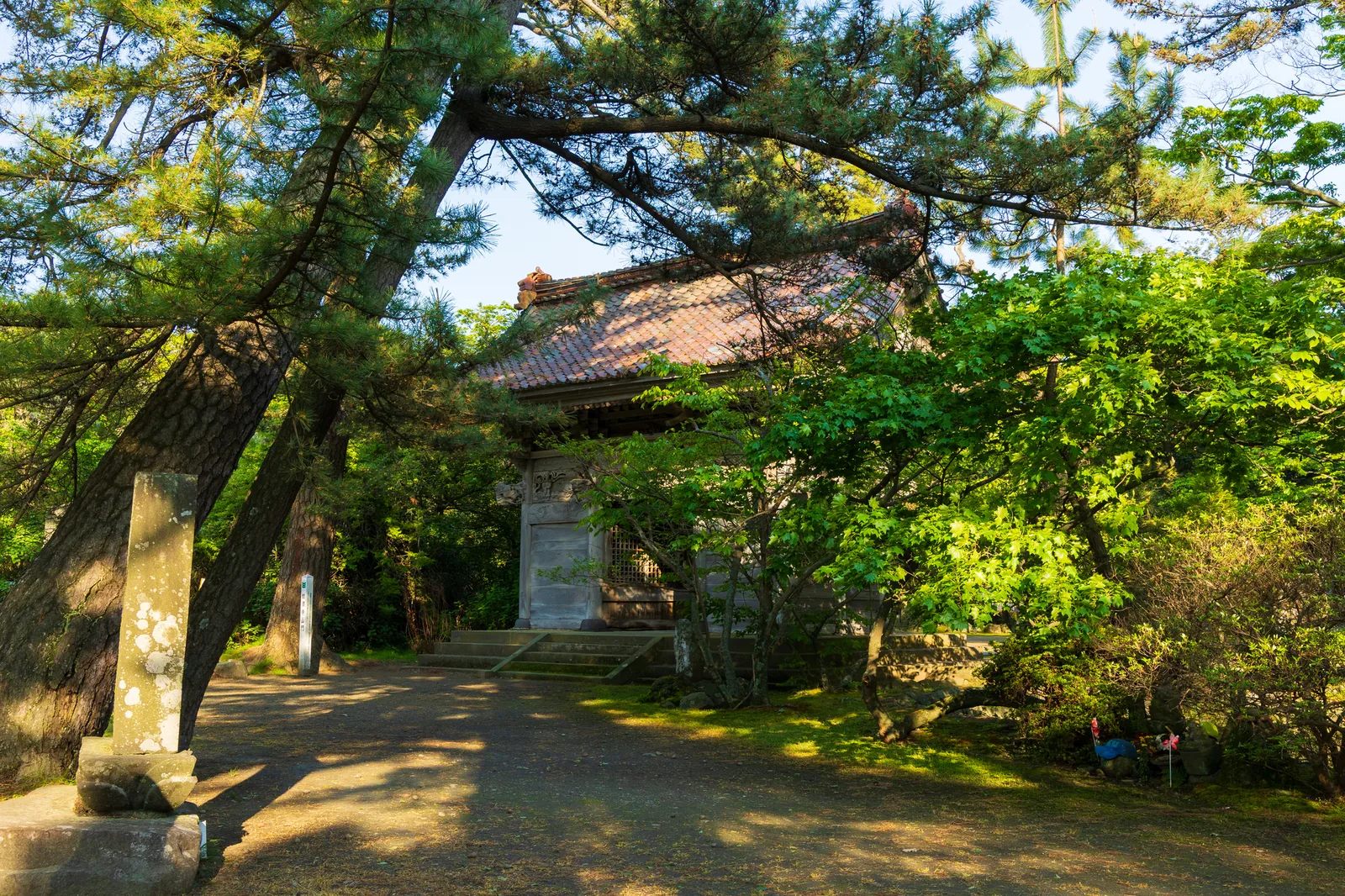
The entrance gate (sanmon) of Kanmanji Temple in Kisakata. Photo: ゆうた1127 / PIXTA
Akita Fan and the Nikaho tourism association give the temple tradition as Kanmanji’s founding in 853, before it became a Soto Zen temple in the Edo period. In 1689, Discover Uetsu records, Matsuo Basho visited Kisakata on the journey of The Narrow Road to the Deep North, commemorated by a haiku stone in the grounds.
Hours: 8:00 to 17:00 (Akita Fan); check local notices for admission and closing days. About 15 minutes on foot from JR Kisakata Station on the Uetsu Main Line.
11 Masuda Merchant Town, Yokote
Traditional merchant houses along a street in Masuda, Yokote. The inner storehouses (uchigura) are not visible from this view. Photo: konatu / PIXTA
Masuda was selected as an Important Preservation District for Groups of Traditional Buildings in December 2013. The uchigura are thick-walled plaster inner storehouses built inside merchant houses between 1847 and 1935, invisible from the street outside, according to Yokote City.
The Masuda town guide lists 19 traditional buildings open to the public (some free, some paid, and several by reservation; allow 20 to 30 minutes per house). The Masuda Kura no Eki information centre opens 9:00 to 17:00 (closed 29 December to 3 January). Access: about 85 minutes by JR train from Akita Station to Jumonji Station, then about 10 minutes by local bus or taxi (Masuda access, Yokote drive guide).
Mt. Chokai (unnumbered on map, Akita–Yamagata border)
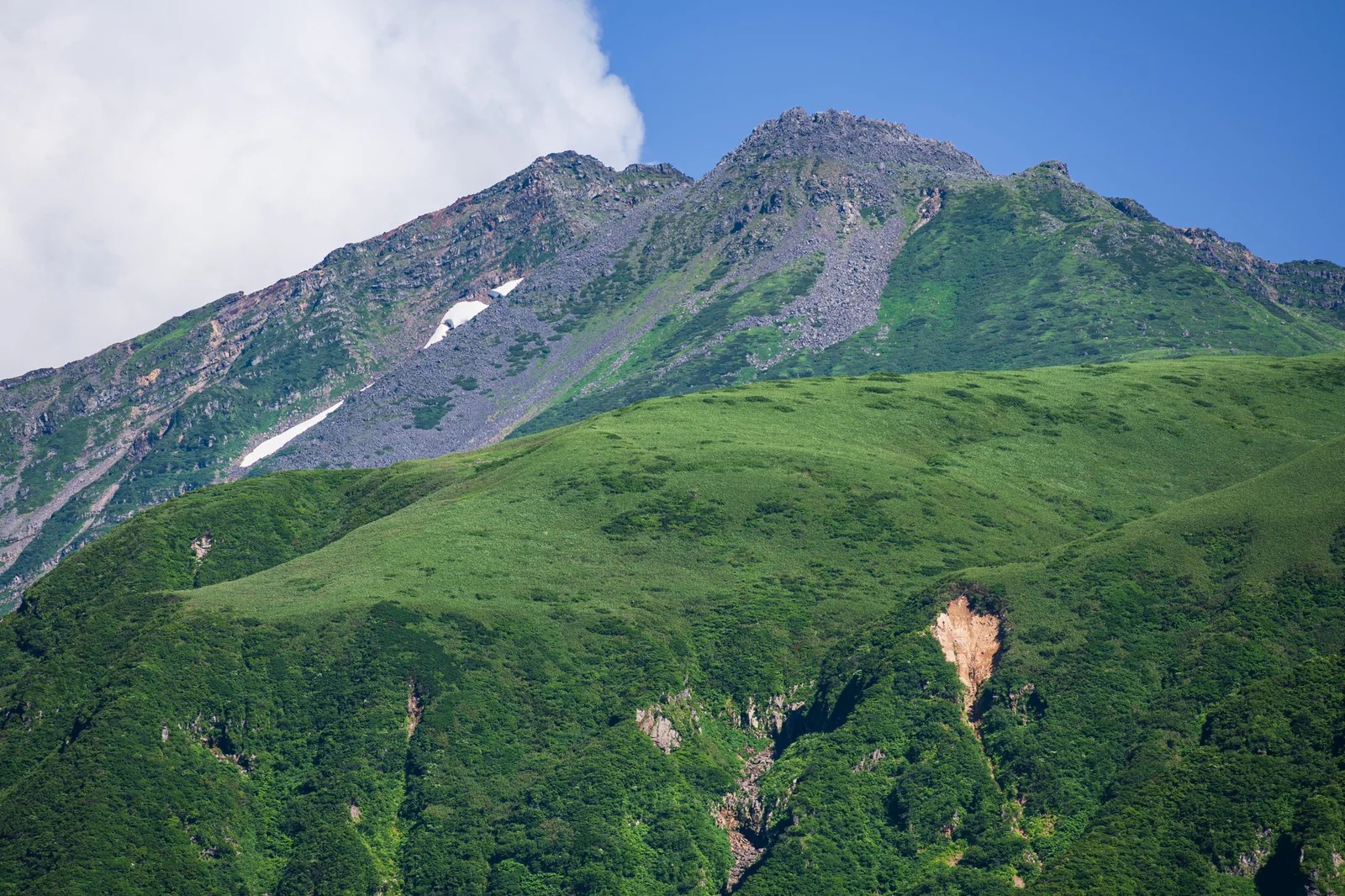
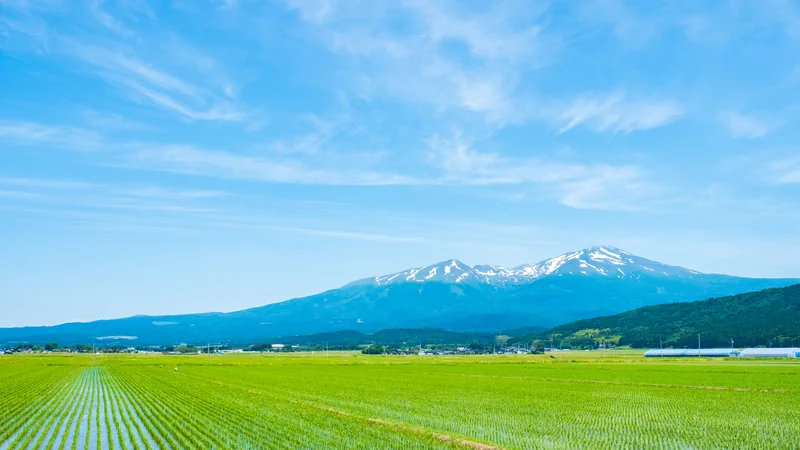
Shown unnumbered in the southwest corner of the map above Kisakata, Mt. Chokai (2,236 metres) is a free-standing active volcano straddling Akita and Yamagata prefectures, designated a National Historic Site as a mountain of ancient faith (Cultural Heritage Online).
About 1 hr 10 min from Haneda (STAY AKITA). Limousine bus to Akita Station West Exit takes ~40 min (1,200 yen); reserve-ahead Airport Liner shared taxis reach Kakunodate (~60 min), Lake Tazawa (~95 min), Nyuto Onsenkyo (~130 min) and Namahage Museum (~95 min).
Three daily ANA round-trips to/from Tokyo Haneda for northern Akita and the Shirakami / Kazuno side.
Inside Akita
Railways, buses and rental cars
JR Ou, Uetsu, Tazawako, Oga and Gono lines plus Akita Nairiku Jukan and Yuri Kogen railways; rural buses (Akita Chuokotsu, Ugo Kotsu, Shuhoku Bus) are infrequent outside towns, so STAY AKITA advises checking schedules ahead or hiring a car.
Where to stay
This page contains affiliate links. Affiliate disclosure. Official hotel sites are linked below. If you book through an Expedia link, Margins & Maps may earn a commission at no extra cost to you.
Akita City (Akita Station)
Central rail and airport-bus hub for the Akita Museum of Art, Senshu Park, Oga day trips and southern trains.
Richmond Hotel Akita Ekimae (official site; 7-minute walk from JR Akita Station West Exit; ~40 min airport bus) · Expedia (affiliate link).
A coastal hot-spring village on the north side of the Oga Peninsula, about 15 minutes by car from the Namahage Museum.
Oga Onsenkyo Cooperative (six member inns, linked to Oga Station by the Namahage Shuttle) · Oga Kanko Hotel (official site; a member inn of the cooperative) · Expedia (affiliate link).